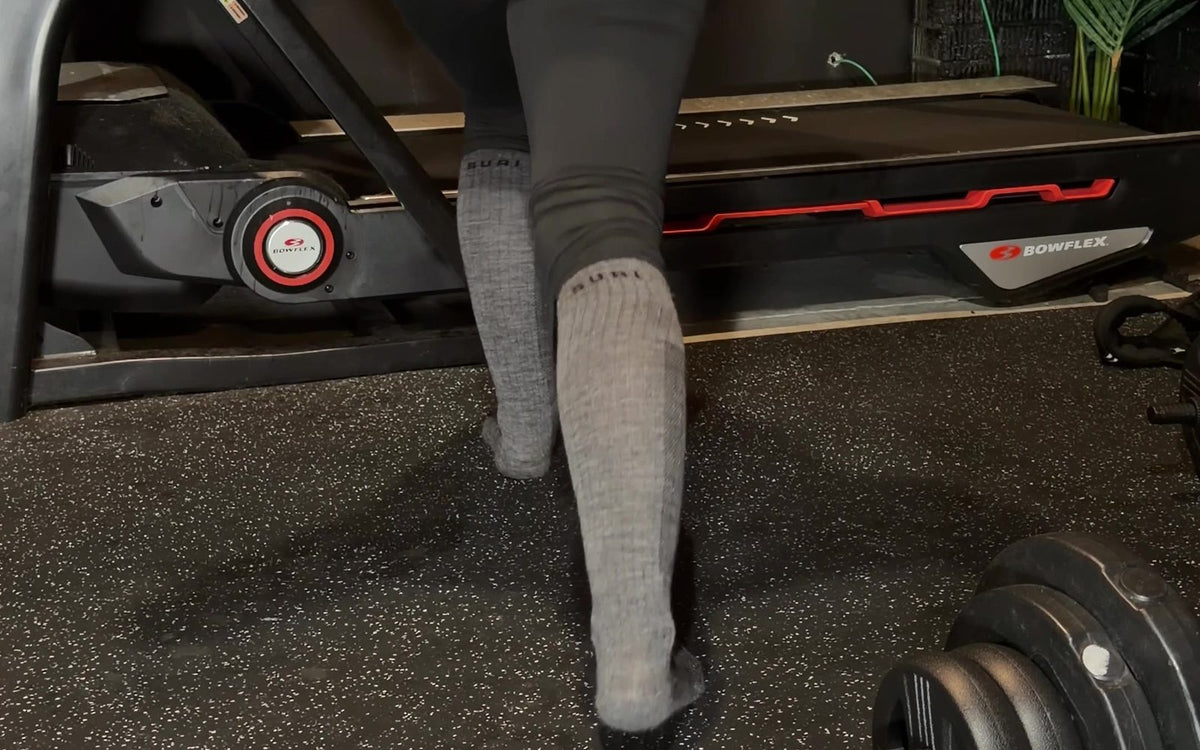
Alpaca compression socks combine graduated compression (firm at the ankle, easing up the calf) with alpaca fiber instead of the slick nylon and spandex most compression socks are made from. You get the leg support of a compression sock with the warmth, breathability, odor resistance and soft, itch-free feel of alpaca.
This guide covers how they work, who they're for, which compression level to choose, how to size them, how they compare with other materials, and how to care for them.
At a glance
-
What they do: graduated compression helps support circulation and reduce leg fatigue and swelling when you're on your feet or sitting for long periods.
-
Why alpaca: most compression socks feel hot, sweaty and plasticky. Alpaca breathes, stays dry, resists odor and doesn't itch.
-
Who they're for: nurses and healthcare workers, retail and warehouse teams, teachers, tradespeople, travelers, and anyone who stands or walks for hours.
-
Most common level: 15–20 mmHg, a moderate everyday level.
What are alpaca compression socks?
Compression socks are knit to apply gentle, measured pressure to your lower leg. Graduated compression is tightest at the ankle and gradually decreases toward the knee. That gradient helps your veins move blood back up toward your heart instead of letting it pool in your lower legs, which is why legs feel heavy and ankles swell after a long day.
Most compression socks use a high percentage of nylon and spandex to create that pressure. Alpaca compression socks blend in a large share of alpaca fiber, so the sock touching your skin is a natural, breathable fiber rather than plastic. The nylon and spandex are still there, because they provide the stretch and recovery that compression needs, but the feel is completely different.
Benefits of alpaca compression socks
1. Support for tired, heavy legs
Graduated compression helps support circulation and reduce leg fatigue and swelling during long periods of standing, walking or sitting. Many people notice the difference most at the end of a long shift or after a flight.
2. Breathable instead of sweaty
The biggest complaint about compression socks is heat. Tight synthetic fabric traps sweat against your skin. Alpaca breathes and moves moisture vapor away, so your legs and feet stay drier and more comfortable all day.
3. Naturally odor-resistant
Synthetic compression socks are notorious for smelling after a 12-hour shift. Alpaca naturally resists odor.
"I tried one pair of these socks for 2 full days of work, 1 at the office and 1 in the operating room, and one day of going to a fair. All three times the socks remained high on my calf with no loss of tightness. The comfort was 10/10. And best of all, even after 3 intense days there was no smell!"
– Dr. Anthony Gualtieri, Orthopedic Surgeon, Houston, TX
4. Soft and itch-free
Alpaca is smooth and lanolin-free, so it doesn't prickle like many wools. That matters for a sock you might wear 12 hours a day, several days a week.
5. Comfortable year-round
Alpaca regulates temperature: warm on cold mornings and breathable in warm weather. One pair works for winter shifts and summer flights.
Who should wear alpaca compression socks?
-
Nurses and healthcare workers on long hospital shifts.
-
Retail, warehouse, factory and restaurant workers who stand on hard floors all day.
-
Teachers, hairstylists and anyone on their feet for hours.
-
Travelers on long flights and drives, where sitting still lets legs swell.
-
Hikers and active people looking for support during and after long days.
-
Men and women alike. Compression socks aren't gendered; sizing is by shoe size and calf measurement.
"I've put about a year (and considerable funds) into finding a compression sock for my needs. I have gout and venous insufficiency. I also hike for my primary pastime. So, I need a compression sock with a decent footbed. I should have tried Suri first, obviously."
– Eric B., verified buyer, Compression Socks
A note on medical use: compression socks support comfort and circulation, but they aren't a treatment for medical conditions. If you have a circulation disorder, diabetes, neuropathy, a history of blood clots or another medical condition, ask your doctor which compression level is right for you before wearing them.
Compression levels: 15–20 vs 20–30 mmHg
Compression strength is measured in millimeters of mercury (mmHg). Higher numbers mean firmer compression.
| Level |
Feel |
Typical use |
| 8–15 mmHg |
Light |
Everyday comfort, mild tiredness |
| 15–20 mmHg |
Moderate |
Long shifts, standing all day, travel, active recovery. The most popular everyday level. |
| 20–30 mmHg |
Firm |
Often recommended by a doctor for specific needs |
| 30–40 mmHg and up |
Extra firm |
Medical use under a doctor's guidance |
For most people who want everyday support for work and travel, 15–20 mmHg is the right place to start. That's the level Suri uses. If your doctor has prescribed 20–30 mmHg or higher, follow their advice.
How to choose alpaca compression socks
-
Graduated compression with a stated mmHg range, not just "compression-style" tightness.
-
High alpaca content for breathability and comfort, blended with nylon and spandex for the stretch compression needs.
-
A cushioned footbed if you're on your feet all day.
-
A stay-up calf that doesn't slide down or dig in.
-
Calf-based sizing and a wide option, because compression only works when it fits.
-
Superfine alpaca, not baby alpaca. Baby alpaca is soft but can pill and lose compression; a stronger grade holds up to daily wear.
Suri alpaca compression socks
Our alpaca compression socks were built to fix everything people dislike about regular compression socks:
-
15–20 mmHg graduated compression, firmest at the ankle.
-
56% Peruvian alpaca, 41% nylon and 3% spandex, using superfine Pro-Grade Alpaca™ selected for strength.
-
15" heel to cuff (knee-high), with a stay-up calf that doesn't cut in.
-
Cushioned footbed for long hours on hard floors.
- Standard and Wide widths.
-
Knit in North Carolina and backed by our 1-Year Ironclad Guarantee.
Want more support or a rotation for the work week? The Compression Bundle gets you 4 pairs, and the Compression Calf Sleeve adds calf support you can wear with your own socks. Browse everything in our alpaca compression socks collection.
How to size compression socks
Compression socks need to fit correctly to work. Too loose and they don't compress; too tight and they're uncomfortable. Measure around the widest part of your calf and check your shoe size.
| Size |
Men (US) |
Women (US) |
Calf |
| Medium |
5–8 |
6–9 |
12–16" |
| Large |
8–11 |
9–13 |
14–18" |
| X-Large |
11–15 |
n/a |
16–20" |
Between sizes? Choose the larger size. Choose Wide if regular compression socks usually feel tight around your calf. They should feel snug and supportive, firmest at the ankle, without pinching or leaving deep marks.
Alpaca vs nylon, cotton and bamboo compression socks
| Material |
Comfort over long days |
Odor |
Temperature |
| Alpaca blend |
Soft, dry, itch-free |
Naturally resistant |
Breathable, warm in cold |
| Nylon/spandex (standard) |
Slick, can feel hot |
Holds odor |
Runs hot |
| Cotton blend |
Soft at first, damp later |
Holds odor |
Cold when wet |
| Bamboo viscose blend |
Very soft |
Fair |
Absorbent, can stay damp |
How to wear compression socks
- Put them on in the morning, before your legs have a chance to swell.
- Turn the sock inside out down to the heel, slip your foot in, then roll the sock up your leg.
- Smooth out any wrinkles. Never roll or fold the top down, which concentrates pressure.
- Take them off at night unless your doctor says otherwise.
How to wash alpaca compression socks
Machine wash cold on a gentle cycle, ideally inside out. Hang or lay flat to dry, and skip the dryer, since heat wears down the stretch that gives compression socks their support. Don't use bleach or fabric softener. Rotating a few pairs helps each one keep its compression longer. More tips in our alpaca sock care guide.
The bottom line
Alpaca compression socks give you the leg support of graduated compression without the hot, sweaty, smelly feel of standard synthetic pairs. For most people on their feet all day or traveling, 15–20 mmHg is the right level. Measure your calf, pick your size and width, and wash them cold.
Shop Suri alpaca compression socks.
FAQs
Do alpaca compression socks work?
Yes. The compression comes from the knit and its graduated pressure, which helps support circulation and reduce leg fatigue. The alpaca makes them more breathable, odor-resistant and comfortable than standard synthetic compression socks.
Are alpaca compression socks good for both men and women?
Yes. Compression socks are sized by shoe size and calf measurement, not gender. Suri compression socks come in Medium, Large and X-Large, in Standard and Wide widths.
What mmHg compression should I get?
For everyday support on your feet or while traveling, 15–20 mmHg is the most common choice. Firmer levels like 20–30 mmHg are often recommended by a doctor for specific needs.
Can you wear alpaca compression socks all day?
Yes, that's what they're made for. Put them on in the morning and take them off at night. Alpaca's breathability makes all-day wear much more comfortable than synthetic compression socks.
Are alpaca compression socks hot?
No. Alpaca is breathable and regulates temperature, so it stays cooler and drier than typical nylon compression socks, while still being warm in cold weather.
Related posts


 Shop best sellers