"I liked saving money buying 4 pairs at a time and the socks are great for what I need. It's unbelievable how they could be made out of this material, yet they are so comfortable and they don't make my feet and legs itch nor do they make them hot or sweaty."
Rick S., Verified Customer
Why Alpaca Fiber Works for All-Season Socks
Share
Alpaca fiber solves common sock problems like moisture retention, temperature swings, and durability issues. Unlike cotton vs wool vs alpaca socks, where alpaca fiber wicks moisture, regulates temperature, and resists odors naturally. Its hollow-core structure insulates in the cold and releases heat in warm conditions, while its low water retention (8%) keeps feet dry. Hypoallergenic and durable, alpaca socks maintain shape and comfort even after repeated use and washing. Whether you're hiking in summer or braving winter, alpaca fiber offers year-round comfort without the downsides of traditional materials.
Common Problems with All-Season Footwear
Moisture and Sweat Buildup
Cotton socks are moisture magnets. When you're hiking, working outdoors, or just transitioning between different settings, cotton becomes a soggy mess against your skin. This trapped moisture doesn’t just feel awful - it also causes friction that can lead to blisters. According to PAKA, cotton's tendency to hold onto moisture accelerates fiber breakdown and increases the risk of blisters.
And it’s not just the moisture - temperature swings add another layer of discomfort.
Temperature Fluctuations
Moving from freezing mornings to warm indoor spaces presents a unique challenge for your feet. Thick socks may keep you cozy in the cold but can quickly make your feet overheat indoors, leading to sweating and discomfort. Thin socks, on the other hand, often fail to hold up in the cold, losing their insulating properties when you need them most.
"In summer heat, cotton soaks up sweat like a sponge and refuses to let it go. That trapped moisture rubs your skin raw and makes your boots feel swampy. In cold weather, damp cotton is even worse - chilling your feet until you can't think about anything but your frozen toes." – American Made Alpaca
While traditional wool does a better job in cold weather than cotton, it’s not without flaws. Wool’s bulkiness can make it incompatible with standard footwear, and under moderate conditions, it can cause overheating. These drawbacks highlight why many conventional materials fall short when it comes to providing reliable comfort across all seasons.
Thermal stress doesn’t just affect comfort - it also takes a toll on durability.
Durability and Wear Issues
Standard socks often break down quickly when faced with tough conditions. Moisture retention speeds up fiber breakdown, and constant friction wears them out faster. This makes traditional sock materials ill-suited for the year-round demands of all-season footwear.
Another issue? Odor. Most standard socks need washing after every use because of how effectively they trap smells.
"The combination of heat and agitation in the wash is what ultimately ruins natural fibers in the washing machine." – PAKA
This constant cycle of wearing and washing accelerates wear and tear, making it clear why conventional socks struggle to keep up with the demands of all-season use.
sbb-itb-855989e
How Alpaca Fiber Compares to Standard Materials
Alpaca vs Merino Wool vs Cotton: Moisture Retention and Performance Comparison
Moisture-Wicking and Quick Drying
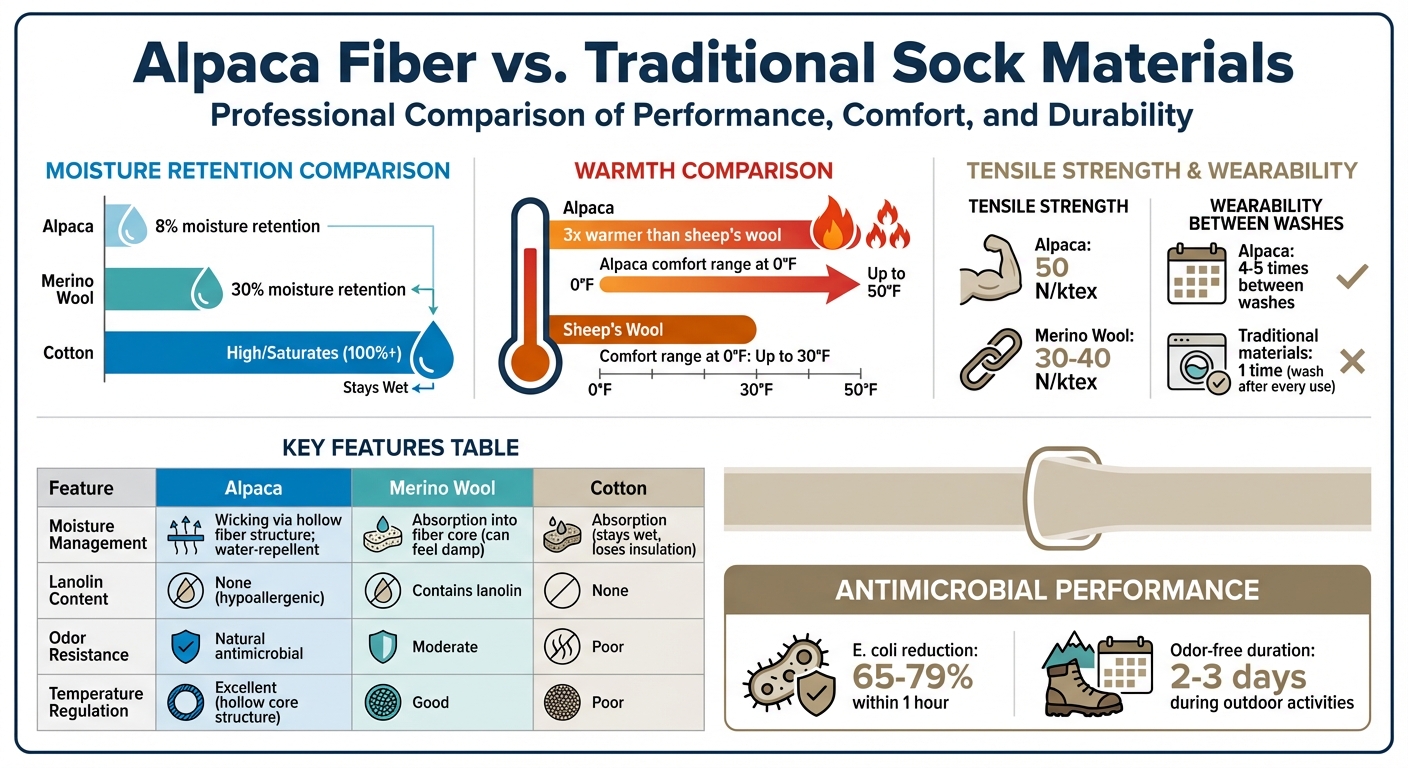
Alpaca fiber is a standout when it comes to moisture management. It absorbs only about 8% of its weight in moisture, significantly less than merino wool at around 30%, and far less than cotton, which tends to soak up water completely. This is thanks to its hollow-core structure, which prevents moisture from being absorbed into the fiber itself. Instead, it channels sweat outward, allowing it to evaporate quickly.
"Alpaca is water repellent. Testing showed it is nearly impossible to saturate alpaca fiber." – Gaston College (2009 study)
This water-resistant property keeps your feet dry whether you're hiking through humid conditions or working outdoors in the rain. Unlike cotton, which stays wet and heavy, or merino wool, which can feel damp, alpaca fiber maintains a dry, lightweight feel.
Fiber Type
Moisture Retention Rate
Primary Moisture Management
Alpaca
~8%
Wicking via hollow fiber structure; water-repellent surface
Merino Wool
~30%
Absorption into fiber core (can feel damp)
Cotton
High (Saturates)
Absorption (stays wet and loses insulation)
This efficient moisture-wicking ability also contributes to alpaca fiber's exceptional temperature regulation.
Temperature Control Properties
Thanks to the tiny air pockets within its fibers, alpaca provides excellent insulation, keeping you warm in cold weather while releasing excess heat in warmer conditions. According to testing by Yocum-McCall Laboratories, alpaca fiber is three times warmer than sheep's wool. For example, in a 0°F environment, alpaca fiber can maintain a comfort range of up to 50°F, whereas sheep's wool only offers about 30°F of comfort.
"The same fiber qualities that insulate them from cold helps protect them from the sun's heat... It is this property that allows alpaca socks to be worn all year round." – Rebecca Gill, Alpaca Farmer, Cotton Creek Farms
This natural ability to regulate temperature means your feet stay cozy without overheating indoors or freezing when stepping outside on a chilly winter morning.
But alpaca fiber doesn't stop at temperature control - it also excels in keeping odors at bay.
Natural Odor Resistance and Hypoallergenic Qualities
One of the key advantages of alpaca fiber is that it contains no lanolin - a waxy substance found in sheep's wool that can cause allergic reactions or skin irritation. Its smooth scales further reduce irritation, making it a great choice for those with sensitive skin.
Additionally, alpaca fiber naturally resists bacterial growth without needing any chemical treatments. By keeping the fabric dry, it creates an inhospitable environment for bacteria, which minimizes odor buildup. This means alpaca socks can be worn 4 to 5 times between washes, making them an excellent option for extended outdoor trips or busy lifestyles.
"Alpaca wool naturally resists bacterial growth, which means less odour buildup and fresher-feeling socks that can be worn longer between washes." – Fellsocks
Other Benefits of Alpaca Fiber for Active Lifestyles
Softness and Comfort
Alpaca fiber is celebrated for its cashmere-like softness, but without the itchiness often associated with traditional wool. This smooth texture comes from its unique structure - featuring a low micron count and smaller scales than sheep's wool. Plus, alpaca fiber is naturally free of lanolin, making it hypoallergenic and gentle on sensitive skin. This means alpaca socks deliver unmatched comfort, whether you're hiking challenging trails or tackling a busy workday. The softness isn't just a luxury - it pairs perfectly with the fiber's durability, ensuring long-lasting performance.
Increased Durability
When it comes to strength, alpaca fiber stands out with a tensile strength of 50 N/ktex, outperforming merino wool's 30–40 N/ktex range. For outdoor enthusiasts, this means your socks can handle heavy use without losing shape or functionality. Alpaca fiber's natural elasticity helps it recover after repeated wear and washing, while its low moisture retention - just 8% - prevents the wear and tear often seen in fabrics that absorb more water. It's a practical choice for those who demand reliability from their gear.
Breathability and UV Protection
Alpaca fiber goes beyond comfort and strength with its impressive breathability and UV protection. Its hollow structure creates air pockets that enhance airflow while also shielding your feet from harmful UV rays, making it ideal for high-intensity activities. Tests by the Alpaca Owners Association show permeability rates exceeding 0.6 and Total Heat Loss values between 414 and 428, demonstrating excellent thermal regulation even during demanding tasks. On top of that, alpaca fiber's natural antimicrobial properties reduce E. coli bacteria by 65% to 79% within an hour, allowing socks to remain odor-free for 2–3 days during outdoor adventures.
Suri Performance Alpaca Socks take full advantage of alpaca fiber's natural qualities to provide comfort and practicality all year long. The unique blend of materials ensures excellent moisture control, keeping your feet dry whether you're on a long hike or tackling multi-day adventures. The fiber's natural air pockets help regulate temperature, keeping your feet cool in scorching heat (up to 100°F) and warm during colder conditions. Reinforced heels and toes add durability, making these socks tough enough for rugged terrains. Plus, their antimicrobial properties help fight odors, even after extended wear. With over 3,248 positive reviews, these socks have earned high praise for their performance and reliability.
These features make Suri Performance Alpaca Socks a go-to choice for outdoor enthusiasts and everyday wear alike.
Options for Different Activities
No matter the activity, there's a style to suit your needs:
Boot Socks ($44.99): Designed with dense cushioning for heavy-duty tasks.
Crew Socks ($37.99): Offer mid-calf coverage for versatile use.
Ankle Socks ($33.33): Feature targeted cushioning, ideal for running or active pursuits.
No-Show Socks ($28.99): Provide a sleek design with excellent moisture management.
Work Socks: Built for tough job sites with boot-length coverage.
Bundle Options for Year-Round Use
The "Buy 3 Get 3 Free" deal makes it easy to stock up for every season without breaking the bank. Bundle prices include Crew Socks at $113.97 for six pairs (just $19 per pair), Boot Socks at $140.97, Ankle Socks at $104.97, and Work Socks at $128.97. Every purchase comes with a 365-day Ironclad Guarantee, ensuring peace of mind. Plus, orders of four or more pairs qualify for free shipping. Best of all, these socks are proudly knit in the USA.
Conclusion
Alpaca fiber tackles the main challenges of all-season footwear with its unique natural properties. It’s three times warmer than sheep's wool, yet breathable enough for summer wear, making it a reliable choice for both scorching summers and freezing winters. This balance of warmth and ventilation makes it a standout option for year-round comfort.
For people constantly on the move, durability and comfort are non-negotiable. Alpaca fiber’s natural strength ensures it withstands repeated wear, while its hypoallergenic and antimicrobial traits allow for extended use without frequent washing - perfect for those with busy lifestyles.
Suri Performance Alpaca Socks take these benefits to the next level, offering thoughtfully designed options for various activity levels. With quality craftsmanship and value-packed bundle pricing, they provide practical comfort for any season.
Whether you’re hitting the trails or just need dependable everyday socks, alpaca fiber addresses the biggest footwear concerns: moisture, temperature regulation, durability, and odor. It’s a material that delivers an all-season solution, outperforming standard options in every way.
FAQs
How does alpaca fiber handle moisture compared to wool and cotton?
Alpaca fiber is exceptional at handling moisture, making it an ideal material for socks. It absorbs just 10-11% of its weight in moisture and dries up to 85% faster compared to many other fabrics. For comparison, cotton soaks up moisture easily and dries slowly, while wool - though an improvement over cotton - can retain up to 30% of its weight in moisture and doesn't dry as efficiently as alpaca.
Thanks to this impressive moisture-wicking ability, alpaca socks help keep your feet dry and comfortable, whether you're hitting the trails, working hard, or going about your daily routine.
Why is alpaca fiber perfect for socks in every season?
Alpaca fiber stands out for its natural adaptability, largely due to its semi-hollow core. This unique structure forms tiny air pockets that work like nature’s insulation system - trapping heat when it’s cold and releasing excess warmth as temperatures climb. The result? Your feet stay cozy in the winter and cool in the summer, offering year-round comfort.
But that’s not all. Alpaca fiber is also moisture-wicking, breathable, and odor-resistant, keeping your feet dry and fresh whether you’re hiking, working, or just going about your day. These qualities make Suri Performance Alpaca Socks a top pick for long-lasting comfort and reliability.
What makes alpaca socks more durable than other types of socks?
Alpaca socks stand out for their durability, thanks to the natural strength and elasticity of alpaca fibers. These fibers are tougher than cotton and stronger than merino wool, which means the socks hold their shape and quality even after repeated use and washing.
What’s more, alpaca fibers resist pilling and breaking better than many other materials. This makes them a great choice for socks that need to endure both daily wear and more challenging activities like hiking or outdoor work.