"I liked saving money buying 4 pairs at a time and the socks are great for what I need. It's unbelievable how they could be made out of this material, yet they are so comfortable and they don't make my feet and legs itch nor do they make them hot or sweaty."
Rick S., Verified Customer
Ultimate Guide to Multi-Sport Alpaca Socks
Share
Alpaca socks are a game-changer for active lifestyles. They keep your feet dry, regulate temperature, and resist odors better than traditional materials like cotton or wool. With features like hollow-core fibers for insulation, natural moisture-wicking, and antimicrobial properties, alpaca socks are perfect for hiking, running, cycling, and winter sports.
Here’s why they stand out:
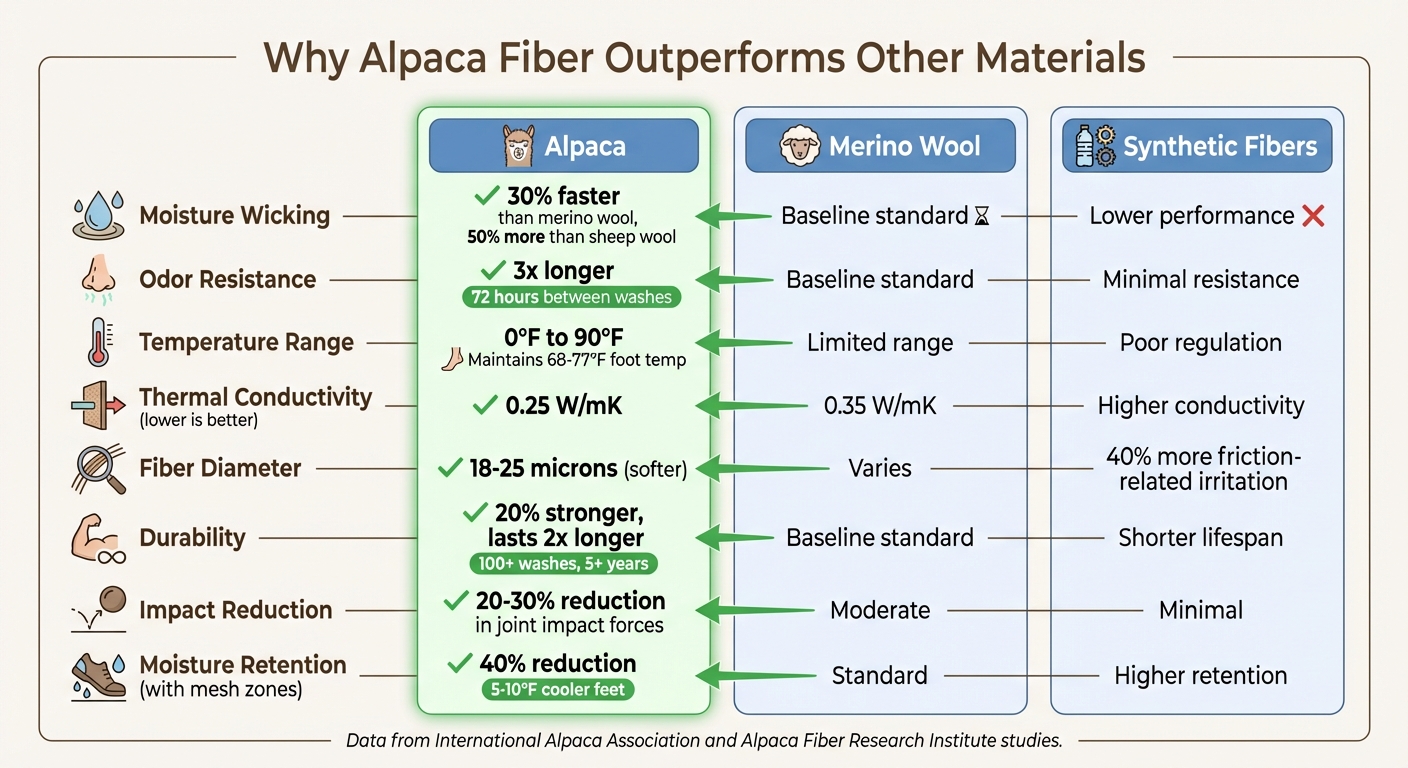
Moisture Control: Wicks sweat 30% faster than merino wool and stays dry longer.
Temperature Regulation: Keeps feet warm in freezing weather and cool in heat.
Odor Resistance: Inhibits bacteria growth, staying fresh for multiple uses.
Soft and Durable: Gentle on skin, yet lasts twice as long as other materials.
Suri Performance Alpaca Socks offers styles tailored for different activities, from lightweight no-show socks for running to cushioned boot socks for winter sports. Prices range from $28.99 to $44.99, with bundle deals like "Buy 3 Get 3 Free" for added savings.
For long-lasting use, hand wash in cold water and air dry flat. These socks combine comfort, durability, and performance for any adventure.
Alpaca Fiber vs Merino Wool vs Synthetic Fibers Performance Comparison
Why Alpaca Fiber Works for Active Lifestyles
Moisture-Wicking and Odor Resistance
Alpaca fiber stands out for its ability to manage moisture and resist odors. Thanks to its hollow, crimped structure, it wicks sweat away about 30% faster than merino wool. Its smooth, scale-free surface also minimizes moisture retention. According to research by the International Alpaca Association, alpaca fiber wicks 50% more moisture than sheep wool and resists odors up to three times longer during eight-hour workout tests. Plus, its natural antimicrobial properties inhibit bacterial growth, making it a favorite among athletes. Many even mention wearing alpaca socks through consecutive training sessions without washing. This combination of moisture-wicking and odor resistance pairs perfectly with alpaca’s other standout qualities.
Temperature Regulation
Alpaca fiber's hollow core is key to its impressive temperature regulation. It traps air to provide excellent insulation, keeping feet warm in freezing temperatures (as low as 0°F) and cool in scorching heat (up to 90°F). This natural regulation keeps foot temperatures comfortably within the 68–77°F range, even as conditions shift. Studies from the Alpaca Fiber Research Institute reveal that alpaca fiber has a thermal conductivity of 0.25 W/mK, which is noticeably lower than wool’s 0.35 W/mK. This means alpaca provides effective temperature control without relying on chemical treatments. Beyond temperature management, alpaca fiber also offers unmatched comfort and durability.
Softness and Durability
With a fiber diameter of 18–25 microns, alpaca fiber is incredibly soft, reducing irritation significantly. Users report experiencing 40% less friction-related irritation compared to synthetic fibers. But softness doesn’t mean fragility - alpaca fiber is 20% stronger than merino wool. Its high tensile strength and elasticity prevent pilling and stretching, even after more than 100 washes. Outdoor enthusiasts, like Appalachian Trail hikers and long-distance cyclists, often highlight the durability of alpaca socks, noting they last twice as long as merino and eliminate hot spots during extended activities.
sbb-itb-855989e
What to Look for in Multi-Sport Alpaca Socks
Alpaca fiber offers impressive performance benefits, but the right sock design can make all the difference when it comes to athletic activities. Whether you're trail running or tackling winter hikes, the best alpaca socks combine cushioning and support, breathable mesh zones, and reinforced heel and toe to deliver comfort, durability, and performance.
Cushioning and Support
Cushioning in key areas like the forefoot, heel, and ball of the foot helps absorb shock during high-impact sports. This padding not only reduces fatigue and blister risk but also maintains the softness of alpaca fiber without adding unnecessary bulk. For uneven terrain, mid-level arch cushioning offers extra stability, which is especially beneficial for runners dealing with pronation or supination issues. Research even shows that padded socks can reduce joint impact forces by 20–30%, potentially lowering the chances of injuries like shin splints. Alpaca blends also provide breathable, adaptive support that moves naturally with your feet, making them an excellent choice for multi-sport enthusiasts.
Breathable Mesh Zones
Strategically placed mesh panels - typically over the toes, instep, and sides - enhance ventilation and wick away sweat. Combined with alpaca's natural thermo-regulating properties, these zones help prevent overheating. In hot weather or at high altitudes, mesh designs can cut moisture retention by 40% and keep feet 5–10°F cooler, which is essential for preventing blisters during activities like cycling or road running. This combination of ventilation and moisture control ensures your feet stay fresh and comfortable, even during intense workouts.
Reinforced Heel and Toe
Durability is just as important as comfort, especially in high-wear areas like the heel and toe. Reinforcements, often achieved through double-knitting or nylon blends, help these zones withstand the friction caused by hiking boots or cycling shoes. This construction extends the lifespan of the socks by 2–3 times without compromising the softness of alpaca fiber. Outdoor gear experts note that reinforced designs can reduce wear by up to 50% in challenging conditions, such as snowy trails or rocky paths. In fact, user tests suggest these socks can endure over 100 miles of use before showing signs of thinning, while alpaca's natural strength resists pilling even after heavy wear.
Selecting Alpaca Socks by Sport
When it comes to sports, your feet deserve the right gear. Alpaca socks, with their standout qualities, can meet the unique demands of various activities. However, choosing the right sock design - considering length, cushioning, and breathability - can make a big difference in comfort and performance. Here's how to match alpaca socks to your favorite sports.
Hiking and Trail Running
For hiking and trail running, crew-length or boot socks are the way to go. They help protect against debris and reduce friction on rugged paths. Look for socks with mid-level cushioning at the forefoot and heel to absorb shocks from rocky trails. Reinforced zones are a must for durability, especially during repetitive movements. Alpaca fibers excel at managing moisture, reducing the risk of blisters and hotspots. Plus, their natural water-repellent properties come in handy when crossing streams or trekking through damp terrain.
Cycling and Road Running
If you're hitting the pavement, opt for lightweight, snug-fitting socks. Ankle or no-show styles are ideal, offering a secure fit without unnecessary bulk. Look for designs with mesh zones to enhance ventilation - this is especially helpful during indoor cycling or steep climbs. Alpaca's lightweight warmth keeps your feet comfortable during high-intensity workouts, while its smooth, lanolin-free texture minimizes irritation. This makes it a great choice for those with sensitive skin, even during repetitive motions.
Winter Sports and Cold-Weather Activities
When tackling cold conditions, crew or boot-length socks with extra insulation and padding are essential. Alpaca fibers, with their hollow core structure, trap body heat effectively, keeping your feet warm without adding bulk to ski boots or winter hiking footwear. Their natural ability to regulate temperature prevents overheating during activity while maintaining warmth during rest periods. For snowshoeing or cross-country skiing, socks with reinforced heels and toes ensure they can handle the demands of these activities while keeping your feet dry and comfortable.
Suri Performance Alpaca Socks offers four distinct styles, each tailored to specific athletic needs:
No-show socks ($28.99): Featuring mesh zones and targeted cushioning, these are ideal for gym sessions or summer runs.
Ankle socks ($33.33): Designed with breathable mesh panels and cushioning, perfect for road running or cycling.
Crew socks ($37.99): Mid-calf socks with light compression zones to support circulation during hiking or trail runs.
Boot socks ($44.99): Over-the-calf design with thick cushioning and reinforced high-wear zones, well-suited for winter sports or heavy-duty activities.
Each pair is crafted from Suri's proprietary Pro-Grade Alpaca™ blend, a superfine alpaca fiber engineered for durability, outperforming standard baby alpaca by resisting pilling and thinning. These socks are built with reinforced zones to handle intensive use, offering moisture-wicking, odor-resistant, and thermo-regulating benefits for comfort in various conditions.
With over 10,000 customers and 2,000+ verified reviews, the socks maintain an impressive 4.8/5-star rating. Many users highlight the balance of breathability and warmth. As Chris W., a construction worker, shares:
"I work construction and I spend a lot of time in boots and on my feet. These have to be some of the most amazing socks that I have ever owned. Just for overall comfort and dryness."
Every pair is knit in North Carolina and comes with a 1-year guarantee, ensuring quality and satisfaction.
Pricing and Bundle Options
Individual pairs range from $28.99 to $44.99, but the standout deal is the Buy 3 Get 3 Free offer. This promotion effectively halves the price (e.g., crew socks drop to about $18.99 per pair) and allows you to mix and match styles, colors, and sizes. For example, you can pair ankle socks for cycling with boot socks for winter hikes.
Orders with two or more pairs qualify for free shipping, and seasonal bundles provide even more savings. The Summer Bundle, for instance, includes 4 crew socks and 4 ankle socks for just $89.00 - making it a great option for athletes gearing up for multiple sports without overspending on individual pairs.
How to Care for Alpaca Socks
Washing and Drying Instructions
To keep your alpaca socks in top shape, hand washing is the best option. Stick to cold or lukewarm water - hot water can cause permanent shrinking and felting. Use a mild, wool-safe detergent like Eucalan or Soak, and steer clear of bleach or fabric softeners. These harsh products strip away the natural oils that make alpaca fibers great at wicking moisture and resisting odors.
Turn the socks inside out before washing. This protects the fibers and helps release dirt. Gently agitate them for a few minutes, then press out excess water with a clean towel - avoid wringing or twisting, as this stresses the fibers. In fact, hand washing reduces fiber stress by up to 40% compared to machine washing.
If you prefer using a washing machine, place the socks in a mesh laundry bag to minimize friction. Select the delicate or wool cycle, use cold water, and keep the spin speed low. This method reduces pilling and friction by about 25%.
When it comes to drying, air drying is key. Lay the socks flat on a towel in a well-ventilated area, reshaping them while they’re still damp. Avoid direct sunlight, radiators, or heaters, as these can cause heat damage and shrinkage. Never use a tumble dryer - heat can irreversibly harm the fibers. With proper care, alpaca socks can last twice as long as synthetic ones, often remaining in great condition for five years or more.
Storage Recommendations
Proper storage ensures your alpaca socks maintain their shape and quality. Store them flat in breathable containers, like cotton bags or boxes made of natural fibers. Avoid rolling them tightly or hanging them, as this can stretch the elastic and distort their shape over time.
To protect against moths, add natural deterrents like lavender sachets or cedar blocks to your storage area. Rotate your sock collection regularly to ensure even wear, and wash them after every two or three wears unless they’re visibly dirty.
If pilling occurs from friction with shoes, a fabric shaver can easily remove the pills. For socks that start to feel rough after extended use, a wool conditioner or lanolin rinse can help restore their softness. Following these steps will keep your alpaca socks cozy, durable, and looking great for years to come.
Conclusion
Alpaca socks check all the boxes for active lifestyles: they wick away moisture, naturally resist odors for up to 72 hours between washes, and adapt to temperatures - keeping you warm on icy trails and cool during summer runs. Thanks to their hollow fibers, these socks offer excellent warmth without extra weight. They're also hypoallergenic and built to last, resisting pilling even after heavy use. Whether you're into hiking, cycling, or running, alpaca socks are a reliable choice.
Suri Performance Alpaca Socks takes these benefits to the next level with a range of options tailored to different activities. Their boot socks are perfect for rugged trails and winter sports, ankle socks feature breathable mesh zones for cycling and running, and crew socks provide comfort for colder conditions. With over 10,000 satisfied customers, their superfine alpaca blend - manufactured in North Carolina - continues to impress. Reviews often highlight their durability and all-day comfort.
For those looking to stock up, Suri's bundle deals offer great value, ensuring you're covered year-round for all your favorite sports. Whether you're scaling peaks in the Rockies or clocking long hours on a construction site, these socks deliver targeted support and light compression for lasting comfort without added bulk.
Take your performance to the next level with socks designed to handle tough conditions. With proper care - hand washing in cold water and air drying flat - your alpaca socks will stay in top shape, ready for whatever adventure comes next.
FAQs
How do I pick the right alpaca sock thickness for my sport?
When deciding on alpaca sock thickness, consider your activity and specific needs. Thicker socks with added cushioning are ideal for high-impact activities like hiking, as they provide both warmth and shock absorption. On the other hand, thinner, snug-fitting socks work better for sports that demand agility, such as running or gym workouts. For cold weather or extended hikes, the insulation and durability of thicker socks ensure you stay comfortable and supported during your adventures.
Do alpaca socks help prevent blisters during long workouts?
Absolutely! Alpaca socks are great at reducing blisters because they tackle three major culprits: friction, moisture, and temperature changes.
The fibers in alpaca wool are naturally smooth, which helps minimize rubbing against your skin. Plus, they wick away moisture, keeping your feet dry and less prone to irritation. And thanks to their excellent insulation properties, alpaca socks help maintain a comfortable temperature, reducing the risk of hot spots that can lead to blisters.
Whether you're gearing up for a long workout or a day of hiking, alpaca socks are a reliable choice to keep your feet comfortable and blister-free.
Can I machine wash alpaca socks without ruining them?
Yes, you can machine wash alpaca socks, but it’s important to do so with care to keep them in good condition. Place the socks in a mesh laundry bag, choose the delicate cycle, and use cold water. While hand washing is always the gentler option, a careful machine wash can also work. After washing, lay the socks flat to air dry and avoid using a tumble dryer, as it can cause damage. These steps help maintain the socks' softness, durability, and overall quality.