"I liked saving money buying 4 pairs at a time and the socks are great for what I need. It's unbelievable how they could be made out of this material, yet they are so comfortable and they don't make my feet and legs itch nor do they make them hot or sweaty."
Rick S., Verified Customer
Ultimate Guide to Seasonal Trail Running Socks
Share
Most trail foot problems start with the wrong sock, not the wrong shoe. If I want fewer blisters, less grit in my shoes, and better comfort from summer heat to winter slush, I need to match my socks to temperature, moisture, terrain, and shoe fit.
Here’s the short version:
Above 60°F: I’d use lightweight socks with strong airflow.
40°F to 60°F: I’d use midweight socks for mixed weather.
Dry, dusty trails: I’d lean toward breathable socks with enough height to block grit.
Rocky or long runs: I’d use more cushioning.
Short, smooth runs: I’d use less cushioning.
Cotton is out. It holds moisture, and wet skin plus friction is a bad mix.
A few sock details matter more than people think. Socks should fit flat with no bunching. Height changes with trail debris. And even a small jump in thickness can change shoe fit enough to lead to numb toes or black toenails on descents.
Trail runners deal with a lot of foot stress. On long runs, feet can swell by up to about 8%, and moisture is one of the main drivers behind blister formation. That’s why the best sock is not just “warm” or “light.” It has to match the day’s conditions.
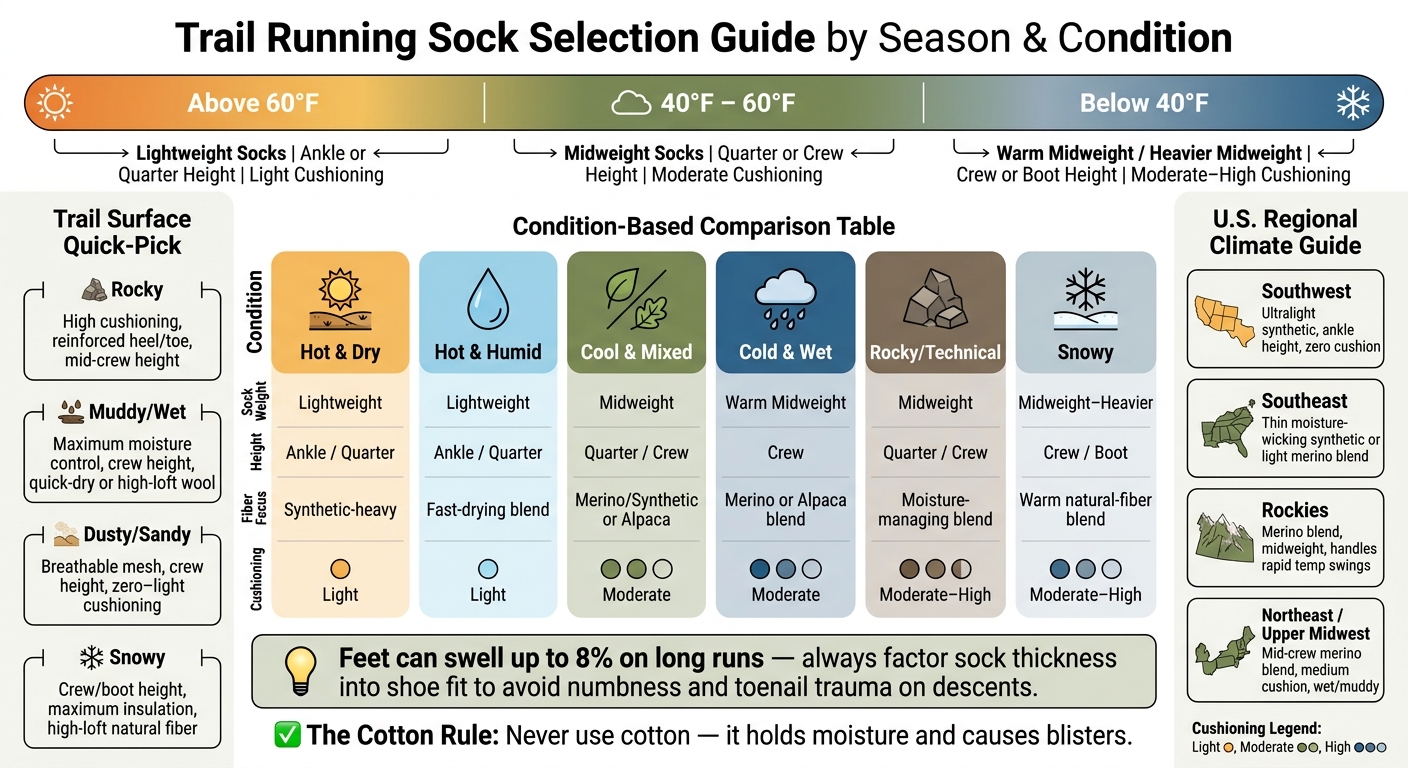
Trail Running Sock Selection Guide by Season & Condition
The Injinji Trail Midweight Crew | Toesocks For Trail Running & Hiking
Trail Running Sock Basics: Materials, Fit, and Performance Features
Materials That Handle Sweat, Heat, and Cold
Material affects almost everything: how a sock moves sweat, how fast it dries, how warm it feels, and how well it handles odor.
Merino wool is a go-to option because it helps regulate temperature, resists odor, and still performs when damp. Alpaca wool has many of those same strengths, but it feels softer and does a strong job of handling shifting temps. If your run starts cold and ends warm, or the weather turns halfway through, that can make a big difference. Suri Performance Alpaca Socks use alpaca fiber for moisture-wicking, odor-resistant, thermo-regulating comfort.
Synthetic blends like polyester, nylon, and CoolMax usually dry faster than natural fibers and hold their shape better over time. That makes them a good fit for river crossings or hot summer runs when fast drying matters most. A lot of trail socks mix synthetics with natural fibers, which gives you a bit of both. Cotton is the one to avoid here. It holds moisture and can lead to blisters.
Fit, Height, and Construction Details That Prevent Friction
After material, fit is what decides whether a sock stays put on uneven ground or turns into a problem. A good trail running sock should feel like a second skin once you're moving. If it's too big, it can bunch up. If it's too small, it can create pressure and limit circulation.
The sock should lie flat against your foot, with no twisting and no extra fabric around the toes. A contoured heel pocket helps keep it in place. Midfoot support bands can also help stop the sock from shifting when the trail gets rough.
Height matters too. Ankle socks work well in warm weather. Quarter and crew socks do a better job of blocking out grit on rocky, muddy, or dusty trails. If you've ever stopped mid-run to shake debris out of your shoe, you know why that matters.
Cushioning, Breathability, and Temperature Control on Technical Trails
Once fit is dialed in, cushioning should match the trail and the distance.
Minimal cushioning keeps you closer to the ground, which helps on well-kept trails where feel and foot placement matter. Moderate cushioning works for most training runs and mixed terrain. Maximum cushioning makes the most sense for ultras, rocky or technical trails, or minimalist shoes where the sock has to take on more impact.
Cushioning Level
Best Use Case
Key Benefit
Minimal
Short runs, groomed trails
Maximum ground feel
Moderate
Mixed terrain
Balanced protection and feel
Maximum
Ultras, rocky or technical terrain
Comfort over long distances
Breathability matters just as much. Mesh ventilation zones over the top of the foot and around the toe box help air move better during climbs and in hot, humid weather. Reinforced heel and toe areas help cut down on wear. Put those details together with the right fiber and cushioning, and you get a sock that helps keep your feet steady and comfortable from the first mile to the last.
How to Choose Socks for Spring, Summer, Fall, and Winter
The right trail sock comes down to three things: weight, height, and fiber. Those should match the conditions under your feet and in the air, especially moisture, temperature, and trail debris.
Spring and Summer: Handling Wet Trails, Heat, and Sweat
Spring trails in the U.S. are often wet, muddy, and all over the place. One day feels mild, the next feels sloppy and cold. A midweight merino-synthetic blend works well in that kind of mix because it manages moisture and handles shifting conditions without much fuss. For height, crew or quarter socks help keep out mud and grit.
Summer is a different story. Once the heat kicks in, go with ultralight or lightweight socks to keep heat buildup down and help your feet breathe. Mesh panels over the top of the foot are worth looking for, especially on long climbs where your shoes can start to feel like ovens. Ankle-height socks are a good fit for many summer runs, but quarter-crew still makes sense on brushy or rocky trails.
When the weather cools off, it usually makes sense to give up some airflow and put more focus on warmth and shoe fit.
Fall and Winter: Balancing Insulation, Dryness, and Shoe Fit
As temperatures drop, the goal shifts from maximum airflow to warmth, dryness, and fit control.
Fall running usually means cool mornings, leaves all over the trail, and weather that can turn fast. A midweight merino-synthetic blend fits that range well. Merino helps smooth out temperature swings on longer runs, which matters when the first mile feels chilly and the fifth feels fine. Crew height is a smart pick here because leaf litter can hide rocks and roots, and that extra bit of coverage helps.
Winter calls for more insulation, but this is where a lot of runners get it wrong: they go too thick. For most cold-weather running, a warm midweight or heavier midweight sock is enough. If the sock gets too bulky, it can tighten the shoe and hold in cold instead of helping with warmth. In cold and wet conditions, stick with cotton vs wool vs alpaca socks, and keep the fit snug, not squeezed.
Adjusting for U.S. Regional Climates
The season matters, but local weather can matter even more. A July run in Arizona and a July run in Florida are not the same problem.
Region
Conditions
Sock Priority
Southwest
Hot, dry, dusty trails
Ultralight synthetic, ankle height, zero cushion
Southeast
Humid, high sweat volume
Thin moisture-wicking synthetic or light merino blend
Rockies
Rapid temperature swings, altitude
Merino blend, midweight
Northeast/Upper Midwest
Cold, wet, muddy, brushy
Mid-crew merino blend, medium cushion
In the Southwest, ultralight socks help reduce heat buildup and leave room for your feet to swell on hot days. In the Southeast, thin synthetics that dry fast are a strong pick when sweat and humidity never seem to let up. In the Rockies, merino-blend socks do a good job in fast-changing mountain weather. And in the Northeast and Upper Midwest, crew-height socks add a bit more coverage against brush, mud, and trail debris.
Matching Sock Profiles to Trail Conditions and Seasonal Use
A Step-by-Step Framework for Picking the Right Sock
Once you’ve got the basics down, the next step is simple: match your socks to the season and the trail you’ll actually run.
A fast way to do that is to check four things:
Weight vs. temperature: heavy below 40°F, midweight from 40°F to 60°F, and lightweight above 60°F
Wet or dry trail: wet conditions lean toward quick-dry synthetics or high-loft wool that stays warm when damp; dry, dusty routes need breathable mesh
Cushioning level: more cushioning for long runs and technical terrain, less for short and fast efforts
Sock height: ankle keeps things cooler and lighter, while crew helps block debris on rough terrain
You can also use the season as a shortcut. Spring and fall usually work best with midweight blends. Summer points to lightweight, breathable socks. Winter calls for heavier insulation.
One tip that saves a lot of regret: do a 15-minute walk test with any new sock and trail shoe combo before a long run or race. That’s usually enough time to spot bunching, sliding, or pressure points before they turn into blisters.
Sock Setups for Rocky, Muddy, Dusty, and Snowy Trails
Season gets you close. Trail surface makes the final pick.
On rocky trails, cushioning matters most. Targeted padding in the heel and forefoot helps absorb impact and can cut down on nail trauma during steep descents.
On muddy and wet trails, moisture control is the main job. Quick-dry synthetics help if you want faster drying. High-loft alpaca or merino blends make more sense when warmth in damp conditions matters more.
On dusty and sandy trails, look for breathable mesh zones and a cuff tall enough to help keep grit out of the shoe. On snowy trails, go with crew or boot height to keep snow out, plus high-loft natural fibers for added warmth.
The same approach works when you build a sock rotation by height and season. Suri Performance Alpaca Socks lines up well with that setup across all four seasons.
Their No-Show and Ankle Socks fit hot, dry summer runs, when low weight and less heat buildup matter most. The Performance Crew Socks make sense through spring, summer, and fall. You get crew height for debris protection, targeted cushioning for rough ground, and alpaca’s natural temperature control for mixed conditions. For cold weather or rougher routes, the Boot Socks add more insulation and coverage.
Alpaca fiber pulls moisture away from the skin, helps fight odor, and manages temperature without the itchiness some runners connect with wool. That makes it a steady pick for shoulder-season runs and colder outings without changing fiber types.
A simple starting rotation looks like this:
two pairs of ankle socks for summer
two pairs of Performance Crew for spring and fall
one or two pairs of Boot Socks for winter and cold, technical runs
Conclusion: Matching Sock Weight, Material, and Height to the Season
Picking the right socks comes down to four things: temperature, moisture, terrain, and shoe fit.
Use lightweight socks for hot, humid runs. Go with midweight socks in cool shoulder seasons. Save heavier socks for subfreezing weather or high-altitude runs.
Sock weight sets your warmth level. Material affects how the sock deals with moisture. Skip cotton. Choose synthetics when dry time matters most. Reach for merino or alpaca blends when you want warmth, odor control, and comfort even when the fabric gets damp.
After that, match height and cushioning to the trail. Ankle socks work well on warm, clean trails. Crew or mid-crew socks help keep out grit and brush on rough ground. Cushioning should match the run too: less for short, fast efforts, and more for long, rocky outings.
One small detail matters more than people think: shoe fit. A thicker sock can change how your shoe feels. If the fit gets too tight, that extra bulk can lead to numbness or toenail trauma on descents.
Keep it simple. A basic rotation of light, midweight, and insulated socks will handle most seasonal trail runs.
FAQs
How many trail running sock types do I really need?
You don’t need some magic number of sock styles. What matters is picking socks that fit the weather, terrain, and trail conditions.
Suri Performance Alpaca Socks gives you a few solid options for different situations:
No-show socks for hot weather and low-cut shoes
Ankle socks for breathable summer runs
Crew socks for everyday all-terrain use
Boot socks for extra warmth and cushioning in cold weather
Match the sock to the conditions, and you’ll have a better shot at staying comfortable and helping prevent blisters.
Should I size my shoes differently for thicker socks?
Usually, no. If your shoes already fit the way they should, thicker socks can add too much pressure. That can lead to numbness, sore spots, or even toenail problems.
If you’re between sizes, sizing up might work - but only if your current fit has room for the extra bulk. The main goal is a snug, secure fit so your socks don’t bunch up, your foot doesn’t slide around, and friction stays under control.
How do I know if my socks are causing blisters?
Socks can cause blisters if they slip, bunch up, or press on certain areas during even a short walk or run. Hot spots and damp skin are early warning signs. When moisture gets trapped, the skin softens and friction goes up.
Fit matters too. Socks that are too loose, too tight, or made with thick seams can rub more than you’d expect, especially around the toes and heels. Moisture-wicking options like Suri Performance Alpaca Socks can help cut down on friction and keep your feet drier.