"I liked saving money buying 4 pairs at a time and the socks are great for what I need. It's unbelievable how they could be made out of this material, yet they are so comfortable and they don't make my feet and legs itch nor do they make them hot or sweaty."
Rick S., Verified Customer
Ultimate Guide to Daily Wear Alpaca Socks
Share
Yes - alpaca socks can work well for daily wear if you pick the right blend, fit, height, and cushion. For most people, the best daily pair has 50% to 70% alpaca plus 10% to 20% nylon or elastic, a close fit, and a weight that matches the shoe.
If I were choosing a pair for all-day use, I’d keep it simple:
For work boots: crew or boot socks with more cushion
For long shifts: look for reinforced heel and toe areas
For sensitive skin: alpaca is lanolin-free, which many people find easier to wear than sheep wool
For longer sock life: wash in cold or lukewarm water and air-dry flat
Alpaca stands out because it helps with moisture, odor, and temperature control better than cotton for many daily uses. But fiber alone is not enough. If the sock is too thick for the shoe, too loose at the heel, or washed with heat, the comfort drops fast.
A quick side-by-side helps:
Fiber
Moisture
Odor
Skin Feel
Best Use
Alpaca
Pulls moisture away and dries fast
Low odor buildup
Soft, lanolin-free
Daily wear, long hours, mixed weather
Cotton
Holds water and stays damp
More odor buildup
Soft
Short wear, light use
Standard wool
Handles moisture well
Good odor control
Can feel itchy for some
Cold weather, general wear
Bottom line: I’d choose alpaca socks for everyday use when I want dry feet, less odor, and all-day comfort - then match the sock to the shoe and wash it with care.
Why Alpaca Fiber Works for Everyday Socks
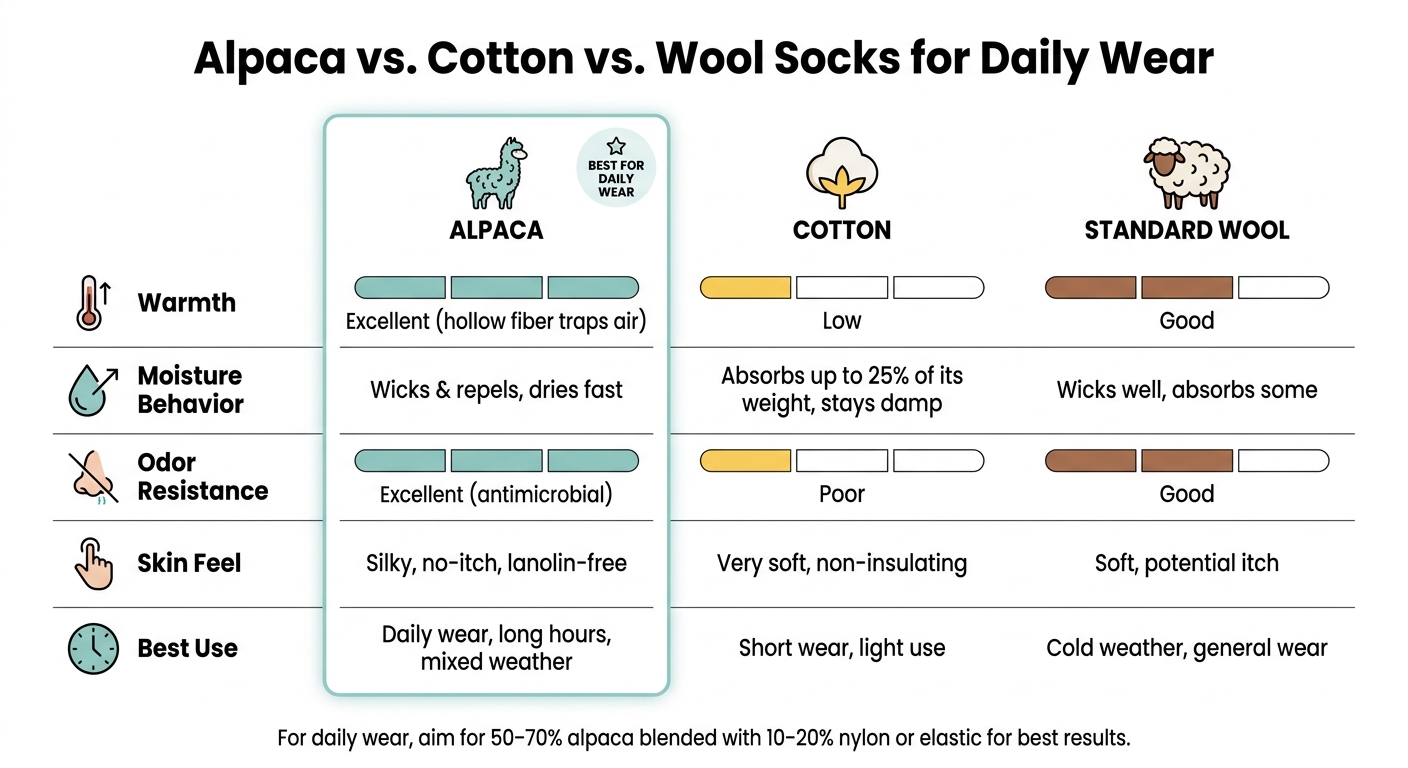
Alpaca vs. Cotton vs. Wool Socks: Daily Wear Comparison
Alpaca fiber has tiny air pockets that hold warmth when it’s cold and let heat escape when it’s warm. That means socks can feel warm without feeling bulky. And that matters more than it sounds like it would. If you’re wearing the same pair through a workday, commute, walk, or gym session, the fiber itself plays a big role in how your feet feel by the end of it.
Moisture, Temperature, and Odor Control
Alpaca behaves very differently from cotton. Instead of soaking up sweat and staying wet, it resists moisture and pulls sweat away from the skin, which helps it dry faster. That same trait also helps with odor. With less dampness sitting in the sock, odor-causing bacteria have less of what they need to grow. So your feet tend to feel drier and smell less through the day.
Comfort for Sensitive Skin and Long Hours
Lanolin-free alpaca is often easier on skin, especially if you’re wearing socks for long stretches. It also has a smoother surface than sheep wool, so there’s less rubbing against the skin. In plain terms: less friction can mean a lower chance of blisters during all-day wear.
For everyday socks, a blend usually works best:
Aim for 50% to 70% alpaca for daily wear
Add 10% to 20% nylon or elastic for stretch and stay-up support
Alpaca vs. Cotton vs. Standard Wool: A Side-by-Side Look
Feature
Alpaca
Cotton
Standard Wool
Warmth
Excellent - hollow fiber
Low
Good
Moisture Behavior
Wicks and repels; dries fast
Absorbs up to 25% of its weight in water and remains damp
Wicks well; absorbs some
Odor Retention
Excellent - antimicrobial
Poor
Good
Softness / Skin Feel
Silky; no-itch; no lanolin
Very soft; non-insulating
Soft; potential itch
Once you’ve got the fiber blend dialed in, fit and thickness decide how well those perks hold up in daily use.
sbb-itb-855989e
How to Pick the Right Fit, Height, and Cushion Level
Fit, height, and cushion shape how alpaca socks feel from morning to night.
Fit That Stays in Place Without Squeezing
A good alpaca sock should sit close to your foot without feeling tight. The heel should lie flat and stay put. The toe area should feel smooth, not bunched up. And the cuff should stay in place without leaving a deep mark on your leg.
When the size is off, problems show up fast. If the sock is too big, it can slide around inside your shoe, bunch up, hold moisture, and create friction. If it’s too small, the cuff can pinch, blood flow can suffer, and the compressed fibers won’t manage moisture or hold warmth as well.
Because alpaca has less stretch than wool, stretch fibers matter. They help the sock spring back into shape and stay in place during the day. Check the sizing chart closely. With alpaca, size matters more than many people expect. If the heel slips or the cuff keeps falling, go with a snugger fit or a blend with more stretch.
It also helps to test a new pair with the shoes you’ll wear most. A sock can feel perfect in your hand and still act very different once it’s inside a narrow dress shoe or a roomy work boot.
Once the fit is right, height and cushioning shape how the sock works with your footwear.
No-Show, Ankle, Crew, or Boot Height: Which to Choose
Height
Coverage
Ideal Shoe Type
Trade-offs
No-Show
Below ankle
Sneakers, loafers
Discreet look; less protection against heel friction
Good for active wear; less warmth on the lower leg
Crew
Mid-calf
Work boots, dress shoes, sneakers
Best all-around pick for daily wear; can feel warm in peak summer
Boot / Knee-High
Below the knee
Tall boots, winter boots
Most warmth and coverage; may need more room in the shoe
For many active professionals, crew height is the easiest all-around choice. It works well with boots, dress shoes, and sneakers, which makes it a safe pick if you want one sock for a lot of situations.
After height, cushion level fine-tunes comfort and how much space the sock takes up inside the shoe.
Light, Midweight, and Cushioned Builds Explained
Cushion should match both your shoes and your day. It affects comfort, warmth, and how much room you have inside the shoe.
Cushion Level
Best Use Case
Ideal Footwear
Lightweight
Warm weather, formal offices
Dress shoes, tight-fitting loafers
Midweight
All-day general use, most of the year
Sneakers, casual boots, work shoes
Cushioned
High-impact work, cold conditions, hiking
Work boots, hiking boots, winter footwear
Lightweight builds are thin and low-bulk. They work well in warm offices or more formal settings where extra thickness can make shoes feel cramped. Midweight builds give you enough padding for long days, errands, office time, and year-round wear without making your feet feel too warm. Cushioned builds have thicker soles for impact absorption and added insulation, which makes them a strong match for work boots, hiking boots, and cold-weather footwear.
Here’s the plain-English rule: always think about the space inside the shoe before you pick a cushion level. A cushioned sock inside a snug dress shoe can feel too tight and limit circulation. A lightweight sock inside a roomy work boot can move around and bunch up.
Matching Alpaca Socks to Your Shoes, Job, and Daily Routine
Once you’ve figured out fit and height, your shoes and your workday usually make the choice a lot easier. The best alpaca sock should match what you wear and what your day looks like.
Sock Builds for Dress Shoes, Sneakers, and Work Boots
Start with the pair of shoes you wear most often.
Dress shoes work best with a lightweight, thin-knit sock that has a smooth finish and a seamless toe. Anything thicker can add bulk and make the shoe feel tight.
Sneakers usually pair well with no-show or ankle socks that have ventilation zones and light to midweight cushioning. That combo keeps things more comfortable without feeling heavy.
Work boots need more support. A crew or boot-height sock with full cushioning and reinforced heel and toe zones does a better job handling friction and impact during a long shift.
Shoe Type
Recommended Height
Cushion Level
Dress Shoes
Crew
Lightweight
Sneakers
No-Show or Ankle
Light to Midweight
Work Boots
Boot or High Crew
Cushioned
Casual / Loafers
No-Show or Ankle
Midweight
What Active Professionals Should Look For
Once you know the right height and cushion level, the next step is your day-to-day routine.
Healthcare and retail workers often spend long hours standing on hard floors. That helps keep feet drier through long shifts. Non-binding cuffs matter too, since they can cut down on pressure marks during extended standing.
Tradespeople and job-site workers usually need one thing most: durability. Reinforced heel and toe zones help cut wear from constant friction inside work boots. A cushioned build can soften impact and add insulation in cold or changing conditions. Look for socks with at least 50–70% alpaca content blended with nylon or elastic for stretch and durability.
Office professionals with outdoor commutes or travel days often get the most out of alpaca’s odor resistance. If dress shoes are part of the routine, a lightweight sock with a thin profile is the better fit.
If you want a ready-made option for daily wear, one alpaca-focused line worth noting is Suri Performance Alpaca Socks. Suri Performance Alpaca Socks offers crew, boot, ankle, and no-show styles for daily wear, with moisture-wicking, odor-resistant, and thermo-regulating alpaca fiber.
Fit and job matter most, but care plays a big part in how well the socks hold their shape and performance over time.
Care and Durability: Making Alpaca Socks Last
How to Wash and Dry Alpaca Socks Without Damaging Them
Once you’ve picked the right fit and construction, care is what decides how long alpaca socks keep doing their job.
The big thing to avoid is heat. Hot water can felt alpaca fibers and shrink socks beyond recovery. Use cold or lukewarm water with a mild wool detergent instead. If you use a washing machine, place the socks in a mesh laundry bag to cut down on friction and pilling, and run a gentle cycle. Hand washing works too.
Turn the socks inside out before washing so the outer surface stays in better shape, and skip bleach and fabric softener.
After washing, don’t wring or twist them. That’s where damage can sneak in. Press the socks between two clean towels to pull out extra water, reshape them while they’re still damp, and let them air-dry flat away from direct heat and sunlight. Never put alpaca socks in a tumble dryer. Hand washing reduces fiber stress by up to 40% compared to standard machine cycles.
What Actually Affects How Long Socks Last
Washing matters, but it’s not the whole story. How often you wear the socks, what kind of shoes you pair them with, and how the socks are built all play a part.
Stretch fibers help socks bounce back after repeated wear and washing. Reinforced heel and toe zones help slow wear in the spots that usually break down first.
A couple of simple habits can also make a big difference:
Keep the inside of your shoes smooth and clean to cut down on friction.
Rotate between several pairs instead of wearing the same pair on back-to-back days. That gives the fibers time to recover their shape and elasticity.
Conclusion: Balancing Performance, Fit, and Care in Daily Wear Alpaca Socks
Alpaca socks earn a spot in a daily lineup because they manage moisture well, resist odor naturally, and stay comfortable through long hours on your feet. But good results don’t come from fiber alone.
You need the right sock height and cushion level for your shoes and your routine. It also helps to choose a build with reinforced zones and a durable fiber blend that matches how hard your day is on your feet.
For daily wear, the best outcome usually comes from three things working together: the right blend, shoes that don’t create much friction, and careful washing. Cold washing, flat drying, and regular rotation help alpaca socks stay comfortable for longer.
FAQs
Are alpaca socks too warm for summer?
No. Alpaca socks work well all year.
Their hollow-core fiber helps with temperature control. On top of that, their moisture-wicking and breathable feel helps keep your feet dry and comfortable in warm weather.
Suri Performance Alpaca Socks are made with these thermo-regulating features for all-season wear.
How many pairs of alpaca socks should I rotate?
Rotate between a few pairs instead of wearing the same pair two days in a row. That short break gives the fibers time to bounce back, helps limit wear from rubbing, and can also mean less washing.
Alpaca is naturally odor-resistant, so you can usually wear a pair more than once. Still, it helps to air them out between uses. That keeps their shape, supports performance, and helps them last longer.
What should I do if my alpaca socks keep slipping?
Slipping usually means the fit is off. Check the brand’s size chart closely, since the right size helps keep the sock in place without bunching or sliding.
If your socks keep sagging or slipping as you move, you likely need to go down a size. They should hug your foot gently, with no loose fabric.