"I liked saving money buying 4 pairs at a time and the socks are great for what I need. It's unbelievable how they could be made out of this material, yet they are so comfortable and they don't make my feet and legs itch nor do they make them hot or sweaty."
Rick S., Verified Customer
How Moisture-Wicking Socks Prevent Odor at Work
Share
Moisture-wicking socks are a game-changer for anyone dealing with sweaty, odor-prone feet during long workdays. Unlike cotton socks, which hold moisture and create a breeding ground for bacteria, these socks pull sweat away from your skin and allow it to evaporate. This keeps your feet dry, reduces odor, and lowers the risk of blisters and infections like athlete's foot.
Key points:
How they work: Moisture-wicking fabrics use advanced fibers (e.g., Merino wool, polyester, and bamboo) to draw moisture to the sock's outer layer for quick evaporation.
Health benefits: Dry feet mean fewer bacteria, less odor, and reduced risk of friction-related issues like blisters.
Materials: Options include hydrophobic synthetics like polyester, absorbent Merino wool, and bamboo, which also have antibacterial properties.
Care tips: Avoid fabric softeners to maintain the sock's moisture-wicking performance.
For professionals like nurses, construction workers, and teachers, these socks offer better comfort and hygiene throughout long shifts. Premium options, like Suri Performance Alpaca Socks, combine moisture-wicking, odor control, and durability, making them a reliable choice for demanding work environments.
Best Work Socks for Hot Sweaty Feet Stay Cool and Comfy #WorkSocks #StayDry
sbb-itb-855989e
How Moisture-Wicking Technology Works
Vanessa Cromwell from Custom Sock Shop describes moisture-wicking fabric as:
Think of moisture-wicking fabric as a high-tech plumbing system for sweat. Instead of acting like a sponge... it functions more like a network of microscopic straws.
This clever "plumbing system" is what keeps moisture-wicking socks performing throughout your day.
These socks work in two key ways: they draw sweat away from your skin and speed up evaporation. Many high-performance socks use a dual-layer design. The inner layer pulls moisture off your skin, while the outer layer spreads it across a larger surface, helping it evaporate more quickly.
The Moisture-Wicking Process
The process kicks in as soon as you start to sweat. Through capillary action, moisture is drawn from your skin to the fabric's outer layer. By spreading the sweat over a wide surface, the fabric encourages rapid evaporation, keeping your feet dry and comfortable. This efficient moisture management also reduces bacterial growth, which helps prevent unpleasant odors.
However, for moisture-wicking socks to work their best, your shoes need to be breathable. Without proper ventilation, the evaporated sweat has nowhere to escape, limiting the effectiveness of even the best socks. This is why many performance socks incorporate features like mesh zones or ventilation panels to boost airflow and regulate temperature.
The materials used in these socks play a big role in how effectively they wick moisture.
Materials That Wick Moisture
Different materials achieve moisture-wicking in unique ways. For example, Merino wool absorbs a small amount of moisture into its fibers while wicking the rest through the fabric's openings. This keeps the surface of the yarn dry to the touch. Impressively, Merino wool can absorb up to a third of its weight in moisture without feeling heavy or damp. Its natural antibacterial qualities also help control odor.
Synthetic fibers like polyester and nylon, on the other hand, are hydrophobic, meaning they repel water. They transfer moisture to the fabric's surface for quick evaporation. Polyester, for instance, holds just 0.4% of its weight in moisture, making it incredibly efficient at staying dry. Bamboo fibers add another option, offering softness, natural absorbency, and antibacterial and antifungal properties.
Many performance moisture-wicking socks combine these materials with elastic fibers like Lycra or spandex. This blend ensures a snug fit while maintaining consistent wicking performance throughout the day. These material choices also help combat the bacteria responsible for lingering odors.
A quick tip: Avoid using fabric softeners and dryer sheets when washing moisture-wicking socks. These products leave a residue that clogs the fabric's microscopic channels, reducing its ability to transfer moisture effectively.
The Connection Between Sweat and Odor
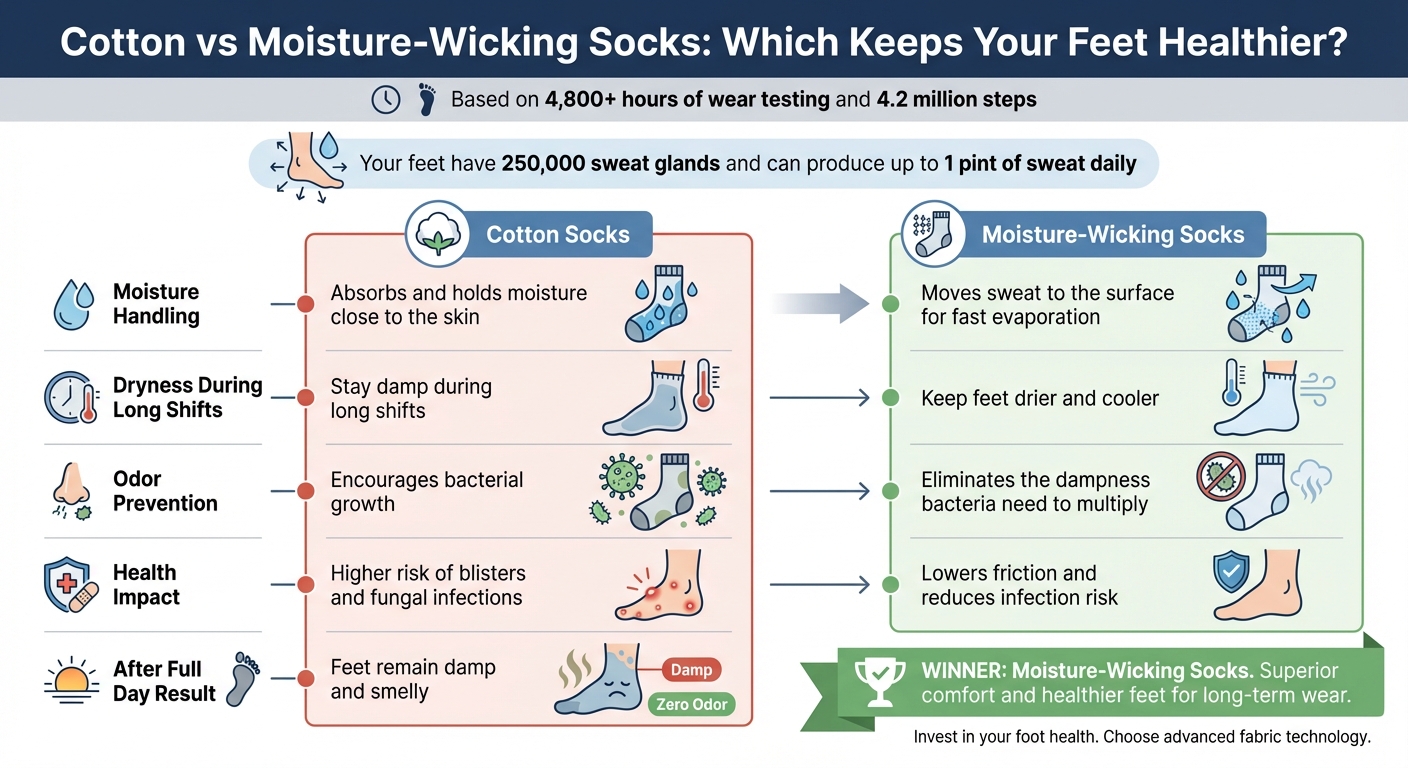
Cotton vs Moisture-Wicking Socks: Performance Comparison
Let’s dig into something you might not expect: sweat itself doesn’t smell. Surprising, right? According to Dr. Motion:
Your feet don't smell because of heat-induced sweating. They stink because of bacteria.
So, where does odor come from? It’s the result of moisture meeting bacteria. Your feet, home to around 250,000 sweat glands, can produce up to a pint of sweat daily. During long hours in shoes, all that sweat creates a damp, warm environment - basically a paradise for bacteria. As these bacteria break down sweat molecules, they release those unpleasant smells we all dread.
This is where moisture-wicking socks come into play. By pulling sweat away from your skin and helping it evaporate quickly, they eliminate the dampness that bacteria need to thrive. No moisture means no bacteria growth, and that means no bad odors.
How Sweat Creates Odor
Here’s how it works: sweat builds up, bacteria multiply in the damp environment, and as they feed, they produce smelly compounds. Closed shoes make things worse by limiting airflow, which keeps your feet damp longer and accelerates odor production.
But it’s not just about the smell. Persistent dampness can also lead to issues like athlete’s foot and other skin conditions that make your day less comfortable. This is why performance alpaca socks are a game-changer - they help keep your feet dry and healthy, unlike cotton socks, which tend to hold onto moisture.
Moisture-Wicking Socks vs. Cotton Socks
The difference between cotton and moisture-wicking socks is crystal clear when you look at how they handle moisture and odor. Testers spent over 4,800 hours wearing socks and clocked 4.2 million steps to compare the two fabrics.
Feature
Cotton Socks
Moisture-Wicking Socks
Moisture Handling
Absorbs and holds moisture close to the skin
Moves sweat to the surface for fast evaporation
Dryness
Stay damp during long shifts
Keep feet drier and cooler
Odor Prevention
Encourages bacterial growth
Eliminates the dampness bacteria need to multiply
Health Impact
Higher risk of blisters and fungal infections
Lowers friction and reduces infection risk
Cotton socks absorb sweat and hold onto it, creating the perfect conditions for bacteria. On the other hand, moisture-wicking socks actively move sweat away from your feet, allowing it to evaporate. This key difference is why wearers of moisture-wicking socks reported "zero odor" after a full day, while cotton socks left feet damp and smelly.
Benefits of Moisture-Wicking Socks at Work
Moisture-wicking socks offer practical advantages that make long workdays more manageable.
Staying Dry and Comfortable All Day
When you're on your feet for hours, keeping dry is non-negotiable. These socks use hydrophobic fibers to pull sweat away from your skin to the sock's outer layer, where it evaporates quickly. Materials like merino wool can absorb up to a third of their weight in moisture without feeling heavy, helping regulate temperature effectively.
Dry feet also mean less friction, which is crucial for avoiding blisters. Features like mesh ventilation, arch support, and light compression add extra comfort and reduce fatigue during extended shifts.
Preventing Odor and Maintaining Hygiene
Dry feet don’t just feel better - they smell better too. Moisture-wicking socks create an environment that’s less inviting for bacteria, helping to prevent odor. Many options also include antimicrobial agents like silver ions, copper, or zinc oxide to actively combat bacteria. Natural fibers like merino wool and bamboo add another layer of odor resistance without relying on synthetic treatments. As Dale Manuel explains:
Merino wool is also naturally antibacterial, which helps prevent foot odor caused by bacteria growth on the skin's surface.
This natural odor control keeps your feet fresh throughout long shifts, so you’re less likely to worry about unpleasant smells when you take off your shoes. Plus, by keeping your feet dry, these socks reduce the risk of fungal infections like athlete’s foot. This combination of comfort and hygiene ensures your feet stay healthier over time.
Durability and Long-Term Performance
Moisture-wicking socks are built to last. By reducing bacterial buildup, they help preserve the fabric’s quality and extend the sock’s lifespan. As Microban points out:
Antimicrobial sock protection helps preserve fabric quality by preventing premature degradation due to microbial build-up.
This technology also combats persistent odors, a common issue with regular socks. Since they stay fresher longer, moisture-wicking socks often require less frequent washing, which minimizes wear and tear from the laundry cycle. For workers who depend on reliable gear, this durability offers great value over time.
Suri Performance Alpaca Socks are designed to handle demanding workdays with ease, thanks to their Pro-Grade Alpaca™ fiber. This advanced material provides exceptional durability and comfort, making it a great choice for workers who need reliable performance during long shifts. Unlike standard alpaca socks made with Baby Alpaca fiber, which can pill over time, Suri's Pro-Grade construction is specifically engineered to maintain its shape and withstand pressure throughout the day.
Moisture-Wicking and Odor Control
Effective moisture management is crucial for keeping feet dry and odor-free, and Suri socks excel in this area. Their alpaca blend wicks moisture three times more effectively than cotton or wool. The fibers feature microscopic air pockets that help regulate temperature, allowing feet to stay comfortable even in temperatures as high as 100°F. This rapid moisture transfer also limits bacterial growth, reducing odors and ensuring long-lasting freshness.
These socks are built to endure tough conditions, with reinforced heels and toes, targeted cushioning, and breathable mesh zones that can handle 14-hour shifts and high-friction environments. Construction worker Chris W. shared his experience:
I work construction and I spend a lot of time in boots and on my feet. These have to be some of the most amazing socks that I have ever owned. Just for overall comfort and dryness.
With a 4.74/5 star rating from 212 reviews and a customer base of over 10,000, Suri socks consistently meet the expectations of their users.
Styles and Pricing
Suri offers four distinct styles to suit various needs:
No-Show Socks ($28.99): Perfect for low-profile footwear.
Ankle Socks ($34.99): Designed with breathable mesh zones for casual or athletic use.
Performance Crew Socks ($44.99): Mid-calf coverage with light compression, ideal for everyday work shoes or light boots.
Field Boot Socks ($46.99): Over-the-calf fit with dense cushioning, ideal for cold weather and heavy-duty boots.
To make these premium socks more affordable, Suri offers bundle deals. The Buy 3 Get 3 Free promotion lowers the price to about $21.50 per pair, while the Buy 2 Get 2 Free deal reduces the cost of Performance Crew Socks to $22.49 per pair. Additionally, every pair comes with a 1-Year Ironclad Guarantee - if your socks wear out within a year, they’ll be replaced at no cost. Proudly knit in North Carolina, USA, these socks combine top-notch American craftsmanship with practical features.
Conclusion
Moisture-wicking socks work by pulling sweat away from your skin and onto the fabric’s outer surface, where it evaporates quickly. This process creates a dry environment that helps prevent odor-causing bacteria from thriving. By keeping your feet dry, especially during long workdays, these socks can reduce the chances of discomfort, blisters, and even fungal infections.
Natural fibers like alpaca, merino wool, and bamboo are especially effective at combating odors, thanks to their ability to resist bacteria naturally. For those who spend hours on their feet, Suri Performance Alpaca Socks offer a dependable choice. Made with Pro-Grade Alpaca™ fiber, these socks are designed to wick away moisture, keep your feet dry, and stay fresh longer due to their antimicrobial properties. Plus, they’re built to last, making them a durable option for everyday wear.
Suri Performance Alpaca Socks cater to various needs, with styles ranging from No-Show Socks priced at $28.99 to Boot Socks at $44.99. For even greater value, their Buy 3 Get 3 Free bundle significantly lowers the cost per pair, making high-quality performance socks more affordable.
Ultimately, these socks provide more than just comfort - they support better foot health and help you stay dry, comfortable, and focused, even during the most demanding work shifts.
FAQs
What makes moisture-wicking socks better than regular cotton socks?
Moisture-wicking socks are crafted to draw sweat away from your skin, allowing it to evaporate quickly. This keeps your feet dry, comfortable, and feeling fresh all day. On the other hand, regular cotton socks tend to soak up moisture and hold onto it, often leading to dampness, discomfort, and unwanted odors.
By keeping your feet dry, these socks do more than just control odor - they also lower the chances of blisters and irritation. This makes them a great choice for long workdays, outdoor adventures, or any activity where staying comfortable and focused matters.
What are the best materials for keeping feet dry and odor-free?
The best materials for keeping your feet dry and odor-free are those with moisture-wicking and odor-resistant qualities. One standout option is alpaca fiber. It offers excellent moisture control, natural antimicrobial properties, and long-lasting durability. Unlike cotton, which holds onto moisture, or wool, which can sometimes feel a bit heavy, alpaca fiber works to keep your feet dry, comfortable, and fresh all day long.
This makes alpaca socks an ideal choice for long workdays, outdoor activities, or any situation where staying comfortable and odor-free matters.
Do moisture-wicking socks help reduce the risk of foot infections?
Moisture-wicking socks are essential for reducing the likelihood of foot infections. These socks work by pulling sweat away from your skin, keeping your feet dry and less inviting for bacteria and fungi to thrive. This simple feature can go a long way in preventing conditions like athlete's foot and other common infections.
If you’re someone who spends extended periods on your feet or enjoys outdoor activities, moisture-wicking socks - such as those made from alpaca fibers - offer a great way to maintain both foot health and comfort all day long.