"I liked saving money buying 4 pairs at a time and the socks are great for what I need. It's unbelievable how they could be made out of this material, yet they are so comfortable and they don't make my feet and legs itch nor do they make them hot or sweaty."
Rick S., Verified Customer
Moisture Control in Alpaca Socks: How It Works
Share
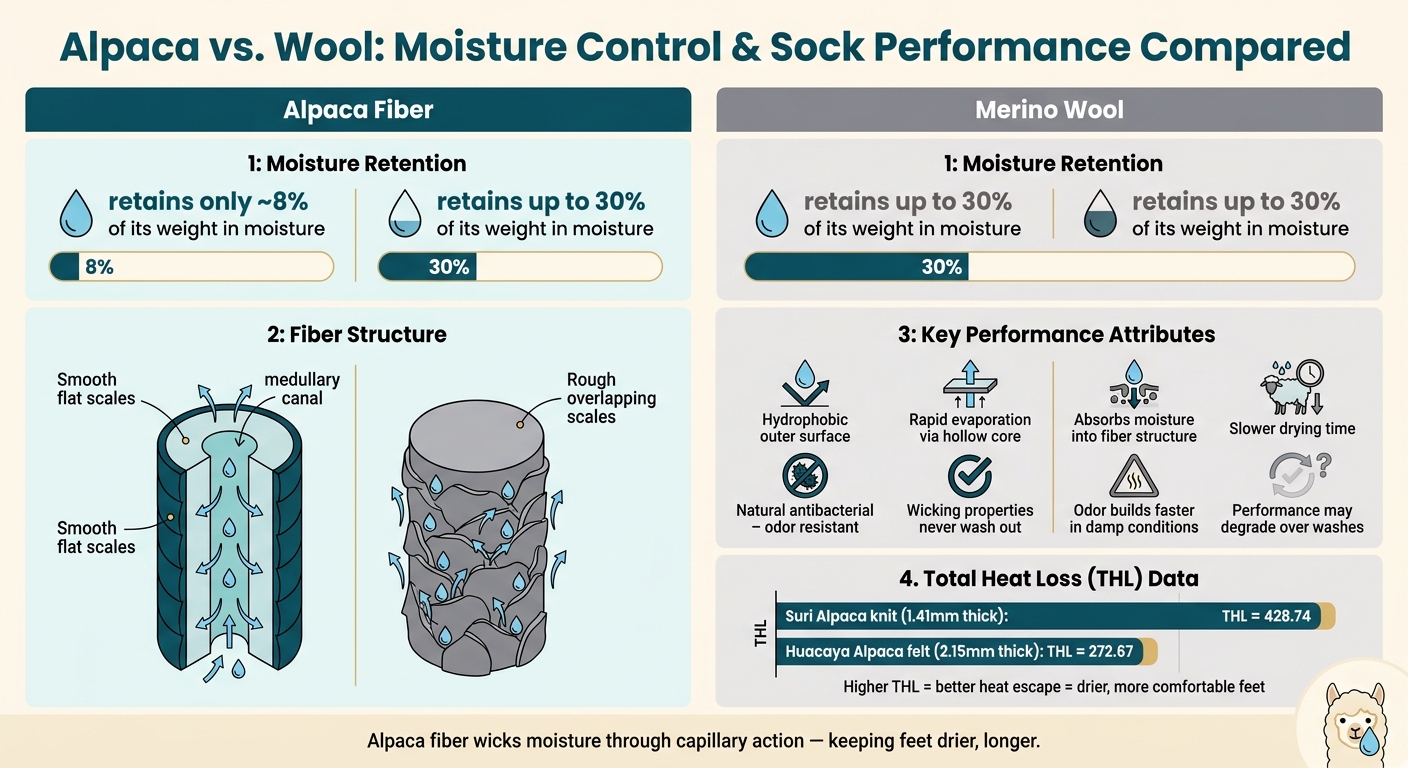
Alpaca socks excel at keeping your feet dry and comfortable by wicking moisture away from your skin and allowing it to evaporate quickly. Unlike materials like cotton or wool, alpaca fibers feature a semi-hollow core that efficiently moves sweat to the sock's surface, where it dries fast. These fibers retain only about 8% of their weight in moisture, compared to wool's 30%, making them a superior choice for moisture management.
Key benefits include:
Moisture-wicking: The hollow core structure moves sweat away from your skin.
Quick drying: Hydrophobic properties prevent water absorption, aiding evaporation.
Comfort in all conditions: Lightweight and breathable for warmth or activity, even in extreme heat.
For optimal performance, choose socks with 60–70% alpaca fiber, reinforced designs, and proper fit. Pair them with breathable footwear to enhance evaporation. Proper care, like washing with mild detergent and air-drying, ensures long-lasting performance.
Alpaca socks are perfect for hiking, running, working long hours, or staying warm in cold weather - keeping your feet dry, blister-free, and odor-free all day.
How Alpaca Fiber Controls Moisture
Alpaca vs. Wool: Moisture Control & Sock Performance Compared
The Semi-Hollow Fiber Core
Alpaca fibers have a fascinating structure - a semi-hollow medullary canal that serves multiple purposes. This canal not only channels moisture but also traps air, which boosts insulation. The result? Socks that are lightweight, maintain their shape, and transport moisture efficiently. This unique structure is the foundation of alpaca fiber's moisture-wicking capabilities.
How Alpaca Fiber Repels and Wicks Moisture
One of alpaca fiber's standout features is its hydrophobic outer surface, which naturally resists water absorption. Meanwhile, the hollow core works like a moisture transport system. Through capillary action, it pulls sweat away from your skin and directs it to the sock's outer surface, where it can evaporate into the air.
As ALPACORE explains:
"Alpaca fiber wicks moisture through its unique hollow core structure that creates capillary channels, pulling sweat away from skin via capillary action and releasing it to air for evaporation."
Another advantage of alpaca fiber is its smoother, flatter scales compared to sheep's wool. This microscopic difference allows moisture to glide along the fiber's surface instead of getting trapped, ensuring a quicker drying process.
How Moisture Evaporates Through the Fabric
Once moisture is transported to the sock's outer surface, the final step is evaporation. This process not only removes moisture but also cools the fabric through evaporative cooling. Even during intense activities like hiking or long workdays, alpaca socks remain breathable and comfortable.
Chris Mccue of ClassicAlpaca highlights this efficiency:
"Because alpaca fibers do not soak up water into their internal structure, there is very little moisture to remove. Once the activity stops, the air circulating through the hollow fibers facilitates rapid evaporation."
The result is a sock that stays dry and comfortable all day long, without the damp, sticky sensation that comes from moisture lingering against your skin.
sbb-itb-855989e
Design Features That Improve Moisture Control
Alpaca fiber's natural structure is already great at handling moisture, but the way a sock is designed - through its fiber mix, knit pattern, and thickness - determines how well that quality performs in everyday use.
Fiber Blends and Synthetic Additions
Mixing alpaca fiber with synthetic materials improves performance in practical ways. For example, nylon boosts durability and helps the socks hold their shape, while spandex ensures a snug fit that prevents bunching - a common cause of trapped moisture. Alpaca fiber itself retains only about 8–11% moisture by weight, compared to up to 30% in merino wool and cotton. Adding synthetics like nylon or polyester enhances this resistance to moisture absorption. The trick is balance: socks with at least 60–70% alpaca content ensure the hollow-core wicking mechanism of the fiber remains effective.
"Alpaca's moisture-wicking is inherent to the fiber structure and doesn't degrade with washing. The natural properties persist throughout the sock's lifespan." - ALPACORE
Once the fiber blend is optimized, the sock's knit structure takes moisture management to the next level.
Mesh Panels and Knit Patterns
The design of the sock itself can amplify alpaca fiber's natural moisture-wicking properties. For instance, mesh ventilation zones - often placed across the top of the foot or instep - improve airflow and help moisture evaporate more quickly.
Knit density also plays a key role. A tighter weave provides extra insulation, while a looser knit allows heat and moisture to escape, which is especially helpful during intense activities. As ALPACORE explains:
"Knit density affects breathability and insulation. Quality construction balances these properties for optimal temperature regulation."
Strategically designed knit patterns also enhance the hollow-core structure of alpaca fibers, creating efficient pathways for moisture to move from your skin to the sock's surface. Combined with the right materials, these knit features pave the way for cushioning designs that further improve moisture control.
Cushioning and Sock Thickness
Sock weight and cushioning are the final pieces of the puzzle for managing moisture. Lightweight socks promote airflow and speed up evaporation, making them ideal for running, gym workouts, or warm-weather hikes. Midweight socks strike a balance between warmth and moisture control, making them perfect for three-season use. On the other hand, heavyweight socks are designed for insulation, prioritizing warmth in extreme cold or during low-activity situations where quick evaporation isn't as critical.
Laboratory tests back this up: thinner suri alpaca knits (1.41 mm) achieved a Total Heat Loss (THL) of 428.74, while thicker huacaya felt (2.15 mm) had a much lower THL of 272.67. A higher THL means better heat escape, which helps keep you dry and comfortable during physical exertion.
Sock Weight
Best For
Moisture Priority
Lightweight
Running, gym, warm weather
Maximum breathability and rapid evaporation
Midweight
Three-season hiking, daily wear
Balanced wicking and warmth
Heavyweight
Extreme cold, low-activity use
Insulation over rapid evaporation
Another advantage of alpaca fiber is its ability to maintain moisture-wicking properties even when compressed, such as inside tight boots. This is particularly useful for long hikes or extended work shifts, as the hollow-core structure continues to perform under pressure - something many synthetic fibers struggle with.
At Suri Performance Alpaca Socks, we combine these features - carefully chosen fiber blends, smartly placed mesh panels, and expertly designed cushioning - to deliver dependable moisture control for any adventure.
How to Choose Alpaca Socks for Moisture Control
When selecting alpaca socks for moisture control, it's important to match the style, material, and fit to your specific activities and environment. Here's how to make the best choice.
Matching Sock Style to Activity
Different activities call for different sock features. For hiking and trekking, opt for mid-to-heavyweight crew socks. These provide ankle protection and cushioning to absorb impact during long walks or climbs. If you're into trail running or gym workouts, lightweight ankle or low-crew socks are ideal. They reduce bulk and encourage airflow, keeping your feet cool and dry during intense activity.
For those working long shifts in boots, typically lasting 10–14 hours, a midweight crew or boot sock with excellent wicking properties is essential. This helps manage the dampness that builds up in enclosed footwear. In cold weather, a heavyweight knee-high sock provides warmth without unnecessary bulk, thanks to alpaca's insulating properties.
Here’s a quick guide to help you choose:
Activity
Recommended Weight
Recommended Height
Key Features
Hiking/Trekking
Mid to Heavyweight
Crew or Knee-high
Cushioned soles, seamless toes, reinforced heels
Running/Trail
Lightweight
Ankle or Low-crew
Breathable blend, snug fit
Work/Boots
Midweight
Crew or Boot
High wicking capacity, odor resistance
Cold Weather
Heavyweight
Knee-high
Maximum insulation, high alpaca content
Casual Wear
Lightweight
Any
Softness, light moisture management
For a wide selection of styles like crew, boot, ankle, and no-show socks, check out Suri Performance Alpaca Socks. Whatever your activity, there’s a style designed to meet your needs.
While the style is important, the material and design details are equally critical.
What to Look for in Fiber Content and Design
To get the best moisture-wicking performance, choose socks with 60–70% alpaca fiber. This ensures the material retains its natural ability to manage moisture effectively. A small percentage of nylon or spandex adds elasticity, helping the socks maintain their shape without sacrificing performance.
Pay attention to construction details as well. Seamless toes reduce friction and prevent moisture buildup in high-pressure areas. Reinforced heels add durability, especially for long-distance wear. Features like mesh ventilation panels and optimal knit density further enhance moisture movement, keeping your feet dry.
However, even the best socks can’t do their job if your footwear isn’t breathable. Ensure your shoes allow evaporated moisture to escape for the socks to perform effectively.
Once you've nailed down the material and design, focus on getting the right fit.
Getting the Right Fit
A well-fitting sock is key to maximizing moisture control. Socks that are too tight compress the fibers, reducing their ability to wick moisture. On the other hand, loose socks can bunch up, creating friction points and reducing effectiveness.
Always check the brand's size chart before buying. If possible, try the socks on with the shoes you’ll be wearing. For low-cut styles, silicone heel grips can prevent sliding and bunching during activity. If you have wide feet or high arches, look for socks with stretch zones designed to accommodate these needs.
How to Care for Alpaca Socks to Keep Them Performing
Alpaca socks are loved for their natural moisture-wicking ability, which comes from the unique structure of the fibers themselves. Unlike synthetic socks treated with chemicals, this feature doesn't wash out over time. However, improper care can clog those fiber channels with oils, salts, and debris, reducing their effectiveness.
Washing and Drying Instructions
To keep your alpaca socks in top condition, wash them on a gentle or wool-specific cold water cycle using a mild detergent. Always turn the socks inside out to minimize wear and tear during washing. The golden rule? Avoid fabric softeners and dryer sheets at all costs. These products coat the fibers with a waxy layer, blocking the moisture-wicking channels.
After washing, gently press out excess water - don’t wring or twist them. Lay the socks flat to air-dry, keeping them away from direct heat or sunlight to avoid shrinkage and fiber damage.
Rotating and Storing Your Socks
Once cleaned, it’s important to let your socks rest. Avoid wearing the same pair two days in a row. Allowing at least 24 hours between wears gives the fibers time to fully dry and regain their shape, ensuring their moisture-wicking system stays functional. Thanks to their natural antimicrobial properties, alpaca socks can often be worn multiple times if they’re aired out properly between uses.
For storage, choose a clean, dry, and breathable container. This keeps the socks fresh and protects them from moths or other damage.
When to Replace Your Socks
Even with excellent care, alpaca socks won’t last forever. Typically, they remain in good condition for 3 to 5 years. Here’s how to tell when it’s time to replace them:
Sign of Decline
What It Means
What to Do
Sagging or loss of shape
A poor fit reduces moisture-wicking performance
Replace to ensure proper contact
Continued dampness
Fiber channels may be permanently blocked
Try a deep clean; replace if needed
Thinning or holes
Moisture pathways are compromised
Repair small holes; replace if severe
Fiber stiffness
Likely buildup from fabric softener
Wash without softener; replace if ineffective
If your socks feel perpetually damp or "swampy" even after cleaning, it’s a clear sign the fibers are no longer functioning properly. Unfortunately, no amount of washing will bring them back to life, and it’s time to invest in a new pair. Consider upgrading to performance crew socks for your next pair to ensure long-lasting comfort.
Conclusion: All-Day Comfort with Alpaca Socks
Alpaca socks stand out thanks to their semi-hollow fiber structure. This unique feature helps wick sweat away from your skin through capillary action, leaving only about 8% moisture by weight. For comparison, merino wool can hold up to 30% moisture. The result? Your feet feel lighter and stay drier during any activity.
But it’s not just about staying dry - it’s about the benefits that come with it. Dry feet mean less friction, which lowers the chance of blisters during long hikes or runs. Plus, bacteria that cause odors thrive in damp conditions, and alpaca socks deny them that environment. That’s why these socks stay fresh longer, without needing chemical treatments. Proper care and thoughtful choices can maximize their performance and lifespan.
When picking alpaca socks, go for ones with a high alpaca fiber content - 60–70% or more is ideal. Pair them with breathable shoes to help moisture evaporate completely. A snug but comfortable fit ensures the hollow fibers can do their job without being compressed, maintaining their moisture-wicking and insulating properties.
For a dependable option, Suri Performance Alpaca Socks offers a full range of alpaca socks including crew, boot, ankle, and no-show styles. Designed for active lifestyles, these socks provide moisture control, odor resistance, and temperature regulation for all-day comfort, whether you’re hiking, working, or just going about your day.
FAQs
Do alpaca socks still wick well if your boots aren’t breathable?
Alpaca socks are great at managing moisture, even when paired with non-breathable boots. Thanks to the hollow-core structure of alpaca fibers, sweat is pulled away from your skin through capillary action, keeping your feet dry. While breathable boots help sweat evaporate faster, alpaca fibers don’t easily get saturated. This means your feet stay dry and comfortable, even in less ventilated conditions. Suri Performance Alpaca Socks are specifically designed to enhance these moisture-wicking qualities, ensuring all-day comfort.
Can alpaca socks keep feet dry if you sweat a lot?
Alpaca socks are great for keeping feet dry, even if you're sweating heavily. The secret lies in their hollow-core fibers, which naturally pull moisture away from your skin through capillary action. This process moves sweat to the surface, where it evaporates quickly. Plus, alpaca fibers only absorb about 8–11% of their weight in moisture, meaning they stay lightweight and avoid that unpleasant clammy feeling. Whether you're hiking, working, or enjoying outdoor adventures, these socks help keep your feet comfortable.
How can you tell if alpaca socks have lost their moisture control?
If your alpaca socks no longer keep your feet dry and start feeling persistently damp or clammy, it’s a sign they’ve lost their moisture-wicking ability. This happens when the fibers' hollow core structure, which helps pull moisture away from your skin, becomes damaged. You might notice your feet feeling heavy or overly saturated, along with more friction or hot spots during wear.
To keep your alpaca socks performing well, steer clear of fabric softeners, bleach, and high-heat drying. These can weaken the fibers and reduce their effectiveness over time.