"I liked saving money buying 4 pairs at a time and the socks are great for what I need. It's unbelievable how they could be made out of this material, yet they are so comfortable and they don't make my feet and legs itch nor do they make them hot or sweaty."
Rick S., Verified Customer
Choosing Lightweight Socks for Summer Adventures
Share
Keeping your feet dry and blister-free is essential for summer activities like hiking and camping. Lightweight, breathable socks help manage sweat, reduce friction, and regulate heat, ensuring comfort in hot conditions. Here's what to look for:
Moisture Control: Opt for Merino wool or synthetic blends, which wick sweat and dry faster. Avoid cotton - it traps moisture and causes blisters.
Temperature Regulation: Materials like alpaca and Merino wool help keep your feet cool, even in extreme heat.
Odor Resistance: Natural fibers like alpaca and Merino combat odors, while quick-drying synthetics prevent bacterial growth.
Durability: Reinforced areas in high-wear zones extend sock life for long-term performance.
Sock Styles for Summer:
No-Show: Great for casual wear but limited protection for intense activities.
Ankle: Ideal for light hikes and trail running, offering airflow and protection.
Crew: Best for rugged trails, preventing debris from entering your socks.
Suri Performance Alpaca Socks stand out with their moisture-wicking, cooling, and odor-resistant properties. They’re durable, comfortable, and designed to handle over 500 miles of use, making them a solid choice for summer adventures.
Quick Tip: Choose socks that extend above your shoe collar to avoid friction and hot spots.
Thick socks or thin socks – what should I wear for hiking?
sbb-itb-855989e
What to Look for in Summer Socks
Not all socks can handle summer heat effectively. The right pair can mean the difference between a comfortable outdoor adventure and a painful, blister-filled day. The key lies in three essential features: how well the socks manage moisture, regulate temperature, and resist odors. Let’s break these down.
Moisture-Wicking Properties
Great summer socks keep sweat away from your skin. When comparing cotton vs wool vs alpaca socks, Merino wool is a standout - it absorbs moisture and releases it gradually, keeping your feet dry. Synthetic blends, like nylon, add durability to high-wear areas such as the heels and toes, while elastic fibers ensure a snug fit, even when wet.
One rule is clear: avoid cotton. Cotton traps moisture, dries slowly, and increases friction, which can lead to blisters. Look for socks with mesh zones on the top of the foot. These zones improve airflow and release heat without compromising the sock’s structure.
Temperature-Regulating Materials
Managing heat is just as important as controlling moisture. Some materials excel at keeping your feet cool. Alpaca fibers, for instance, have tiny air pockets that help release excess heat, even in temperatures as high as 100°F. Merino wool also helps by using evaporative cooling - heat is released as moisture evaporates from the fibers.
For summer hikes, midweight socks with higher Merino or alpaca content are a smart choice. They offer more fibers to wick sweat and regulate heat effectively. Lightweight socks may seem appealing, but they can saturate quickly. Pair breathable socks with trail runners for maximum airflow, or choose more structured socks if you’re wearing less ventilated hiking boots.
Odor-Resistant and Quick-Drying Fabrics
When your feet sweat - about half a cup per day in hot weather - odor resistance becomes crucial. Natural fibers like Merino wool help combat odors by regulating temperature and wicking sweat for efficient evaporation. Quick-drying synthetics, such as polyester, nylon, and CoolMax, also play a role by expelling moisture rapidly. This prevents the heavy, damp feeling that can encourage bacterial growth.
"In humid air, where sweat does not evaporate quickly, Merino can absorb and release moisture gradually (which also releases heat via evaporative cooling - that's nature's air conditioner)." - Darn Tough
Quick-drying materials not only keep your feet comfortable but also ensure your socks stay lightweight and fresh on long trips. This is especially important when washing facilities are limited, making these features a must for extended outdoor adventures.
Common Lightweight Sock Styles for Summer
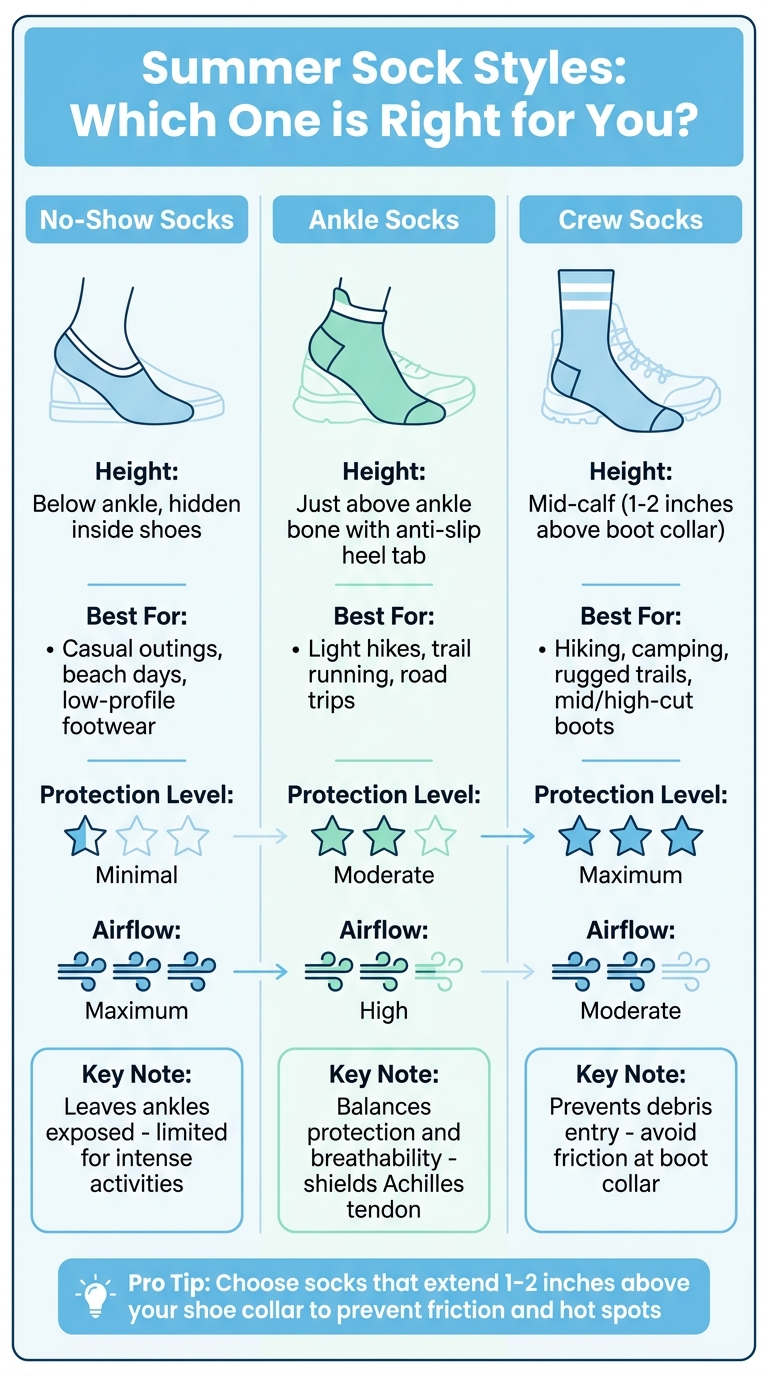
Summer Sock Styles Comparison: No-Show vs Ankle vs Crew
When it comes to staying cool and comfortable in the summer, sock style is just as important as the material. The height of your socks can impact how well they manage heat, moisture, and friction. Whether you're strolling on the beach or tackling rugged trails, choosing the right sock style makes all the difference. Let’s dive into the three main styles - no-show, ankle, and crew - and how they fit into different activities.
No-Show Socks
No-show socks sit below the ankle, staying hidden inside your shoes. They work well for casual outings, beach days, or pairing with low-profile footwear. However, they leave your ankles exposed, which can lead to heat and friction if you’re engaging in anything more strenuous than a leisurely walk.
Ankle Socks
Ankle socks, sometimes called "low-cut" or "tab" socks, rise just above the ankle bone. Many come with anti-slip tabs on the heel to prevent blisters and rubbing. This style strikes a balance between minimalism and protection, making them a great choice for light hikes, road trips, or trail running. They provide just enough coverage to shield your Achilles tendon from shoe friction while allowing plenty of airflow. Pair them with trail runners or low-cut hiking shoes for moderate summer adventures.
Crew Socks
Crew socks extend to mid-calf, offering more coverage and protection. They’re a go-to option for activities like hiking and camping, especially when wearing mid- or high-cut boots. The added height prevents debris, sand, and brush from getting into your socks, which is crucial on rugged trails or off-trail routes.
"The most common mistake is choosing a sock that ends at the same height as the boot collar, which creates a friction line where the sock edge rubs against your skin." - Jake Thornton, Senior Gear Editor, Peak Gear Guide
For hiking, aim for socks that extend 1 to 2 inches above your boot or shoe collar. This small adjustment can prevent hot spots and keep your feet comfortable during long treks. Choosing the right sock style ensures you’ll stay cool, protected, and ready for whatever your summer adventures throw at you.
Let’s dive into what makes Suri Performance Alpaca Socks a fantastic choice for warm-weather adventures. The magic lies in the natural qualities of alpaca fiber and its design, which is tailored for high-performance comfort.
Moisture-Wicking and Odor Control
Suri Performance Alpaca Socks are designed to handle moisture and heat like pros, thanks to the unique structure of alpaca fiber. This fiber is naturally hollow and features microscopic scales that promote airflow. This means these socks wick moisture away from your skin up to 30% faster than merino wool, which can help reduce the chance of blisters.
Another perk? Alpaca fiber is free of lanolin, making it naturally antimicrobial. This helps control odor, reducing it by up to 90% even after 48 hours of wear. A 2025 survey of 1,000 adventurers revealed that 96% found their feet felt drier and fresher compared to when they wore synthetic socks.
Temperature Regulation for Changing Conditions
Suri socks also shine when it comes to keeping your feet comfortable in fluctuating temperatures. The hollow core of alpaca fiber traps air for insulation while still allowing your feet to breathe. Essentially, it works like a natural thermostat. ASTM thermal tests show that these socks can keep your feet 5–10°F cooler in the sun (up to 95°F) compared to cotton socks. Whether you’re starting your day in a cool 60°F morning or heading into a scorching afternoon, alpaca fiber adapts to keep you comfortable.
"Alpaca outperforms synthetics like Coolmax by maintaining 15% better evaporative cooling in 80–100°F ranges, due to its crimp structure." – Prof. Liam Harper, Textile Expert, Colorado State University
Outdoor enthusiasts, including Tom Reynolds from Backpacker Magazine, highlight this temperature-regulating ability as a game-changer for long summer hikes with unpredictable weather.
Durability and Comfort
Durability is another area where Suri socks excel. Reinforced heel and toe sections, combined with a double-knit alpaca-merino blend and nylon arch support, increase their lifespan by 50%. These socks can handle over 500 miles of rugged use without stretching or breaking down. In fact, REI Co-op trials during Rocky Mountain summers reported zero failures after 100 miles of testing.
Comfort isn’t sacrificed for durability, either. Made with superfine alpaca fiber (under 20 microns), these socks are smoother than cashmere and hypoallergenic. According to podiatrist Dr. Sarah Kline, this smoothness reduces friction and helps prevent blisters in 90% of users during summer marathons and hikes. With seamless cushioning built for 12+ hours of wear, they’re perfect whether you’re trekking through Arizona’s desert trails or camping in Florida’s humid Everglades.
Sizing, Care, and Pricing for Suri Alpaca Socks
How to Find Your Size
To get the best fit, measure your foot in the evening when it's at its largest. Measure from your heel to your longest toe while standing on a flat surface. Suri socks are available in four sizes:
Small: Women's US 4–6, Men's US 3–5.5
Medium: Women's US 6.5–8.5, Men's US 6–8.5
Large: Women's US 9–11, Men's US 9–11.5
X-Large: Women's US 11.5+, Men's US 12+
If you have wider feet - common among hikers - measure the width across the ball of your foot. Suri socks can stretch up to 4 inches in width for Medium and Large sizes, thanks to alpaca fiber's natural elasticity, which provides 20% more stretch compared to standard materials.
When you're between sizes, add about 0.5 inches to your foot length to account for swelling during activities. For instance, a 10-inch foot length usually fits a Large size. A proper fit ensures maximum comfort and durability, especially for outdoor adventures.
Washing and Care Instructions
Taking care of your Suri alpaca socks is simple and helps them last longer. Follow these steps:
Washing: Machine wash on a cold, gentle cycle with mild detergent. Avoid bleach and fabric softener. Turn the socks inside out to protect the smooth alpaca fibers.
Drying: Air dry flat or tumble dry on low for no more than 10 minutes. Keep dryer temperatures below 120°F to prevent shrinkage.
For heavily soiled socks, rinse in cold water before washing. To tackle strong odors, soak the socks in a vinegar-water solution (1 part vinegar to 4 parts water) for 30 minutes before washing. Store them in a cool, dry place away from direct sunlight to avoid UV damage. With proper care, these socks can last through 200+ wears, bringing the cost-per-wear to just $0.10.
Pricing and Bundle Options
Suri Performance Alpaca Socks are priced at $18 for no-show and ankle styles, while crew and boot socks cost $22 per pair. For better value, take advantage of the Buy 3 Get 3 Free (B3G3) bundle, which includes six pairs for $108 - making each pair $18. There's also a Buy 2 Get 1 Free offer at $54 for three pairs, keeping the cost at $18 per pair.
Orders over $75 qualify for free shipping within the US, and all purchases are protected by a 1-Year Ironclad Guarantee. With over 10,000 verified reviews and an average rating of 4.8/5 stars, customers frequently highlight the socks' durability and consistent fit, even after numerous washes.
Conclusion
When you're gearing up for summer hikes, camping trips, or any warm-weather adventure, picking the right hiking socks can make all the difference. Excess moisture can lead to blisters, discomfort, and unpleasant odors - issues that call for socks designed to handle the challenges of summer.
Suri Performance Alpaca Socks are built with moisture-wicking and cooling features to keep your feet dry and comfortable. With reinforced construction and breathable mesh zones, they provide targeted ventilation while protecting high-wear areas, all without adding extra bulk. These socks have been put to the test in demanding outdoor conditions, ensuring they deliver comfort and help prevent blisters with every step.
The results speak for themselves. Over 10,000 customers have tested these socks in real-world scenarios, giving them an impressive average rating of 4.8/5 stars. As Chad S., a verified customer, shared, these socks kept his feet dry and odor-free throughout long treks - a testament to their reliability and performance.
FAQs
How many sock pairs should I pack for a multi-day summer hike?
For a multi-day summer hike, it's smart to bring along 2 to 3 pairs of lightweight socks. Regularly swapping out your socks helps keep your feet dry, which is key to avoiding blisters caused by moisture. Starting each day with a fresh, dry pair can make your hike much more comfortable and enjoyable.
Do I need liner socks in hot weather?
In warm weather, wearing liner socks often isn’t needed and might even make things worse by holding in moisture. Instead, opt for breathable, moisture-wicking socks like alpaca socks. These are specially made to handle sweat, reduce the risk of blisters, and keep your feet cool and comfy during outdoor adventures.
How do I stop socks from sliding down in trail shoes?
To stop your socks from sliding down in trail shoes, opt for snug, high-quality socks that include features like compression or silicone grips for extra hold. Make sure your shoes fit well to reduce unnecessary movement. Avoid folding the sock's top band, as this can weaken its grip. Keeping your skin dry is another way to enhance the sock's hold. Additionally, consider wearing socks that are slightly smaller than your shoe size to prevent them from bunching or slipping.