"I liked saving money buying 4 pairs at a time and the socks are great for what I need. It's unbelievable how they could be made out of this material, yet they are so comfortable and they don't make my feet and legs itch nor do they make them hot or sweaty."
Rick S., Verified Customer
Ultimate Guide to Hunting Layers and Socks
Share
I plan hunting layers around movement, moisture, and time spent sitting - not temperature alone. My starting rule: hike slightly cool, add insulation when I stop, and pack at least 1 pair of dry socks.
Here’s my checklist:
Clothing: Wear a merino or synthetic base layer, a breathable mid-layer, insulation for stops, and a shell for wind or rain.
Socks and boots: Match ultra-dense boot socks to boot space. I want room to wiggle my toes, not extra bulk that squeezes my feet.
Weather and pace: Carry more warmth for long sits. An 800-gram boot insulation rating isn’t a temperature guarantee.
Foot care: Keep spare socks dry, treat rubbing early, and dry boots between hunts.
Safety: <u>I stop the hunt for persistent numbness, poor coordination, or uncontrolled shivering</u> and seek shelter and medical help if I suspect cold injury.
Before a remote hunt, I test the whole setup on a short outing.
Treating it as insulation; ignoring ventilation and fabric noise
Start with a close-fitting base layer that moves with you without binding when you shoulder a firearm or draw a bow. Merino resists odor and stays warm when damp. Synthetics dry faster after sweaty climbs.
For hiking and stalking in cool weather, use fleece, grid fleece, or lightweight wool. Grid fleece has channels that help moisture escape during climbs. Match the warmth to your pace, and save heavier insulation for stops.
Down packs small and provides plenty of warmth for its weight, but it loses much of its insulating ability when wet. Synthetic insulation holds more warmth when damp and usually dries faster. Keep either type in a dry, protected compartment until you stop to glass or settle into a blind or tree stand.
A shell blocks weather; it doesn't replace insulation. Choose a water-resistant softshell for light moisture and a waterproof shell for steady rain or snow. Look for vents and enough room to fit over your insulation without flattening it or restricting movement. In dry bowhunting conditions, brushed softshells and fleece help reduce fabric noise.
Adjust your layers before heavy sweating starts. Open your collar or shell vents, shed extra warmth, or slow your pace. Keep your stationary insulation within reach so you can put it on as soon as your effort drops.
The same approach applies inside your boots. Once your upper layers are sorted, foot moisture can become the next limiting factor. Avoiding torso overheating helps reduce sweat buildup in your socks, where boots make moisture harder to release. Follow the same rules next to your feet: manage moisture while moving, then add warmth at stops.
Match Hunting Socks to Your Boots
Sock Fibers, Cushioning, and Liners
Choose the knit, cushioning, and fiber blend - not just the fiber name. Cushion placement, knit thickness, and room inside your boots matter as much as the material. For multi-day hunts, look for socks that can dry overnight.
Cool hunts and extended trips where odor control matters
Alpaca blend
Wicks moisture, resists odor, and helps regulate temperature
Drying depends on fiber content and thickness
Performance depends on knit, cushioning, and fit
Crew or boot lengths when cuff height and volume match your boots
Synthetic blend
Moves moisture away from skin
Generally dries fast; useful when drying time is short
Can add durable reinforcement without heavy cushioning
Active hikes and early-season hunts
Use a thin liner only if it leaves enough room for your toes, and make sure it extends above the boot cuff.
For fast hikes, choose thinner socks that dry faster. For long sits, more loft can help - but only if your boots still fit correctly.
Boot Fit, Insulation, and Cold Ground
Try on boots with the socks you plan to wear and your normal lacing. Your toes should wiggle freely, with no pressure across the top of your foot, while your heel stays secure.
Warmth comes from loft and boot space, not bulk. Socks that crowd your boots compress the insulating air space and can restrict circulation. Damp socks also increase heat loss when you stop moving. Your sock-and-boot fit needs to work for both hiking and sitting, as well as the weather you'll face.
Choose boot weather protection for wet brush, snow, mud, and crossings. No sock fiber can make up for water getting into your boots.
200-gram or 800-gram insulation ratings aren't temperature guarantees. As with clothing layers, boot warmth depends on movement, moisture, and ground temperature. Cold ground and metal tree-stand platforms draw heat through the soles.
Suri Performance Alpaca Crew and Boot Socks
Suri Performance Alpaca Socks offers crew and boot styles for hunters who want moisture management and odor control. Match the sock height, cushioning, and size to your boots, then test the pair before your hunt.
With socks and boots fitted together, the next step is matching the rest of your clothing system to your pace, the weather, and the time you'll spend moving or sitting still.
Plan Layers for Activity and Weather
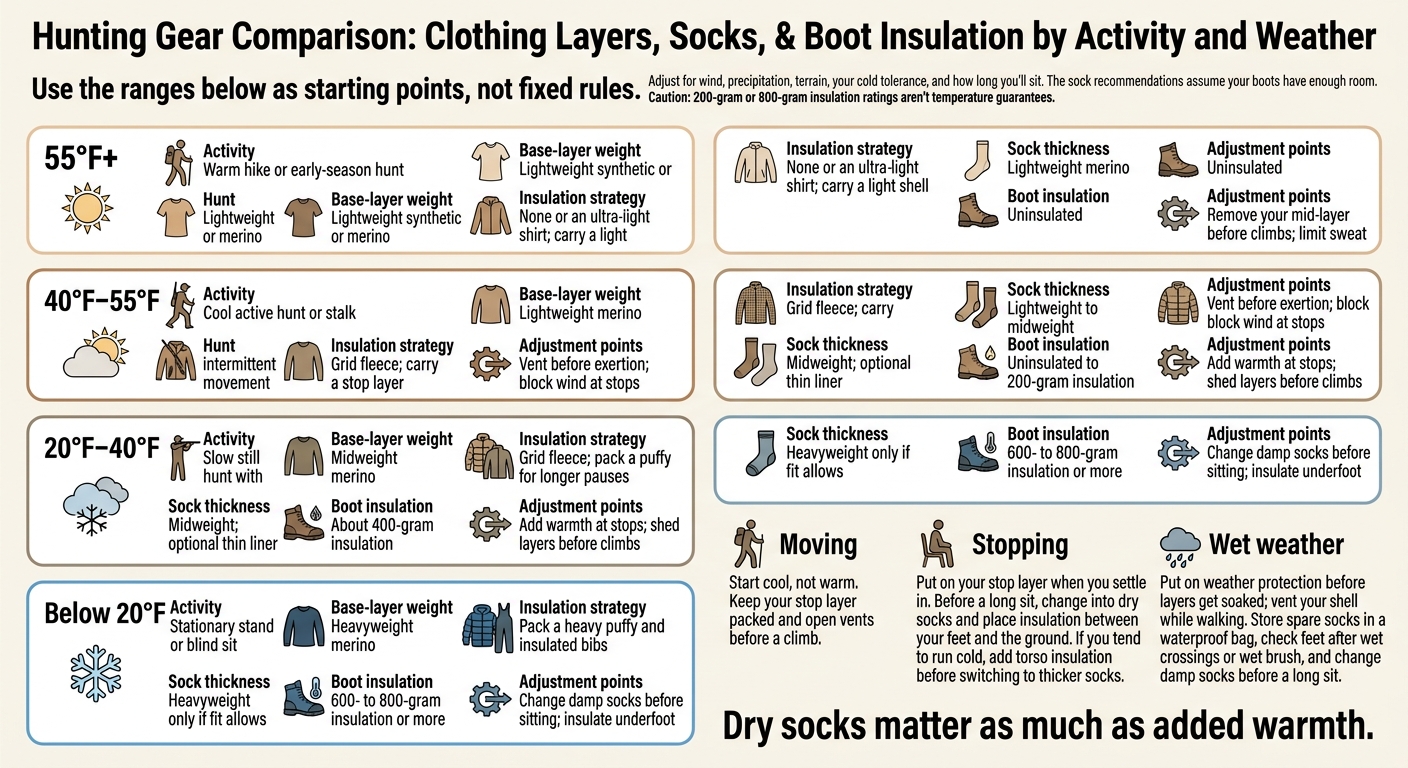
Hunting Layers and Socks by Activity and Weather
Once your socks and boots fit correctly, choose the rest of your layers based on your pace and the weather.
Use the ranges below as starting points, not fixed rules. Adjust for wind, precipitation, terrain, your cold tolerance, and how long you’ll sit. The sock recommendations assume your boots have enough room.
Illustrative °F range
Activity
Base-layer weight
Insulation strategy
Sock thickness
Boot insulation
Adjustment points
55°F+
Warm hike or early-season hunt
Lightweight synthetic or merino
None or an ultra-light shirt; carry a light shell
Lightweight merino
Uninsulated
Remove your mid-layer before climbs; limit sweat
40°F–55°F
Cool active hunt or stalk
Lightweight merino
Grid fleece; carry a stop layer
Lightweight to midweight
Uninsulated to 200-gram insulation
Vent before exertion; block wind at stops
20°F–40°F
Slow still hunt with intermittent movement
Midweight merino
Grid fleece; pack a puffy for longer pauses
Midweight; optional thin liner
About 400-gram insulation
Add warmth at stops; shed layers before climbs
Below 20°F
Stationary stand or blind sit
Heavyweight merino
Pack a heavy puffy and insulated bibs
Heavyweight only if fit allows
600- to 800-gram insulation or more
Change damp socks before sitting; insulate underfoot
Warm Hikes and Cool Active Hunts
Start cool, not warm. Wear layers that manage moisture, leave your stop layer in your pack, and open vents before a climb.
Cold Still Hunts and Stationary Sits
Keep your stop layer packed during the approach, then put it on when you settle in. Before a long sit, change into dry socks and place insulation between your feet and the ground. If you tend to run cold, add torso insulation before switching to thicker socks.
Rain, Snow, and Temperature Swings
Put on weather protection before your layers get soaked, then vent your shell as you walk. Store spare socks in a waterproof bag. Check your feet after wet crossings or walking through wet brush, and change damp socks before a long sit.
Treat venting, shell use, and sock dryness as parts of the same system. Wet feet increase friction and the risk of blisters and cold injury, so dry socks matter as much as added warmth.
Prevent Blisters and Handle Wet or Cold Feet
Even the right layers can fail when friction or moisture builds up inside your boots.
Protect Hot Spots and Change Damp Socks
Damp socks and loose boots increase friction. Stop at the first sign of rubbing. Remove your boot and sock, cover the hot spot with a blister dressing, and switch to dry socks as soon as yours get damp.
Don't double up on socks to fix the fit. Inside snug boots, extra thickness can compress insulation and restrict circulation. Moisture-wicking socks won't solve leaking boots or a poor fit, either.
If your socks aren't keeping your feet dry and protected, address the problem rather than push through it.
Dry Socks and Boots Between Hunts
Follow the care instructions for your sock blend. Before the next hunt, open your boots, remove the insoles, and dry everything with ventilation or manufacturer-approved equipment.
Recognize Cold Injury and Stop the Hunt
Stop the hunt if you notice persistent numbness, numb toes, poor coordination, or uncontrolled shivering. Don't dismiss these symptoms just because it's above freezing. Wind and dampness can still trigger hypothermia in temperatures in the 30s and 40s°F.
Seek shelter, replace wet layers, and get medical help if you suspect a cold injury.
Conclusion: Check Fit and Pack Dry Socks
Once you’ve matched your layers to your pace and the weather, do a final fit check before heading out.
Check fit: Put on your insulation and shell, then check that you can move freely. Your socks and boots should leave room for your toes while holding your heels securely.
Pack for changes: Keep insulation, gloves, and your shell easy to reach. Pack at least one pair of dry socks in a waterproof bag.
Test your setup: Take a short outing to check how everything works before a remote or multi-day hunt.
FAQs
Why are my feet cold when my body feels warm?
Your feet may feel cold because of trapped moisture and restricted blood flow. When sweat stays in your socks, it draws heat away from your feet once you stop moving. Tight boots also squeeze out insulating air space and limit blood flow, so less warmth reaches your toes.
Suri Performance Alpaca Socks help regulate temperature and wick away moisture to keep your feet dry and comfortable.
How many spare socks should I pack for a multi-day hunt?
Pack at least one spare pair of socks. Changing into dry socks helps prevent blisters and keeps your feet warm. Many hunters also tuck a quick-drying spare liner sock into a jacket pocket for a midday swap.
Give your feet the same care as your torso. Choose moisture-wicking materials, like those in Suri Performance Alpaca Socks, to keep your feet comfortable throughout the hunt.
How can I tell if my socks are too thick?
Try on your boots with the socks you plan to wear, and lace them as you normally would. You should be able to wiggle your toes freely and lift your heel slightly without the boot pressing on the top of your foot. If you can’t, your socks are too thick.
Packing thick socks into snug boots compresses the insulation and restricts circulation. That can leave your feet colder, not warmer.