"I liked saving money buying 4 pairs at a time and the socks are great for what I need. It's unbelievable how they could be made out of this material, yet they are so comfortable and they don't make my feet and legs itch nor do they make them hot or sweaty."
Rick S., Verified Customer
How to Choose the Softest Alpaca Socks
Share
Alpaca socks are prized for their softness, durability, and moisture-wicking abilities. Here's how to pick the best pair:
Blends: Pure alpaca is soft and hypoallergenic, but blends with nylon or spandex improve durability and stretch.
Construction Details:
Seamless toes: Prevent friction.
Reinforced heels: Add strength.
Ribbed cuffs: Ensure a snug fit.
Thickness:
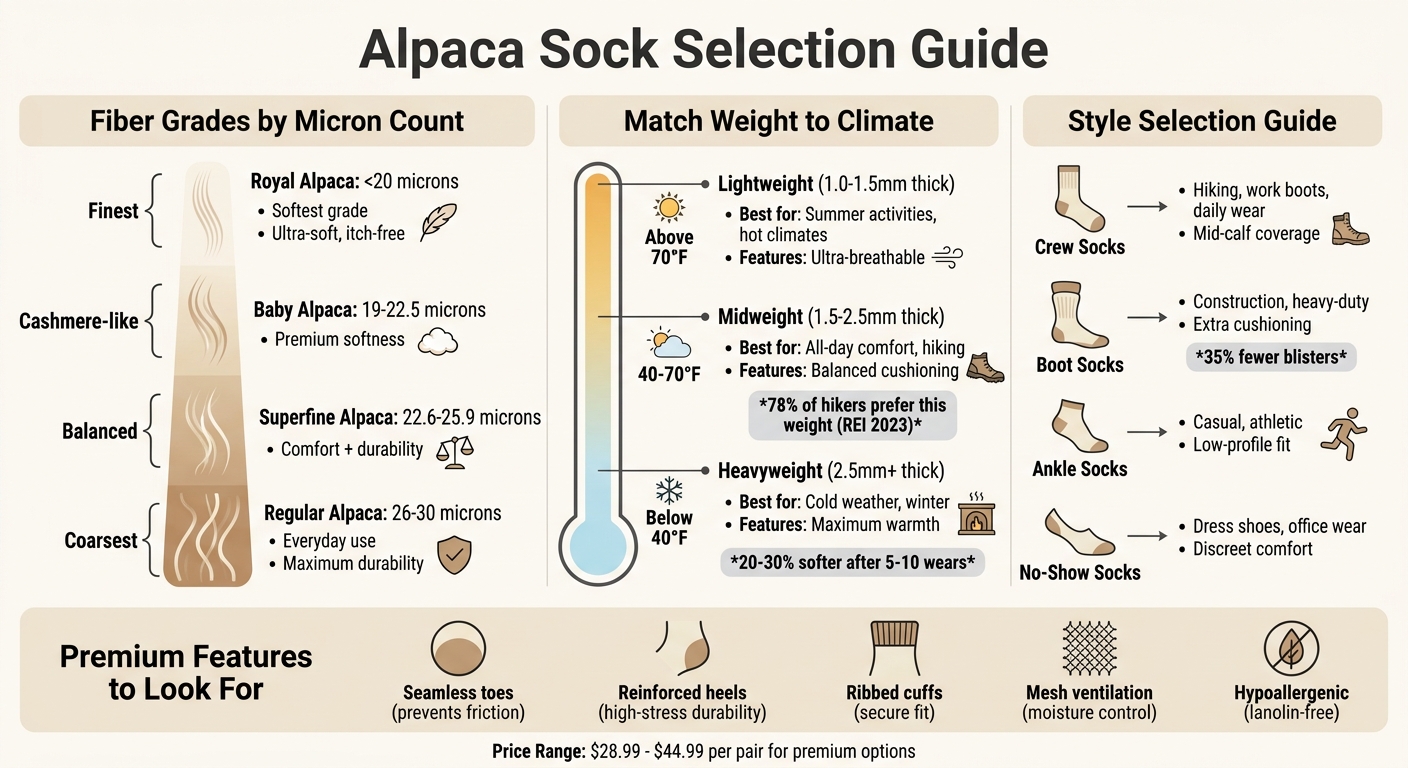
Lightweight: Best for warm weather (above 70°F).
Midweight: Great for moderate climates (40–70°F).
Heavyweight: Ideal for cold conditions (below 40°F).
Styles:
Crew: Versatile for hiking or daily wear.
Boot: Extra cushioning for rugged use.
Ankle: Low-profile for casual or athletic activities.
No-show: Discreet comfort for dress shoes.
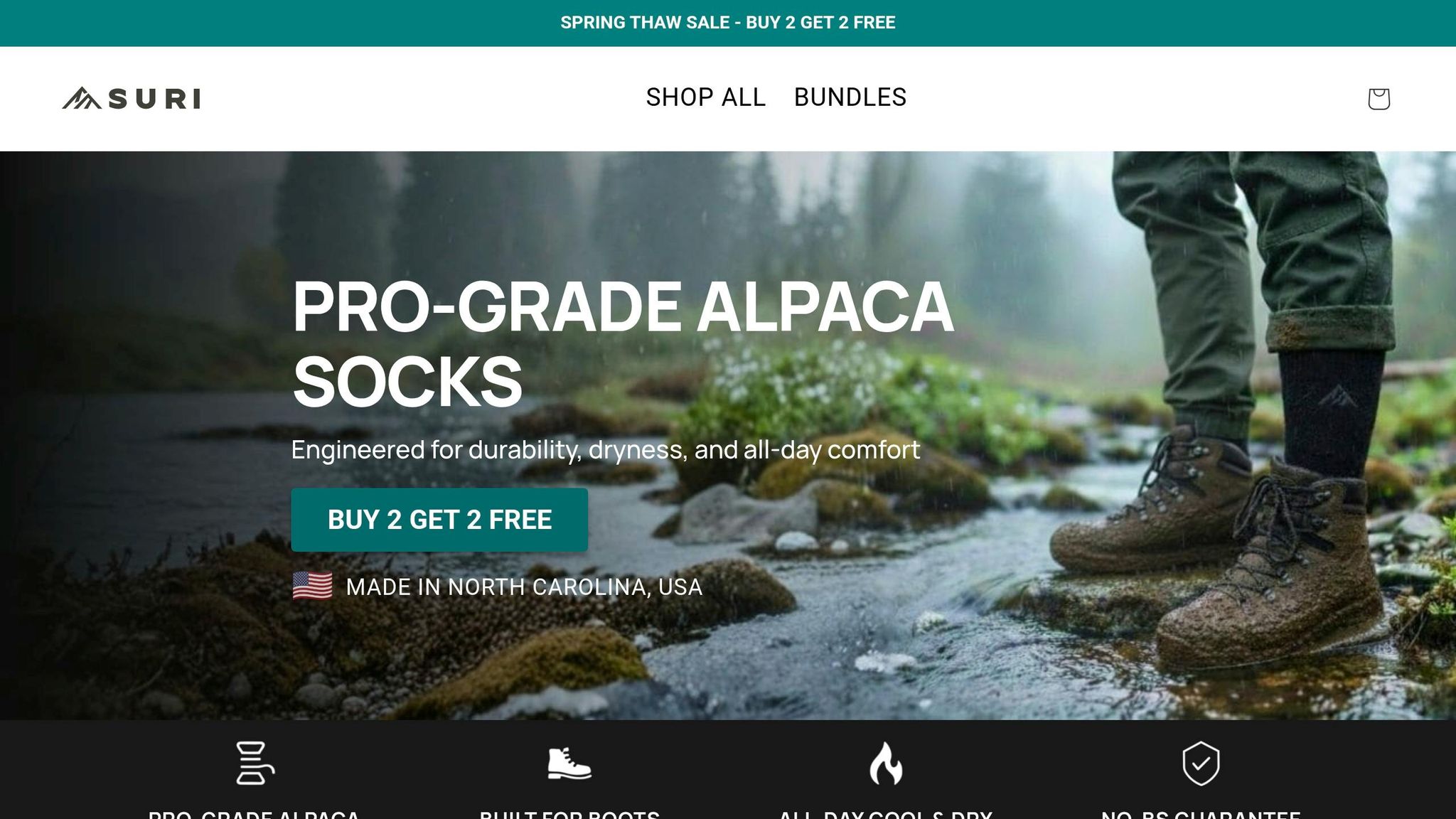
Top brands, like Suri Performance Alpaca Socks, offer premium options with advanced features like Pro-Grade Alpaca™ fiber and targeted cushioning. Prices range from $28.99 to $44.99 per pair, with options for various activities and climates.
Choose based on fiber grade, design, and your specific needs for ultimate comfort and performance.
Alpaca Sock Selection Guide: Fiber Grades, Weights, and Styles Compared
Alpaca Fiber Quality Explained
What Determines Alpaca Fiber Softness
The softness of alpaca socks comes down to one key factor: micron count. This measures the diameter of the fiber, and the rule is simple - lower micron counts mean finer, softer fibers that feel amazing against your skin.
The finest grade is Royal Alpaca, with fibers under 20 microns. Next is Baby Alpaca, ranging from 19 to 22.5 microns, offering cashmere-like softness. Interestingly, "Baby Alpaca" refers to the fiber's fineness, not the age of the animal. Superfine Alpaca falls between 22.6 and 25.9 microns, providing a great mix of comfort and durability.
If you're after that ultra-soft, itch-free feel, Royal or Baby Alpaca are your best bets. As Edward Pickering explains:
"The fiber's microscopic structure features a smooth surface with minimal scales, resulting in a softer hand feel and reduced pilling compared to traditional wool".
And while alpaca on its own is naturally soft, blending it with other fibers can fine-tune its performance.
Alpaca Fiber Blends and Their Benefits
Blending alpaca fibers with other materials can take their performance to the next level. Pure alpaca is incredibly soft and hypoallergenic, but adding fibers like nylon or spandex makes socks more durable, stretchy, and better at holding their shape - essential for performance crew socks that face heavy wear.
While pure alpaca delivers unmatched comfort, it can wear down in high-friction areas. Blends that include nylon or spandex strengthen these zones without compromising warmth or moisture-wicking properties. For daily use or sensitive skin, socks with a high percentage of alpaca are perfect. On the other hand, for activities like hiking or work, alpaca blends offer the durability you need while retaining the fiber's natural benefits.
Understanding these fiber grades and blending options helps you choose socks that balance comfort and toughness, tailored to your specific needs.
sbb-itb-855989e
Sock Construction Features That Improve Comfort
Seamless Toes and Reinforced Heels
The way a sock is constructed can make a world of difference in how it feels. Seamless toe construction is a game-changer, eliminating the bulky seams that can cause friction and discomfort. By removing these pressure points, seamless toes help prevent rubbing and chafing. When paired with the natural smoothness of alpaca fiber, this design creates a soft, barely-there sensation that’s hard to beat.
Reinforced heels are another thoughtful feature, taking advantage of alpaca fiber’s natural strength. These reinforced areas provide extra durability in high-stress zones, like the heel, where wear and tear are most common. The result? Socks that stay comfortable and hold up over time, all while maintaining their luxurious softness.
Ribbed Cuffs and Mesh Ventilation Panels
Ribbed cuffs add to the comfort equation by offering a secure fit without being too tight. Alpaca’s natural elasticity allows the cuff to grip gently, keeping the sock in place without cutting off circulation or leaving marks. For those with sensitive skin or circulation issues, soft top or non-binding cuffs are a great alternative, offering the same stability with added comfort.
Mesh ventilation panels take alpaca’s moisture-wicking abilities to the next level. These breathable zones improve airflow, helping to keep feet dry and comfortable. By reducing trapped moisture, they also lower the risk of blisters, making them a smart addition for anyone on their feet all day.
Matching Sock Thickness and Style to Your Needs
Lightweight, Midweight, and Heavyweight Socks Compared
Choosing the right sock weight can make a big difference in comfort and performance, especially when considering your activity and the weather. Alpaca socks come in three weights, each tailored to specific needs. Lightweight socks (about 1.0–1.5mm thick) are perfect for warmer weather, typically above 70°F. These socks use ultra-fine alpaca fibers - less than 20 microns thick - which gives them a silky-soft texture. They're great for summer activities or hot climates where breathability is key. According to the International Alpaca Association, finer fibers improve softness by 30–40% due to their smoother alignment.
Midweight socks (1.5–2.5mm thick) offer a balance of softness and insulation, making them ideal for temperatures between 40°F and 70°F. They provide all-day comfort without overheating. A 2023 REI Consumer Survey revealed that 78% of hikers prefer midweight crew socks for their combination of cushioning and breathability. Heavyweight socks, on the other hand, are over 2.5mm thick and are designed for colder conditions, below 40°F. These socks start off dense but soften over time, gaining 20–30% more cushioning after 5–10 wears, resulting in a plush, cozy feel.
Sock Styles for Different Activities
The style of sock you choose should match both your activity and your footwear. Crew socks, which reach mid-calf, are a versatile option for hiking, wearing with work boots, or daily use. Their extended coverage helps prevent slippage and adds to overall comfort. Boot socks are designed with extra cushioning and reinforced areas, making them a top choice for heavy-duty tasks like construction work or long hours on your feet in cold weather.
For a more casual or sporty look, ankle socks provide a low-profile fit and pair well with sneakers for errands or everyday wear. Meanwhile, no-show socks are perfect for dress shoes or loafers, offering discreet comfort for office settings. Pairing the right style with the appropriate sock weight enhances your performance and comfort. For example, when hiking, midweight or heavyweight boot socks and crew socks are excellent choices. Outdoor gear reviews have shown that these styles can reduce blisters by 35% during long hikes. Lightweight socks are great for hot climates, while heavyweight boot socks excel in keeping your feet warm during freezing winters.
Suri Performance Alpaca Socks combine premium fiber with expert craftsmanship, offering options to suit a variety of needs.
Performance Crew Socks
The Performance Crew Socks feature Pro-Grade Alpaca™ fiber, ensuring exceptional softness and shape retention. Designed to reach mid-calf, these socks include targeted underfoot cushioning and light compression, making them perfect for long workdays. At $37.99 per pair, they’ve received an 83% five-star rating from 217 reviews. Alex D. highlighted their standout comfort:
"The overall comfort is incredible. Kept my feet dry and I tend to sweat a ton."
Thanks to the natural odor resistance of alpaca fiber, users report these socks stay fresh for up to two weeks. For those needing socks tailored for intense activities or a sleeker fit, Suri has more options.
Field Boot Socks
Priced at $44.99 per pair, the Field Boot Socks are built with Performance Terry Cushioning, offering impact protection without unnecessary bulk. Designed for rugged activities like hiking or construction work, they deliver both comfort and durability. With an 85% five-star rating from 259 reviews, they’ve become a favorite for preventing blisters during long shifts. John H. shared his experience:
"No blisters, no stink, even after a day on the job site."
Ankle Socks
Perfect for active lifestyles, the Ankle Socks cost $33.33 per pair and feature breathable mesh zones to keep your feet cool. These low-cut socks offer what Suri describes as "hidden comfort", blending the softness of alpaca fiber with a sleek, athletic design suitable for both workouts and casual wear.
Designed for everyday use, the No-Show Socks are priced at $28.99 per pair. With lightweight construction and hypoallergenic alpaca fiber, they’re a great choice for sensitive skin. Alpaca fiber is lanolin-free, avoiding common irritants found in wool. Breathable mesh panels enhance ventilation, making them ideal for warm weather or high-energy activities. Hiker Chad S. praised their performance:
"These struck the right balance - breathable, comfy, and they kept my feet dry the whole time. No odor either, even after multiple days hoofing it."
All Suri socks are proudly knit in North Carolina and come with a one-year guarantee, ensuring long-lasting quality and dependability.
How to Choose Your Alpaca Socks
Start by examining the fiber grade. If you're after a silky-soft feel, look for Baby alpaca (20–22.5 microns) or Royal alpaca (under 20 microns). For everyday durability, Regular alpaca (26–30 microns) is a better choice. To strike a balance between comfort and strength, consider blends that combine alpaca with nylon or elastane. Once you’ve determined the fiber quality, take a closer look at the sock's design to ensure lasting comfort.
Pay attention to construction details like seamless toes, reinforced heels and toes, and non-binding cuffs. These features make a big difference in how comfortable the socks feel over time. For active use, mesh ventilation panels improve breathability, while non-binding cuffs help maintain circulation without leaving marks.
Choose the sock style based on your needs. Lightweight socks work well with dress shoes and for everyday wear. Midweight options with cushioned soles are better for hiking or standing for long periods, while loose-fitting designs are perfect for keeping warm while relaxing.
If you’re considering premium options, look at how top brands incorporate these features. For example, Suri Performance Alpaca Socks use Pro-Grade Alpaca™ fiber in a high-density blend designed for durability. Their reinforced heel-to-toe construction handles heavy use, and the design is 50% less bulky than traditional wool socks while providing three times the warmth. Plus, they’re made in North Carolina and come with a one-year guarantee.
For those with sensitive skin, alpaca socks are an excellent choice because alpaca fiber doesn’t contain lanolin, which can cause irritation. With proper care - washing them inside out on a cool cycle and laying them flat to dry - your alpaca socks can last anywhere from 3 to 5 years.
FAQs
How can I tell if alpaca socks will feel itchy on me?
Alpaca socks are known for being gentle on the skin, thanks to their smooth, silky fibers and the absence of lanolin. This makes them a great choice for people with sensitive skin or allergies. To ensure the best comfort, go for socks crafted from high-quality, superfine alpaca fibers, typically between 15-25 microns. These finer fibers are softer and less likely to cause irritation. Unlike wool, alpaca fibers have a smoother texture, reducing friction and making itchiness far less of a concern.
What alpaca blend percentage is best for everyday wear vs. hiking or work?
For everyday use, a blend containing 70-80% alpaca strikes the perfect balance, offering softness, comfort, and excellent moisture-wicking properties. On the other hand, for activities like hiking or work, a blend with 50-70% alpaca is a better choice. It prioritizes durability and support while still maintaining warmth and managing moisture effectively.
Everyday wear: Opt for 70-80% alpaca for a softer, more comfortable feel.
Hiking or work: Choose 50-70% alpaca for added durability and support.
How do I wash alpaca socks without ruining their softness?
To keep your alpaca socks soft and in great condition, handle them with care during washing. Use cold or lukewarm water and a gentle detergent designed for wool. Steer clear of hot water, strong chemicals, or rough agitation - they can harm the delicate fibers. Hand washing is ideal, but if you prefer using a machine, stick to a delicate cycle with slow rotation. When drying, lay the socks flat in a shaded area, away from direct heat or sunlight. Avoid wringing or tumble drying, as these can ruin their softness and shape.