"I liked saving money buying 4 pairs at a time and the socks are great for what I need. It's unbelievable how they could be made out of this material, yet they are so comfortable and they don't make my feet and legs itch nor do they make them hot or sweaty."
Rick S., Verified Customer
How Alpaca Socks Manage Moisture
Share
Alpaca socks are designed to keep your feet dry, comfortable, and odor-free, even during long wear or intense activity. Here's how they work:
Moisture Control: Alpaca fibers wick sweat away from your skin using capillary action, allowing it to evaporate quickly. This keeps your feet dry and reduces the risk of blisters.
Breathability: The semi-hollow structure of alpaca fibers promotes airflow, helping to regulate temperature and prevent overheating.
Odor Resistance: Alpaca fibers naturally reduce bacteria, cutting down on odors by up to 79% for Suri fiber and 65% for Huacaya fiber.
Durability in All Conditions: Whether you're hiking in wet weather or enduring hot temperatures, alpaca socks maintain comfort by efficiently managing moisture and heat.
Proper care, like hand washing and air drying, ensures your socks last longer and perform well. Pair them with the right footwear - like boot socks for heavy-duty use or ankle socks for summer - for maximum comfort and moisture management.
How Alpaca Fiber Manages Moisture
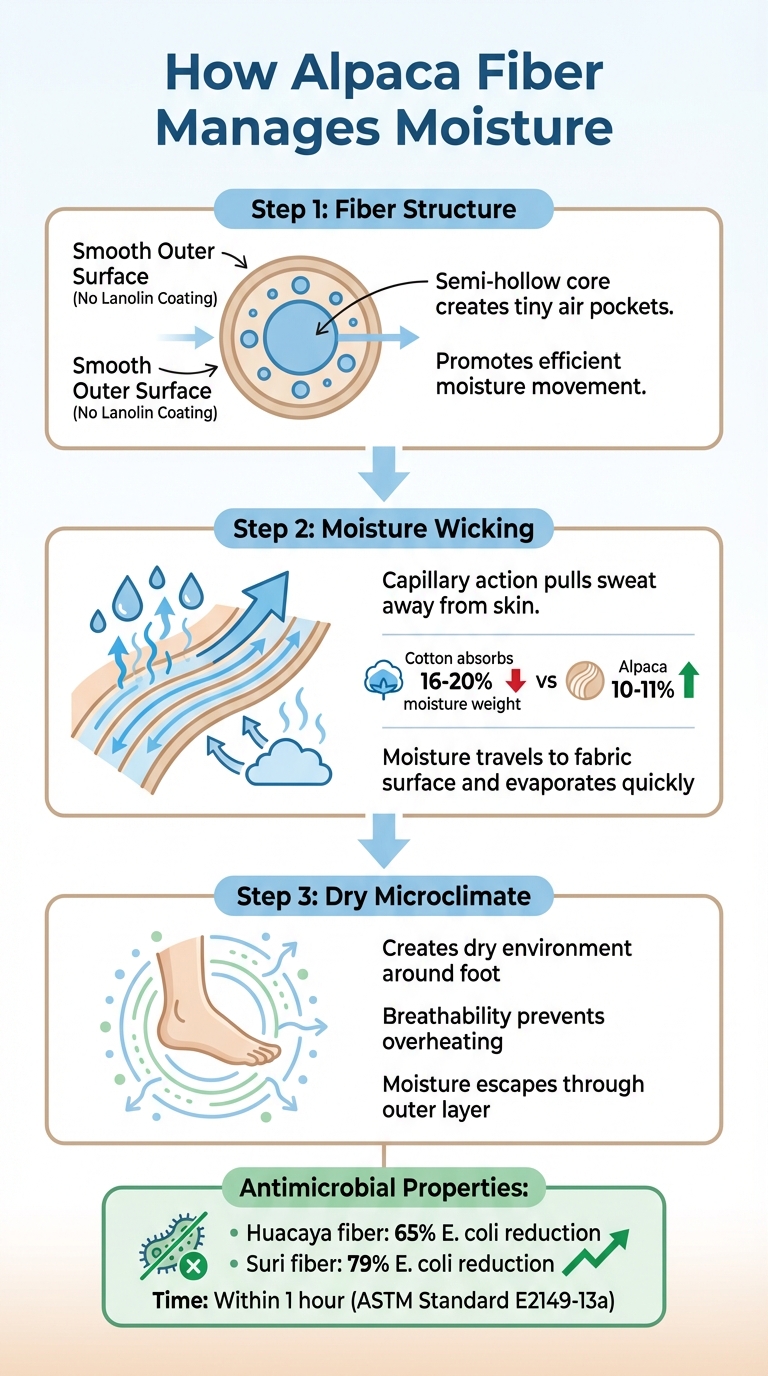
How Alpaca Fiber Manages Moisture: A 3-Step Process
The Structure of Alpaca Fiber
Alpaca fiber stands out due to its semi-hollow core, which creates tiny air pockets within each strand. This unique internal structure, combined with a smooth outer surface, promotes efficient moisture movement. Unlike fibers coated with lanolin, alpaca remains non-greasy and highly breathable. These qualities work together to help keep your feet drier, even during extended wear.
The semi-hollow design not only resists external water but also pulls perspiration away from the skin. This dual function makes alpaca socks an excellent choice for wet weather or active use. The fiber's natural structure is key to its ability to transfer moisture effectively.
How Alpaca Fiber Draws Moisture Away
Thanks to its structural advantages, alpaca fiber uses capillary action to move sweat from your skin to the fabric's surface. During physical activity, moisture travels through these microscopic channels and evaporates quickly. Unlike cotton, which absorbs 16–20% of its weight in moisture and tends to stay damp, alpaca absorbs only about 10–11% and dries much faster. This means your socks remain lighter and more comfortable, even when you're on the move.
While alpaca shares some moisture-wicking traits with cotton, it doesn't become heavy or waterlogged. This continuous action of pulling moisture away helps prevent dampness from building up, reducing the risk of discomfort and blisters.
Maintaining a Dry Environment Around Your Feet
By transferring moisture to the sock's outer surface, alpaca fiber helps create a dry microclimate around your foot. This prevents the clammy sensation often caused by materials that trap sweat against the skin. Additionally, alpaca’s natural thermo-regulating properties work in tandem with its moisture management. In warm conditions or during intense activity, the fiber's breathability helps prevent overheating. When paired with well-ventilated footwear, moisture escapes easily from the outer layer, ensuring it doesn’t remain trapped inside your shoes. This ongoing moisture transfer is key to maintaining consistent comfort, even during long hours of wear.
Benefits of Alpaca Socks During Long Activities
Alpaca fiber isn’t just about comfort - it’s a game-changer for anyone engaging in long-duration activities. Let’s break down why these socks stand out.
Preventing Blisters and Protecting Skin
When your feet stay wet, your skin softens, making it more prone to friction and blisters. Alpaca socks excel at keeping feet dry, which helps maintain your skin’s natural barrier. Plus, the smooth texture of alpaca fiber reduces irritation and friction, offering an extra layer of protection against blisters.
Controlling Odor Naturally
Here’s an interesting fact: alpaca fiber has natural antimicrobial properties. According to ASTM Standard E2149-13a tests, huacaya fiber can reduce E. coli by 65%, while Suri fiber achieves a reduction of 79% in just one hour. The Alpaca Owners Association even highlights, “These test results now give us the ability to honestly say that alpaca fiber is antimicrobial in nature”. Combine this with excellent breathability, and you’ve got socks that stay fresher for longer, even with extended wear - no need for constant washing.
Regulating Temperature
Alpaca socks don’t just keep your feet dry - they also regulate temperature like pros. Thanks to their semi-hollow structure, alpaca fibers trap warm air when it’s cold and release excess heat as your activity level rises. This dynamic ability to adapt ensures your feet stay comfortable, no matter the conditions. And because they wick moisture away from your skin, they prevent that unpleasant cooling effect caused by evaporating sweat.
Take, for example, Suri Performance Alpaca Socks. They’re designed to take full advantage of alpaca’s natural properties - moisture-wicking, antimicrobial, and temperature-regulating - to keep your feet dry, fresh, and comfortable, no matter how long your journey lasts.
How to Get the Most from Your Alpaca Socks
Getting the best out of your alpaca socks comes down to picking the right style, taking care of them properly, and pairing them with the right shoes.
Choosing the Right Sock Style for Your Activity
The right sock style can make all the difference, especially when it comes to keeping your feet dry and comfortable. For demanding activities, boot socks are a solid choice. With their thick cushioning and reinforced areas, they’re built for heavy boots, cold weather, and long hours - perfect for 14-hour workdays or rugged hikes. If you’re looking for something versatile, crew socks offer mid-calf coverage and light compression, making them great for everyday wear.
When the temperatures climb, ankle socks step in with breathable mesh to keep your feet cool, even in heat up to 100°F. And for low-profile footwear, no-show socks provide discreet comfort. Suri Performance Alpaca Socks offers all these styles, with prices starting at $28.99 for no-show socks and going up to $46.99 for boot socks. To save, you can grab their "Buy 3 Get 3 Free" bundles - like the Boot Bundle for $140.97 - which lowers the cost per pair significantly. Once you’ve picked your style, proper care ensures they last longer.
Caring for Your Socks to Maintain Performance
Taking care of your alpaca socks isn’t complicated, but it’s important if you want to keep them performing their best. The ideal way is to hand wash them in cold water with a mild detergent made for wool or delicates. This prevents the fibers from felting or matting. If you prefer machine washing, turn the socks inside out, place them in a mesh laundry bag, and use the delicate or wool cycle. Skip the fabric softeners - they can coat the fibers and reduce their ability to wick moisture.
When it comes to drying, air drying is the way to go. Squeeze out excess water gently, roll the socks in a clean towel, and lay them flat to dry away from direct heat. Between washes, you can simply air them out overnight thanks to alpaca’s natural antimicrobial properties, which help reduce odors and allow for less frequent washing. Finally, pair your socks with the right footwear to truly enjoy their benefits.
Matching Socks with the Right Footwear
The right footwear can take your alpaca socks to the next level. For heavy-duty boots, boot or work socks with thick cushioning are the best match, especially for tough conditions or long shifts. Crew socks pair well with everyday sneakers or athletic shoes, providing just the right amount of support. If you’re wearing low-cut athletic shoes, ankle socks with breathable mesh zones are ideal, making the most of alpaca’s cooling properties. By matching the cushioning of your socks to your footwear, you’ll get the full moisture and heat-regulating benefits of alpaca fibers.
sbb-itb-855989e
Using Alpaca Socks in Different Conditions
Alpaca fiber is known for its ability to manage moisture and regulate temperature, making it a standout choice across various conditions. Whether you're braving freezing rain, enduring the sweltering summer heat, or tackling long work shifts, alpaca socks can help you stay comfortable. For example, Suri Performance Alpaca Socks (https://surisocks.com) are specifically designed to wick away moisture, control odors, and maintain a comfortable temperature.
Cold and Wet Weather
When the weather turns cold and damp, alpaca socks shine. Even if they get wet, they help keep your feet warm by trapping heat close to your skin while pushing moisture outward. This eliminates that unpleasant clammy feeling. Thicker styles, like boot socks, are particularly effective in these conditions. They provide extra insulation while remaining breathable, which helps reduce sweat buildup - especially useful when wearing heavy winter boots. This natural moisture management can make long periods in wet environments much more bearable.
Hot Weather and Temperature Swings
In hot weather, lighter alpaca socks - like ankle-length styles with breathable mesh zones - are your best bet. The fiber's natural breathability promotes rapid evaporation of moisture, keeping your feet cool and dry. This is especially handy when you're moving between air-conditioned spaces and outdoor temperatures soaring to around 100°F. These qualities also make alpaca socks a smart choice for high-sweat situations.
Heavy Sweating and Long Wear
If you deal with sweaty feet or spend long hours on your feet, alpaca fiber's antimicrobial properties are a game-changer. Tests using ASTM Standard E2149-13a revealed that alpaca fiber can reduce E. coli bacteria by approximately 65% in huacaya fiber and 79% in suri fiber within just one hour of contact. This helps combat odor, even during extended wear.
For those prone to heavy sweating, opt for knit alpaca socks over felted ones. Knit styles offer better breathability and Total Heat Loss, ensuring your feet stay dry and comfortable throughout the day.
Conclusion: Why Alpaca Socks Work for Moisture Management
Alpaca fiber stands out when it comes to managing moisture. It naturally wicks away moisture, helps regulate temperature, and even fights odor thanks to its antimicrobial properties. In fact, lab tests reveal that Suri alpaca fiber can reduce E. coli by about 79%, while Huacaya fiber reduces it by 65%. With a permeability rating exceeding 0.6 and a THL (Total Heat Loss) of 428.74, alpaca fiber ensures excellent moisture control and insulation. Experts in the industry emphasize that these antimicrobial qualities are key to long-term comfort.
Suri Performance Alpaca Socks bring these benefits to life in various styles, including crew, boot, ankle, and no-show options. They combine moisture-wicking, odor resistance, and temperature regulation to keep your feet comfortable all day long.
Whether you're braving wet winter weather, enduring scorching summer heat, or tackling outdoor activities that lead to heavy sweating, alpaca socks provide dependable performance. Their blend of insulation, breathability, and odor control makes them a smart choice for staying comfortable in any situation.
FAQs
How do alpaca socks keep your feet dry compared to wool socks?
Alpaca socks are excellent at keeping your feet dry, thanks to their impressive moisture-wicking abilities. Unlike wool, which can hold up to 30% of its weight in moisture, alpaca fibers only take on about 8–11%. This means they dry quicker and stay feeling dry against your skin, even during extended activities.
What’s more, alpaca fibers wick moisture up to 85% faster than wool. They efficiently pull sweat away from your feet, allowing it to evaporate quickly. This not only helps prevent blisters but also keeps odors at bay, making alpaca socks a dependable option for hiking, outdoor adventures, or long days on your feet.
Do alpaca socks help keep your feet dry and odor-free during long hikes?
Alpaca socks are a smart pick for outdoor enthusiasts. Thanks to their natural moisture-wicking properties, they keep your feet dry by drawing sweat away from your skin. This helps minimize the conditions that lead to odor, making them perfect for long hikes or extended time outdoors.
What’s more, alpaca wool is excellent at regulating temperature. Whether you're navigating a hot trail or exploring cooler terrain, these socks help maintain a comfortable balance. With their ability to keep feet dry, fresh, and cozy, alpaca socks are a dependable choice for all-day adventures.
How should I care for my alpaca socks to keep them moisture-wicking and long-lasting?
Taking care of your alpaca socks properly is essential to keep their moisture-wicking abilities and durability intact. For the best care, hand wash your socks in cold water using a mild detergent specifically made for wool. Let them soak for about 5–10 minutes, then gently swirl them around - no scrubbing! Rinse thoroughly, and instead of wringing them out, press out the excess water gently. After that, reshape the socks and lay them flat to air-dry in a well-ventilated spot.
Prefer using a washing machine? No problem. Just select the delicate cycle with cold water and place your socks in a mesh laundry bag for added protection. But skip the dryer - always air-dry them flat to avoid shrinkage and to maintain the fibers' moisture-wicking properties. To get the most out of your alpaca socks, rotate between multiple pairs and store them in a dry, breathable space. This way, they'll last longer and perform at their best.