"I liked saving money buying 4 pairs at a time and the socks are great for what I need. It's unbelievable how they could be made out of this material, yet they are so comfortable and they don't make my feet and legs itch nor do they make them hot or sweaty."
Rick S., Verified Customer
How Alpaca Fiber Regulates Foot Temperature
Share
Alpaca socks help balance warmth and sweat - not set your feet to a fixed temperature. I’d start with lighter socks for warm, active days and thicker socks for cold, less-active days, while leaving enough room in your shoes.
Here’s what I look for:
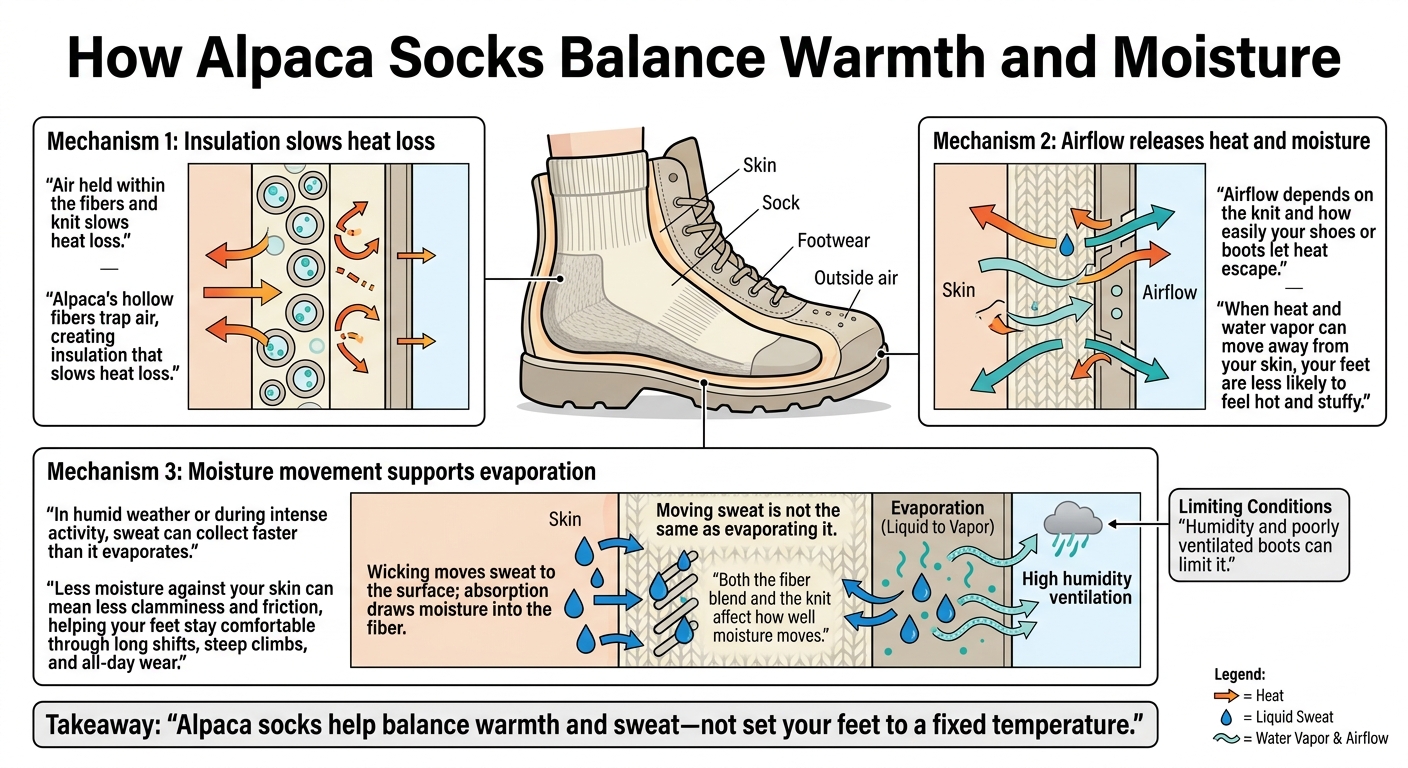
Warmth: Air held within the fibers and knit slows heat loss.
Airflow: The knit and your footwear affect how heat and moisture escape.
Sweat control: Blends can move moisture away from skin, but cooling depends on evaporation. Humidity and poorly ventilated boots can limit it.
Fit and care: For work, hikes, or daily wear, I check the blend, cushioning, and fit - not just alpaca percentage - and follow the care label.
My rule: <u>Choose the sock and shoe together.</u> If your feet feel hot or damp, check your footwear before reaching for a different pair of socks.
Thermoregulating Alpaca Socks
sbb-itb-855989e
How Fiber Structure, Airflow, and Moisture Control Heat
Airflow depends on the knit and how easily your shoes or boots let heat escape. When heat and water vapor can move away from your skin, your feet are less likely to feel hot and stuffy.
Moisture Movement Helps Sweat Evaporate
Moisture control matters just as much as airflow. Wicking moves sweat to the surface; absorption draws moisture into the fiber. Both the fiber blend and the knit affect how well moisture moves.
In humid weather or during intense activity, sweat can collect faster than it evaporates. Less moisture against your skin can mean less clamminess and friction, helping your feet stay comfortable through long shifts, steep climbs, and all-day wear.
Foot Temperature at Work, on Hikes, and During Daily Wear
Comfort matters more than a fixed foot temperature. Alpaca socks help regulate temperature naturally, but conditions still change.
That balance matters most when you switch activities or move between warmer and cooler settings.
Work: Long Shifts and Temperature Changes
If your shift involves standing, walking, and moving indoors and outdoors, compression socks or choose socks that leave room in your boots. Heavy footwear or boots with poor ventilation can trap heat and moisture, leaving your feet damp and uncomfortable.
Hiking: Cool Starts and Warm Climbs
Choose socks that fit comfortably inside your boots. Extra thickness isn’t always better - it can crowd your feet.
Daily Wear: Choose Thickness for the Weather
For daily wear, a medium-weight knit usually balances warmth and airflow. Skip dense knits in warm weather, since they can trap heat. In cold weather, thicker socks help only when your shoes or boots leave enough room for airflow and moisture to escape.
Fit, thickness, and knit density also help guide your choices when buying and caring for alpaca socks.
How to Choose and Care for Alpaca Socks
Check the Fiber Blend, Fit, and Knit
Knowing how alpaca manages heat is a starting point. Next, look at how the socks are made. Alpaca percentage alone won’t tell you how warm or breathable a pair will be. Check the fiber blend, knit density, cushioning, and ventilation zones together, and compare each style’s listed details before buying.
Choose a size that keeps your heel in place without bunching or squeezing. Your socks should also leave enough room in your shoes.
Match Sock Features to Your Activity
Match the sock’s features to how you’ll wear it:
Ventilation zones and lighter knits help release heat and moisture during activity or warm-weather wear.
Denser knits help hold warmth in cold conditions.
Targeted cushioning and heel-toe reinforcement add comfort and durability in areas that take the most pressure and wear.
Moisture-wicking blends help move sweat away from your skin.
Crew, boot, ankle, and no-show describe coverage - not guaranteed warmth.
Follow the Washing and Drying Instructions
Fit and construction matter, but care affects how well your socks keep working. Proper washing helps protect the fiber structure and knit that support insulation, airflow, and moisture movement.
Follow each pair’s care label. Use cold water and gentle detergent, and skip fabric softener. Air-dry unless the label permits low-heat drying. Use low heat only when allowed; high heat can damage the fibers and elastic.
Let socks dry completely before wearing them again. Check the heels, toes, and ball of the foot for thinning, which reduces cushioning. For long shifts or hikes, keep a dry spare pair handy.
Conclusion: Balance Warmth, Airflow, and Moisture
Whether you’re working a shift, hiking, or going about your day, temperature control depends on the whole system - not just the fiber. Alpaca traps air to slow heat loss, while breathable knits allow heat and moisture to escape. Moisture cools feet only when it evaporates from the sock’s surface. Humid air or poor ventilation can limit that cooling effect.
Sock thickness, fit, footwear, and activity all affect comfort. If your feet feel hot or damp, check your footwear first. Insulated shoes can trap enough heat to outweigh the sock’s ability to regulate temperature. Balancing warmth, airflow, and moisture control helps feet stay warm in cold weather and cooler in heat as conditions change.
FAQs
Can one pair of alpaca socks work year-round?
Yes, alpaca socks can work year-round. Their hollow-core fibers trap heat in cold weather and release excess heat when it’s warm. The fibers also breathe and wick moisture, helping keep your feet dry without overheating.
Midweight socks are often the best all-around choice for three-season wear. Lightweight socks can make summer wear more comfortable, while heavyweight socks offer more warmth in winter.
How can I tell if my socks are too thick?
Your socks may be too thick if your feet stay damp or clammy, or feel overly hot during activity. Thick socks can trap heat, making it harder for your feet to cool down.
For running or warm conditions above 70°F, lightweight socks help air circulate and moisture evaporate. Choose lightweight socks for warm weather and midweight socks as seasons change. Save heavyweight socks for extreme cold or times when you’re less active.
When should I change socks during a hike?
With Suri Performance Alpaca Socks, you don’t need to change socks mid-hike. Alpaca fiber naturally controls temperature and manages moisture as your pace and conditions change.
Its semi-hollow structure draws moisture away from your skin and releases excess heat during tough climbs. When you stop for a break, it still provides insulation. Natural antimicrobial properties also help keep foot odor in check on day hikes and multi-day treks.