"I liked saving money buying 4 pairs at a time and the socks are great for what I need. It's unbelievable how they could be made out of this material, yet they are so comfortable and they don't make my feet and legs itch nor do they make them hot or sweaty."
Rick S., Verified Customer
How Targeted Cushioning Improves Hiking Socks
Share
More padding is not the fix. Padding in the right spots is. On the trail, your heel, forefoot, toes, arch, and Achilles take the most abuse. That’s why hiking socks work better when they cushion those zones instead of adding bulk from top to bottom.
Here’s the short version:
Trail impact can hit 2–3x body weight per step
Medium cushioned socks can cut peak foot pressure by 15%+
Targeted padding helps with three big issues: foot fatigue, blisters, and sweaty feet
Thin, breathable panels matter too: they help heat and moisture move out
Fit still matters: too much bulk in a tight boot can cause new pressure points
I’d sum it up like this: a good hiking sock uses Terry-loop padding at the heel, ball of the foot, toes, and around the Achilles, then keeps the rest lighter. That gives you more shock protection where you need it, while helping the sock stay in place and the boot fit feel more normal.
Moisture-handling fiber like alpaca for long or damp hikes
Bottom line: the best hiking socks don’t try to cushion everything. They focus on the parts of your foot that take the hardest hits, then leave the rest light enough to help with fit, heat, and sweat.
How to Choose Hiking Socks
sbb-itb-855989e
How Targeted Cushioning Works in Hiking Socks
Targeted vs. Full Cushioning: Hiking Sock Zone Guide
Once you know where trail stress shows up, the next step is simple: put padding in those spots and keep the rest of the sock lean.
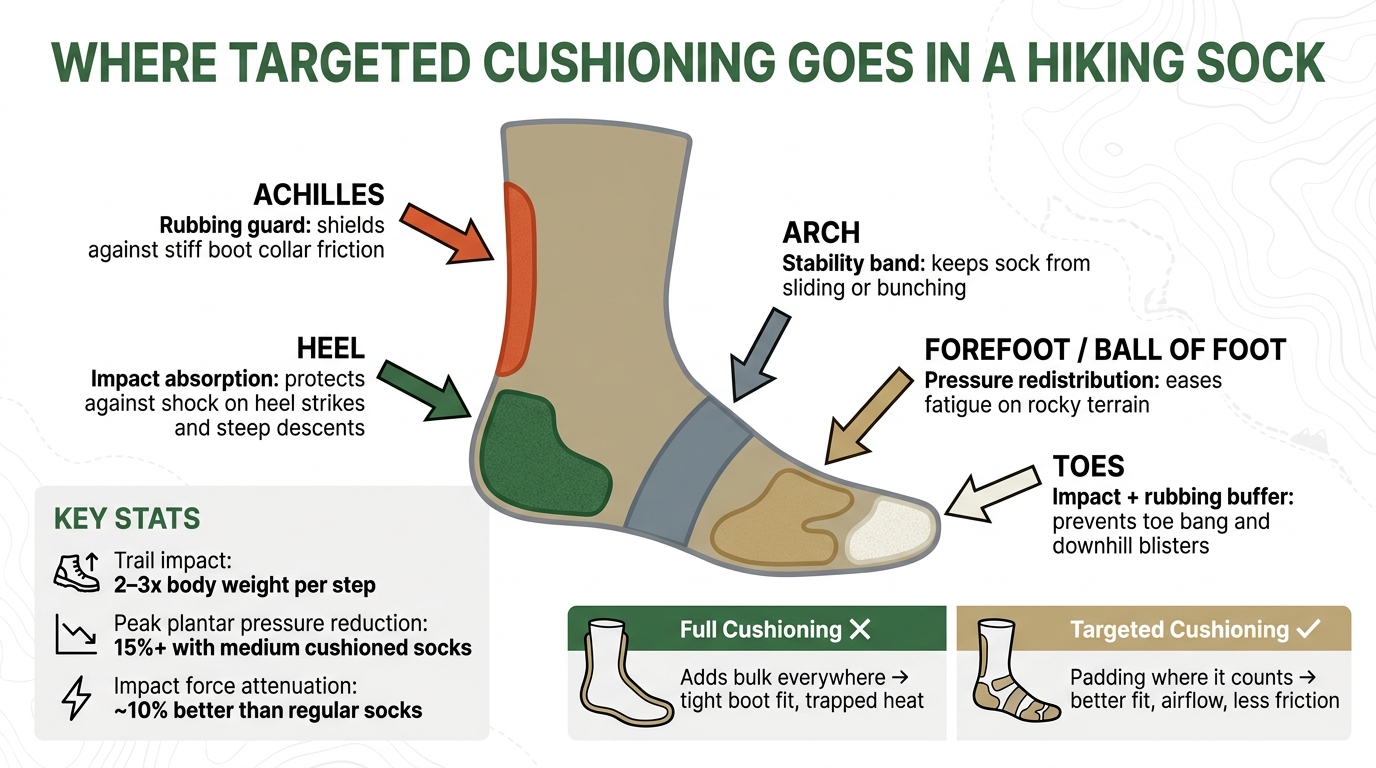
That’s what targeted cushioning does. It places padding only in high-stress zones - heel, forefoot, toes, arch, and Achilles - while the rest of the sock stays thin. That padding comes from Terry loops, which are small knit loops that add thickness only where it helps most. The result is localized density that softens impact, while thinner panels help preserve fit and breathability.
Key Cushion Zones: Heel, Forefoot, Toes, Arch, and Achilles
Each zone deals with a different type of impact or friction, so the padding has a specific job to do.
Cushion Zone
Primary Function
Why It Matters
Heel
Impact absorption
Protects against shock during heel strikes and steep descents
Forefoot
Pressure redistribution
Eases fatigue under the ball of the foot on rocky terrain
Toes
Impact and rubbing buffer
Prevents "toe bang" and blisters during downhill movement
Arch
Stability and fit
Arch bands help keep the sock from sliding or bunching
Achilles
Rubbing guard
Shields against rubbing from stiff boot collars
The arch zone works a little differently. Instead of relying on extra padding alone, it uses a compression band to help anchor the sock and cut down on slip. When that band holds the sock in place, you get less bunching and less friction - the kind that often leads to blisters.
How Zoned Padding Cuts Pressure Without Adding Bulk
Here’s the balancing act in sock design: more Terry loops bring more protection, but they also add bulk. And too much bulk can mess with boot fit fast.
Targeted cushioning deals with that by limiting loops to the areas that need them most, while using thinner panels or mesh in the rest of the sock. So instead of making the whole sock thick, it builds padding with a purpose.
Mesh ventilation panels on the instep or top of the foot help heat escape, while padded zones take care of impact. That mix gives you enough cushion to handle the trail without adding extra thickness that makes boots feel tighter.
That zoning is what turns padding into something you actually feel on the trail: less pressure, fewer blisters, and better moisture control.
Better Support, Fewer Blisters, and Drier Feet
Zoned padding does more than make a sock feel softer. It helps with the three issues that wear hikers down over time: fatigue, blisters, and sweaty feet. On long hikes, that kind of targeted cushioning matters in three clear ways: it cuts down on foot fatigue, lowers friction in hot spots, and helps manage heat and moisture.
Foot Support and Fatigue Reduction on Long Hikes
Cushioning in the heel and forefoot helps soften repeated impact on descents and rough, rocky trails. After miles of uneven ground, that extra absorption can mean less soreness at the end of the day. The arch band also plays a big part. It helps keep the sock from sliding around, which can ease strain over long stretches.
Research supports that point: medium-thickness cushioned socks reduce peak plantar pressures by more than 15%, and specialized hiking socks attenuate peak impact force roughly 10% more than regular socks.
Blister Prevention in High-Friction Areas
Blisters usually show up when pressure, heat, moisture, and movement all pile up at once. If the sock rubs against skin in the wrong spot, trouble starts fast. Targeted cushioning in the heel, ball of the foot, toes, and Achilles helps cut that rubbing by keeping the sock steadier against your skin.
Fit matters just as much as padding. A close fit keeps those cushioned zones lined up with the heel, forefoot, toes, and Achilles. That way, the padding helps reduce friction instead of adding to it.
Once the sock stays in place, breathability becomes the next thing to watch.
Moisture and Temperature Control During Active Use
Because targeted cushioning adds padding only where it's needed, it leaves space for breathable knit panels in warmer areas. That gives heat and sweat a way out instead of trapping them around your foot.
The choice of sock fiber also matters. Alpaca fiber helps regulate temperature and move moisture, which lowers blister risk on multi-day hikes. Suri Performance Alpaca Socks combine alpaca fiber, targeted cushioning, and breathable mesh for all-day trail comfort.
What to Look for in a Hiking Sock With Targeted Cushioning
Construction Details That Make Cushioning Work
If you want less pressure without adding bulk, the knit details do the heavy lifting. Targeted cushioning only works when the knit pattern supports it. That comes down to knit thickness, terry-loop length, and knit density.
Before you buy, check for a few build details:
Seamless or flat-linked toe closure: Cuts down on rubbing at the toe seam.
Reinforced heel and toe zones: Help the sock last longer in high-wear spots.
Compression arch band: Helps keep the sock in place and cuts down on bunching.
Breathable mesh panels: Let heat and moisture escape.
These features help take pressure off the heel, forefoot, toes, and Achilles without making the boot feel crowded. They matter even more when the sock also handles moisture well and keeps its fit over long miles.
One catch: thicker cushioning needs enough room inside the boot. If the fit is too tight, extra padding can backfire and create new pressure points.
When Alpaca Performance Socks Fit the Need
On multi-day hikes or in damp conditions, alpaca fiber works well with zoned cushioning because it helps keep feet drier and fresher. Alpaca fiber absorbs less moisture, which helps keep skin drier and reduces the softening that can make blisters worse. It also resists odor naturally, so socks stay fresher across several days on the trail.
Conclusion: Why Targeted Cushioning Makes Hiking Socks Work Better
Trail stress isn’t spread evenly, so sock cushioning shouldn’t be either. That’s the core idea behind zoned design: put padding where the trail hits hardest.
Cushioning in the heel, forefoot, toe, and Achilles helps absorb impact in the areas that deal with the most friction and force. Trail forces can reach 2–3 times body weight per step, and thicker cushioning in those key zones can reduce peak force. At the same time, keeping the arch and instep lighter and more breathable helps limit heat and moisture buildup, which can help lower blister risk.
The knit pattern also matters. A zoned knit structure helps the cushioning do its job without making the sock feel bulky.
Suri Performance Alpaca Socks pair zoned cushioning with alpaca fiber for moisture control, odor resistance, and temperature regulation.
The best hiking socks aren’t just padded all over. They’re built with purpose: more cushion in high-stress zones, less bulk everywhere else.
FAQs
How do I know if my socks have too much cushioning?
Your socks may have too much cushioning if they feel bulky or make your shoes fit too tightly. That extra thickness can lead to discomfort instead of support.
A better fit is usually more balanced: targeted cushioning in the heel and forefoot helps soften impact without making the sock feel stuffed or awkward. The goal is simple. Your socks should feel supportive, not oversized.
If the discomfort keeps coming back, it may be worth talking with a foot care professional about any underlying foot issues.
Which cushion zones matter most for steep hikes?
For steep hikes, the heel and forefoot matter most when it comes to cushioning. Those are the spots that take the hardest hits and the most pressure, both on the way up and on the way down.
Padding in those zones helps absorb shock and cut down on painful hot spots. Suri Performance Alpaca Socks place cushioning right where you need it, giving you support and protection without extra bulk.
Can targeted cushioning help with sweaty, blister-prone feet?
Yes. Targeted cushioning adds extra padding in high-pressure spots like the heel and forefoot. That helps cut down on friction and impact, which are two common causes of irritation and blisters.
Pair that with moisture-wicking alpaca fiber, like the kind used in Suri Performance Alpaca Socks, plus breathable mesh zones, and your feet stay drier and more comfortable during long hikes and other tough outdoor activities.