"I liked saving money buying 4 pairs at a time and the socks are great for what I need. It's unbelievable how they could be made out of this material, yet they are so comfortable and they don't make my feet and legs itch nor do they make them hot or sweaty."
Rick S., Verified Customer
Diabetic Alpaca Socks: Features and Benefits
Share
Diabetic alpaca socks are designed to address common foot health challenges faced by individuals with diabetes or sensitive feet. These socks focus on:
Non-restrictive fit: They avoid tight elastic bands, ensuring proper circulation and comfort.
Moisture control: Alpaca fibers wick moisture 3x better than cotton or wool, reducing the risk of bacterial and fungal infections.
Cushioning and protection: Extra padding and seamless designs help prevent blisters and irritation, especially for those with neuropathy.
Temperature regulation: Alpaca fibers keep feet warm in winter and cool in temperatures up to 100°F.
Compared to standard diabetic socks and Merino wool options, alpaca socks excel in moisture management, warmth, and hypoallergenic properties. While they are pricier ($19.50–$42.48 per pair), their durability and therapeutic benefits make them a strong choice for maintaining foot health.
1. Diabetic Alpaca Socks
Non-Restrictive Tops
One of the standout features of diabetic alpaca socks is their non-binding tops, designed without tight elastic bands. This ensures they don’t restrict blood flow to the legs and feet. As Island Alpaca Company puts it:
"A diabetic sock is a non-binding and non-elasticized sock which is designed so as to not constrict the foot or leg." – Island Alpaca Company
For those dealing with swelling or edema, these socks often include wide calf designs with relaxed ribbing. This keeps them securely in place throughout the day without digging into the skin or leaving marks. The graduated fit, which is wider at the top of the calf, mirrors the natural shape of the leg, offering a more comfortable fit.
Moisture-Wicking and Antimicrobial Properties
Alpaca fiber has an impressive ability to manage moisture. It absorbs only about 8% of its weight in moisture, compared to merino wool’s 30%. This helps keep feet drier, reducing the chances of fungal or bacterial infections. The fiber actively wicks sweat away before odor-causing bacteria can develop.
"Alpaca fiber wicks away moisture and repels water, reducing dampness and lowering the risk of bacteria or fungal infections." – Alpaca Time
Cushioning and Protection
Sensitive feet benefit from the targeted terry lining and dense cushioning found in diabetic alpaca socks, particularly in the heel and toe areas. This padding minimizes friction and absorbs impact, which is especially important for those with diabetic neuropathy who may not feel minor irritations. Additionally, seamless or flat-seam toe closures prevent rubbing and chafing, reducing the risk of blisters or skin damage.
Temperature Regulation
Alpaca fibers are equipped with microscopic air pockets that act as natural climate control. These hollow-core fibers trap heat efficiently, making alpaca warmer than sheep’s wool while remaining lightweight. At the same time, they release excess heat, ensuring comfort even in extreme temperatures.
"Alpaca's natural fibers create tiny air pockets that work like built-in climate control - whisking excess heat away so your feet feel breezy and comfortable even when the thermometer hits 100°F." – Suri Performance Alpaca Socks
This ability to regulate temperature helps avoid the damp, overheated conditions that can lead to discomfort or bacterial growth. By maintaining a balanced environment for your feet, diabetic alpaca socks stand out when compared to standard diabetic, Merino wool, or alpaca ankle socks options.
sbb-itb-855989e
2. Standard Diabetic Socks
Non-Restrictive Tops
Standard diabetic socks are designed with non-binding tops to promote healthy blood flow. Their wide calf construction also accommodates swelling, making them a practical choice for individuals managing circulation issues. As Alpaca Emporium explains:
"Diabetic socks are made of soft and usually seamless material with low elastic soft tops so that they do not grip the leg and restrict circulation or cause irritation and sores."
For the best results, healthcare professionals recommend choosing socks labeled as "non-binding" or "therapeutic." These options not only support circulation but also address moisture control and improve circulation, which are essential for foot health.
Moisture-Wicking and Antimicrobial Properties
Dry feet are key to avoiding infections and skin problems. Standard diabetic socks use breathable, moisture-wicking materials to reduce the risk of blisters and infections. This is particularly important given the significant amount of moisture feet produce annually. Unlike standard cotton, which traps moisture, these socks help keep feet dry and minimize odors, even during long periods of wear.
Cushioning and Protection
These socks also provide extra cushioning, often featuring reinforced heels and toes along with terry linings. This padding absorbs impact and reduces friction in high-pressure areas, offering vital protection for sensitive feet. For individuals with neuropathy, who may not notice minor irritations, this cushioning can help prevent injuries and ulcers. Beyond protection, the added padding contributes to overall comfort during daily activities.
Temperature Regulation
Maintaining a stable foot temperature is another benefit of standard diabetic socks. They are designed to keep feet warm without causing overheating, helping to avoid damp conditions that could lead to complications. However, the effectiveness of temperature regulation largely depends on the quality of the materials used, so selecting well-made socks is essential for consistent performance.
Diabetic Socks (Are they worth it?)
3. Merino Wool Socks
Merino wool brings a unique set of benefits tailored for diabetic feet, making it a noteworthy option for those seeking comfort and care.
Moisture-Wicking and Antimicrobial Properties
One of Merino wool's standout features is its ability to absorb moisture vapor before it turns into liquid. These fibers can hold up to 35% of their weight in moisture without feeling damp, helping to keep diabetic feet dry and reducing the likelihood of fungal infections. Plus, its natural antimicrobial qualities help tackle odor by trapping odor molecules and slowing bacterial growth. However, individuals with very sensitive skin should be aware that the lanolin in Merino wool might cause irritation. With fibers under 22 microns thick, Merino wool is also incredibly soft, making it gentle on delicate skin. These moisture-managing properties create an excellent foundation for Merino's temperature-regulating abilities.
Temperature Regulation
Merino wool is often referred to as a "smart" fiber due to its ability to adapt to changing conditions. Its natural crimp creates air pockets that insulate the feet, providing warmth in cold weather and a cooling effect when it's hot. This feature is particularly helpful for diabetics who may experience poor circulation. Merino wool also excels at absorbing moisture vapor, holding 30% to 35% of its dry weight, which is significantly more than many other materials. This dual functionality of temperature control and moisture management makes it a reliable choice for diabetic foot care.
Cushioning and Protection
Beyond its climate control, Merino wool's elasticity ensures a snug, comfortable fit. This natural stretch helps socks maintain their shape and stay securely in place, preventing uncomfortable bunching that could lead to pressure points on sensitive feet. Its fine structure and flexibility provide added protection for diabetic feet. As Ridge Merino highlights:
"Merino wool's inherent strength allows us to use less synthetic material. As you reduce the amount of natural fibers in a garment, you also reduce all the benefits you get from those natural fibers."
Therapeutic Merino wool socks are an investment, typically priced between $20 and $30 per pair, with specialized versions costing up to $40 or $60. For maximum comfort and minimal irritation, look for "superfine" or "ultrafine" Merino wool (under 18.5 microns), which reduces the risk of prickle and is gentle on sensitive skin.
Advantages and Disadvantages
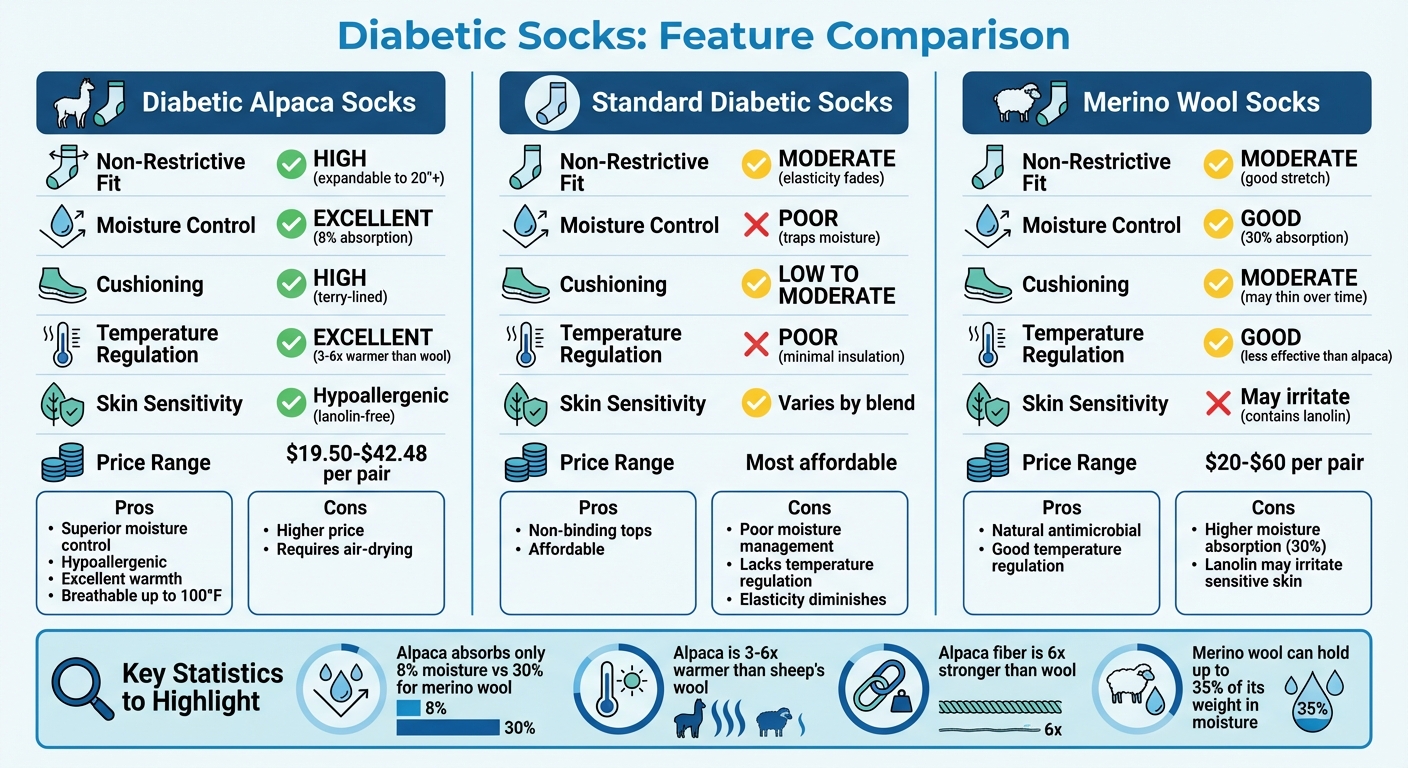
Diabetic Socks Comparison: Alpaca vs Standard vs Merino Wool
Each type of sock brings its own set of strengths and weaknesses when it comes to diabetic foot care, as outlined below.
Diabetic alpaca socks stand out for their exceptional features. With expandable gussets that stretch over 20 inches, they’re perfect for swollen calves and don’t restrict circulation. Their semi-hollow fibers absorb only 8% of moisture, offering excellent moisture control. They’re also hypoallergenic due to their lanolin-free fibers and provide warmth - 3 to 6 times that of sheep’s wool - while remaining breathable, even in temperatures up to 100°F. However, these socks come with higher price tags ($19.50–$42.48 per pair) and require air-drying to avoid shrinkage. Rebecca Gill of Cotton Creek Farms highlights their benefits, saying:
"These relaxed alpaca socks will offer breathable wear that helps support healthy feet for diabetics. And better yet, they look like regular old socks."
Standard diabetic socks, often made from cotton or synthetic blends, are a more affordable option and feature non-binding tops. However, they fall short in moisture management - cotton retains moisture against the skin, increasing the risk of infections. They also lack effective temperature regulation and natural cushioning, and their elasticity tends to diminish over time. These shortcomings make alternative materials, like Merino wool, worth considering.
Merino wool socks offer good temperature regulation and natural antimicrobial properties. However, they absorb more moisture (up to 30%), which may not be ideal for diabetic feet. Additionally, their lanolin content can irritate sensitive skin, potentially limiting their appeal.
Here’s a breakdown of the key features and trade-offs for each sock type:
Feature
Diabetic Alpaca Socks
Standard Diabetic Socks
Merino Wool Socks
Non-Restrictive Fit
High; expandable to 20"+
Moderate; elasticity fades
Moderate; good stretch
Moisture Control
Excellent; 8% absorption
Poor; traps moisture
Good; 30% absorption
Cushioning
High; often terry-lined
Low to Moderate
Moderate; may thin over time
Temperature Regulation
Excellent; 3–6x warmer
Poor; minimal insulation
Good; less effective than alpaca
Skin Sensitivity
Hypoallergenic; lanolin-free
Varies by blend
May irritate; contains lanolin
This comparison highlights why diabetic alpaca socks are a standout choice, offering a superior balance of comfort, moisture control, and warmth. For those prioritizing both durability and therapeutic benefits, performance crew socks with 40% to 80% alpaca content are an excellent pick - and they don’t require hand-washing.
Conclusion
Looking at the comparisons above, it's clear why diabetic alpaca socks stand out. They handle moisture exceptionally well, absorbing only about 8% of their weight compared to up to 30% for merino wool. Plus, they offer impressive thermal regulation - up to six times warmer than sheep's wool - while staying breathable, even in warmer conditions. With non-binding tops that promote circulation and a lanolin-free composition, they're a great option for those with sensitive skin. These features combine to provide long-lasting protection and comfort for your feet.
For the best results, choose socks with at least 60% alpaca content. This ensures effective moisture-wicking and antimicrobial properties. Alpaca fiber is also about six times stronger than wool and resists pilling, making it a durable choice for repeated use. While Suri Performance Alpaca Socks range from $28.99 to $44.99 per pair, their therapeutic advantages and longevity make them a worthwhile investment.
If you struggle with swelling, poor circulation, or sensitive skin, diabetic alpaca socks offer a well-rounded solution. For everyday use, Suri Performance Alpaca Socks (https://surisocks.com) provide excellent durability, moisture-wicking, and odor resistance, making them a smart choice for maintaining foot health and comfort throughout the day.
FAQs
How do I choose the right alpaca content percentage?
Choosing the right alpaca content comes down to what you're looking for - whether it's moisture-wicking, comfort, or durability. Products with higher alpaca fiber content (50% or more) are better at managing moisture, resisting odors, and regulating temperature. This makes them a great choice for people with sensitive skin or those planning to use them for active wear. On the other hand, if you're aiming for something more affordable or for occasional use, lower alpaca percentages can still work. Just keep in mind, the higher the alpaca content, the more you'll benefit from its natural qualities.
Can alpaca socks help with swelling and wide calves?
Alpaca socks are a great option for those dealing with swelling or wider calves. Their stretchier, non-restrictive design makes them especially suitable for people with conditions like edema or diabetes. These socks deliver both comfort and gentle support without squeezing, making them a better choice for sensitive feet or larger calves.
How should I wash and dry alpaca socks to prevent shrinkage?
To keep your alpaca socks in great condition and prevent shrinkage, it's best to hand wash them in cool water with a mild detergent. If you prefer using a machine, opt for a gentle cold-water cycle and place the socks in a mesh bag for added protection. When it comes to drying, always lay them flat to air dry. Avoid using a tumble dryer, hanging them up, or exposing them to direct heat. Following these steps will help preserve their shape, softness, and overall quality for the long haul.