"I liked saving money buying 4 pairs at a time and the socks are great for what I need. It's unbelievable how they could be made out of this material, yet they are so comfortable and they don't make my feet and legs itch nor do they make them hot or sweaty."
Rick S., Verified Customer
Customer Stories: Alpaca Socks on Hunting Trips
Share
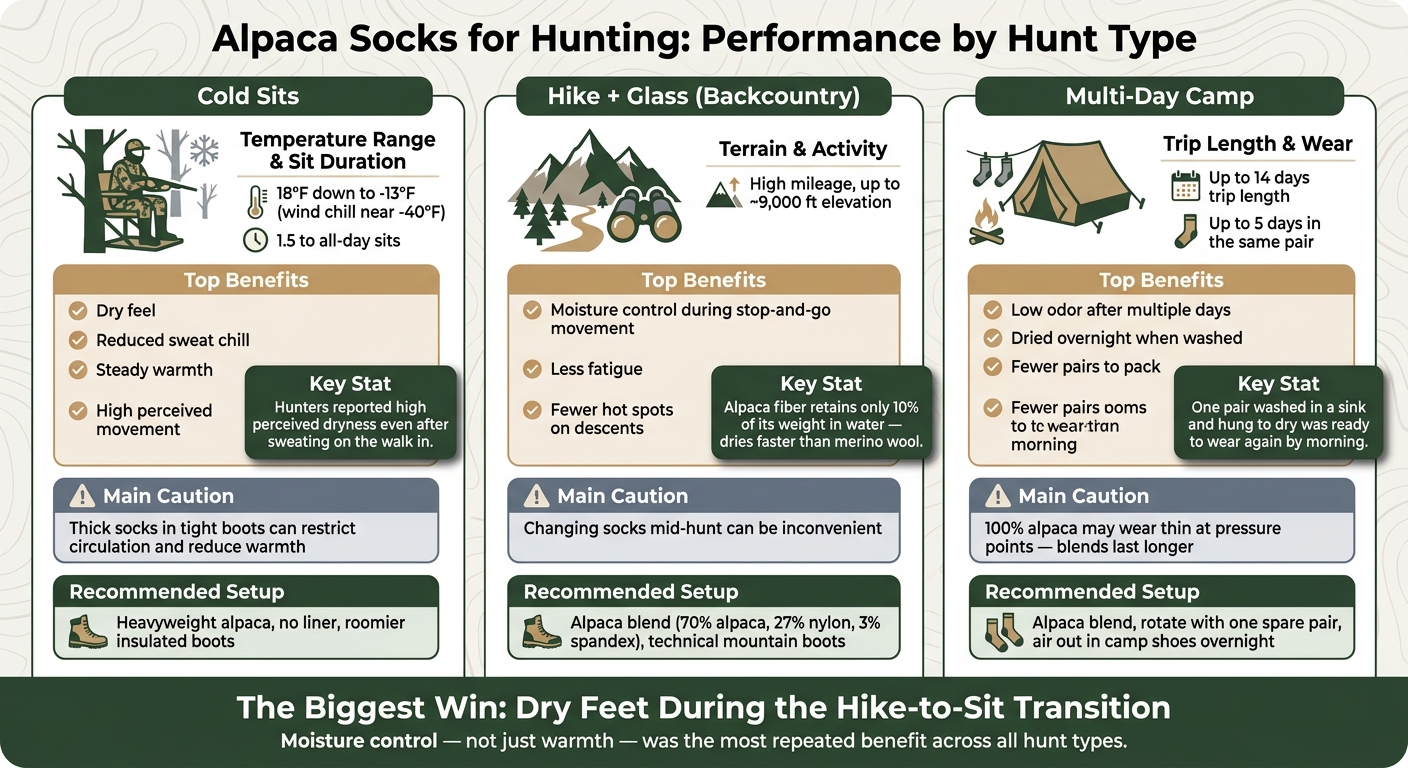
If you hunt in cold weather, wet feet are often the main problem - not the air temperature. From the stories in this article, I’d sum it up like this: alpaca socks helped hunters keep feet drier, warmer during long sits, and less smelly over multi-day trips.
Here’s the short version:
For stand and blind hunts, hunters said alpaca socks helped cut the cold feeling that shows up after the walk in.
For backcountry hunts, the main win was moisture control during the shift from hiking to glassing.
For multi-day trips, some hunters wore the same pair for 5 straight days and reported low odor and overnight drying.
In the coldest reports, hunters used them from about 18°F down to -13°F, with wind chills near -40°F.
Fit still mattered: thick socks in tight boots can make feet colder by cutting circulation.
For long mileage, hunters leaned toward alpaca blends - often around 70% alpaca, 27% nylon, and 3% spandex - instead of 100% alpaca.
If you want the main takeaway in one line, it’s this: alpaca socks seemed to work best when hunters needed dry feet across cold sits, hard hikes, and repeated wear in the same boots.
Hunt use
What hunters liked
Main caution
Cold sits
Dry feel, less sweat chill, steady warmth
Need room in the boot
Hike + glass
Better moisture handling during stop-and-go use
Changing socks in the field can be a hassle
Multi-day camp
Less odor, dry by morning, fewer pairs to pack
Pure alpaca may wear faster
Below, I break down what hunters said, where the socks worked best, and what setup choices made the biggest difference.
Alpaca Socks for Hunting: Performance by Hunt Type
Ned's Altera Alpaca Review | Wild Bout Huntin
sbb-itb-855989e
Case studies from cold-weather stand and blind hunts
Cold-weather stand hunting is hard on feet in a pretty predictable way. You hike in warm, stop moving, and then sit for hours while the temperature drops. That switch from movement to stillness is where cold and moisture start to pile up inside a boot. These cases look at long, quiet sits where dry feet and steady warmth matter most.
Dry feet and reduced sweat chill during long sits
Even a short walk to the stand can build enough heat to make your feet sweat inside insulated boots. Then you stop, the moisture cools off, and the chill sets in fast. Hunters using alpaca socks said their feet stayed drier and they felt less of that cold, sweaty after-effect once they got settled in.
One hunter wearing heavyweight alpaca socks in 400-gram insulated boots said his feet stayed dry and warm during 1.5 to 2.5 hours on stand. Some hunters also left out the liner so the socks could pull moisture straight from the skin without making the boot fit too tight.
Warmth, softness, and fit inside insulated boots
Feedback from cold-weather hunters kept coming back to the same things: warmth during long periods of sitting still, how the material felt on the skin, and whether the sock stayed put inside the boot.
"My feet wicked moisture, never got fatigued... Alpaca fiber socks are better especially when it comes to prolonged comfort hours into a hunt." - Jay Pinsky, Freelance Journalist and Hunter
Hunters also said alpaca felt soft on the skin and didn't get itchy after hours of wear. Fit mattered too. Thick alpaca socks can crowd a tight boot and cut off circulation. If a sock makes a snug boot even tighter, warmth can actually get worse. These socks tend to work better when the boot has enough room for the foot to breathe. Hunters with tighter insulated boots were told to size up or leave out a liner.
Cold-weather hunter results: comparison table
Stand hunts gave the clearest read on results. Across these reports, hunters said alpaca setups worked from 18°F muzzleloader sits to sub-freezing all-day stands. The coldest stories reached -13°F, with wind chills down to -40°F.
Hunt Type
Temperature Range
Hours Sitting
Sock Setup
Perceived Dryness
Warmth Rating
Reported Issues
Muzzleloader stand
18°F
1.5–2.5 hrs
Heavy alpaca, no liner
High
Good
None reported
Bow hunting stand
Sub-freezing
All day
Superwarm Heavy Extreme alpaca socks
High
High
None reported
Late-season deer stand
Below 30°F
All day
Heavy alpaca + toe warmers
Moderate
Good
Circulation was still a problem
The same moisture control and warmth get tested even harder once a hunt adds miles, climbs, and stop-and-go movement.
Case studies from backcountry hunts with heavy mileage
Backcountry hunts put socks through a tougher kind of test. You’re climbing hard, sweating into your boots, then sitting still behind glass while your feet cool off fast. That’s a very different job than stand hunting. The main issue isn’t just warmth. It’s moisture control.
Moisture control while hiking, glassing, and cooling down
Most of the moisture shows up on the climb. The problem starts when that sweat stays trapped during a long glassing break. That’s when warm feet can turn cold in a hurry.
Hunters reported dry feet, better ground feel, and less fatigue on steep terrain. In plain terms, fast drying matters most during the switch from movement to stillness. If a sock can move sweat out and dry fast, it helps keep that damp, chilled feeling from setting in during cold stops.
Odor, blisters, and wear over multiple days
On a multi-day backcountry trip, you may not want to carry a pile of extra socks. Space and pack weight matter, so each pair needs to do more work.
Hunters reported less odor after several days of wear. Kevin Paulson, Founder and CEO of HuntingLife.com, tested a performance alpaca blend over five straight days of high-activity use:
"Alpaca fiber retains only 10% of weight in water which allows these socks to dry so much faster than merino wool or other wool socks. Even after a few days of wear, these socks did not smell like boot socks usually do." - Kevin Paulson, Founder and CEO of HuntingLife.com
Hunters also reported fewer hot spots on long descents and under pack weight. That matters because downhill miles are often where feet start to complain.
There is one catch, though. Hunters putting in heavy mileage should skip 100% alpaca socks. They can wear thin at pressure points after repeat use. A blend of roughly 70% alpaca, 27% nylon, and 3% spandex held up much better through repeat wear and washing. That showed up not just on the trail, but in camp too, where drying time, rotation, and next-day comfort all start to matter.
Multi-day backcountry results: comparison table
These field reports point to the same trend across long miles, high elevation, and multi-day wear.
Trip Type
Trip Length
Daily Mileage / Elevation
Consecutive Days Worn
Odor Notes
Blister Incidence
Durability Observations
Backcountry Elk Hunt
14 Days
High mileage; ~9,000 ft
Not specified
Lower than expected
None reported
Held up after repeated wear
Gear Field Test
5 Days
High-activity walking
5 Days
Lower than expected
None reported
Washed easily, dried overnight, held shape
How hunters used alpaca socks with boots and camp routines
Hunters said the outcome came down to three things: sock weight, boot fit, and what they did at camp. Get those lined up, and the socks worked well. Miss on one of them, and the whole setup could feel off.
Layering and boot pairing by hunt conditions
Hunters picked sock weight based on the hunt itself. Heavier socks were the go-to for long, motionless sits. Lighter pairs made more sense for active days with a lot of miles.
For cold sits, hunters used heavyweight socks with roomier insulated boots and skipped liners. That no-liner setup seemed to work best when they were staying still for long stretches. On mixed days with hiking and glassing, many leaned toward lighter Outdoor Adventure styles with uninsulated or lightly insulated leather boots to help avoid getting too hot while moving. The same boot-fit logic showed up again in camp, where drying and rotating pairs mattered just as much.
Drying, rotating, and packing pairs for multi-day trips
On multi-day hunts, hunters often kept one or two pairs in rotation and counted on overnight drying to make that work. Since the socks dried by morning, they could wash a pair and wear it again the next day instead of stuffing extra pairs into their pack. Hunters also said blended socks kept their shape better on longer trips.
"I wore the same pair of socks for 5 days... I could wash the socks in the sink at the airbnb and hang them on a hanger to dry overnight. These socks held up all week." - Kevin Paulson, Founder and CEO, HuntingLife.com
One field habit came up for stand hunters with sweaty feet: don’t hike in wearing the alpaca socks. Pack them, then put them on once you reach the stand. That way, your feet start the sit dry instead of damp from the walk in.
"I prefer alpaca wool socks but to help them last longer i don't put them on until i get into my stand... It keeps hike-in sweat from chilling my feet." - Kevin, HuntingPA Forum member
Sock use strategies in the field: comparison table
Strategy
Best Conditions
Boot Type
Main Benefit
Tradeoff
Cold sit
Extreme cold, stationary sits
Pac boots, Muck boots
Maximum thermal loft and direct wicking
Bulky; needs roomier boots
Hike and glass
Long hike followed by a cold sit
Technical mountain boots
Prevents sweat-chill by starting the sit with dry socks
Inconvenient to change in the field
Active/Lightweight
Mountain hunting, drives, stalking
Uninsulated or light leather
High breathability; helps prevent overheating
Less insulation during long periods of stillness
Camp rotation
Multi-day backcountry trips
Camp shoes or slipper booties
Lets primary socks air out and dry overnight
Requires carrying at least one spare pair
What these hunting stories show overall
Repeated results across the customer stories
Across stand hunts and backcountry miles, the same theme kept showing up: dry feet made the biggest difference.
Hunters said their feet stayed drier during the shift from hiking hard to sitting still. That matters, because that’s often when cold starts to creep in. They also said warmth held up during long, motionless sits, even in severe wind chill. On top of that, some reported wearing the socks for multiple days without any noticeable odor.
Moisture control came up more than anything else. The same thing showed up on longer hikes too, where fast drying mattered just as much as warmth.
Put simply, the biggest change showed up during that hike-to-sit transition.
Key points for hunters considering alpaca socks
These stories point to a clear pattern: cold sits, heavy mileage, and multi-day wear. If your hunt includes sharp moisture swings, long hours in the cold, or back-to-back days in the same gear, alpaca socks seem to fit that kind of use best.
Suri Performance Alpaca Socks (surisocks.com) offers crew, boot, ankle, and no-show styles with moisture-wicking, odor-resistant, thermo-regulating performance built for dry feet on the move, warmth in stillness, and faster overnight drying.
FAQs
How many pairs should I pack for a multi-day hunt?
It depends on your needs, but rotating between multiple pairs is a smart move for hygiene and longer wear.
Giving socks a day or two off lets the fibers bounce back and gives moisture time to dry out all the way. Some hunters have worn one pair for up to five days without odor or a drop in performance. Even so, rotating pairs can help you stay more comfortable and keep temperature control steadier throughout your trip.
Should I wear liners with alpaca socks?
Usually, no. Plenty of hunters wear alpaca socks by themselves and say their feet stay warm and dry, even in sub-freezing temperatures.
Alpaca fiber naturally pulls moisture away from the skin and helps control temperature, so you often don’t need another layer. Wearing alpaca socks on their own also lets the fiber breathe and do its job.
What sock weight is best for stand hunting vs. hiking?
For stand hunting, a heavier sock works best. It gives you more warmth and insulation when you're sitting still for long stretches in below-freezing weather.
For active hunting or hiking, go with a lighter, more breathable sock. It helps move sweat away from your skin and regulate temperature, so your feet stay dry and comfortable while you're on the move.