"I liked saving money buying 4 pairs at a time and the socks are great for what I need. It's unbelievable how they could be made out of this material, yet they are so comfortable and they don't make my feet and legs itch nor do they make them hot or sweaty."
Rick S., Verified Customer
7 Features of Cold-Weather Hunting Socks
Share
Cold-weather hunting socks aren't just socks - they're specialized gear designed to keep your feet warm, dry, and comfortable in freezing conditions. Here's what makes them stand out:
Insulation: Materials like Merino wool and alpaca trap heat effectively, even when damp. Alpaca offers about 20% better thermal insulation than traditional wool.
Moisture-Wicking: These socks pull sweat away from your skin to prevent chilling and discomfort.
Blister Prevention: Seamless designs and secure fits reduce friction and keep your feet protected during long treks.
Odor Resistance: Natural fibers like Merino and alpaca help limit bacterial growth, keeping socks fresh for multi-day use.
Durability: Reinforced heels and toes, along with blended fibers, ensure they withstand rugged conditions.
Cushioning and Support: Padding in key areas absorbs impact, while arch bands provide a snug fit to reduce fatigue.
Height and Cuff Design: Tall designs add warmth, protect against debris, and seal gaps between boots and pants.
These features work together to ensure your feet stay warm, dry, and comfortable, letting you focus on your hunt instead of your gear.
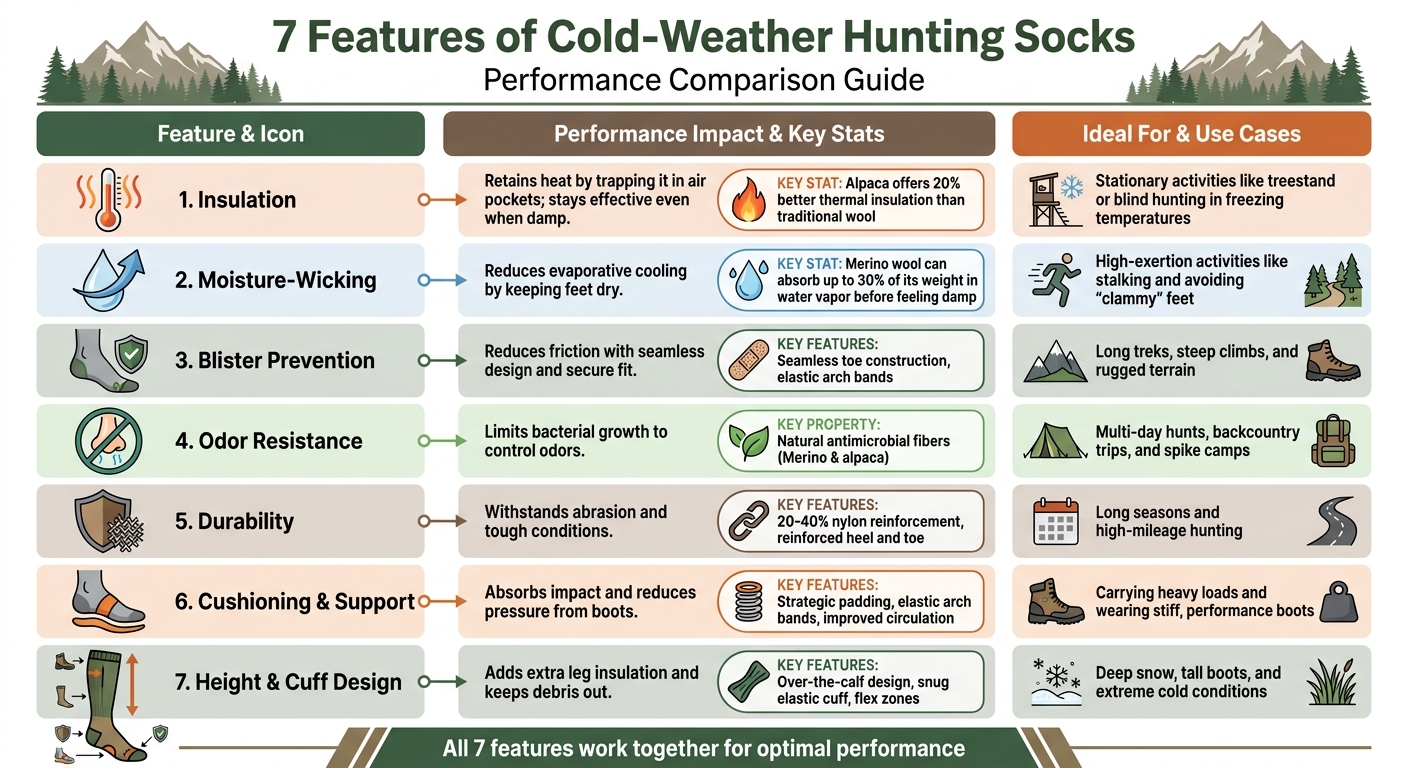
7 Essential Features of Cold-Weather Hunting Socks Performance Comparison
1. Insulation for Extreme Cold
Insulation and Thermoregulation
When it comes to cold-weather hunting socks, their main job is to create thermal loft - tiny air pockets that trap body heat and protect against freezing temperatures. The effectiveness of insulation comes from the fiber's internal structure, not just its thickness. For instance, alpaca fibers are naturally hollow, which allows them to trap more air, offering about 20% better thermal insulation than wool. Merino wool is another excellent option, known for its ability to create loft and maintain warmth even during long periods of inactivity.
These fibers also regulate temperature effectively. They help prevent overheating during activity while keeping you warm when you're stationary.
But insulation alone isn't enough to keep your feet warm in extreme conditions.
Moisture Control and Breathability
Insulation can quickly fail if moisture builds up. When sweat lingers on your skin, it can cause rapid cooling, leading to numbness or even frostbite. That’s why moisture-wicking is just as important as insulation. Both alpaca and Merino wool excel at pulling moisture away from the skin while retaining their insulating abilities.
For hunts that involve a mix of hiking and long periods of stillness, many hunters rely on a two-sock system. This setup includes:
A thin synthetic liner (often made from polypropylene) to wick moisture away from the skin.
A thicker outer sock, typically made of Merino or alpaca, for insulation.
This layered approach not only keeps your feet warm but also ensures the socks maintain their fit and function, even in harsh conditions.
Comfort and Fit for Long Wear
The fit of your socks can make or break their insulating performance. Socks that are too tight compress the air pockets needed for insulation and can restrict circulation, reducing warmth. To avoid this, it’s essential to match the sock thickness to the interior volume of your boots. This ensures the insulating structure stays intact without unnecessary compression.
High-quality hunting socks often blend natural fibers with nylon and spandex to provide durability, strength, and a snug, irritation-free fit. For example, Suri Performance Alpaca Socks use alpaca’s thermal advantages combined with reinforced construction to deliver both warmth and long-lasting comfort.
sbb-itb-855989e
2. Moisture-Wicking Properties
Moisture Control and Breathability
Socks play a crucial role in keeping your feet comfortable by acting as a cooling system. The key to this system? Moisture-wicking. When you're trekking through rugged terrain or hiking to your stand, your feet naturally sweat. If that moisture lingers on your skin, it can quickly lead to a chilling effect once you stop moving. This happens because wet skin loses heat much faster than dry skin.
"Think of your sock as the engine for your foot's microclimate. Its main job is to pull sweat away from your skin, stopping that rapid, bone-chilling cold that sets in when moisture evaporates." - Magic Eagle
The best hunting socks are designed with fibers that draw sweat away from your skin and move it to the sock's outer layer, where it can safely evaporate. Merino wool, for example, can absorb up to 30% of its weight in water vapor before it even feels damp. Alpaca fibers take it a step further - they naturally repel liquid water while still managing vapor, making them ideal for cold-weather conditions. Products like Suri Performance Alpaca Socks take advantage of alpaca's moisture resistance and pair it with smart construction for long-lasting comfort. These natural fibers work hand-in-hand with advanced synthetics like polypropylene, which is entirely hydrophobic and channels moisture outward for faster evaporation.
Durability Under Heavy Use
Effective moisture-wicking does more than just keep your feet dry - it also helps your socks last longer. When fibers remain dry, they hold up better against friction and resist breaking down. Blends that combine Merino or alpaca with nylon offer increased durability without sacrificing moisture management. Just remember: avoid using fabric softeners when washing your socks. These can clog the tiny pores in technical fibers, reducing their ability to wick moisture effectively.
Warmest Hunting Socks TEST | Merino, Alpaca, Electric Heated
3. Blister Prevention Features
Hunting often involves long hours on your feet, making blister prevention a top priority. Along with insulation and moisture-wicking, smart design elements play a critical role in keeping your feet blister-free during extended outings.
Moisture Control and Breathability
Sweaty feet are a recipe for blisters. When skin softens from moisture, friction increases, leading to painful hotspots. Effective moisture management is key to avoiding this. Alpaca fiber stands out here - it naturally repels liquid water while still allowing vapor to escape. This unique property keeps feet drier, which significantly reduces the risk of blisters caused by damp, friction-prone conditions.
Comfort and Fit for Long Wear
A proper fit is just as important as moisture control. Socks that shift inside your boots are a major culprit behind blisters. Features like seamless toe construction eliminate those irritating ridges that can rub against your skin, especially during downhill treks when your toes are constantly pushed forward.
"A flat, smooth seam at the toe box eliminates the main source of rubbing and blistering, especially on downhill treks where your toes are constantly pushed forward." - Magic Eagle
To further enhance comfort, elastic arch bands wrap snugly around the midfoot, holding the sock securely in place and preventing the dreaded bunching and sliding that often lead to friction injuries. Additional targeted cushioning at key areas like the heel, ball of the foot, and Achilles absorbs impact and eases pressure points.
For hunters tackling steep or uneven terrain, a two-sock layering system can be a game-changer. By wearing a thin synthetic liner beneath a thicker insulating sock, you create a friction-reducing barrier. Instead of rubbing against your skin, the two sock layers glide against each other, keeping your feet protected.
4. Odor Resistance for Multi-Day Use
When you're out on a multi-day backcountry trip, keeping your gear fresh isn't just about comfort - it's about maintaining a more pleasant environment for you and your companions. And when it comes to socks, odor control starts with understanding how bacteria grow and how certain fibers naturally combat those unpleasant smells.
Moisture Control and Breathability
Odor resistance is closely tied to how well a sock manages moisture. Why? Because bacteria thrive in warm, damp conditions, creating the odors we all want to avoid. Natural fibers like Merino wool and alpaca excel at this by drawing liquid sweat away from your skin and absorbing moisture vapor into their core. This keeps the sock's surface dry, making it much harder for odor-causing microbes to flourish.
"Merino's benefits go way beyond just warmth and moisture control. It's also naturally antimicrobial, which means it stops odor-causing bacteria from growing." - Magic Eagle
Merino wool’s ability to absorb moisture helps reduce bacterial growth. Similarly, alpaca fibers offer comparable antimicrobial benefits, along with excellent moisture-wicking capabilities. This makes them especially well-suited for cold-weather conditions, where you need warmth and freshness. Plus, effective moisture management extends the life of your socks, preserving their antimicrobial and durable qualities over time.
Durability Under Heavy Use
The antimicrobial properties of Merino wool and alpaca are built into the fibers themselves - they won’t wash out or wear off. However, to keep these benefits intact, proper care is key. Skip the fabric softeners, as they can block the tiny pores that allow moisture to escape. Instead, turn your socks inside out before washing to remove sweat and dead skin cells effectively. Air-dry them or use the lowest heat setting to protect both the fibers and the elastic components.
For hunters tackling multi-day adventures, Suri Performance Alpaca Socks are a solid choice. They combine alpaca’s natural odor resistance with reinforced durability. Their breathable design ensures moisture is managed effectively, keeping your socks fresh and ready for extended use.
5. Durability for Rugged Conditions
Durability Under Heavy Use
When you're tackling harsh terrain, durability becomes just as important as moisture control and blister prevention. Cold-weather hunting is no joke - your gear faces constant challenges from rocky paths, thick brush, and uneven ground. All that friction between your boots and socks can wear down materials fast. This is why choosing the best sock materials is so important - pure wool just doesn’t cut it. As Magic Eagle explains:
"Pure wool lacks the necessary grip and flexibility, causing it to bunch and wear quickly in extended hunts."
Durability goes hand in hand with features like moisture wicking and anti-blister technology, creating socks that can handle the toughest conditions.
To withstand heavy use, high-quality hunting socks incorporate 20–40% nylon for added strength in areas prone to wear, such as the heel and toe. Spandex or Lycra is often included to maintain the sock’s shape and prevent bunching, which can lead to early wear and tear.
Reinforced zones are the secret weapon here. Padding in key areas - like the heel, Achilles, and toe - absorbs shock and shields the fibers from breaking down over time. This kind of thoughtful design can mean the difference between a sock that barely makes it through one season and one that holds up for years.
Take Suri Performance Alpaca Socks, for example. These socks blend alpaca fibers, known for their incredible strength and lightweight properties, with reinforced features to handle tough environments. They include targeted cushioning in high-impact zones and breathable mesh panels for a balance of protection and flexibility. Whether you're on a short trek or a multi-day hunt, they’re built to last.
Finally, how you care for your socks matters just as much as their construction. For longer-lasting performance, turn them inside out before washing and stick to the lowest heat setting to protect both the elastic and the outer fibers. A little extra care goes a long way in preserving their durability.
6. Cushioning and Arch Support
Comfort and Fit for Long Wear
When it comes to long hunting trips, cushioning and arch support aren't just nice-to-haves - they're essential for keeping your feet comfortable and protected.
In cold weather, effective cushioning and arch support help combat fatigue. Strategic padding in key areas like the heel, ball of the foot, and Achilles tendon absorbs impact during long walks, easing strain on your feet. This pairs perfectly with moisture-wicking and insulation features to keep you comfortable, even in freezing conditions.
Elastic arch bands provide snug, supportive compression, which holds the sock securely in place. This reduces friction, lowers the chance of blisters, and improves blood flow. Better circulation can minimize swelling and keep your feet feeling more energized during those all-day treks.
Cushioning serves another purpose, too. Thick terry loops trap air, adding warmth, while padded zones in areas like the shin and Achilles protect against the pressure and rubbing caused by stiff boots and tight laces. Without proper arch support, though, even the best cushioning can fall flat. It's essential that your boots leave enough room for cushioned socks; too tight, and you risk compressing the insulation and limiting blood flow. If you're between sizes, opt for a smaller sock size to avoid bunching and friction.
Suri Performance Alpaca Socks take these features to the next level. With targeted cushioning and supportive arch bands, they’re designed for top-tier performance in cold-weather hunts. Plus, the natural alpaca fiber adds a layer of softness, is itch-free, and naturally wicks moisture, keeping your feet dry and comfortable all day long.
7. Height and Cuff Design for Protection
Insulation and Thermoregulation
The height of your socks plays a big role in keeping you warm. Over-the-calf or knee-high socks help trap body heat, providing extended thermal protection. A snug elastic cuff also keeps cold air and debris out by sealing the gap between your boots and pants. In harsh environments, taller socks act as a barrier against brush and snow, making them ideal for cold-weather hunts. These features not only boost insulation but also stand up to the tough conditions hunters often face.
Durability Under Heavy Use
Durability goes hand in hand with insulation, especially during long hunts. High-quality socks provide cushioning along the shin, reducing the impact from boots and preventing bruising. Many designs include flex zones - thinner, more breathable areas above the ankle - that allow natural foot movement without causing the fabric to bunch or bind as you walk. This combination of comfort and resilience ensures your socks can handle heavy use.
Comfort and Fit for Long Wear
While insulation and moisture-wicking are key, the right cuff design is just as important for all-day performance. Elastic cuffs and arch support help keep socks in place, reducing friction and preventing slipping. However, the cuff should be snug without being too tight, as overly constrictive cuffs can restrict blood flow. Suri Performance Alpaca Socks strike this balance perfectly by blending natural alpaca fiber with performance materials. They provide a secure fit that maintains elasticity while ensuring proper circulation, making them a great choice for long, cold hunting trips.
Feature Comparison Table
Each feature is designed to keep you warm, dry, and comfortable, even in freezing conditions.
The table below highlights how these key features improve performance in the field. Whether you're sitting in a treestand at sub-zero temperatures or navigating rugged terrain, these features work together to regulate your body temperature, prevent discomfort, and ensure you stay protected during your hunt.
Feature
Performance Impact
Ideal For
Insulation
Retains heat by trapping it in air pockets; stays effective even when damp.
Stationary activities like treestand or blind hunting in freezing temperatures.
Moisture-Wicking
Reduces evaporative cooling by keeping feet dry.
High-exertion activities like stalking and avoiding "clammy" feet.
Blister Prevention
Reduces friction with a seamless design and secure fit.
Long treks, steep climbs, and rugged terrain.
Odor Resistance
Limits bacterial growth to control odors.
Multi-day hunts, backcountry trips, and spike camps.
Durability
Withstands abrasion and tough conditions.
Long seasons and high-mileage hunting.
Cushioning
Absorbs impact and reduces pressure from boots.
Carrying heavy loads and wearing stiff, performance boots.
Height (OTC)
Adds extra leg insulation and keeps debris out.
Deep snow, tall boots, and extreme cold conditions.
This breakdown emphasizes the importance of choosing socks that combine these features for peak performance during your hunt.
Alpaca fibers stand out for their exceptional insulation, which pairs perfectly with moisture-wicking properties to combat the "bone-chilling cold" caused by dampness. Together, they create a system that keeps your feet warm and dry.
Suri Performance Alpaca Socks incorporate all seven features, utilizing naturally hollow alpaca fibers to deliver excellent insulation and durability. These socks are designed to handle the challenges of demanding hunts, balancing warmth, moisture control, and comfort. Understanding how these features interact helps you make the right choice to elevate your hunting experience.
Conclusion
Your socks are more than just an accessory - they’re your first line of defense against the cold. They help regulate your foot's microclimate, playing a key role in whether you stay warm and comfortable or have to cut your hunt short. By understanding how insulation, moisture-wicking, blister prevention, odor resistance, durability, cushioning, and proper height all work together, you’ll start seeing socks as essential technical gear rather than a simple piece of clothing.
These seven features - insulation, moisture-wicking, blister prevention, odor control, durability, cushioning, and proper height - are the backbone of keeping your feet warm, dry, and comfortable. As Magic Eagle puts it:
"When every component is engineered correctly, the sock disappears. You shouldn't be thinking about your feet; you should be focused on the hunt."
Suri Performance Alpaca Socks combine these features with naturally hollow alpaca fibers, which offer 20% better thermal insulation than traditional sheep’s wool. The hollow fibers create exceptional loft to trap heat, while their natural moisture-wicking and odor-resistant properties ensure your feet stay dry and fresh, even during multi-day adventures. Whether you’re braving sub-zero temperatures in a treestand or trekking across rugged terrain, these socks are designed to meet the challenges of cold-weather hunting.
The right socks don’t just keep you warm - they extend your endurance, protect you from frostbite, and let you focus entirely on your hunt. They’re the foundation that allows the rest of your gear to perform at its peak. Nail these features, and you’ll be ready for whatever the hunt throws your way.
FAQs
How do I choose the right sock thickness for my boots?
When deciding on sock thickness, think about your activity level and the weather. Thicker socks work well for keeping your feet warm in cold conditions when you're not moving much. On the other hand, lighter or medium-weight socks are better for activities like hiking or other high-energy movement, as they help prevent overheating. If you're spending long hours in freezing temperatures, thicker socks are a smart choice. But if you're staying active, thinner socks can reduce bulk and help manage sweat. No matter the thickness, make sure your socks fit properly and manage moisture to keep your feet dry and comfortable.
Do I need a liner sock in extreme cold?
In very cold conditions, wearing a liner sock can provide an additional layer of insulation while also helping to control moisture. This combination enhances warmth and comfort, especially during extended hunts. Keeping your feet dry is key to avoiding cold-related discomfort, and liner socks can play a big role in achieving that.
How should I wash technical wool or alpaca hunting socks?
To clean your technical wool or alpaca hunting socks, stick to cold or lukewarm water and a mild detergent specifically designed for wool. Make sure the detergent is free of bleach or fabric softeners. You can either hand wash them gently or use the delicate cycle on your washing machine. Avoid using hot water, as it can cause the socks to shrink.
After washing, carefully press out the excess water - don’t wring them out, as this can damage the fibers. Lay them flat to dry in a spot with good airflow, keeping them away from direct heat or sunlight to preserve their shape and quality.