"I liked saving money buying 4 pairs at a time and the socks are great for what I need. It's unbelievable how they could be made out of this material, yet they are so comfortable and they don't make my feet and legs itch nor do they make them hot or sweaty."
Rick S., Verified Customer
Why Breathable Socks Matter for Foot Health
Share
If your socks trap sweat, your feet are more likely to get hot, smelly, and sore. From what I see in the article, the main point is simple: socks that move moisture away from your skin can help lower friction, cut down on blisters, and keep your feet more comfortable during long hours in shoes.
Here’s the short version:
Moisture is the main problem. When sweat stays on your skin, friction goes up.
More friction can mean more blisters.
Damp socks can also lead to more odor because bacteria do better in warm, wet conditions.
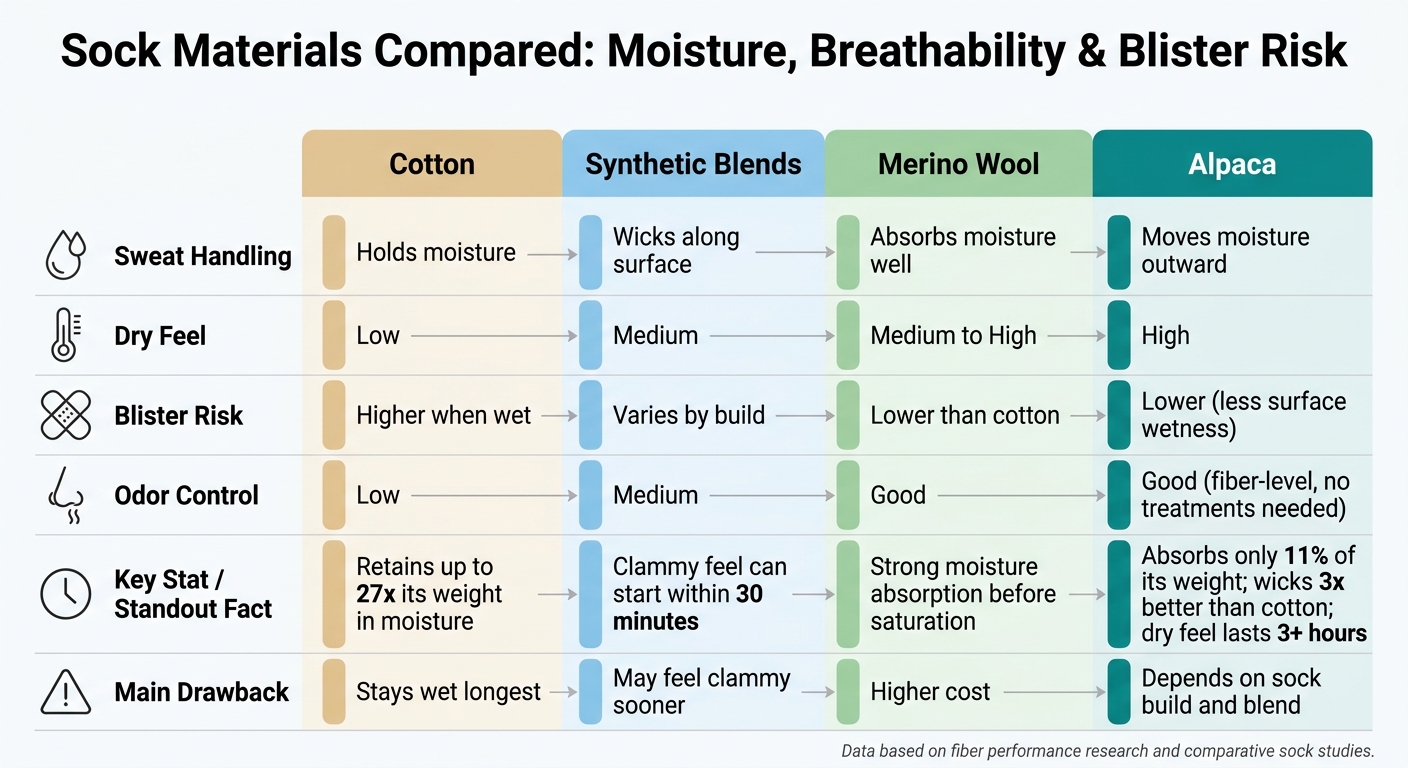
Drying time matters. One point in the article says some synthetic socks may start to feel clammy in about 30 minutes, while alpaca socks may keep a drier feel for 3+ hours.
Fiber type matters. Cotton tends to stay wet. Alpaca and some other performance fibers do a better job moving moisture away.
Sock design matters too. Mesh zones, rib knits, cushioning, and fit all affect airflow and comfort.
I’d sum it up like this: better breathability helps keep feet drier, lowers rubbing, and supports all-day comfort. The article uses alpaca as the main example because its hollow fiber structure helps with moisture movement, temperature control, and odor reduction.
If you’re choosing socks for work, hiking, travel, or long days on your feet, I’d focus on these things first:
So if I had to put the whole article into one plain answer, it would be this: breathable socks matter because dry feet are less likely to blister, smell, or feel miserable by the end of the day.
sbb-itb-855989e
Foot Moisture, Heat, and the Skin Microclimate
Your foot stays inside a shoe for hours at a stretch. That small space heats up fast. If moisture gets trapped, the skin microclimate changes almost right away. And once a sock stops moving sweat away well, humidity climbs, heat builds, and your skin starts heading in the wrong direction.
The problem starts before you can see skin damage. That's why drying speed matters so much.
How Wet Socks Change Friction and Skin Condition
Damp skin breaks down more easily under pressure. Moisture raises the friction coefficient of skin, which means wet skin is more likely to rub at the skin-sock-shoe interface and start wearing down. That's how a small hot spot turns into a blister.
Alpaca can hold more moisture inside the fiber before the sock even feels wet. That makes a big difference during long hours on your feet. When a sock doesn't breathe well, humidity gets trapped, friction goes up, and the risk of blisters and odor goes up with it. Breathable alpaca crew socks help move moisture outward and keep temperature more steady.
Why Comfort Changes Before Skin Problems Appear
Most of the time, discomfort shows up before you see damage on the skin. You'll notice the heaviness and that clammy feel long before a blister appears. Think of it as an early warning sign: the microclimate inside the shoe is no longer working in your favor.
Studies suggest that people wearing synthetic socks can notice that clammy feel within 30 minutes of moderate activity. Under similar conditions, alpaca socks can keep a dry feel for more than 3 hours. That's a huge gap, and it's exactly why drying speed matters on long days.
Moisture Management and Blister Prevention
Inside the skin microclimate, one thing matters most: does the sock hold sweat against your skin, or move it away?
Wicking works through capillary action. It pulls sweat off your skin and pushes it toward the outer part of the sock, where it can evaporate. That matters a lot when your shoes stay warm and closed for hours at a time.
What Studies Show About Wetness and Blister Risk
Dry socks help keep friction lower. Damp or soaked socks do the opposite. As skin softens, friction goes up, and so does blister risk. One cited finding reports that natural fibers can reduce skin friction rates by up to 23% compared with synthetic blends.
So moisture control isn't just a comfort feature. It's the first line of blister prevention.
Why Drying Speed Matters During Long Days on Your Feet
Drying speed is where socks start to separate from each other. If a sock can't evaporate moisture as fast as your foot produces it, sweat builds up, the fabric gets saturated, and blister risk climbs fast.
Alpaca handles this in a different way. It moves moisture as vapor and helps limit surface wetness through its hollow-core fiber structure. Alpaca can absorb 15x more moisture vapor than synthetic performance fabrics before the sock surface even feels wet.
Cotton behaves very differently. It absorbs liquid and stays wet, which keeps skin softer and more prone to blisters. In plain terms, a wet cotton sock can turn a long day on your feet into a problem.
That moisture control comes down to both fiber type and knit structure. Those factors matter just as much as the sock's fit.
Breathable Fibers and Sock Construction: Why Alpaca Stands Out
How Fiber Type Affects Drying, Airflow, and Sweat Movement
Once sweat gets trapped or pushed away from the skin, the next thing that matters is the fiber itself. Breathability comes down to how well a fiber deals with moisture and airflow.
Here’s the short version: cotton tends to hold sweat, polyester can wick moisture along the surface, merino can absorb more moisture, and alpaca pushes moisture outward through its hollow fibers while staying lighter and drier.
Alpaca’s hollow fibers help move moisture away so it can evaporate faster. The fiber absorbs only about 11% of its weight in moisture, while cotton can retain up to 27 times its weight, which helps explain why alpaca dries fast and doesn’t feel as heavy when conditions get sweaty. Alpaca also wicks moisture about 3 times better than cotton.
There’s another piece people often notice after hours on their feet: comfort. Alpaca has a smooth surface, which helps cut down on skin friction. That can matter a lot when you’re trying to avoid blisters during long workdays, hikes, or travel.
How Knit Structure Changes Breathability
Fiber is only part of the story. Knit structure decides how much of that airflow actually reaches your skin and how fast moisture can get out.
Rib knits create small air pockets in the fabric, which helps air move more freely. Mesh zones, often placed on the instep, open up airflow in spots where heat tends to build. Put together, these features help moisture move outward and dry off with less resistance.
You can see these same ideas in actual sock design. Suri Performance Alpaca Socks use alpaca fiber, mesh zones, targeted cushioning, and reinforced high-wear areas to support breathability and durability.
Odor Control, Temperature Regulation, and Day-Long Comfort
Why Drier Feet Usually Smell Less
Moisture control does more than cut down on blisters. It also plays a big part in odor and temperature.
When socks stay warm and damp, odor-causing bacteria have an easier time multiplying. If a fabric moves moisture away from the skin, that risk drops. That’s where moisture-vapor transfer comes in. Materials that handle moisture vapor well help keep socks from getting to that damp, swampy stage in the first place.
Unlike treated socks, alpaca’s odor resistance comes from the fiber itself. Its naturally slightly acidic pH and lack of lanolin help make the surface less supportive of bacterial buildup over time. In plain terms, the fiber is doing the work on its own, without depending on added treatments that can fade with wear and washing. A drier sock also means less heat trapped against the skin.
Temperature control follows the same pattern. Breathable fibers move moisture to the outer surface, where it can evaporate. That evaporation removes heat and helps reduce the overheating that can kick off heavier sweating. Alpaca adds another piece to the puzzle: its hollow medullary cavity traps still air for insulation, which helps feet stay warm in cold conditions while still letting heat escape during higher-output activity, even inside a shoe.
That mix matters for long days on your feet. If a sock can help manage sweat, heat, and odor at the same time, it’s doing a lot more than just acting as a layer between your foot and your shoe.
Conclusion: What the Research Means for Choosing Socks
Breathable socks help feet stay drier, cooler, and fresher. Alpaca supports moisture-vapor movement, provides insulation under compression, and resists bacterial adhesion without relying on treatments that wash out over time. Suri Performance Alpaca Socks put those findings to work with moisture-wicking, odor-resistant, thermo-regulating alpaca fiber for hiking, work, and outdoor use.
FAQs
How do breathable socks help prevent blisters?
Breathable socks help prevent blisters by cutting down on moisture, heat, and friction. Moisture-wicking fibers like alpaca pull sweat away from the skin so it can evaporate fast, which helps keep your feet dry.
That matters because dry skin is less likely to soften and turn into hot spots when your foot rubs against the sock or shoe. Alpaca fiber also has a smooth texture, which helps reduce friction and keeps the inside of the sock cooler and drier. That combo makes blisters less likely to form.
What makes alpaca fiber more breathable?
Alpaca fiber is breathable because its semi-hollow core helps air flow through the fiber while moisture vapor moves away from your skin.
That means heat and sweat can escape instead of getting trapped. The result is feet that stay drier and cooler. Its smooth surface also helps cut down on friction and keeps air moving steadily.
Which sock features improve airflow most?
Look for socks that pair alpaca fiber with breathable design details. Alpaca fiber has a semi-hollow structure that helps air move through the fabric, supports temperature control, and helps moisture dry faster.
For extra airflow, Suri Performance Alpaca Socks use mesh zones in high-heat areas. Put together, those features help keep your feet dry, cool, and comfortable all day.