"I liked saving money buying 4 pairs at a time and the socks are great for what I need. It's unbelievable how they could be made out of this material, yet they are so comfortable and they don't make my feet and legs itch nor do they make them hot or sweaty."
Rick S., Verified Customer
Breathable Mesh Socks for Work: A Guide
Share
When you're on your feet all day in tough jobs like construction or warehousing, choosing the right socks can make or break your comfort. Breathable mesh socks are designed to keep your feet dry, reduce blisters, and manage odor. Here's what you need to know:
Why They Work: Mesh zones improve airflow, synthetic materials wick moisture, and natural fibers like alpaca regulate temperature.
Key Features: Look for targeted ventilation, reinforced cushioning, and durable fiber blends like alpaca or Merino wool.
Fit Matters: A snug fit with arch support and seamless toes prevents slipping and bunching, reducing friction and discomfort.
Durability: High-quality socks last longer and perform better after repeated use and washing.
Investing in the right socks, like alpaca blends, can keep your feet comfortable and blister-free during long shifts, even in extreme conditions. Prioritize moisture-wicking, proper fit, and durability for maximum performance.
Benefits of Breathable Mesh Socks
What Are Breathable Mesh Zones?
Breathable mesh zones are specially designed ventilation areas woven into the fabric of socks. These zones, often located on the instep (the top of your foot) or along the leg in ribbed patterns, allow heat to escape while letting fresh air circulate around your feet. By aligning with natural heat zones, these mesh areas ensure steady airflow, helping to reduce sweat buildup. This thoughtful design is the backbone of many other benefits these socks provide.
Moisture-Wicking and Odor Control
Alpaca fibers are a game-changer when it comes to moisture management. They draw sweat away from your skin and move it to the surface of the sock, where it evaporates quickly. Unlike cotton, which can leave your feet feeling damp, alpaca fibers keep them dry and comfortable. The hollow structure of alpaca fibers enhances this moisture transport, reducing the chances of blisters and fungal infections - especially crucial in tough work environments.
One customer, Chad S., shared his experience:
These struck the right balance - breathable, comfy, and they kept my feet dry the whole time. No odor either, even after multiple days hoofing it.
Alpaca fibers also naturally resist microbial growth, ensuring your socks stay fresh, even during long shifts.
Durability and Comfort for Demanding Work
On top of moisture control, these socks are built for endurance and comfort. High-quality work socks combine strategic ventilation with reinforced areas, like the heel and toe, to withstand wear and tear. The inclusion of mesh zones adds to their durability, making them a reliable choice for demanding environments.
Take the Suri Performance Alpaca Socks, for example. They’ve earned a 4.73/5 rating from 205 reviews and are trusted by over 10,000 customers. John H., a satisfied user, praised their performance:
No blisters, no stink, even after a day on the job site.
For challenging conditions, look for socks that pair mesh ventilation with targeted cushioning to keep your feet cool and protected from impact.
Checklist: How to Choose Breathable Mesh Socks for Work
Fiber Blend and Performance Properties
Start by checking the fiber content. Alpaca and Merino wool blends are excellent for demanding jobs since they wick moisture effectively and help regulate temperature throughout the year. Wool can absorb up to 30% of its weight in moisture while still feeling dry, which is a game-changer for those long shifts on your feet. On the other hand, avoid 100% cotton - it holds onto moisture, increasing the risk of blisters and discomfort. Look for blends that include a small percentage of nylon or polyester for added durability but prioritize natural fibers for keeping odors in check.
Mesh Placement and Targeted Ventilation
Pay attention to where the mesh is placed. The instep (top of your foot) and the leg area are hotspots for heat, so these are the ideal zones for ventilation. If you wear rubber boots or other non-breathable footwear, mesh in the leg area is crucial - it helps moisture escape upward and out of the boot collar. At the same time, areas like the heel and toe, which experience the most friction, should remain cushioned and free of mesh for added durability. Designs with these features have consistently performed well in field tests, offering both breathability and comfort. Just ensure the cushioning and ventilation work together to provide impact protection without overheating.
Cushioning and Impact Protection
For jobs that require heavy-duty footwear, look for socks with terry loop cushioning in high-impact areas like the heel, ball of the foot, and toe. If you wear steel-toe or composite-toe boots, choose socks with an "extended protective toe box" to protect your feet from rigid boot caps while managing moisture buildup. Hybrid designs that combine targeted padding with mesh ventilation are ideal - these offer protection where it’s needed most while preventing heat from getting trapped. Full-cushion socks might seem appealing for maximum protection, but they can run hot. Instead, opt for designs that strategically place mesh zones, such as behind the toe or along the instep, to balance comfort and breathability.
Fit, Compression, and Stay-Up Design
A proper fit is just as important as the materials. Look for features like arch support, seamless toes, and enhanced heel pockets to keep the socks securely in place. Match the sock height to your boots - Micro Crew socks work well for 8-inch boots, while taller boot-height designs are better for 10-inch boots. If you’re standing for extended periods, consider socks with arch compression to promote blood flow and reduce swelling. Owen from Darn Tough’s Product Design team sums it up perfectly:
The best socks, the most comfortable socks for work, are the socks you do not notice.
Durability and Post-Wash Performance
Finally, durability is key. Look for reinforced heels and toes made with high-density knitting or abrasion-resistant materials like nylon to ensure they last. Blends of synthetic and natural fibers tend to outlast socks made entirely of natural materials. Before committing to a brand, test how the socks perform after multiple washes - they should hold their shape, elasticity, and structure without sagging. For example, Suri Performance Alpaca Socks are specifically designed with reinforced construction to handle the wear and tear of tough work conditions.
Matching Socks to Your Work Environment
Construction and Heavy-Duty Jobs
If you’re working 14+ hour shifts on concrete floors or wearing steel-toe or composite-toe boots, you need socks that can handle the grind. Look for options with reinforced heels and toes, plus targeted cushioning to combat prolonged friction and absorb heavy impacts. Natural fibers like alpaca go a step further, offering a unique advantage: they’re naturally fire-resistant. This makes them a smart pick for electricians, utility workers, or anyone exposed to sparks or open flames. Along with their durability, alpaca socks like Suri Performance Alpaca Socks are designed with mesh zones to keep your feet dry, even during grueling workdays.
Indoor Jobs in Warehouses and Manufacturing
Working in warehouses or manufacturing facilities often means long hours on hard floors and dealing with fluctuating indoor temperatures. In these environments, socks with light-to-medium cushioning and well-placed mesh zones for ventilation are a game-changer. Blisters are a common issue, with around 63% of blue-collar workers reporting friction-related foot problems. To combat this, choose socks that fit snugly and provide arch support to reduce fatigue. Materials like alpaca and merino wool excel here, as they naturally regulate temperature, keeping your feet comfortable no matter how conditions shift. For those transitioning between indoor and outdoor tasks, the stakes are even higher - outdoor trades require a different level of performance.
Outdoor Trades and Field Work
Outdoor jobs come with their own set of challenges: freezing mornings, scorching afternoons, rain, mud - you name it. This is where thermo-regulating fibers like alpaca stand out. Thanks to its hollow-core structure, alpaca provides insulation in the cold while staying breathable enough to release heat as temperatures rise. It also manages moisture effectively, preventing sweat from turning into blisters or that dreaded "zombie foot" feeling. Wildlife biologist Forrest Galante sums it up perfectly:
You can take these boot socks and wear them from literally subfreezing and your toes don't get cold to 80° and you don't notice the difference.
For landscapers, utility crews, and field technicians, this versatility is a must. Alpaca fibers wick moisture up to three times faster than regular wool, keeping your feet dry and blister-free. To maximize their lifespan, rotate at least three pairs and let them air-dry for 48 hours between uses - this can extend their durability by up to 40%.
sbb-itb-855989e
5 Best WORK BOOT SOCKS | Tough Socks for Steel Toe Boots
Fit and Comfort Check Before Wearing
Choosing socks with the right material and design is just the first step. To truly maximize their performance, you need to ensure they fit properly before slipping on your boots. Start by checking that the mesh zones are positioned correctly on the top of your foot - this is where heat tends to build up. Make sure your sock size aligns with your shoe size for a snug fit. Once the sock is on, double-check that the mesh isn’t twisted or bunched and that the reinforced heel and toe are securely in place.
Align Mesh Zones for Proper Ventilation
The placement of mesh zones plays a big role in keeping your feet cool. Before putting on your boots, confirm that these zones are centered on the top of your foot. Misaligned mesh can reduce ventilation and make your feet feel warmer than they should. Additionally, ensure the reinforced heel and toe are positioned correctly - these areas act as anchor points to keep the sock in place. Paying attention to these details ensures your socks work as intended.
Test for Slipping and Bunching
A sock that slips or bunches can quickly turn into a problem. Friction caused by excess fabric can lead to blisters, so it’s crucial to test the fit. Put on your socks, lace up your boots, and take a few steps. The sock should fit snugly, almost like a second skin, without any fabric gathering at the toes or heel. The arch and heel should feel secure, with no slipping. As Kevin Dean from Darn Tough points out:
Performance fit helps socks stay in place, greatly reducing bunching, slipping, and sliding issues common in too-loose socks.
Loose or wrinkled fabric not only affects comfort but can also block airflow, creating hot spots. Ensuring a secure fit is key to keeping your feet comfortable and blister-free throughout the day.
Assess Heat and Moisture After Use
At the end of the day, your socks can tell you a lot about their performance. Remove your boots and check if your socks feel light and dry. If they’re damp or heavier than usual, the moisture-wicking properties may not be working as they should. Pay attention to any areas of your feet that feel unusually warm - this could signal poor air circulation. Look for redness or irritation around the toes and heel, as these are early signs of friction or excess moisture that could lead to blisters. Even a quick sniff can be informative; any odor might mean moisture and bacteria are being trapped instead of evaporating. Ideally, your socks should leave your feet feeling dry and cool, so any signs of dampness or overheating may indicate they’re not the best choice for your work environment.
Conclusion
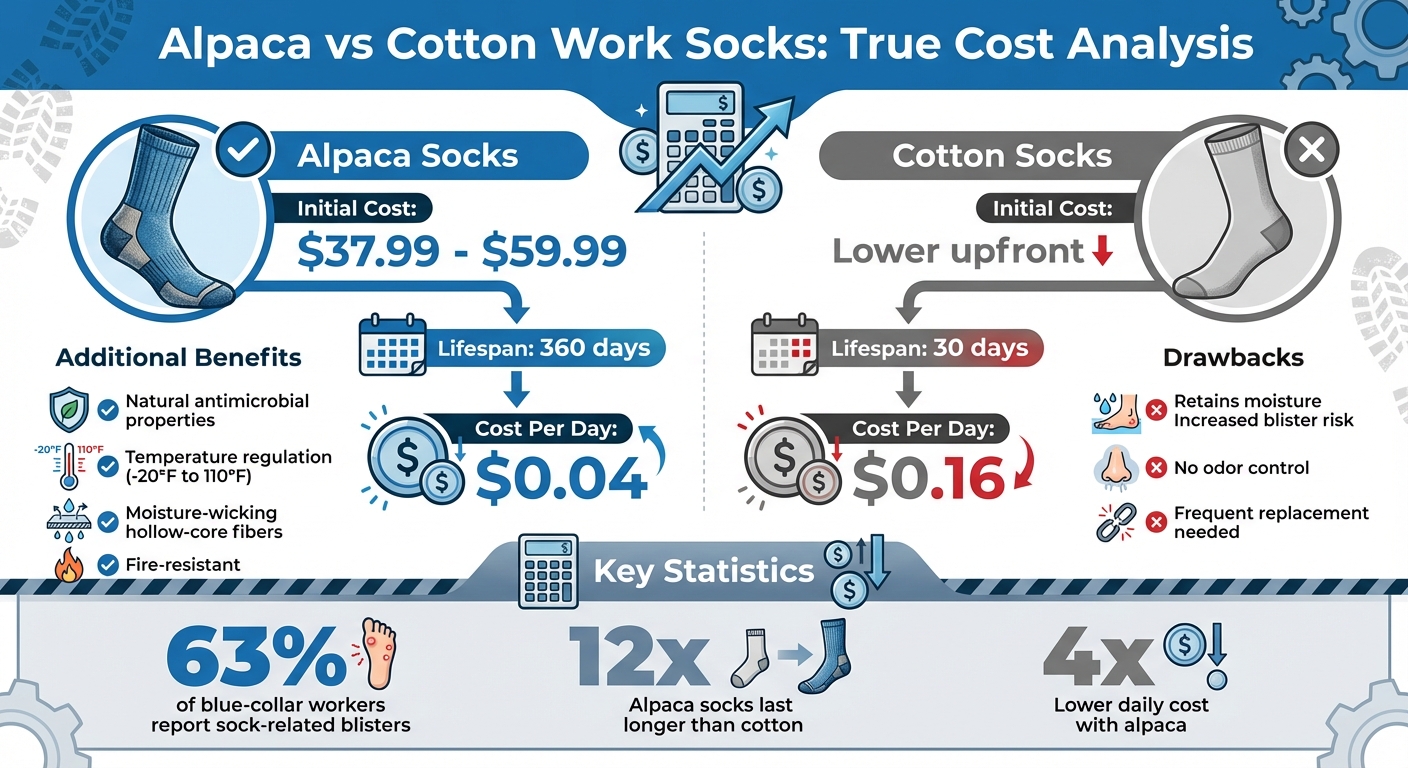
Cost Comparison: Alpaca vs Cotton Work Socks Over 360 Days
Breathable mesh socks can make a world of difference during long shifts, keeping your feet dry, cool, and comfortable. When your feet stay free of moisture, you’re less likely to deal with blisters, fungal infections, or the kind of foot fatigue that turns every step into a struggle. With over 60% of blue-collar workers reporting sock-related blisters, picking the right pair isn’t just a minor decision - it’s essential for staying on the job and avoiding unnecessary pain.
Suri Performance Alpaca Socks offer a smart solution for physically demanding work environments. Made from a blend of premium alpaca fibers, nylon, and spandex, these socks are designed to wick away moisture and regulate temperature effectively. Thanks to the hollow-core structure of alpaca fiber, they naturally adjust to extreme temperatures, keeping your feet comfortable whether you’re braving -20°F in a freezing warehouse or enduring over 110°F on a scorching construction site.
The long-term benefits of investing in high-quality socks are undeniable. While premium alpaca socks fall in the $37.99 to $59.99 price range, they far outlast cheaper cotton blends. In fact, alpaca socks can last up to 360 days, compared to just 30 days for cotton socks. That breaks down to about $0.04 per day for alpaca versus $0.16 per day for cotton. Plus, their natural antimicrobial properties help keep odors under control during grueling 14+ hour shifts while maintaining their durability.
When it comes to your feet, quality matters. Use the checklist provided in this guide to evaluate your current socks, focusing on critical features like fiber composition, mesh design, cushioning, and overall fit. Make sure every aspect works together for maximum comfort. Test new pairs over full shifts before committing, and don’t shy away from spending a little more for something you’ll wear 8 to 12 hours a day. The right breathable mesh socks will let you concentrate on your work - not on how soon you can take off your boots.
FAQs
Why are alpaca fibers a better choice than cotton for work socks?
Alpaca fibers are an excellent pick for work socks, thanks to their ability to wick moisture up to three times faster than cotton. This means your feet stay dry and comfortable, even during those long, grueling shifts. While cotton can hold up to 60% of its weight in water, alpaca fibers only retain about 8%, making them far more effective at managing sweat.
On top of that, alpaca socks provide top-notch insulation, durability, and natural odor resistance. They keep your feet warm, fresh, and well-supported, even in tough conditions. Whether you're tackling physically demanding workdays or enjoying outdoor adventures, these socks are built to deliver the comfort and reliability you need.
How do mesh zones in socks help keep your feet comfortable during long work shifts?
Mesh zones in socks serve as built-in ventilation panels, promoting airflow to release heat and wick away moisture. This design helps keep your feet cool, dry, and comfortable - even during demanding work shifts. By cutting down on sweat and friction, these zones can reduce irritation and fatigue, making them ideal for long hours of standing or movement.
Why does wearing properly fitting socks help prevent blisters?
Wearing socks that fit just right plays a key role in keeping blisters at bay. They minimize friction between your skin and footwear, which is often the main culprit behind those painful spots. Plus, well-fitted socks are great at wicking away moisture, helping to keep your feet dry and less likely to become irritated. This combination is a game-changer, especially during long hours of activity or work when your feet need extra protection.