"I liked saving money buying 4 pairs at a time and the socks are great for what I need. It's unbelievable how they could be made out of this material, yet they are so comfortable and they don't make my feet and legs itch nor do they make them hot or sweaty."
Rick S., Verified Customer
Blister Prevention: Alpaca Socks for Tough Jobs
Share
If you’re constantly on your feet for tough jobs like construction, farming, or warehouse work, blisters can be a painful and frustrating problem. The main culprits? Friction, sweat, and heat inside heavy boots. Standard socks, especially cotton, often make things worse by trapping moisture and increasing irritation.
Alpaca socks offer a practical solution by:
Reducing friction with smooth fibers that prevent chafing.
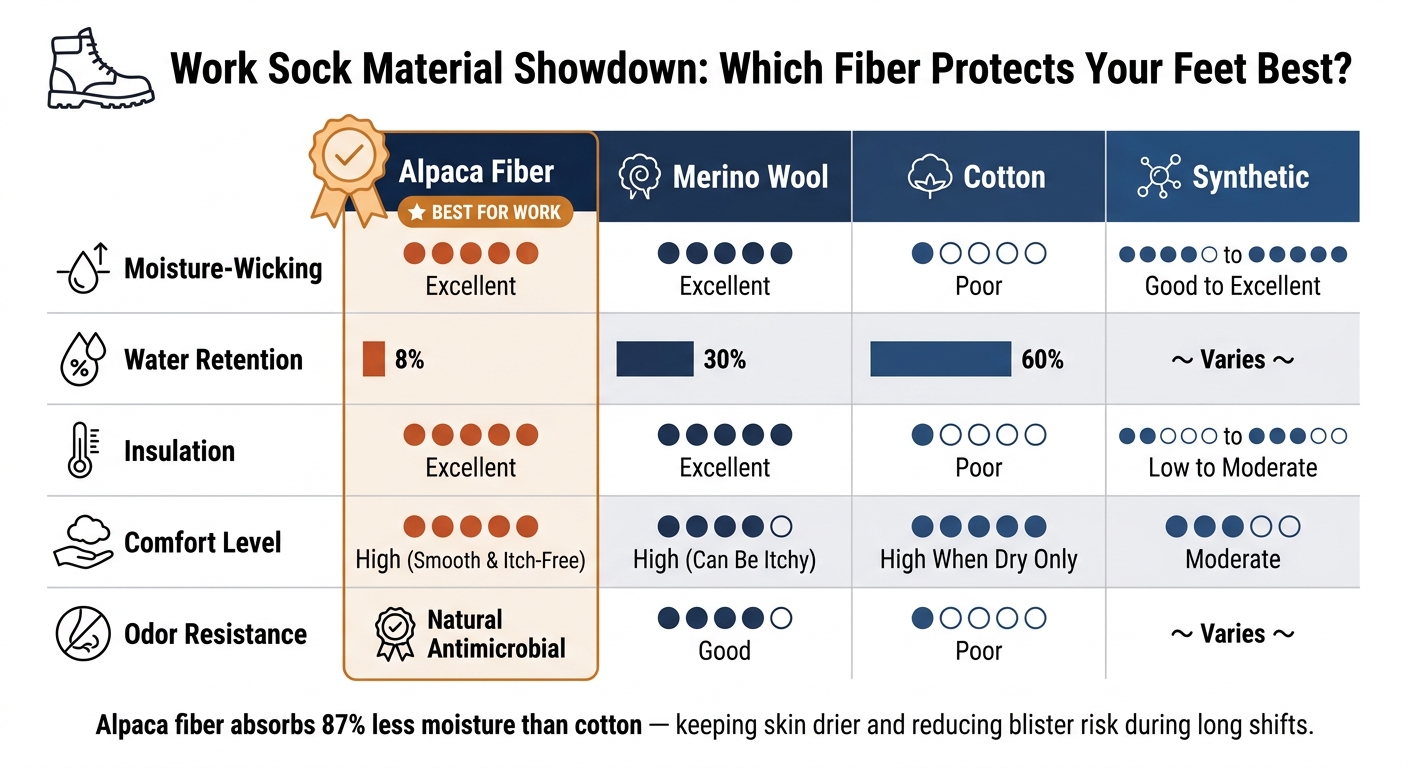
Wicking moisture to keep feet dry (absorbing only 8% moisture compared to cotton’s 60%).
Regulating temperature to combat heat buildup in boots.
Resisting odors thanks to natural antimicrobial properties.
These features make alpaca socks ideal for long shifts, keeping feet comfortable and blister-free. For demanding work environments, choosing durable alpaca work socks adds extra cushioning, reinforced areas, and a snug fit to prevent slippage.
How to use Alpaca Wool for Blister Prevention
sbb-itb-855989e
Common Workday Conditions That Cause Blisters and Foot Discomfort
Workday conditions can significantly contribute to blisters, especially in demanding jobs where friction, moisture, and heat often combine to create the perfect storm for foot discomfort.
Friction and Movement Inside Heavy Work Boots
Heavy work boots, while essential for protection, can cause repeated rubbing due to constant micro-movements during an 8–12 hour shift. The heel is particularly at risk because it tends to lift slightly with each step, creating repeated contact with the back of the boot. Similarly, the forefoot may slide forward and backward during activities like climbing stairs or shifting directions, while toes can press uncomfortably against the toe box on inclines.
These repetitive motions lead to "hot spots", areas of irritation that can quickly turn into painful blisters. Workers in physically demanding roles - like roofing, landscaping, or warehousing - are especially vulnerable, particularly when their boots have even the slightest looseness.
Sweat and Moisture Build-Up Inside Boots
Moisture is another major culprit. Feet naturally produce a lot of sweat during physical labor, and in the enclosed environment of a work boot, that sweat has nowhere to go. Over time, this moisture softens the skin in a process known as maceration, which makes the skin more susceptible to blisters as the shift wears on.
Condition
Main Cause
Effect on Feet
High Friction
Loose fit, rigid materials, repetitive motion
Hot spots, chafing, and skin layer separation
Moisture Buildup
Long hours, non-wicking socks, poor ventilation
Softened skin and increased blister risk
Heat & Poor Airflow
Insulated or waterproof boots, active labor
Swelling, sweating, and faster blister formation
Heat and Poor Airflow in Protective Footwear
Heat adds another layer of discomfort. Protective boots - whether insulated, waterproof, or equipped with steel toes - are critical for safety but often restrict airflow. As activity levels rise, body heat builds up inside the boot, creating a hot and humid environment. Conversely, during downtime or in winter, many struggle with cold feet at work due to poor circulation and moisture. This heat drives more sweating, and as feet swell, the boots can feel tighter, increasing pressure and friction.
Together, friction, moisture, and heat create a challenging environment for feet. Understanding these conditions is crucial in choosing the best sock materials for outdoor workers that help reduce friction, wick away moisture, and regulate temperature effectively.
How Alpaca Socks Prevent Blisters, Manage Sweat, and Improve Comfort
Alpaca vs. Merino vs. Cotton vs. Synthetic Socks: Work Performance Comparison
Understanding how blisters form helps explain why alpaca socks are so effective at preventing them. Let’s break down how the unique properties of alpaca fiber tackle friction, moisture, and heat.
Smooth Fibers That Reduce Chafing
Unlike rougher fibers that can irritate the skin, alpaca fiber has a smooth, low-scale surface structure that minimizes abrasion. This is especially important in jobs with constant movement - think construction, warehousing, or landscaping. Activities like heel lifts, forefoot shifts, or toes pressing forward on inclines create multiple friction points. Alpaca’s smoother texture helps reduce irritation during these repetitive motions, stopping blisters before they start.
But it’s not just about reducing friction - alpaca socks also handle moisture and temperature in a way that keeps your feet protected.
Moisture-Wicking and Temperature Regulation
Alpaca fiber is naturally water-repellent, meaning it doesn’t absorb sweat into the fibers. Instead, it pushes moisture outward, where it can evaporate. This keeps your skin drier and less prone to softening or breaking down, which can lead to blisters.
Another standout feature is its thermo-regulating ability. Thanks to its semi-hollow structure, alpaca fiber traps warm air while still allowing breathability. This makes it ideal for workers moving between indoor and outdoor environments - like delivery drivers, field technicians, or maintenance crews - who need socks that adapt to changing conditions.
Material
Moisture-Wicking
Water Retention
Insulation
Comfort
Alpaca Fiber
Excellent
8%
Excellent
High (Smooth/Itch-free)
Merino Wool
Excellent
30%
Excellent
High (Can be itchy)
Cotton
Poor
60%
Poor
High (When dry only)
Synthetic
Good to Excellent
Varies
Low to Moderate
Moderate
Natural Odor Resistance for All-Day Comfort
Alpaca fiber also offers natural antimicrobial properties, which help slow the growth of odor-causing bacteria. For those working 10- to 12-hour shifts with limited chances to change socks, this is a game-changer. Drier feet combined with fewer bacteria mean socks stay fresher for longer. While this doesn’t replace regular washing, it does extend the time socks remain comfortable and odor-free between laundry cycles.
Altogether, these features make alpaca socks a smart choice for blister-free, comfortable workdays - perfect for anyone tackling tough jobs.
How to Choose the Right Alpaca Socks for Your Job
Alpaca socks made for casual use won’t cut it during a grueling 10-hour shift in steel-toed boots. Picking the right socks can make all the difference in durability and comfort.
Features to Look for in Alpaca Work Socks
When it comes to work socks, certain features are non-negotiable: reinforced heels and toes, targeted cushioning, and a flat toe seam. These details help combat the friction, heat, and moisture challenges that come with wearing heavy boots. Reinforced areas at the heel and toe not only extend the sock’s lifespan but also reduce the risk of painful blisters. Targeted cushioning, such as performance terry cushioning, adds comfort without making the sock overly thick, so your boots still fit properly. A flat toe seam ensures there’s no irritating ridge rubbing against your toes during long shifts.
For jobs that require high activity, look for socks with breathable mesh zones around the arch or upper foot. These zones improve airflow, helping regulate temperature without compromising the sock’s structure. If you’re on your feet for extended hours, light compression zones are a bonus - they support circulation and help reduce fatigue.
Matching Sock Styles to Your Work Setting
The right sock height and fit are just as important as the material when it comes to preventing chafing and slippage. Use this guide to pair sock styles with your specific work footwear:
Sock Style
Best Footwear Match
Primary Work Setting
Key Feature
Ankle
Low-cut shoes
Indoor/Light activity
Breathable mesh zones
Crew
Standard work shoes
Everyday/Versatile
Light compression
Field Boot
Work/Outdoor boots
All-season/Active
Over-the-calf stay-put fit
Ultra Boot
Heavy/Insulated boots
Sub-zero/Deep winter
Maximum density cushioning
Compression
Any footwear
Long-standing shifts
Circulation support
For tall work boots, over-the-calf styles like the Field Boot Sock are ideal - they stay in place and prevent bunching, which often leads to friction. If you’re wearing standard work shoes or handling lighter tasks, a crew-length sock offers just the right balance of coverage and support without adding unnecessary bulk. By aligning your sock choice with your footwear and work environment, you can ensure your socks perform as hard as you do.
Suri Performance Alpaca Socks stand out by focusing on functionality rather than just softness. Their proprietary Suri Pro-Grade Alpaca™ fiber tackles the challenges of friction, cold, and sweat, making it ideal for demanding jobs. Blended with nylon, this material reinforces high-stress areas and helps the socks maintain their shape throughout long shifts. The result? Socks that wick moisture, cushion effectively, and last.
"Most alpaca socks are built for softness. Suri is built to work." - Suri Performance Alpaca Socks
Their range includes options for every work setting. For heavy boots and all-season use, the Field Boot Socks ($46.99 per pair) are a go-to. The Performance Crew Socks ($37.99 per pair) are perfect for everyday shifts. Plus, their Buy 3 Get 3 Free offer brings the price down to about $19.00 for crew socks and $22.50 for boot socks. With a 1-Year Ironclad Guarantee, Suri ensures their socks meet the demands of tough jobs.
With a 4.8/5 average rating from over 260 verified reviews - 85% of which are 5-star - customers frequently highlight dry feet, no odor, and zero blisters, even after full days on the job.
"The overall comfort is incredible. Kept my feet dry and I tend to sweat a ton." - Alex D., Verified Customer
Daily Habits That Help Prevent Blisters
While alpaca socks bring advanced features to the table, your daily habits are just as important in keeping blisters at bay.
Foot Care Before and After Your Shift
Start your day with clean, dry feet to reduce the chances of blisters. Moisture softens the skin, making it more vulnerable to friction - especially in areas like between the toes, where dampness often lingers. To combat this, air out your boots after every shift to minimize moisture buildup. Rotating between two pairs of boots can also help prevent the damp environment that no sock, no matter how well-designed, can completely eliminate. These simple steps before and after your shift lay the groundwork for better foot health throughout the day.
Small Adjustments You Can Make During Your Shift
If you're working in hot or demanding conditions, swapping your socks midway through a long shift can make a big difference. This quick change helps reset moisture levels, keeping your feet dry and comfortable. When paired with the moisture-wicking properties of alpaca socks, this habit ensures your socks perform their best for the entire duration of your shift.
Why Wearing Alpaca Socks Consistently Pays Off
Blister prevention is about building good habits over time. Regularly wearing alpaca socks reduces the gradual damage caused by friction, helping to prevent calluses and sore spots. Plus, the natural antimicrobial properties of alpaca fiber help keep bacteria - and the odor and irritation it causes - at bay.
Many customers notice the benefits quickly after switching to alpaca socks. As Mike K., a verified Suri customer, shared:
"Wore Suri's for the first time yesterday - anything else is a disservice to your feet."
Conclusion: How Alpaca Socks Support Blister-Free Workdays
Blisters don’t have to come with the territory. The main culprits - friction, sweat, heat, and poor airflow inside heavy boots - can be tackled by choosing alpaca socks over cotton or wool. Alpaca fiber helps by reducing chafing, pulling moisture away from the skin, and keeping temperatures steady - all key factors in avoiding blisters.
Over time, the benefits of alpaca socks really add up. Keeping your skin drier means less friction, which translates to fewer painful blisters by the end of a long week. For anyone spending 8–12 hours a day on their feet, this can make all the difference.
For those tough workdays, Suri Performance Alpaca Socks deliver durable, high-performance options. You can buy them individually or save with bundle pricing, bringing the cost to about $15–$22.50 per pair.
Take the step toward better foot care: switch to alpaca socks and let your feet feel the difference.
FAQs
How do I know if my blisters are from sock friction or boot fit?
Blisters caused by sock friction typically develop on spots like the heels and toes. This happens when moisture and movement cause the sock to repeatedly rub against your skin. Socks that are wet or bunched up are often to blame.
Blisters from ill-fitting boots, on the other hand, occur for different reasons. Tight boots can create painful pressure points, while loose boots allow too much movement, leading to friction. Pay attention to where the blisters appear to pinpoint the problem.
How thick should alpaca work socks be for steel-toe boots?
Alpaca work socks for steel-toe boots need to be thick to offer solid cushioning, with reinforced areas in high-stress zones for durability. They usually measure between 11–14 inches long, ensuring full coverage and comfort. These socks are specifically crafted to handle tough conditions, keeping your feet dry and well-supported throughout long hours on the job.
How often should I change socks on a 10–12 hour shift?
For a 10–12 hour shift, changing socks at least once is a smart move for better foot hygiene and comfort. Swapping to a fresh pair halfway through helps minimize moisture, lowers the risk of blisters, and keeps your feet feeling dry. Durable, moisture-wicking socks, like alpaca ones, are particularly effective since they handle moisture efficiently and remain comfortable during long hours on your feet.