"I liked saving money buying 4 pairs at a time and the socks are great for what I need. It's unbelievable how they could be made out of this material, yet they are so comfortable and they don't make my feet and legs itch nor do they make them hot or sweaty."
Rick S., Verified Customer
Best Socks for Hot and Cold Weather Hiking
Share
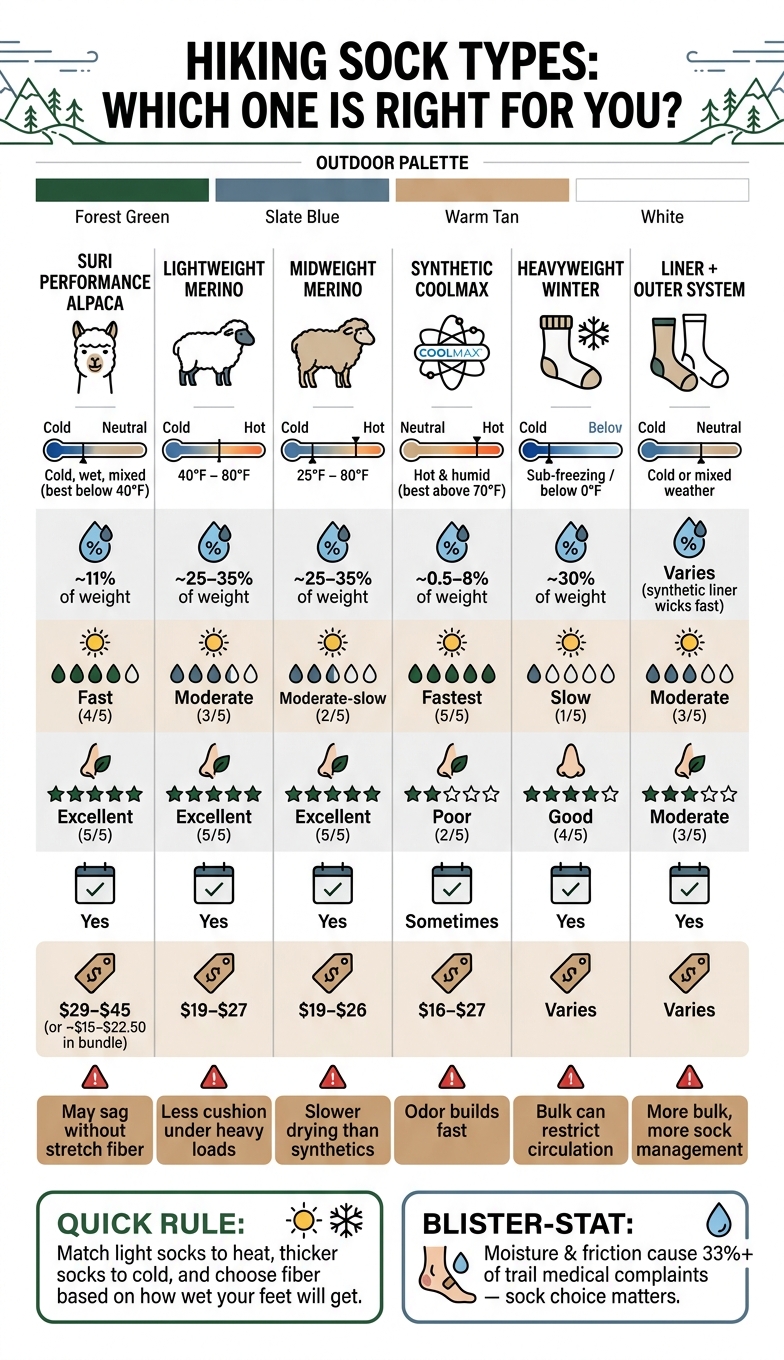
If you hike in both heat and cold, sock material matters as much as shoe fit. On long U.S. trails, blister-type foot problems tied to moisture and friction make up more than 33% of medical complaints. From what I see in this guide, the short answer is simple: synthetic Coolmax dries fastest for hot, sweaty hikes; lightweight and midweight merino work best for most 3-season trips; alpaca stands out for cold, wet, multi-day use; and heavyweight or layered systems fit deep cold when your boots have enough room.
If I had to boil it down fast, here’s what each sock type does best:
My main takeaway: if you want one simple rule, match light socks to heat, thicker socks to cold, and pick the fiber based on how wet your feet are likely to get. The rest comes down to boot volume, trip length, and how much cushion you want.
Suri Performance Alpaca Socks use alpaca’s hollow-fiber structure to help manage temperature. In cold weather, those hollow fibers hold in heat and deliver about 20% more insulation than sheep’s wool while still feeling light. When it’s warm out, the fiber lets heat escape, which helps keep feet from getting too hot.
That makes these socks a good fit for trips where the temperature swings during the day. If you’re heading into colder conditions or wearing high-ankle boots, crew and boot styles give you more coverage. For hotter days, ankle and no-show styles make more sense.
Moisture and Drying
Alpaca is naturally water-repellent and takes in only 11% of its weight in moisture, compared with up to 30% for merino wool. It pulls moisture away from the skin, which can help your feet stay drier on multi-day hikes.
It also dries faster than wool. That matters when you’re hiking day after day and don’t have much time to air gear out.
Odor Control
Alpaca fibers are naturally antimicrobial and odor-resistant, so they work well for multi-day wear without washing. They’re also lanolin-free, which may help hikers who are sensitive to lanolin.
Cushioning and Durability
On longer trips, comfort is only part of the story. Heel-and-toe wear matters too. Alpaca holds up well over time and resists pilling, and its low fiber scale height helps cut down on skin friction and hot spots during long hikes.
For trips below 40°F or hikes in high-ankle boots, crew and boot styles add more coverage and warmth. Prices run from about $29 to $45 per pair. The Buy 3 Get 3 Free bundle drops the effective cost to about $15–$22.50 per pair, depending on the style. One thing to watch: boots with limited internal space can compress thicker socks, which may reduce insulation and restrict circulation.
If you need a different mix of warmth, drying time, and weight, the next sections look at other sock builds.
2. Lightweight Merino Blend Hiking Socks
If you care more about airflow and a low-bulk feel than extra warmth, lightweight merino is usually the first place to look. These socks are a strong fit for 3-season hiking, especially in 40°F to 80°F weather. They also make sense when your feet tend to heat up on steep climbs or fast-moving days.
Temperature Regulation
Merino is a natural insulator, so it traps air and helps hold warmth during chilly morning starts. As you warm up and your pace picks up, it also breathes well, which helps keep your feet comfortable as effort levels change.
Moisture and Drying
Merino fibers move moisture away from the skin and let it release over time. The fiber can absorb roughly 25% to 35% of its dry weight in moisture before it starts to feel damp to the touch. And because lightweight blends use less fiber than heavier wool socks, they tend to dry faster between hiking days.
Odor Control
Merino wool is naturally antimicrobial, which helps these socks resist odor buildup over multiple days of wear. That matters a lot on longer backpacking trips, where washing your socks every day usually isn't in the cards.
Cushioning and Durability
Most lightweight merino socks use targeted cushioning in the heel and forefoot. They also blend in nylon and spandex for durability, which matters because those high-friction zones take a beating mile after mile on multi-day hikes. Expect to pay about $19 to $27 per pair.
When temperatures drop at night or your trip drifts into shoulder season, extra insulation starts to matter.
3. Midweight Merino Hiking Socks
Midweight merino socks add a bit more warmth for cold mornings, chilly nights, and hikes with a heavier pack. In most cases, they work well in a practical range of about 25°F to 80°F. That puts them right between airy 3-season socks and thicker cold-weather pairs.
Temperature Regulation
Compared with lightweight socks, midweight merino has denser terry loops that trap more air. That means more insulation when you're standing around camp or starting out on a cold morning.
Once the day heats up, merino still does a solid job moving moisture vapor out. That said, the extra cushioning can feel warmer than a lighter sock when the weather gets very hot.
Moisture and Drying
Merino pulls sweat away from your skin, which helps keep feet more comfortable on the move. The tradeoff is simple: midweight socks take longer to dry than lighter pairs after rain or stream crossings.
Odor Control
Merino does a good job fighting odor, so midweight socks make sense for several days on trail without washing. If you're packing light, that's a nice plus.
Cushioning and Durability
Extra padding under the heel and ball of the foot helps a lot on long days with a loaded pack. It takes some sting out of repeated impact and can make rough miles feel easier.
There is one catch. Thick socks can crowd low-volume boots, and compressed fibers lose insulating air pockets and can leave feet colder.
Expect to pay about $19 to $26 per pair.
If you want faster drying or less bulk, the next option moves to a lighter synthetic ankle socks.
Coolmax is a strong pick for hot, high-output hiking because it moves sweat fast and dries fast. That makes it a good match for hot, humid miles. But when the temperature drops, or your feet stay wet for a while, it doesn't do as well.
Temperature Regulation and Moisture Management
Coolmax uses specialized polyester yarns to pull sweat to the fabric surface, where it can evaporate faster. Synthetic fibers absorb very little water - usually just 0.5% to 8% of their weight - so they dry much faster than merino wool after sweaty climbs or stream crossings.
There’s a clear tradeoff, though. Once conditions turn cold or your feet get soaked, synthetic fibers don’t hold warmth the way merino does. They can feel colder and less comfortable when wet.
The Wrightsock Coolmesh II pushes this even further with a double-layer build that cuts down on rubbing by moving friction between the sock layers.
Odor Control
This is the biggest downside of synthetic socks on multi-day trips. They tend to hold odor more than merino, so smell can build up fast.
"Synthetics hold odour more than merino over multi-day trips, so expect to rinse them more often."
On longer trips, that means you’ll likely need to rinse them more often.
Cushioning and Durability
Most Coolmax socks use light to medium cushioning to help keep airflow high. Synthetic fibers are also usually more abrasion-resistant than wool, so these socks often wear well over time.
Coolmax is also a good wool-free choice. For another high-performance natural alternative, consider alpaca hiking socks which offer excellent moisture management. If you're heading out in colder conditions, heavier socks can add some of the insulation that Coolmax doesn't provide.
5. Heavyweight Winter Hiking Socks
Heavyweight winter hiking socks work like insulation. They trap air and hold heat. But that only happens if your boots leave enough space for the socks to loft.
Temperature Regulation
The main upside here is simple: more warmth. The catch is fit.
A thick sock only helps if your boot has enough room for it. If the sock gets squeezed inside the boot, those warm air pockets flatten out. It can also limit blood flow, which is the body’s main heat source. If your toes can’t move freely, the sock is too thick for that boot. In other words, warmth depends on space as much as thickness.
Suri Performance Alpaca Socks use alpaca’s hollow fibers for warmth, moisture control, and odor resistance. That means they can add warmth with less bulk than heavier wool builds.
Moisture and Drying
Heavyweight merino dries slowly, but it keeps more warmth in damp cold. That can help on cold, wet climbs. Alpaca blends take in only about 11% of their weight in moisture, compared with roughly 30% for merino, so they dry faster.
On a multi-day winter trip, that gap matters. A simple system is to carry three pairs:
one pair for hiking
one pair drying on your pack
one dry pair saved for sleeping
If you can’t swap socks often, drying time becomes a big deal.
Odor Control
Heavyweight merino and alpaca both resist odor well on cold trips. But in warmer shoulder-season weather, more sweat can mean more odor.
Cushioning and Durability
Full-cushion models use dense terry loops on the inside of the footbed. That helps trap air and soften impact without making the entire sock thick. It also helps the cushioning hold up better over repeated use.
Check the heel and toe zones too. Reinforced areas - often made with nylon or another synthetic blend - handle the friction that comes with heavy winter boots.
When boots fit tight or the weather keeps changing, a liner-and-outer sock system gives you more control over warmth and fit.
6. Liner Sock and Outer Sock Systems
When one sock feels too tight for cold-weather boots or shifting conditions, layering gives you more say over fit and comfort. A liner-and-outer sock setup splits the workload: the liner moves sweat away from your skin and cuts down on friction, while the outer sock adds cushioning and warmth.
Temperature Regulation
Layering traps extra air, which helps keep feet warmer in cold weather, but only if your boots still have enough space. All five toes should move without trouble. If the fit gets too tight, those air pockets get flattened and circulation can drop.
That’s why the outer sock does most of the adjusting. Keep the liner the same, then swap the outer sock based on the weather. That kind of flexibility helps on trips where the morning starts cold and the climb turns warm a few hours later.
Moisture and Drying
The liner pulls sweat into the outer sock, which helps lower friction and blister risk. A synthetic liner with an alpaca or merino outer sock is a solid pairing. The synthetic layer moves moisture fast, and the natural-fiber outer sock adds warmth and helps with odor.
Odor Control
Synthetic liners dry fast, but they tend to smell sooner than natural fibers. Merino or alpaca outer socks can help balance that out on multi-day trips. On longer hikes, it helps to rotate pairs. If socks are damp at night, keep them inside your sleeping bag so your body heat can help dry them by morning.
Cushioning and Durability
The outer sock handles most of the cushioning, so you can get more padding without turning the liner into a thick, bulky layer. Liner socks are thin, and they usually wear out sooner than outer socks with reinforced construction.
Keep both layers flat and smooth. Any ridges or bunching can turn into pressure points fast. Double-layer socks are a simpler option because both layers are sewn together, but there’s a catch: you can’t switch out only the liner when it gets damp.
Component
Job
Best Material
Liner Sock
Wick moisture, reduce friction
Synthetic (polyester/nylon), thin merino
Outer Sock
Cushioning, insulation, odor control
Merino wool blend or alpaca
Double-Layer
Blister prevention (all-in-one)
Polyester/nylon blend
Those upsides come with tradeoffs in fit, bulk, and extra fuss.
Pros and Cons of Each Sock Type
Every sock type fixes a different trail problem, and every fix comes with a cost. So the better question isn’t which sock is best in general. It’s which tradeoff matters most for this trip.
Suri Performance Alpaca Socks work well in cold, wet, or mixed conditions. Their main downside is stretch. Alpaca fibers have less natural elasticity than merino, so they can sag or bunch over long miles if the blend doesn’t include enough nylon. That makes alpaca a strong pick when temperatures shift a lot over the course of one day.
Heavyweight winter socks give you the most insulation and impact protection. But they’re also bulkier, slower to dry, and more sensitive to boot fit. They only work well when your boots have enough room to keep loft and circulation intact.
The table below sums up the main tradeoffs so you can make a fast call.
Sock Type
Best Advantage
Key Drawback
Best Use
Suri Performance Alpaca
Warmth without extra bulk; low moisture absorption
Less stretch; may sag without enough nylon
Cold, wet, or variable conditions
Lightweight Merino Blend
Maximum breathability and odor control
Minimal cushioning under heavy loads
Summer day hikes; desert trekking
Midweight Merino
Versatile cushion and warmth balance
Dries slower than synthetics
3-season backpacking; standard boots
Synthetic Coolmax
Fastest drying; vegan-friendly
Retains odors quickly on multi-day trips
Hot, humid trails; river crossings
Heavyweight Winter
Maximum insulation and impact protection
Bulk can restrict circulation in tight boots
Mountaineering; below 0°F temperatures
Liner + Outer Sock System
Shifts friction away from skin; reduces blister risk
How to Choose by Weather, Footwear, and Trip Length
The fastest way to pick the right hiking sock is to look at weather, footwear, and trip length together.
When temperatures climb above 70°F, lightweight merino or synthetic socks help cut down heat buildup. They do that by letting more air move through the fabric and by pulling sweat away fast. Once you get to 40°F and below, the job changes. At that point, insulation and moisture control matter most. Alpaca stands out in cold conditions because it takes in very little moisture and still feels comfortable when damp. If you're heading into mixed mountain weather and want one safe pick, a midweight merino crew is usually the best middle ground.
Your shoes or boots matter just as much. Trail runners work best with quarter-height or no-show socks in lightweight or ultralight weights. Hiking boots need more coverage. A crew-height or boot-height sock helps shield the lower leg from the boot collar and spreads pressure better when you're carrying a heavier pack. Before you grab a heavyweight sock for boots, do a quick toe-room check. You should be able to move all five toes with no trouble, and there shouldn't be any pinching across the top of your foot. If the sock feels tight, it's too thick for the boot's volume and may limit circulation.
Trip length also helps narrow things down. For a 3- to 5-day trip, three pairs is the most practical setup:
one pair to wear
one pair to dry
one clean spare
If nighttime temperatures are expected to fall below 40°F, pack a separate heavyweight pair for camp or sleep. That way, your feet stay warm and dry while you rest.
Use this quick field guide when you want a one-glance answer.
Use Case
Sock Weight
Height
Hot (>70°F)
Ultralight or Lightweight
Quarter or No-Show
Mixed Mountain
Midweight Merino
Crew
Cold (≤40°F)
Heavyweight Merino or Alpaca
Boot or Over-the-Calf
Cold, wet
Alpaca or high-merino content
Crew (with gaiters)
Trail Runners
Ultralight or Lightweight
Quarter or No-Show
Hiking Boots
Midweight or Heavyweight
Crew or Boot-Height
Conclusion
There’s no one sock that works best for every hike. The right pick depends on temperature, trail moisture, trip length, and whether you care more about fast drying or odor control.
The simplest rule is this: match insulation to temperature, and match drying speed to moisture. On summer trails above 80°F, lightweight merino or synthetic socks can help reduce heat buildup and dry fast after stream crossings. For three-season hiking between 40°F and 80°F, a lightweight to midweight merino blend is the best all-around pick. In colder weather below 40°F, heavyweight winter hiking socks give you the most insulation. If those cold trips are also wet or slushy, alpaca stands out because it absorbs only 11% of its weight in moisture, compared with up to 35% for merino.
That gives alpaca a clear edge for hikers who want warmth, fast drying, and odor control in one package. If you want an alpaca sock made for hiking, Suri Performance Alpaca Socks bring together moisture-wicking, odor resistance, and temperature regulation for multi-day hikes.
Match your sock to the trip, check your boot fit before you head out, and pack at least three pairs for any outing longer than two days. Get those basics right, and your feet are much more likely to stay in good shape on the trail.
FAQs
How do I choose between merino, alpaca, and synthetic hiking socks?
Choose your socks based on the weather and how your feet usually feel on the trail.
Merino wool is a go-to pick for multi-day hikes. It helps manage temperature in both warm and cold conditions, and it does a nice job of holding off odor.
Alpaca works well in cold, wet, or hard-to-predict weather. It offers strong insulation and pulls moisture away from the skin.
Synthetics like nylon and polyester are a good fit for hot days and high-output hikes. They dry fast and breathe well, which can make a big difference when you're moving for hours.
A lot of hiking socks use blended fabrics. That mix helps with durability, stretch, and moisture control.
One material to skip? Cotton. It holds moisture, and that's bad news when you're trying to avoid blisters.
Can thicker socks make your feet colder in tight boots?
Yes. If your socks are too thick for your boots, they can squash the insulating fibers and shrink the air pockets that help hold heat around your feet.
A boot that fits too tight can also limit blood flow, and that makes it harder for your feet to stay warm. Your boots should leave enough space for your toes to wiggle with ease.
How many pairs of hiking socks should I pack for a multi-day trip?
For a multi-day hike, you may not need as many pairs if you go with high-performance socks that move sweat well and resist odor.
Suri Performance Alpaca Socks use antimicrobial, thermo-regulating fibers to help keep feet dry and smelling better. Because of that, many hikers can wear the same pair for more than one day. That means you may not need to pack a separate pair for each day, which helps keep your pack light.