"I liked saving money buying 4 pairs at a time and the socks are great for what I need. It's unbelievable how they could be made out of this material, yet they are so comfortable and they don't make my feet and legs itch nor do they make them hot or sweaty."
Rick S., Verified Customer
Best Hunting Socks for Cold, Wet Conditions
Share
Cold feet can end a hunt fast. If I’m hunting in wet brush, snow, or freezing rain, I want socks that stay warm when damp, move sweat off my skin, and fit my boots without bunching.
Here’s the short version:
Alpaca socks work well in cold, wet hunts because the fiber helps hold heat and manage moisture.
Boot height matters if I wear tall boots or sit for long hours in deep cold.
Crew height makes more sense if I’m moving a lot in standard hunting boots.
Heavy cushioning helps on late-season sits, but too much bulk can make boots tight and cut down comfort.
Reinforced heel and toe areas matter because those spots take the most wear inside stiff hunting boots.
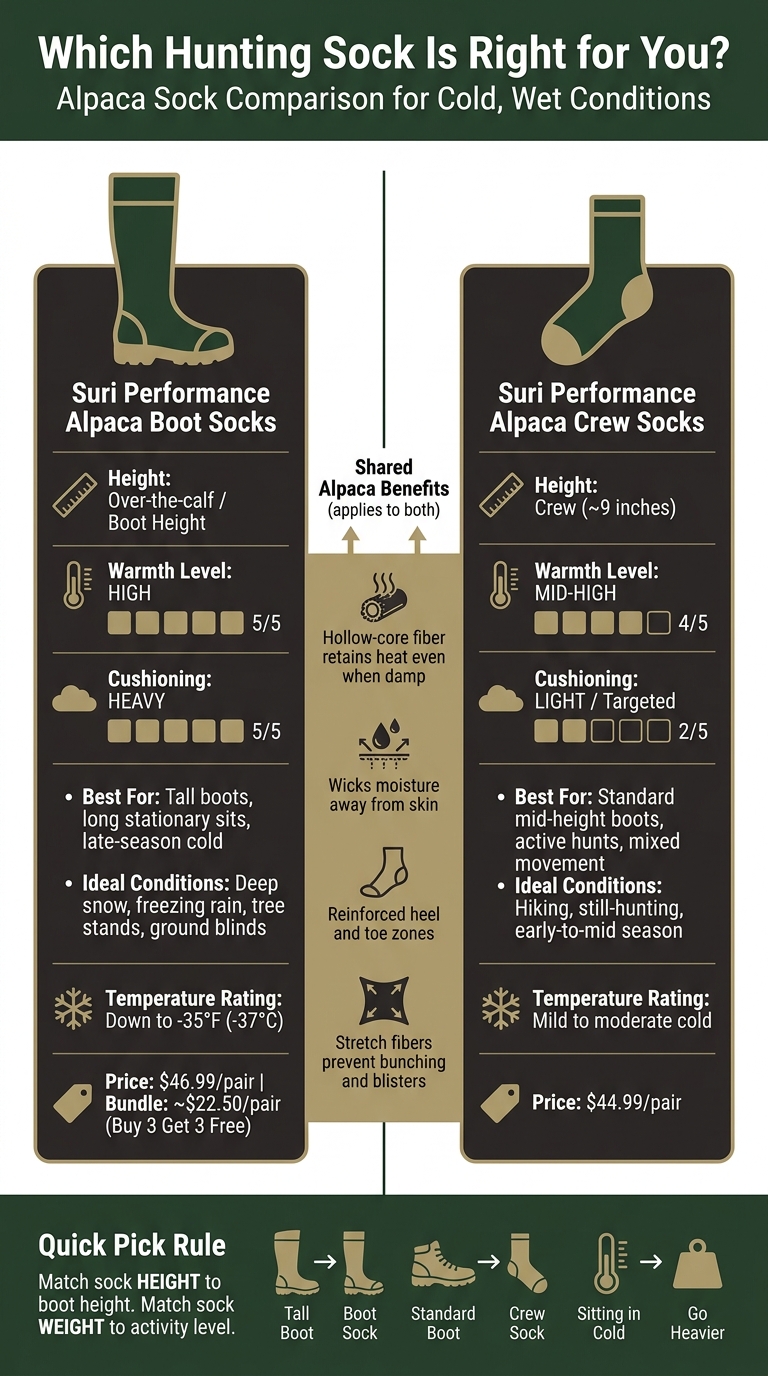
Price runs from $44.99 to $46.99 per pair, with the boot sock bundle dropping the cost to about $22.50 per pair when buying six.
If I had to boil the whole article down to one point, it would be this: match sock height to boot height, and sock weight to how much you move. That’s what keeps feet warmer, drier, and less beat up over a long day.
Warmest Hunting Socks TEST Part 2 | Bison, Yak, Merino, Alpaca, Electric
Quick Comparison
Sock Model
Warmth
Cushioning
Height
Best For
Price
Suri Performance Alpaca Boot Socks
High
Heavy
Over-the-calf / boot height
Tall boots, long sits, colder late-season hunts
$46.99
Suri Performance Alpaca Crew Socks
Mid-high
Light / targeted
Crew
Standard boots, active hunts, milder cold
$44.99
I’d use this guide to pick between boot vs. crew height, heavy vs. lighter cushioning, and the right sock setup for stationary hunts, active hunts, and mixed conditions.
Why Alpaca Fiber Works for Cold, Wet Hunting
Moisture-Wicking and Warmth When Damp
Cold, wet hunts go sideways fast when moisture stays trapped in your boots. Alpaca fiber helps by pulling moisture off your skin and moving it toward the outer part of the sock. That keeps your feet drier while you hike, glass, and sit.
There’s another reason alpaca works so well here: its hollow fibers trap air and hold heat even when the sock is damp. So if your socks get wet from sweat, freezing rain, or soaked brush, they can still help keep your feet warm. On long hunts with repeated wet-dry cycles, that can make a big difference.
Drier skin can also help limit odor on multi-day hunts.
Once moisture control is handled, fit and height decide how well the sock performs inside the boot.
Cushioning, Reinforcement, and Boot Fit
Cushioning needs to do two jobs at once: cut down on rubbing without making the boot feel too tight. Reinforced heel and toe zones matter too, since those areas take the most abuse.
Too little cushioning can let your foot slide and rub inside a stiff boot. Too much thickness can crowd the boot and cut down circulation. Dense footbed cushioning absorbs impact and reduces pressure points.
Stretch fibers also help the sock stay smooth and secure inside the boot, which can help prevent blisters.
That brings you to the next call: sock height.
Crew vs. Boot Height for Hunting
Sock height should line up with your boot height and how much time you spend moving. Crew socks, which are about 9 inches tall, work well with standard mid-height boots and active hunts where you're covering ground and building heat.
Boot-height socks make more sense when you're wearing tall hunting boots, dealing with deep snow or wet brush, or sitting for long stretches. The extra height helps protect your shin from boot-rim friction and adds insulation along the lower leg, where cold air and moisture tend to creep in.
If the sock ends below the top of the boot, you leave skin open to rubbing and cold.
sbb-itb-855989e
Best Alpaca Hunting Socks for Cold, Wet Conditions
Alpaca Hunting Socks Comparison: Boot vs. Crew for Cold & Wet Conditions
Once you’ve sorted out fit and height, the best choice mostly comes down to your boot style and how much you’ll move during the hunt.
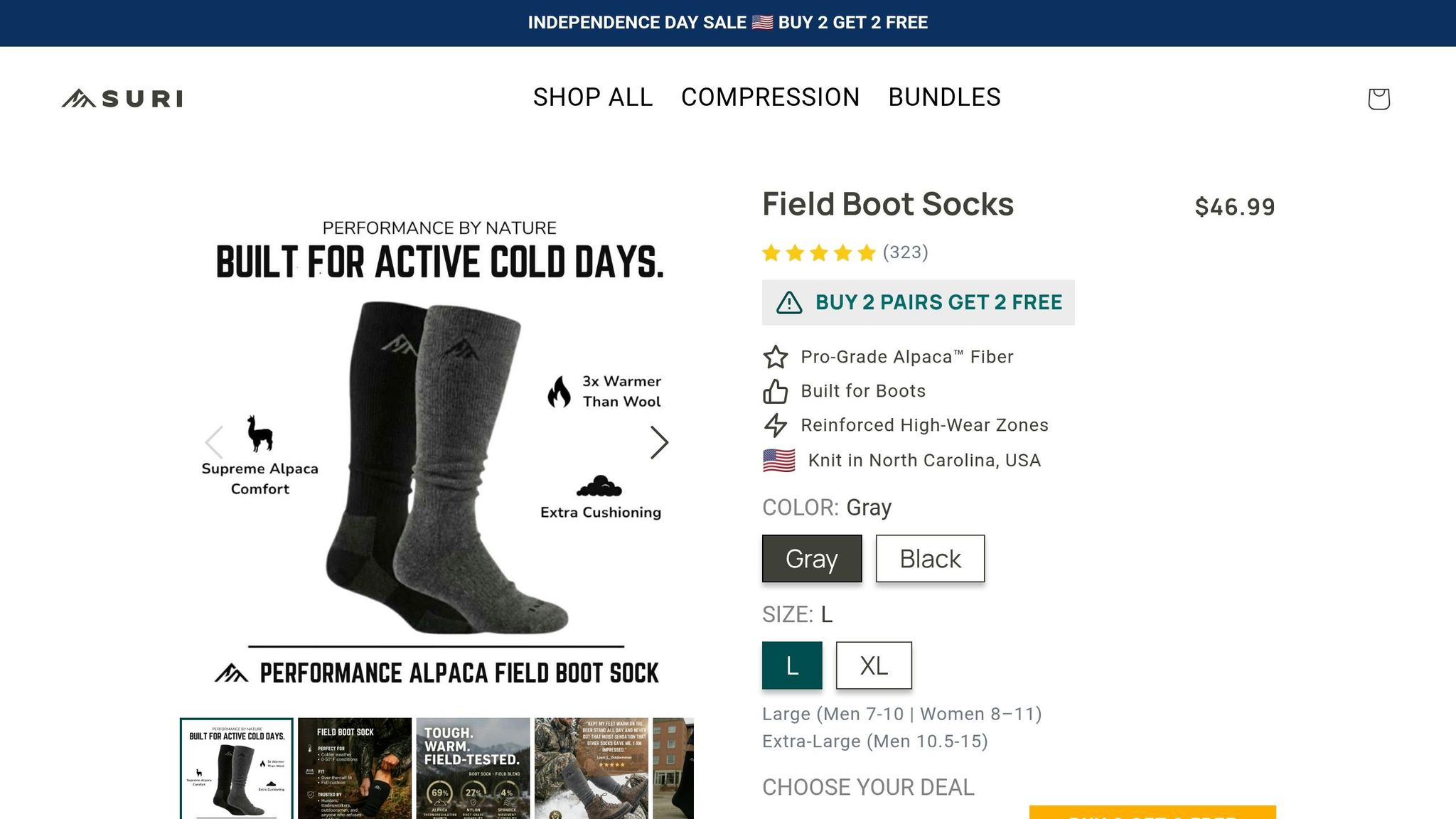
The Suri Performance Alpaca Boot Socks are made for tall boots and long sits. Their over-the-calf height, dense cushioning, and reinforced heel and toe areas make them a strong match for tall boots and repeated hard use.
At $46.99 per pair, the Buy 3 Get 3 Free bundle drops the effective price to about $22.50 per pair.
The Suri Performance Alpaca Crew Socks are a better fit for standard hunting boots and more active hunts. The lighter build helps preserve boot fit during high-output days, while light compression zones and reinforced heel and toe construction help keep the sock in place.
At $44.99 per pair, they’re the more flexible pick for hunters who want performance without extra bulk.
Heavyweight, Midweight, and Cushioned Alpaca Options
Sock weight should match three things: how much you move, how long you sit, and how cold it gets.
Heavyweight alpaca socks are best for stationary hunting in harsh cold. Dense cushioning and maximum insulation help hold heat during long sits, and some options are rated for temperatures down to -35°F (-37°C).
Midweight cushioned socks work well for mixed movement and sitting. Think early-to-mid season hunts, or days when the temperature swings and you bounce between hiking and waiting.
Lightweight crew socks fit active hunts in milder cold. They make sense for early-season rain, warm-to-cool weather shifts, or any hunt where sweat is a bigger problem than freezing.
That weight split makes it easier to line up your socks with the season and your boot setup.
Pros and Cons Table
Feature
Pros
Cons
Warmth
Hollow-core alpaca fiber helps retain heat even when damp
Heavyweight options can make active hunters too hot
Moisture Control
Wicks sweat well and stays warm when wet
Lighter designs may not insulate enough during long, stationary sits
Cushioning
Dense footbed helps cut impact and ease pressure points
Too much thickness can tighten boot fit and limit circulation
Height Options
Boot height covers the shin and helps prevent boot-collar friction; crew height suits active use
The wrong height for your boot can leave skin exposed to friction or cold
Durability
Reinforced heel and toe zones are built for hard use
Needs cold-water washing and low-heat drying
How to Match Your Hunting Sock to Your Season and Boot Setup
Once you’ve got the height right, sock weight and boot volume decide how the sock will feel in the field.
Match Sock Weight to Activity and Temperature
Activity matters more than temperature.
For active hunts - tracking, still-hunting, or hiking long distances - lightweight or midweight socks are the better pick. They work best when sweat is the main issue.
For stationary hunting - tree stands, ground blinds, or long cold sits - heavyweight alpaca boot socks are made for that job. Dense cushioning helps hold warmth when you’re not making much body heat through movement. And the reinforced build is meant for long hours on cold ground and inside heavier boots.
For long late-season sits, a smart move is to hike in with a lighter pair, then switch to a warmer pair before you settle in.
Next, look at fit issues that can wipe out the gains from choosing the right weight.
Common Cold-Weather Sock Mistakes to Avoid
One common mistake is wearing socks that are too thick for the boot. Match sock thickness to boot volume. Bulky socks belong in roomier insulated or waterproof boots.
Another problem hunters run into is ignoring thinned heel and toe zones. Thin heel and toe zones create hot spots fast. Moisture control stays effective only while the heel and toe remain reinforced. That performance depends on intact heel and toe reinforcement. Check those areas often so wear doesn’t turn into a blister.
It also helps to avoid using the same sock thickness for every boot and every hunt. Rainy early-season hunts call for lighter socks. Late-season sits call for warmer, denser pairs. Use the coldest part of the hunt and the tightest boot in your setup to choose thickness.
Conclusion: Keep Feet Dry, Warm, and Comfortable on Cold-Weather Hunts
Cold, wet hunting conditions punish bad gear fast. The right socks help manage moisture, hold warmth even when damp, cushion each step, and add extra wear protection where it matters most: the heel and toe.
That’s where alpaca has an edge. Its hollow fibers help trap heat while pulling moisture away from your skin.
But material alone isn’t enough. Fit is what makes that performance work. Height and weight shape the fit. If you wear tall hunting boots and spend long hours sitting in the cold, Suri Performance Alpaca Boot Socks are the better match. If you’re moving more in standard hunting boots, Suri Performance Alpaca Crew Socks give you a crew-height option.
Match sock weight to your activity level. Match sock height to your boot. And check that the heel and toe reinforcement is still in good shape before every hunt. Get those three things right, and cold, wet ground stops calling the shots.
FAQs
How do I know if my boots have enough room for heavier socks?
Check that your boots still let blood move the way it should. Thick socks can add bulk, create pressure points, and make boots fit too tight.
Aim for warmth without piling on extra fabric. Suri Performance Alpaca Socks give strong insulation with a slimmer profile, so your boots can stay snug while still leaving room for natural foot movement in cold, wet conditions.
Should I bring an extra pair of socks on a cold, wet hunt?
Yes. Bringing an extra pair is a smart move on any longer outing, even if you're wearing high-performance socks.
Suri Performance Alpaca Socks help manage moisture and stay warm even when damp. But a backup pair gives you the option to switch into dry, fresh socks, which can make the next day - or even the next stretch of the trip - feel a whole lot better.
How often should I replace hunting socks for best performance?
High-quality alpaca hunting socks can hold up for months of hard use without thinning out or slipping down your calf. In most cases, they keep their shape, padding, and on-the-hunt performance even after lots of wear and repeated washes.
It’s time to replace them when the cushioning starts to flatten or the fabric begins to lose its structure. If you want to get more life out of each pair, wash them inside out in cold water with a mild detergent, then lay them flat to air dry.