"I liked saving money buying 4 pairs at a time and the socks are great for what I need. It's unbelievable how they could be made out of this material, yet they are so comfortable and they don't make my feet and legs itch nor do they make them hot or sweaty."
Rick S., Verified Customer
Customer Favorites: Best Hiking Socks for Year-Round Use
Share
If I had to boil this down to one point, it’s this: pick your hiking socks by weather, cushion, and boot fit first. A midweight merino crew works for most trips, a lighter sock helps on hot days, and a thicker pair makes more sense for cold hikes. The article also points to alpaca as a strong option for people who want one fiber that handles both cool mornings and warmer afternoons.
Durability so the padding and fit hold up over time
Odor resistance for multi-day use
Fit so the sock doesn’t bunch or crowd your boot
A few numbers stand out. The Darn Tough Hiker Micro Crew has a 4.89/5 rating from 4,300+ reviews, and some reports put its life at 600+ miles. Price in this group runs from about $20 to $44.99, with lighter summer socks near the low end and thicker alpaca boot socks at the high end.
Best Hiking Socks Compared: Cushion, Season & Price Guide
I Tested Hiking Socks in Every Season - Here’s What Works
Bottom line: if you hike in mixed conditions, I’d start with a midweight crew, then add one light pair for summer and one thicker pair for winter. That gives you a simple rotation without overbuying.
Best Customer Favorites for Everyday Year-Round Hiking
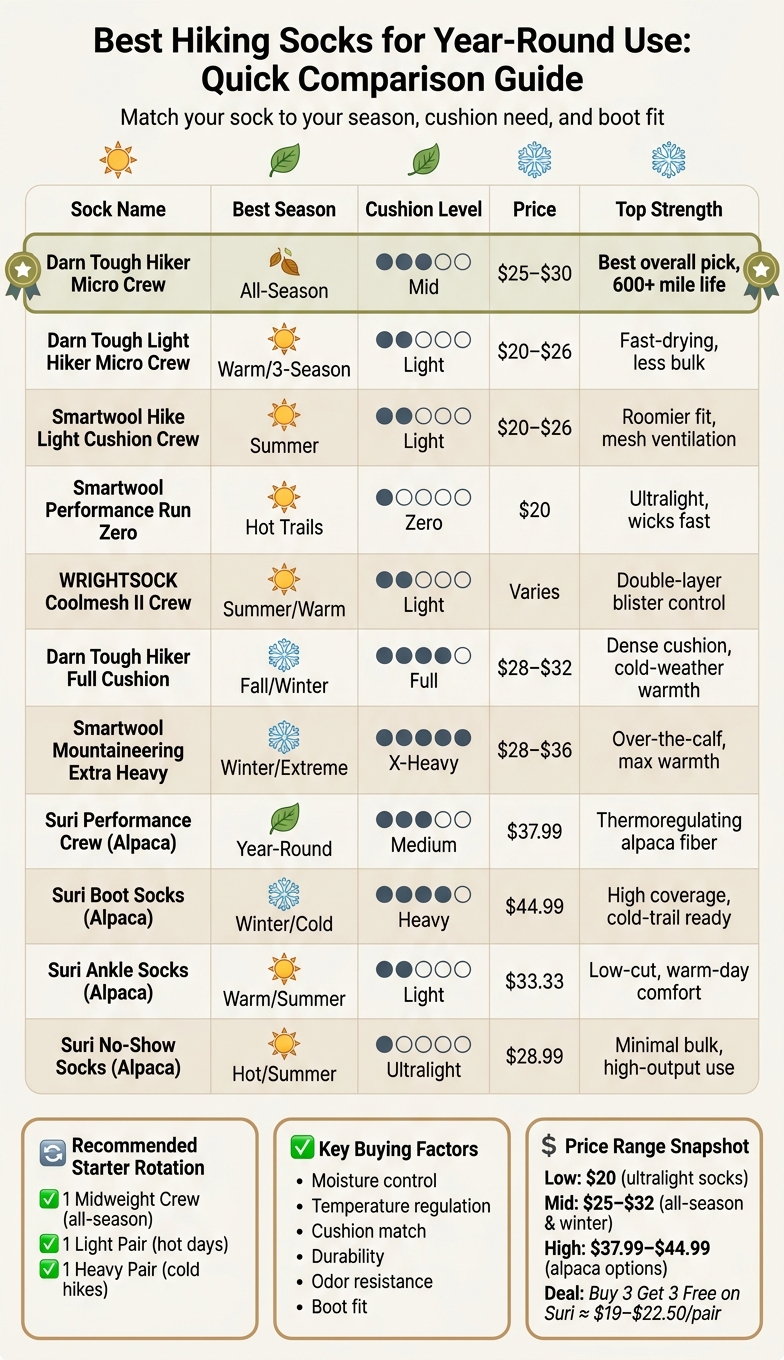
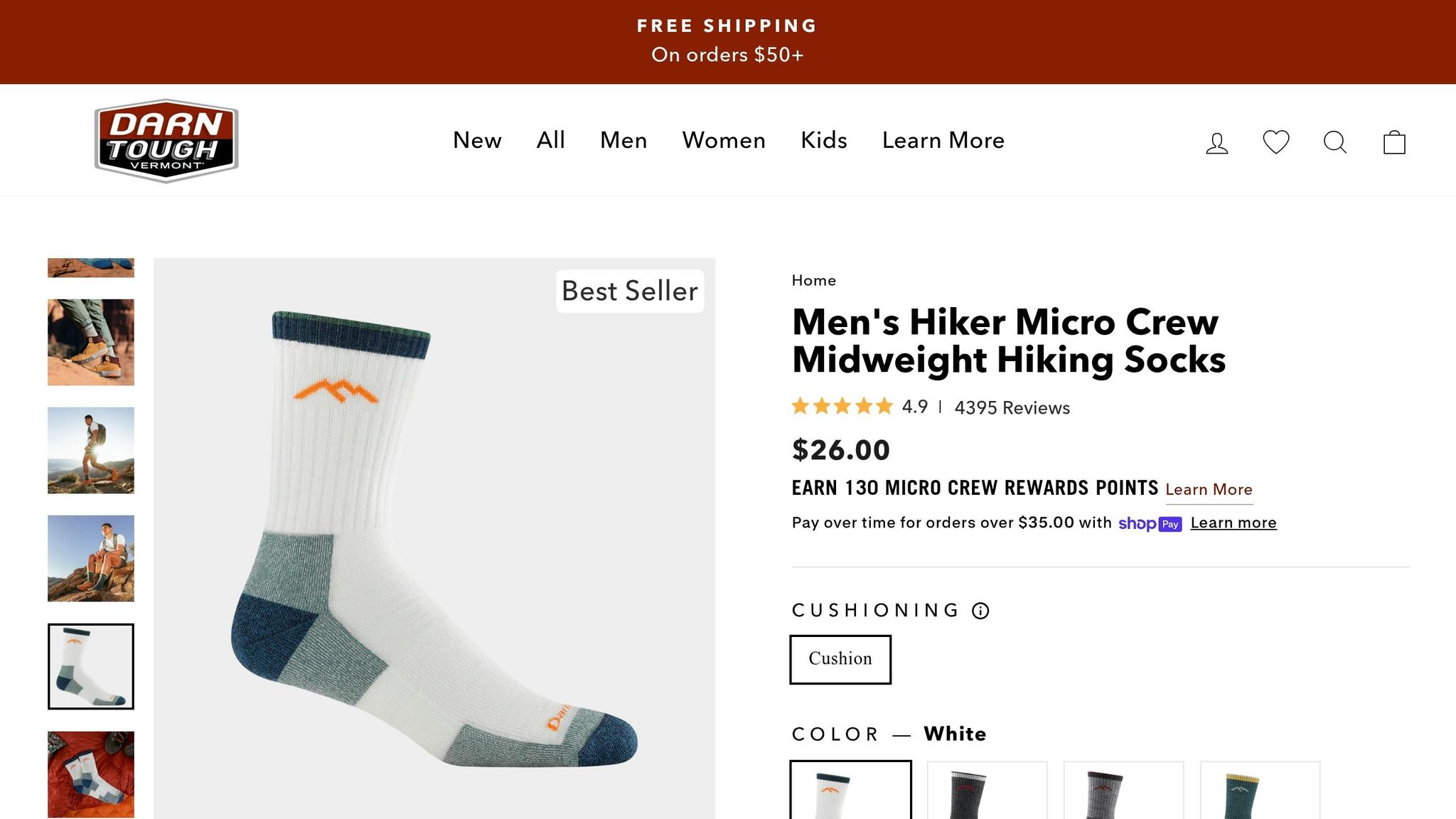
For one sock that can handle most hikes, the Darn Tough Hiker Micro Crew Cushion is a strong all-around pick. It has a 4.89 out of 5 rating from more than 4,300 verified reviews, and it often lands the "Best Overall" spot from major reviewers like Good Housekeeping and Treeline Review.
Its biggest draw is the midweight cushion. You get extra impact protection on rocky trails and enough warmth for cool mornings, but without that stuffed, bulky feel inside snug boots.
The blend is 61% merino wool, 36% nylon, and 3% Lycra, which helps the sock keep its shape and stand up to wear. Darn Tough also backs it with an unconditional lifetime guarantee, and reviewers say the socks can last 600+ trail miles before major wear shows up. At $25–$30, the price lines up with that kind of lifespan.
The micro crew height is about 8.5 inches, so it clears the collar of most mid-cut boots and helps cut down on Achilles rubbing. If you're between sizes, it's smart to size down so the sock doesn't bunch inside a tighter boot.
If you'd rather have less bulk and a sock that dries faster, the next two lightweight hiking socks go lighter, though you give up some warmth.
Darn Tough Light Hiker Micro Crew Light Cushion and Smartwool Performance Hike Light Cushion Crew
If you want a lighter, faster-drying sock, these two are popular choices. The Darn Tough Light Hiker and the Smartwool Performance Hike Light Cushion Crew both use lighter cushioning and mesh ventilation zones, which can make a big difference on high-output hikes.
The Light Hiker drops to about 43% merino wool, down from the midweight version's 61%. That lighter blend dries faster, though it gives up a bit of warmth. The Smartwool Performance Hike line uses "Shred Shield" anti-wear technology and fits about 10–20% roomier through the heel and midfoot than Darn Tough, which may work better if you have wider feet.
Both usually sell in the $20–$26 range, so they cost a bit less than the midweight Darn Tough. They're a good fit for three-season hiking and warm-climate use. For cold-weather trips or rough mountain terrain, though, the midweight Hiker Micro Crew is the better pick.
Comparison Table: Everyday All-Season Picks
Use the table below to compare cushion, fit, and trail use at a glance.
For hotter days and higher-output hikes, lighter socks tend to make more sense.
Best Customer Favorites for Hot and Cold Weather Hiking
When the weather shifts, your socks should too. An all-season pair can do a lot, but it won’t always feel right. If your go-to socks start to feel too warm, too thick, or just plain uncomfortable, it makes sense to swap in a pair built for the conditions.
Warm-Weather Picks for Hot Trails and Fast-Paced Hikes
For hot trails and high-output hikes, focus on airflow, low bulk, and fast drying. Once temperatures go up, warmth stops being the priority. You want socks that help your feet stay cooler and less cramped. Lightweight alpaca ankle socks are a popular choice for this purpose.
Ultralight socks can also leave a bit more room for foot swelling, which helps on long, hot days. Less bulk can mean less rubbing too.
The Smartwool Performance Run Zero Cushion ($20) earns “Best for Hot Weather” for how well it wicks sweat and dries fast. It’s a solid pick when you want something light that won’t feel soggy halfway through the day.
If you want a bit more protection without adding much thickness, the WRIGHTSOCK Coolmesh II Crew stands out. Its double-layer build works in a simple way: the inner layer moves with your foot, and the outer layer moves with your shoe. That setup helps absorb the rubbing that leads to blisters.
When colder weather shows up, the tradeoff changes. At that point, cushioning matters more than airflow.
Cold-Weather Picks for Winter Hikes and Shoulder Seasons
For winter hikes, shoulder-season trips, and heavier packs, put warmth and pressure relief first. Full-cushion socks add padding across the entire foot, which can help in winter boots where cold and pressure tend to build up over time.
The Darn Tough Hiker Full Cushion ($28–$32) has a 4.7 out of 5 rating and works well for cool-to-cold hikes and heavier loads. If you need even more insulation for snow days, the Smartwool Mountaineering Extra Heavy ($28–$36) steps up with an over-the-calf height made for winter conditions.
"In warm weather, especially humid heat, full cushion felt like too much extra material on my feet... it can still feel too warm and too bulky for comfort." - Muhammad Nasir, Trail Tester
There’s one catch with thicker winter socks: your boots need enough space for them. If they don’t, the extra bulk can squeeze your feet, limit circulation, and leave you feeling colder instead of warmer. That’s why it helps to size your boots with winter socks in mind.
Comparison Table: Warm-Weather vs. Cold-Weather Hiking Socks
Sock Model
Best Season
Cushion Level
Boot Compatibility
Key Strengths / Limitations
Smartwool Performance Run Zero Cushion
Summer / Hot
Zero
Trail runners / Low-cut
Ultralight build; fast-drying
WRIGHTSOCK Coolmesh II Crew
Summer / Warm
Light
Trail runners / Low-cut
Double-layer anti-blister design; breathable
Darn Tough Hiker Full Cushion
Fall / Winter / Cold
Full
Mid-to-high boots
Dense cushion; warmth under load
Smartwool Mountaineering Extra Heavy
Winter / Extreme Cold
Extra Heavy
Mountaineering / High boots
Over-the-calf height; maximum warmth for snow
For hikers who want moisture control and temperature regulation in one fiber, alpaca socks are the next step.
Alpaca fiber is a smart pick for changing trail conditions because its semi-hollow structure has microscopic air pockets that hold warmth, stay breathable, wick moisture, and resist odor. In plain English, that means the same pair can feel good on a cold morning start and still stay comfortable once the trail heats up later in the day.
It’s also naturally hydrophobic, so it resists soaking up water and dries fast. And because it has little to no lanolin, alpaca can feel better for hikers with wool sensitivities.
That makes alpaca a solid choice for hikers who want one sock line that can handle shifting temperatures without a lot of fuss.
Suri Performance Alpaca Socks: Crew, Boot, Ankle, and No-Show Options
Suri Performance Alpaca Socks uses that fiber profile across four heights, which makes it easier to match coverage to the day’s conditions.
The Performance Crew Socks ($37.99) are the best all-around option for most hikes. They offer mid-calf coverage and balanced cushioning for standard trail use.
The Boot Socks ($44.99) give you more coverage and heavier cushioning, which works well with taller footwear and colder conditions, similar to heavy-duty work socks.
The Ankle Socks ($33.33) make more sense for low-cut hiking shoes and warmer days on the trail.
The No-Show Socks ($28.99) are the lightest option, built for hot trails and high-output hikes.
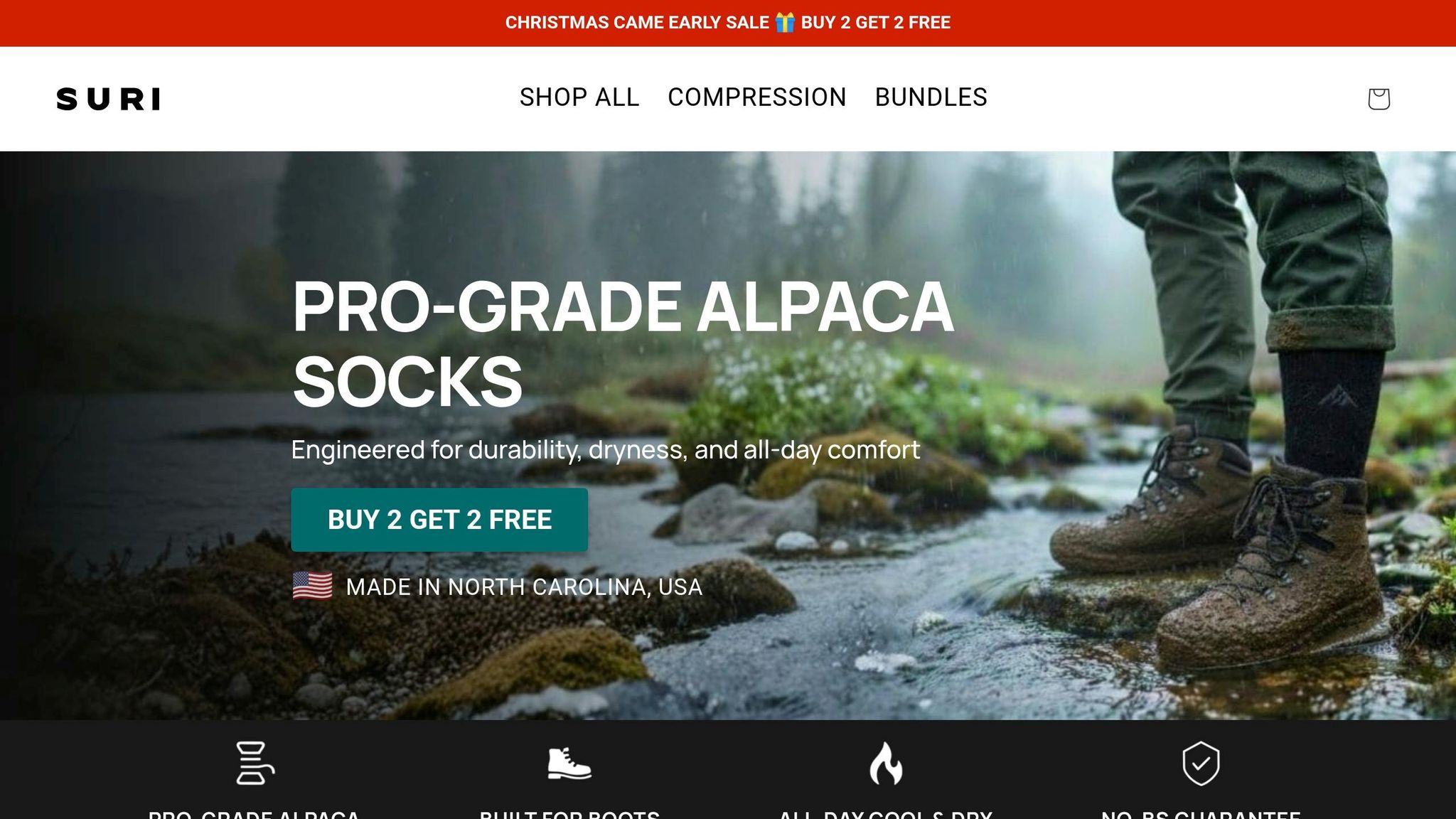
If you use the Buy 3 Get 3 Free deal, the effective price drops to about $19.00 per crew sock and $22.50 per boot sock.
Comparison Table: Which Suri Sock Style Fits Each Hiking Scenario
Suri Sock Style
Best Use Case
Cushioning Feel
Coverage
Seasonal Fit
Performance Crew ($37.99)
Standard trail use and backpacking
Medium / Balanced
Mid-calf
Year-round
Boot Socks ($44.99)
Taller footwear and colder trails
Heavy / Maximum
High-calf
Winter / Shoulder Seasons
Ankle Socks ($33.33)
Low-cut hiking shoes and fast packing
Light / Targeted
Ankle
Warm weather / Summer
No-Show Socks ($28.99)
Hot trails and high-output training
Ultralight / Minimal
Below ankle
Summer
To help alpaca fibers last, wash the socks sparingly on a gentle cold cycle and lay them flat to dry. High heat can harm the fibers and shorten the life of the socks.
Conclusion: How to Pick the Right Hiking Socks for Your Conditions
When you look across all the socks above, the best pick comes down to conditions and fit. Match the sock to the trail. If you don’t, you’re more likely to deal with blisters, hot spots, or cold toes.
For mixed weather, alpaca does a lot of the heavy lifting. This is where alpaca shines: its thermoregulating fiber helps with cold starts in the morning and warmer trails later in the day, so you may not need to change socks halfway through.
Boot fit matters just as much as temperature. Sock thickness needs to match your boot volume. If it doesn’t, you can end up with pressure points or heel slip.
For most hikers, a small sock rotation is enough:
A midweight crew for three-season use
A heavier sock for cold weather
A lighter pair for hot days
A midweight crew will handle most three-season hikes. Then add a warmer sock for winter and a lighter pair for hot trails. Build your rotation around the conditions you hike in most often.
FAQs
How do I choose the right sock thickness?
Choose sock thickness based on the season, the ground you’ll cover, and how your shoes or boots fit.
In hot weather or during hard efforts, lightweight or ultralight socks work well because they breathe better, move sweat away, and add less bulk. In cooler weather or on long hikes, medium-weight socks give you more warmth and extra cushioning. Heavyweight socks make the most sense in cold, snowy conditions, though they don’t breathe as well.
Fit matters just as much as thickness. If your socks make your boots feel too tight, you’re more likely to end up with hot spots and blisters.
Are alpaca hiking socks good year-round?
Yes. Alpaca hiking socks work well all year because their natural fibers help regulate temperature. That means your feet stay warm in cold weather without feeling stuffy when it’s warm out.
They also wick moisture and resist odor, which helps keep your feet dry, fresh, and comfortable across different climates and trail conditions.
How should hiking socks fit in my boots?
Hiking socks should fit snugly around your foot, but not so tight that they cut off circulation. They should sit smooth against your skin, with no bunching or wrinkles. That matters because even small folds can lead to friction, pressure points, and blisters.
When you try on a new pair, walk around for a bit. Check that the heel cup sits right on your heel and that the seams don't rub or feel awkward. It's also smart to pick a sock thickness that matches your boot volume. If the socks are too thick for the boot, your feet can feel cramped and warm. If the match is off, you may also end up with hot spots.