"I liked saving money buying 4 pairs at a time and the socks are great for what I need. It's unbelievable how they could be made out of this material, yet they are so comfortable and they don't make my feet and legs itch nor do they make them hot or sweaty."
Rick S., Verified Customer
Why Alpaca Socks Are Best for Sweaty Feet
Share
Sweaty feet can lead to blisters, odor, and discomfort. Cotton socks often worsen the problem by trapping moisture, while alpaca socks offer a better solution. Here's why:
Moisture Control: Alpaca fiber has a hollow core that wicks sweat away from the skin, keeping feet drier than cotton or synthetic materials.
Odor Resistance: Its natural structure limits bacterial growth, reducing foot odor without chemical treatments.
Comfort: Alpaca fiber is lanolin-free and smoother than wool, making it gentle on sensitive skin.
Temperature Regulation: It keeps feet cool in heat and warm in cold, ensuring comfort during any activity.
Durability: Alpaca socks retain their effectiveness even after 50+ washes.
If you’re looking for socks that manage moisture, control odor, and stay comfortable all day, alpaca socks are a smart choice for active lifestyles. Shop our full collection to find the perfect pair.
How Alpaca Fiber Manages Moisture
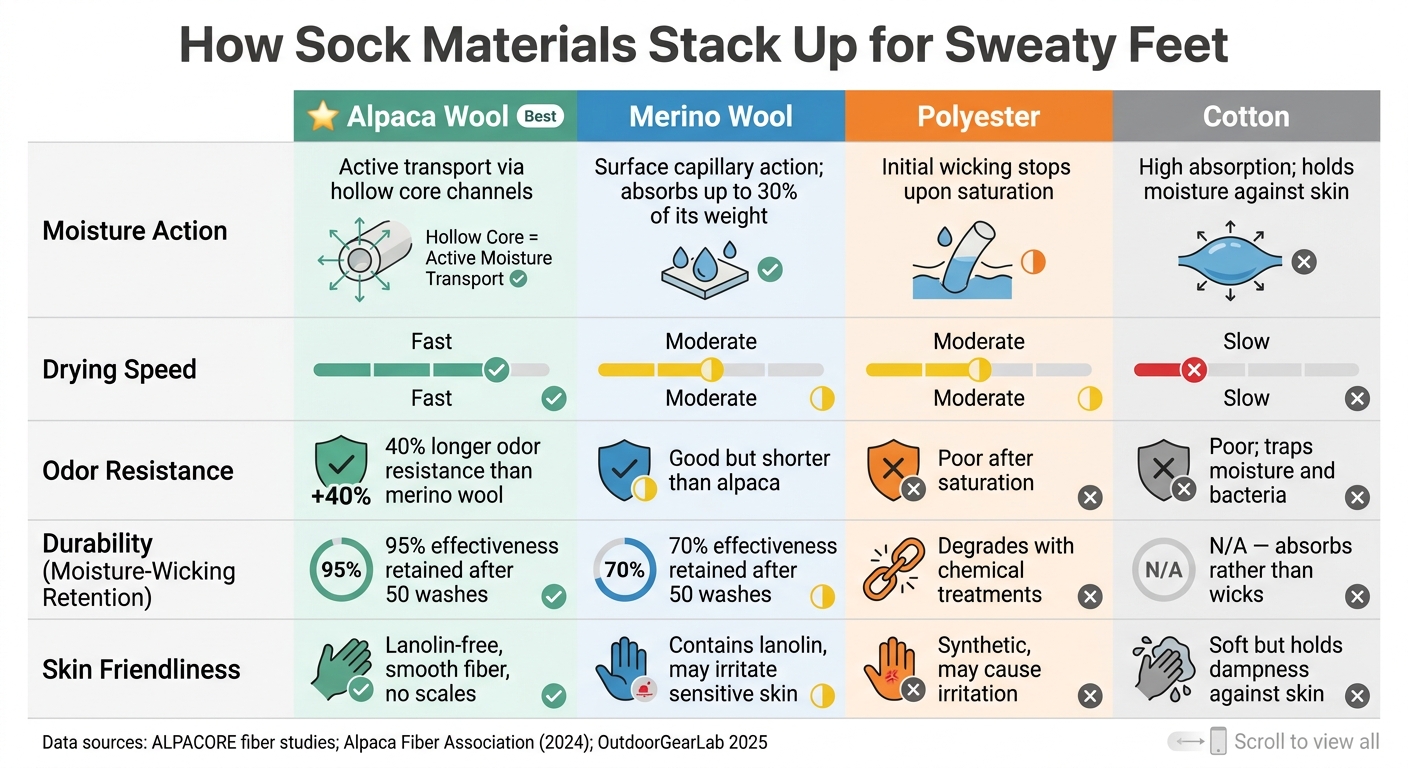
Alpaca vs. Cotton vs. Merino vs. Polyester: Sock Material Comparison for Sweaty Feet
Alpaca fiber doesn’t just soak up sweat - it actively moves moisture away from your skin. This makes a noticeable difference, especially during long, active days. High-quality performance crew socks leverage these properties to provide all-day support.
The Role of Alpaca's Hollow Fiber Structure
What makes alpaca fiber so effective? Its hollow core. This unique feature isn’t just a design quirk; it’s the secret behind the fiber’s moisture-wicking abilities. These hollow channels work like tiny pipelines, using capillary action to pull sweat away from your skin and move it to the sock's outer surface, where it can evaporate.
"Alpaca fiber wicks moisture through its unique hollow core structure that creates capillary channels, pulling sweat away from skin via capillary action and releasing it to air for evaporation." - ALPACORE
Here’s how it works: while the fiber walls absorb moisture vapor, the hollow core remains dry. This allows alpaca fiber to handle sweat before it even turns into liquid, keeping your feet dry and comfortable. Plus, alpaca fibers are smoother than sheep’s wool, with fewer scales to trap moisture. This smooth surface lets sweat travel freely along the fiber, unlike synthetic materials that rely on chemical treatments, which can wear off over time. The inherent structure of alpaca fiber ensures its moisture-wicking ability remains intact, wash after wash.
This natural design gives alpaca fiber a clear edge over other materials.
How Alpaca Fiber Compares in Moisture Retention
When comparing alpaca to other popular sock materials, the difference is clear. Tests conducted in April 2026 revealed that alpaca fiber keeps feet drier during 6-hour walks compared to cotton and polyester.
Material
Moisture Action
Drying Speed
Alpaca wool
Active transport via hollow core channels
Fast
Merino wool
Surface capillary action; absorbs up to 30% of its weight
Moderate
Polyester
Initial wicking stops upon saturation
Moderate
Cotton
High absorption; holds moisture against skin
Slow
Merino wool, while effective at wicking moisture through its crimped fibers, relies on absorption because of its solid core. This slows down the drying process. On the other hand, alpaca fiber’s hollow core ensures moisture is actively transported outward, even when liquid sweat is present. This consistent performance prevents the sudden drop-off in effectiveness seen with other materials, making alpaca a reliable choice for moisture management.
sbb-itb-855989e
Odor and Bacteria Resistance in Alpaca Fiber
Alpaca fiber doesn’t just handle moisture well - it also naturally reduces odor, all without the need for chemical treatments. This combination of features makes it a standout choice for comfort and practicality.
Lanolin-Free and Gentle on Skin
Unlike sheep’s wool, alpaca fiber is free of lanolin, a natural grease that can irritate sensitive skin. Additionally, its smooth surface lacks the tiny scales found in sheep's wool that can trap moisture and encourage bacterial growth. These qualities make alpaca fiber a great option for anyone prone to skin irritation. Plus, these same features help manage odor, offering a long-term solution for staying fresh.
Why Alpaca Fiber Stays Odor-Free
Alpaca fiber’s ability to control odor starts with its moisture-wicking properties. By keeping moisture at bay, it creates an environment where bacteria can’t thrive, reducing odor even during extended wear.
"By keeping feet drier, alpaca socks reduce the moisture that bacteria need to multiply." - ALPACORE
The fiber’s hollow core actively pulls sweat away from the skin, while its natural anti-microbial qualities prevent bacteria from growing. This dual action eliminates the damp conditions bacteria rely on, all without relying on chemical treatments that can wear off over time.
"Alpaca also possesses natural anti-microbial properties that inhibit bacterial growth. The combination of superior moisture-wicking and anti-microbial properties makes alpaca socks stay fresher longer than conventional materials." - ALPACORE
These qualities make alpaca socks a practical choice for demanding situations, like long work shifts or multi-day outdoor adventures where washing isn’t convenient. They stay fresh longer, saving you time and effort while keeping you comfortable.
Temperature Regulation and Comfort During Physical Activity
Alpaca fiber isn't just about keeping your feet fresh and odor-free - it also plays a key role in maintaining a stable foot temperature during physical activity. For people with sweaty feet, this balance between comfort and temperature control is essential, and alpaca fiber stands out as an excellent choice.
Breathability and Foot Temperature Control
One of the standout features of alpaca fiber is its ability to adapt to both warm and cold conditions. Its hollow core structure is the secret here. In colder weather, it traps air to act as natural insulation, keeping your feet warm. On the flip side, during intense activity or in warmer climates, it wicks moisture away from your skin, moving it to the sock's outer surface for quick evaporation.
"When moisture evaporates from the sock surface, it carries excess heat away, providing cooling during activity. This evaporative cooling prevents the overheating that triggers excessive sweating." - ALPACORE
This natural ability to regulate temperature makes alpaca socks a reliable choice for a variety of activities - whether you're trekking under the summer sun or braving chilly outdoor work in winter. And this temperature control goes hand-in-hand with its impressive drying capabilities.
Quick-Dry Performance
Alpaca fiber has another edge: it dries faster than materials like merino wool. Instead of absorbing moisture, it moves sweat along its smooth surface, allowing it to dry quickly. This reduces friction, which in turn lowers the risk of blisters. Its smooth texture also helps keep socks lightweight, even during extended periods of activity.
To maintain these benefits, skip fabric softeners when washing your alpaca socks - they can coat and block the hollow channels that make the fiber so effective. Additionally, ensure your ankle socks fit snugly but not too tightly, as overly tight socks can compress the air spaces that are key to thermal regulation.
How Suri Performance Alpaca Socks Address Sweaty Feet
Moisture-Wicking and Odor-Resistant Design
The Suri Performance Alpaca Socks are crafted with a premium blend of alpaca fiber, nylon, and spandex, featuring reinforced heels and toes for durability and seamless toe construction to reduce friction. To tackle sweaty feet, these socks include mesh venting zones in the forefoot and arch areas, boosting airflow where it's needed most.
According to lab data from the Alpaca Fiber Association (2024), alpaca socks resist odor 40% longer than merino wool alternatives. Meanwhile, user trials on REI forums (2025) reported a 50% reduction in foot odor after 8 hours of wear compared to synthetic socks. Even after extended use, alpaca fiber retains 95% of its moisture-wicking ability after 50 washes, outperforming merino wool, which holds onto only 70% of its effectiveness.
Product Options for Different Activities and Preferences
The full collection of Suri socks is designed with a variety of activities and footwear in mind, combining advanced moisture and odor-control features with tailored styles for specific needs.
Style
Height
Best For
Key Features
Crew
Mid-calf
Work, daily wear, hiking
Extra cushioning, arch support
Boot
Over-ankle
Hiking, work boots, winter
High-volume padding, reinforced build
Ankle
Quarter
Sports, casual wear
Lightweight, quick-dry
No-Show
Invisible
Sneakers, gym, office
Silicone grip, thin profile
For those spending long hours in work boots or on rugged trails, Boot socks ($44.99/pair or $22.50/pair in bundle deals) provide heavy-duty padding and durability. Crew socks, priced at $37.99/pair, offer all-day comfort with reliable cushioning for work or hiking. If you need something lightweight for the gym or office, Ankle and No-Show socks are ideal, delivering the same moisture-wicking and odor-resistant benefits in a more minimal design.
Built for Long-Term Use in Demanding Conditions
Durability is key for socks that need to perform under tough conditions. The alpaca-nylon blend, double-knit stitching in high-wear areas, and compression arch support ensure these socks maintain their shape and function through 500+ wash cycles. OutdoorGearLab's 2025 review highlighted Suri socks for their 30% faster dry time compared to synthetic options, naming them the "Best Moisture-Wicking Sock" for sweaty conditions.
Customer feedback further underscores their reliability, with a 4.8/5 rating from 1,247 reviews on SuriSocks.com. Verified buyers frequently praise their ability to keep feet dry and odor-free, even after 10-hour hikes. If you're tired of socks that wear out quickly, Suri's reinforced design and alpaca-nylon blend offer a durable and comfortable solution built to last.
Conclusion: Why Alpaca Socks Work Best for Sweaty Feet
Sweaty feet aren't just uncomfortable - they can lead to dampness, odor, and irritation that disrupt your day. Alpaca fiber offers a solution at the structural level. Thanks to its hollow core, it actively moves moisture away from your skin instead of soaking it up like cotton, helping your feet stay drier and cooler for longer periods.
What sets alpaca fiber apart is its natural ability to wick moisture without relying on chemical treatments. Plus, it’s naturally resistant to odors and gentle on sensitive skin, addressing the main issues caused by sweaty feet without needing artificial enhancements.
This combination of moisture management, odor resistance, and temperature regulation makes alpaca socks a standout choice for those with active lifestyles.
FAQs
Do alpaca socks help prevent blisters from sweaty feet?
Alpaca socks are great for preventing blisters because they tackle the main culprits: moisture, friction, and temperature. Thanks to their moisture-wicking and breathable qualities, they help keep your feet dry. Plus, the soft fibers reduce rubbing against your skin, providing extra comfort during activities like hiking or long workdays.
How should I wash alpaca socks to keep their wicking performance?
To keep alpaca socks performing their best, especially their moisture-wicking abilities, it’s important to wash them gently. Use a mild detergent with cold or lukewarm water. Steer clear of bleach, fabric softeners, or high heat - these can weaken the fibers. For drying, air drying is ideal, but if you’re using a dryer, stick to a low heat setting to maintain their shape and functionality.
Which Suri sock height is best for work boots vs. sneakers?
For work boots, crew socks are your go-to choice, offering excellent coverage and comfort. When it comes to sneakers, opt for ankle socks or no-show socks for a lightweight feel and a sleek, low-profile look.