"I liked saving money buying 4 pairs at a time and the socks are great for what I need. It's unbelievable how they could be made out of this material, yet they are so comfortable and they don't make my feet and legs itch nor do they make them hot or sweaty."
Rick S., Verified Customer
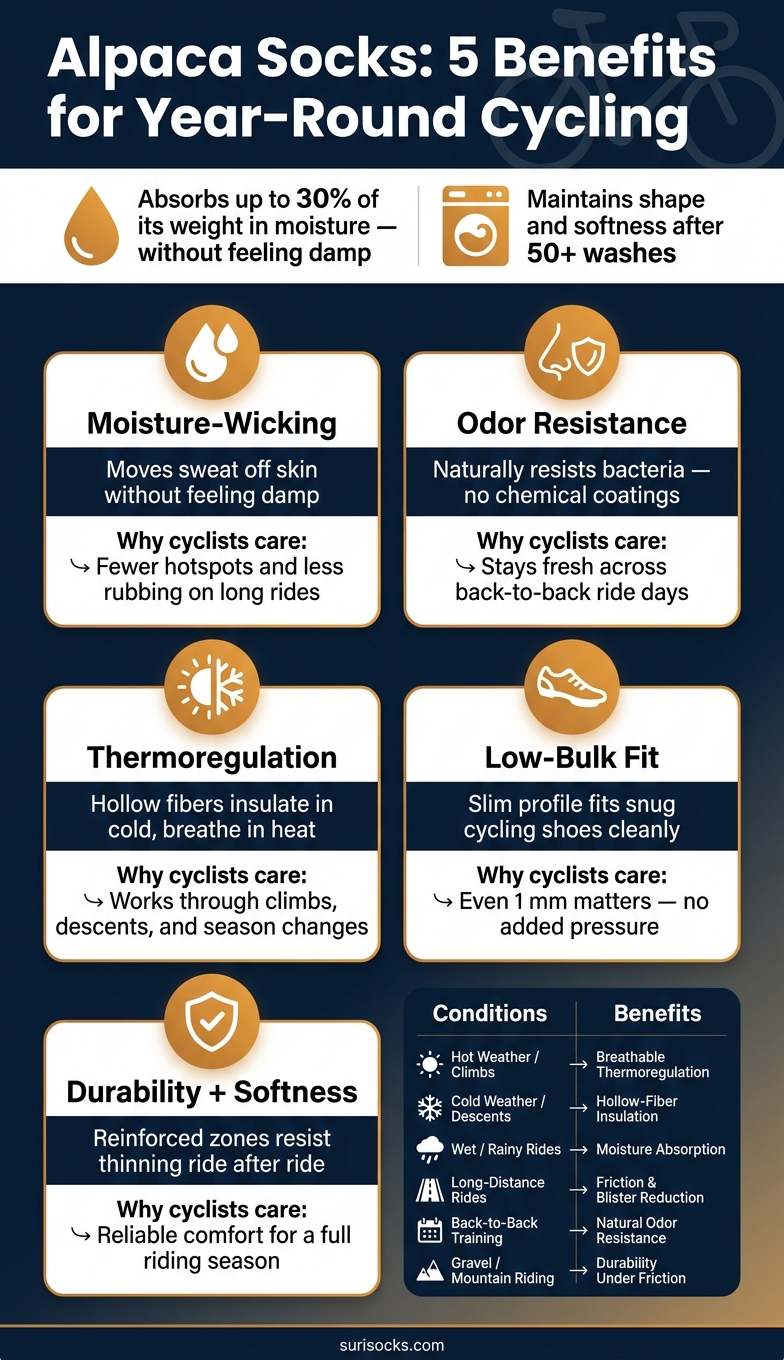
5 Benefits of Alpaca Socks for Year-Round Cycling
Share
If I ride in heat, cold, or wet weather, alpaca socks solve the same core problem: keeping my feet more dry, less smelly, and more comfortable inside tight cycling shoes.
If I had to sum up the whole article in five points, it would be this:
Drier feet on long rides: alpaca moves sweat off the skin and helps cut down on rubbing
Less odor between washes: the fiber resists odor-causing bacteria without added chemical coatings
Works in heat and cold: it helps keep feet from overheating in summer and helps hold warmth on cold starts
Fits well in snug shoes: low-bulk socks matter when even 1 mm can change shoe feel
Holds up through the season: soft fibers plus reinforced zones help with daily riding wear
That’s the full takeaway. If I want one sock type for summer climbs, cool descents, wet rides, and back-to-back training days, alpaca covers all five jobs in one.
Alpaca Socks vs. Cycling Conditions: 5 Key Benefits at a Glance
Quick Comparison
Benefit
What it helps with
Why cyclists care
Moisture-wicking
Sweat buildup
Fewer hot spots and less rubbing
Odor resistance
Smelly socks
Better for multi-day use and fewer washes
Thermoregulation
Hot and cold weather
More stable foot comfort across seasons
Low-bulk breathability
Tight cycling shoes
Better fit and less pressure
Durability + softness
Repeated wear
More comfort over many rides
So before I think about sock style - crew, ankle, or no-show - I’d focus on these five traits first.
sbb-itb-855989e
1. Moisture-Wicking Keeps Feet Drier on Long Rides
Inside a stiff cycling shoe, sweat doesn’t have many places to escape. That’s why fabric choice matters so much. Alpaca fiber has a hollow or semi-hollow core that helps move moisture away from the skin instead of trapping it there. So the sock pulls sweat off your skin without feeling wet.
That dry feel isn’t just nice to have. It can make a big difference on long rides, when moisture often turns into friction. Alpaca fibers can absorb up to 30% of their own weight in moisture without feeling damp to the touch. That’s about three times cotton’s absorption capacity.
Drier feet usually mean fewer hotspots and less rubbing over time. When sweat sits on the skin, it softens the surface and adds friction with every pedal stroke. Alpaca is lanolin-free, so it feels smoother and can cut down on irritation during long rides, especially when wearing low-profile ankle socks.
For care, wash alpaca socks in cold water, use a gentle cycle, and let them air dry. Skip fabric softener. It can coat the fibers and reduce moisture transfer.
2. Natural Odor Resistance Holds Up Between Washes
Once your feet stay drier, the next problem is pretty obvious: odor. Alpaca fiber helps on that front too. It naturally resists odor-causing bacteria, and it does so without chemical treatments. That resistance is built into the fiber itself, not added later, unlike synthetic socks that often rely on antimicrobial coatings that can wash out over time.
There’s also a simple day-to-day upside. Because alpaca dries fast, it tends to stay fresher between rides. That matters a lot on back-to-back ride days, multi-day trips, and bikepacking runs where ultra-dense boot socks provide extra protection, where a clean-feeling pair of socks can make a bigger difference than people expect.
3. Thermoregulation Works in Both Summer and Winter Riding
Cycling conditions can flip fast, and alpaca handles heat and cold without extra bulk.
Alpaca fibers are hollow or semi-hollow. That helps hold warmth on cold early starts and fast descents. Then, when the pace picks up or the temperature climbs, the same fiber structure stays breathable and lets excess heat escape.
It also works well on shoulder-season rides, when a hard climb warms your feet and a quick descent cools them right back down. You get warmth without bulk, so the sock works across changing conditions without adding extra layers.
That balance matters on rides with frequent pace changes.
And because alpaca stays low-bulk, it also fits cleanly inside snug cycling shoes.
4. Breathable Fit Works Well Inside Snug Cycling Shoes
Inside a snug cycling shoe, sock thickness can make or break comfort. A low-profile alpaca sock fits cleanly without adding extra pressure or bulk. That matters a lot when your shoes already feel tight and dialed-in.
Once the fit is right, moisture becomes the next problem. In a closed shoe, alpaca helps move sweat away from the skin, which can cut down on friction and hot spots.
It also stays comfortable through repeated pedal strokes. A smooth, low-bulk alpaca sock feels good on long rides, while reinforced heel-and-toe zones help it last season after season.
Wear your ride socks when fitting new cycling shoes. Even 1 mm can change the fit. For extra support, consider alpaca compression socks to improve circulation during long efforts.
5. Durability and Softness Make Alpaca Socks Reliable All Season
Once moisture, odor, and temperature are under control, durability becomes the next big test. A sock has to keep doing its job ride after ride.
If a sock wears out halfway through the season, it stops mattering. Alpaca has natural stretch and resilience, which helps it resist sagging and thinning, especially around the heel and toe. Reinforced heel, toe, and sole zones also help it stand up to repeated pedal friction. On top of that, alpaca fibers are smooth and lanolin-free, so they feel soft and non-itchy during long rides. High-quality High-quality alpaca socks are also reported to keep their shape and softness even after 50+ washes.
That balance of softness and wear resistance is what makes alpaca socks a solid pick for a full riding season.
Cycling Conditions vs. Alpaca Sock Benefits: A Quick Comparison
The table below shows which alpaca sock trait tends to matter most in each riding condition.
Scenario
Main Benefit
Why It Matters
Hot Weather / Climbs
Breathable Thermoregulation
Helps prevent overheated, damp feet during high-output efforts
Cold Weather / Descents
Hollow-Fiber Insulation
Keeps toes warm without bulk
Wet / Rainy Rides
Moisture Absorption
Drier skin means fewer chills and blisters
Long-Distance / Century Rides
Friction & Blister Reduction
Soft feel and moisture management reduce hotspots
Back-to-Back Training Days
Natural Odor Resistance
Keeps socks fresh across consecutive ride days and bikepacking trips
Gravel and Mountain Riding
Durability Under Friction
Resists thinning in high-friction heel and toe zones
A lot of these perks work together, which is the whole point. A ride can start chilly, heat up on a climb, then turn wet on the way back. In that kind of mixed setup, socks that handle sweat, warmth, and rubbing all at once can make a big difference.
Suri Performance Alpaca Socks offers crew, ankle, boot, and no-show styles built for moisture control, odor resistance, and temperature regulation.
Conclusion
Put it all together, and alpaca stands out as a smart year-round cycling sock. It handles sweat, odor, temperature swings, and snug shoe fit in one pair. That makes it a practical pick for all four seasons, not just something you pull out for one part of the year.
That mix matters on the bike because conditions can shift fast. The same structure that helps alpaca insulate in cold weather also lets it stay breathable when temperatures climb. So one pair can keep working as the ride changes.
If you want one sock that can cover multiple seasons, alpaca is the simplest pick. For a year-round option, Suri Performance Alpaca Socks offers crew, ankle, boot, and no-show styles built for moisture control, odor resistance, and temperature regulation.
FAQs
Are alpaca socks good for summer cycling?
Yes. Alpaca socks are a smart pick for summer cycling.
Their natural thermo-regulating fibers help let excess heat escape, so your feet don’t feel as hot on the bike. They’re also breathable, which matters a lot on warm rides.
Suri Performance Alpaca Socks wick moisture too, helping keep your feet drier and cooler when the temperature climbs.
For the best results, go with lightweight ankle or no-show pairs. If you can, choose styles with ventilated mesh zones to improve airflow and help manage sweat.
How should I wash alpaca cycling socks?
Hand washing in cold or lukewarm water is the best way to help Suri Performance Alpaca Socks keep their shape and feel.
Use a mild, wool-safe detergent, and skip bleach and fabric softener.
Turn the socks inside out, gently swish them in the water, then press out extra moisture with a towel. Never wring or twist them.
If you use a washing machine, place them in a mesh bag and choose a delicate or wool cycle with cold water.
When it's time to dry, lay them flat to air dry and keep them away from direct heat.
Which alpaca sock height is best for cycling?
The best alpaca sock height for cycling depends on how and where you ride. Ankle socks work well for road cycling or warm-weather rides because they feel light and breathable.
For cooler weather or tougher rides, crew socks give you mid-calf coverage and light compression for extra support. Suri Performance Alpaca Socks come in both styles, with comfort and moisture management built in.