"I liked saving money buying 4 pairs at a time and the socks are great for what I need. It's unbelievable how they could be made out of this material, yet they are so comfortable and they don't make my feet and legs itch nor do they make them hot or sweaty."
Rick S., Verified Customer
Alpaca vs Wool: Which Feels Softer?
Share
Alpaca fiber feels softer than wool due to its smoother structure and lack of lanolin. While Merino wool is fine and soft, its barbed scales can cause itchiness, especially for sensitive skin. Alpaca fibers have flatter scales and a hollow core, making them silkier, hypoallergenic, and lighter. Additionally, alpaca repels moisture better, stays dry longer, and provides superior warmth compared to wool. These qualities make alpaca a more comfortable choice for clothing, especially for people with skin sensitivities or those looking for all-day wear.
Quick Comparison:
Feature
Alpaca Fiber
Merino Wool
Softness
Silky, smooth (up to 10x smoother)
Fine, but can feel prickly
Itch Potential
Very low
Moderate
Skin Sensitivity
Hypoallergenic (lanolin-free)
May irritate due to lanolin/scales
Warmth
3x warmer
Moderate
Moisture-Wicking
85% faster
Slower; absorbs more moisture
Durability
Higher tensile strength
Moderate
Alpaca is a better option for softness, warmth, and moisture control, making it ideal for socks and other everyday wear.
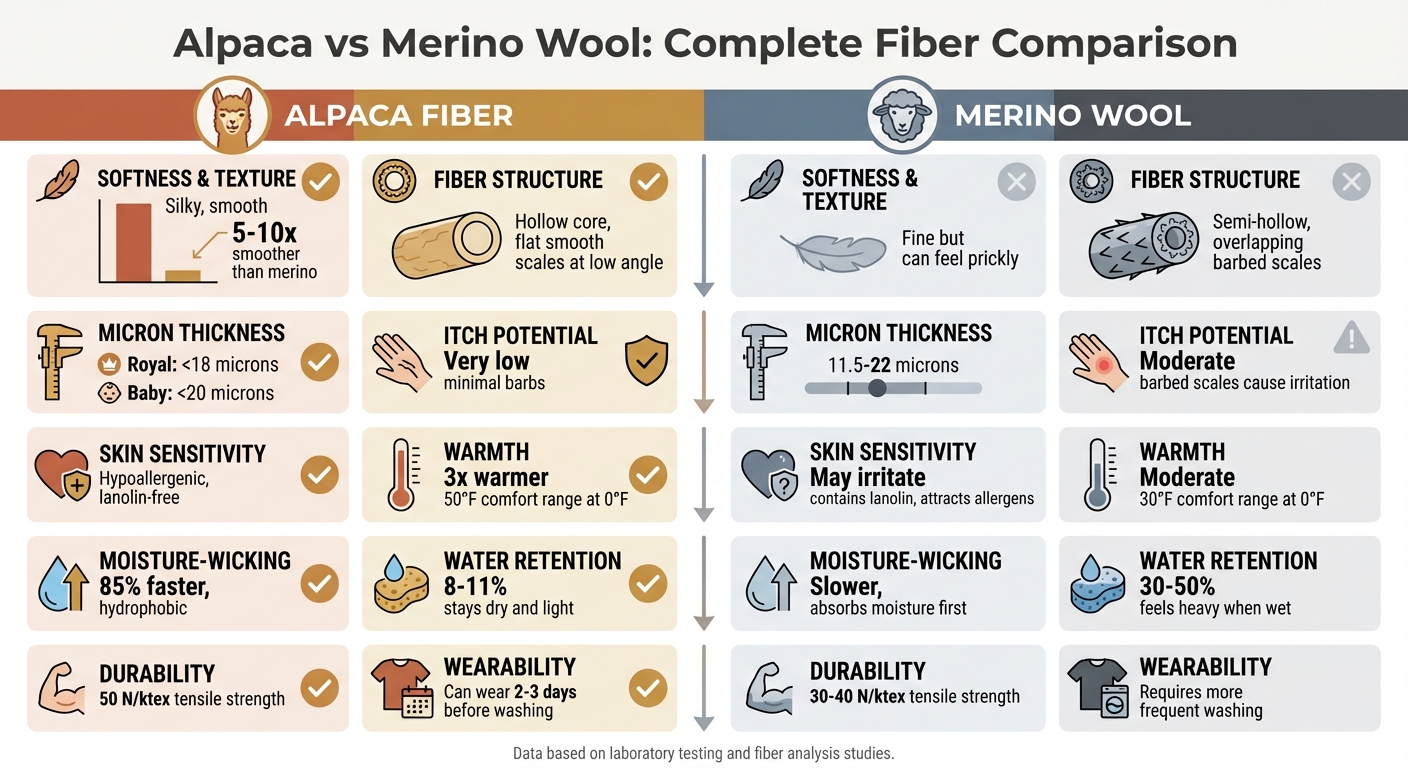
Alpaca vs Merino Wool Fiber Comparison Chart
Alpaca vs Sheep Wool: Which Offers Better Comfort and Warmth?
sbb-itb-855989e
How Fiber Structure Affects Softness
Microscopic details like diameter, scale structure, and core composition are what give each type of fiber its unique texture.
Micron Thickness and Texture
The diameter of a fiber, measured in microns, plays a major role in how soft it feels. Alpaca fibers typically range from 15 to 36 microns, with the finest grades - Royal Alpaca (under 18 microns) and Baby Alpaca (under 20 microns) - being incredibly soft to the touch. Merino wool, on the other hand, can measure even finer, from 11.5 to 22 microns. However, despite its smaller diameter, Merino wool often feels rougher due to its scale structure.
Here’s why: the scales on the surface of the fiber make all the difference. Alpaca fibers have flatter scales, which glide smoothly over the skin. As Ruth Fuqua explains, "Alpaca fiber scales are at a lower angle from the main shaft, which reduces the prickle or itchy feel often encountered with sheep wool". This structural difference is a key reason why alpaca is less irritating.
Another factor is the hollow core of alpaca fibers, which makes them lighter and better at insulating compared to the solid fibers of wool. This hollow structure not only reduces the fiber’s weight but also enhances its softness, making it particularly comfortable for items like cotton, wool, or alpaca socks.
But softness isn’t just about structure - fiber composition matters, too.
Lanolin-Free Comfort
Alpaca fiber’s lack of lanolin is another reason for its superior comfort. While only about 1% to 2% of people have a true lanolin allergy, lanolin can still cause issues. Its sticky nature tends to trap dust, pollen, and other allergens, which can irritate the skin. Plus, removing lanolin during wool processing often diminishes the fiber’s natural softness.
Alpaca fibers, however, are naturally lanolin-free. This absence makes them hypoallergenic and eliminates the need for harsh chemical scouring. Bluegrass Alpaca Ranch highlights this benefit, stating, "The absence of lanolin, and the fact that it requires no chemical-scouring agents for processing, makes alpaca fiber hypoallergenic". Without the greasy coating, alpaca fibers are cleaner, smoother, and less likely to cause irritation.
When you combine alpaca’s smooth scales with its lanolin-free nature, it’s easy to see why it feels up to 5 to 10 times smoother than Merino wool of a similar grade. For those with sensitive skin, this isn’t just about luxury - it’s about making clothing that’s wearable and comfortable.
Softness and Comfort: Direct Comparison
When it comes to softness, alpaca fibers offer a silky, smooth texture, while Merino wool can sometimes feel a bit prickly. This difference becomes especially noticeable when you consider the structure of the fibers and the role of lanolin. These factors directly influence how comfortable each material feels against the skin.
The root of this contrast lies in the fiber structure. Merino wool has barbed scales that can cause tiny abrasions, leading to a prickly sensation. On the other hand, alpaca fibers have minimal barbs, which naturally reduce irritation. For those with sensitive skin, alpaca's lanolin-free composition is another bonus, as it minimizes allergen retention and irritation. As Alice Jones Webb from Outdoor Life puts it, "Alpaca wool can feel five to 10 times smoother than merino wool, giving it a softer feel".
Comparison Table: Softness, Itch Potential, and Skin Sensitivity
Here's a quick breakdown of how alpaca and Merino wool stack up in terms of comfort:
Category
Alpaca
Sheep's Wool (Merino)
Softness
Silky and smooth; akin to cashmere
Fine and soft, but can feel prickly due to scale structure
Itch Potential
Very low; lacks barbed scales
Moderate; scales can cause a cactus-like sensation
Skin Sensitivity
Hypoallergenic and lanolin-free
May irritate due to lanolin or coarse fibers
Fiber Structure
Hollow core with flat, smooth scales
Semi-hollow with overlapping, barbed scales
These qualities make alpaca socks an excellent choice for all-day comfort. Thanks to their hollow core, they provide lightweight insulation, which is perfect for active lifestyles. For instance, Suri Performance Alpaca Socks take full advantage of alpaca's softness, hypoallergenic properties, and lightweight feel to keep your feet cozy and irritation-free in any situation.
Performance Features That Affect Softness
Alpaca fiber isn't just soft - it stays soft, thanks to its ability to manage warmth, moisture, and breathability throughout the day. These performance features are what set it apart from other materials, ensuring lasting comfort.
Warmth and Insulation
Alpaca's hollow-core fiber design makes it an impressive insulator. According to Yocum-McCall Testing Laboratories, alpaca is three times warmer than merino wool. While traditional wool traps warmth using air pockets between fibers, alpaca takes insulation to another level. In freezing temperatures (0°F), alpaca provides a comfort range of 50°F, compared to wool's 30°F range. The result? Lightweight warmth that feels cozy without the bulk or stiffness often associated with thicker wool garments.
Moisture-Wicking and Breathability
Alpaca fiber doesn't just keep you warm - it keeps you dry. Its hollow structure not only traps heat but also helps wick moisture away from your skin. Being hydrophobic, alpaca repels water instead of absorbing it. In fact, it wicks moisture 85% faster than merino wool, moving it to the surface for quick evaporation.
"Alpaca fiber on the other hand has hollow tubes for fiber, which means that it doesn't absorb the moisture, but instead sheds it and pushes it away." – Alpacas of Montana
This moisture management is further highlighted by its low water retention rate of just 8% to 11%, compared to wool's much higher 30% to 50%. This means alpaca stays dry, light, and soft, even during extended wear. Whether you're hiking, working, or simply on the go, these properties ensure consistent comfort.
Comparison Table: Warmth, Moisture-Wicking, and Breathability
Performance Feature
Alpaca
Sheep's Wool (Merino)
Warmth
3x warmer; hollow-core insulation
Warms via air pockets between fibers
Moisture-Wicking
85% faster wicking; hydrophobic
Absorbs moisture before wicking
Water Retention
8–11% (stays dry and light)
30–50% (can feel heavy and clammy)
Breathability
High; regulates temperature
Moderate; decreases when saturated
Comfort Range (0°F)
50°F range
30°F range
These features make alpaca a standout choice for comfort in all conditions. Products like Suri Performance Alpaca Socks take full advantage of alpaca's hollow-core fibers and moisture management. Whether you're braving cold weather or tackling a long day at work, alpaca keeps your feet dry, cozy, and irritation-free. Plus, its natural breathability prevents overheating, making it a year-round winner for softness and comfort.
Why Alpaca Works Better for Everyday Socks
Alpaca fiber stands out when it comes to everyday socks, offering comfort and performance that’s hard to beat. Whether you're spending hours on your feet at work, tackling a hiking trail, or simply running errands, alpaca socks deliver a combination of softness, moisture control, and odor resistance that keeps your feet happy all day long.
One of the most practical perks? You can wear alpaca socks for 2–3 days before needing to wash them. This is thanks to alpaca's ability to expel moisture, which prevents the bacterial growth that typically causes odors. Wool, on the other hand, tends to retain moisture, often leading to a damp, clammy feel and more frequent washing.
Another edge alpaca socks have over wool is how they handle long hours of wear. Wool socks can feel heavy and damp after a while, but alpaca socks stay dry and lightweight. Their naturally hollow fiber structure helps regulate temperature, keeping your feet comfortable. Plus, their smooth, hypoallergenic texture reduces the chances of itching or irritation, even during extended use.
For a great example of these benefits in action, check out Suri Performance Alpaca Socks. These socks are designed for all-day wear and come in various styles like crew, boot, ankle, and no-show. Features like targeted cushioning, breathable mesh zones, and reinforced durability make them perfect for daily use. Prices start at $28.99 for no-show socks, but bundle deals like Buy 3 Get 3 Free bring the cost down to around $18–$19 per pair, making premium comfort more accessible.
Durability is another area where alpaca socks shine. With a tensile strength of 50 N/ktex compared to wool's 30–40 N/ktex, alpaca fiber resists pilling, thinning, and general wear and tear. Combined with its antimicrobial properties and excellent moisture control, alpaca socks offer long-lasting comfort that’s perfect for everyday use.
Conclusion
When it comes to softness and comfort, alpaca fiber stands out compared to traditional wool. Thanks to its flatter, smoother scale structure, alpaca feels 5 to 10 times smoother than merino wool, avoiding the prickly sensation often associated with wool socks. Even better, alpaca is naturally lanolin-free, which makes it hypoallergenic - great news for those with sensitive skin or wool allergies.
But alpaca offers more than just softness. For active lifestyles, it delivers exceptional performance. Its hollow-core structure provides 3 times more warmth than wool, and its hydrophobic nature holds only 8% moisture compared to wool's 30–50%. This means alpaca socks dry faster, control odor better, and can be worn for 2–3 days before needing a wash. Plus, with a tensile strength of 50 N/ktex, alpaca socks resist pilling and maintain their shape far longer than typical wool options.
Want to try them yourself? Suri Performance Alpaca Socks combine these benefits with thoughtful designs for everyday wear. Choose from crew, boot, ankle, or no-show styles, all featuring targeted cushioning and breathable mesh zones for maximum comfort and durability. Starting at $28.99, bundle offers like Buy 3 Get 3 Free bring the price down to about $18–$19 per pair, making premium alpaca socks an affordable luxury.
Whether you're tackling a tough hike, enduring long workdays, or just looking for all-day comfort, alpaca fiber's softness, moisture control, and durability make it a clear upgrade over traditional wool.
FAQs
Why is alpaca fiber gentler on sensitive skin compared to wool?
Alpaca fiber is a great option for people with sensitive skin because it doesn’t contain lanolin. Lanolin, commonly found in sheep wool, is a substance that can irritate the skin or cause allergic reactions in some individuals. Since alpaca fiber is free of lanolin, it’s naturally hypoallergenic and gentler on the skin.
Beyond that, alpaca fibers are smoother and softer compared to traditional wool. This smooth texture helps minimize the itchiness often linked to wool products, making alpaca garments perfect for all-day comfort. Whether it’s socks or other clothing items that touch the skin directly, alpaca fiber offers a cozy and irritation-free experience.
What makes alpaca fibers warmer and more comfortable than traditional wool?
Alpaca fibers stand out thanks to their hollow core structure, which boosts both warmth and comfort. These small air pockets are incredibly efficient at trapping heat, offering excellent insulation without adding extra weight. Plus, this structure helps regulate temperature, so you stay warm without feeling overheated. It also wicks away moisture, keeping you dry and comfortable all day long.
Why are alpaca fibers better at wicking moisture than merino wool?
Alpaca fibers are impressive when it comes to moisture management. Thanks to their hollow-core structure, they absorb much less water - only about 10-11% of their weight - compared to merino wool, which can hold up to 30%. This allows alpaca fibers to dry faster and keep your feet feeling dry for longer periods.
What’s more, alpaca fibers naturally repel moisture while remaining breathable. This makes them a fantastic option for activities where staying dry and comfortable is a priority.