"I liked saving money buying 4 pairs at a time and the socks are great for what I need. It's unbelievable how they could be made out of this material, yet they are so comfortable and they don't make my feet and legs itch nor do they make them hot or sweaty."
Rick S., Verified Customer
Alpaca vs. Wool: Which Is More Sustainable?
Share
When it comes to choosing between alpaca and wool for clothing, alpaca fiber emerges as the more eco-conscious choice. Here's why:
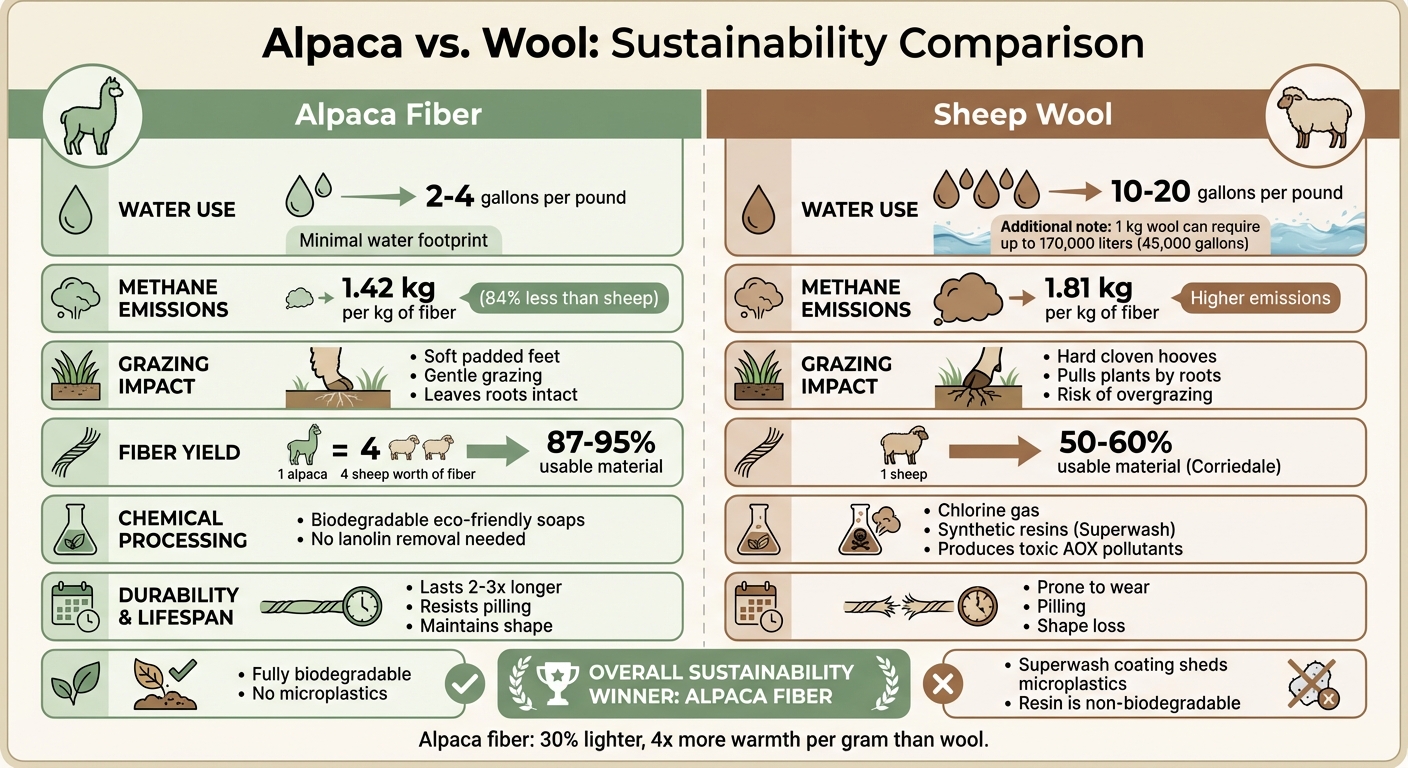
Water Use: Producing alpaca fiber requires significantly less water - just 2–4 gallons per pound compared to 10–20 gallons for sheep wool. Wool production also involves heavy water use during cleaning due to lanolin removal.
Methane Emissions: Alpacas emit 84% less methane than sheep, making them a lower-impact option for greenhouse gas emissions.
Grazing Habits: Alpacas graze gently, leaving plant roots intact, which helps prevent soil erosion and supports land regeneration. Sheep grazing often leads to overgrazing and land degradation.
Durability: Alpaca garments last longer due to their stronger, smoother fibers, reducing the need for frequent replacements. For those seeking high-performance options, alpaca ankle socks provide a durable, eco-friendly alternative to traditional wool.
Processing: Alpaca fiber avoids harsh chemical treatments like Superwash wool, which uses chlorine and synthetic resins, reducing pollution and microplastic waste.
Quick Comparison
Feature
Alpaca Fiber
Sheep Wool
Water Use
2–4 gallons per pound
10–20 gallons per pound
Methane Emissions
1.42 kg per kg of fiber
1.81 kg per kg of fiber
Grazing Impact
Gentle, supports regrowth
Risk of overgrazing
Durability
Long-lasting, resists pilling
Prone to wear and shape loss
Chemical Processing
Minimal, eco-friendly soaps
Chlorine, synthetic resins
Biodegradability
Fully biodegradable
Microplastic issues with Superwash wool
Alpaca fiber not only reduces resource consumption but also offers better performance in terms of warmth, durability, and care. While wool remains a practical and accessible option, alpaca is a smarter long-term investment for reducing your footprint.
Alpaca vs Wool Sustainability Comparison: Environmental Impact Data
Alpaca vs Sheep Wool: Which Offers Better Comfort and Warmth?
sbb-itb-855989e
Environmental Impact: Alpaca vs. Wool
When comparing alpaca fiber to sheep wool, the environmental differences are striking. From grazing habits to water use and methane emissions, alpacas have a noticeably smaller environmental footprint. Let’s break it down.
Land Use and Grazing Patterns
Alpacas tread lightly - literally. Their soft, padded feet are much gentler on the ground compared to sheep's hard, cloven hooves, which can compact soil and lead to erosion. Additionally, alpacas graze selectively, nibbling the tops of plants and leaving the roots intact for quick regrowth. Sheep, on the other hand, often pull plants out by the roots, increasing the risk of overgrazing and land degradation.
Here’s another key point: one alpaca can produce as much fiber as four sheep. Not only that, but alpaca fiber has a higher usable yield - 87–95% usable material compared to just 50–60% for sheep wool (like Corriedale wool), which often contains more lanolin and dirt. As Simply Natural highlights:
Their soft padded feet cause less soil damage compared to sheep's hooves.
Water Requirements
Alpacas are well-adapted to dry environments, relying mostly on natural water sources like streams and rivers. This reduces the strain on water resources. Originating from the arid Andes, they thrive with minimal water intervention. Sheep wool production, however, can be incredibly water-intensive - producing just 1 kg of wool can require up to 170,000 liters (about 45,000 gallons) of water.
Another advantage of alpaca fiber is its lack of lanolin. This means it requires much less water for cleaning, further reducing its environmental impact. Combined with their lower methane emissions, alpacas present a more eco-friendly option.
Methane Production and Climate Impact
Methane emissions are another area where alpacas come out ahead. They emit around 1.42 kg (3.1 lbs) of methane per kg of fiber, which is lower than the 1.81 kg (4.0 lbs) produced by merino sheep. Their selective grazing habits also mean less land needs to be cleared for pastures, helping preserve vegetation and reduce deforestation. Plus, alpacas are naturally resistant to many parasites, so they require fewer chemical treatments. This translates to less chemical runoff and healthier water ecosystems.
Soil Health and Vegetation Impact
Alpacas’ gentle grazing supports biodiversity and soil health. By consuming only what they need and leaving plant roots intact, they help pastures regenerate. As Wolpakka explains:
Sheep, however, graze less selectively, which can lead to degraded land and monocultures. This loss of diversity affects the resilience of pastures and the ecosystems they support.
From their grazing habits to their water and methane efficiency, alpacas prove to be a more environmentally friendly choice for fiber production. Their practices promote healthier ecosystems, making their fiber a compelling option for sustainable textiles.
Durability and Product Lifespan
Sustainability isn’t just about how something is made - it’s also about how long it lasts. When a garment stays in use for years, it generates less waste and reduces the need for replacements. This is exactly where alpaca fiber stands out.
Fiber Strength and Resistance to Wear
Alpaca fiber is naturally stronger and more durable than sheep’s wool. Its smooth texture minimizes friction, which helps prevent pilling. This means alpaca garments retain their polished look season after season, unlike wool items that can start to appear worn much sooner.
While wool has more elasticity, it can stretch out and lose its shape over time. Alpaca fiber, on the other hand, maintains its structure impressively well, even after years of use. Plus, alpaca fiber lacks lanolin, so there’s no grease buildup to weaken it. These qualities make alpaca garments incredibly tough and long-lasting.
How Long Products Last
The durability of alpaca fiber takes sustainability a step further. With proper care, alpaca garments can last for decades. As AlpacaApparel explains:
Alpaca garments, when cared for properly, can last a lifetime. Fewer replacements mean less waste, fewer resources consumed, and a gentler footprint on the planet.
Simply Natural echoes this sentiment:
Alpaca wool generally lasts longer - especially high-quality grades like Baby Alpaca or Royal Alpaca. It's a luxury fiber that doesn't just feel amazing - it stands the test of time.
Another bonus? Alpaca’s hollow fibers make it warmer than wool, so you often need fewer layers. This reduces wear and extends the life of your clothing even further.
Care Requirements and Resource Use
Alpaca garments are not only durable but also easy to care for, which helps conserve resources over time. The hollow fibers repel water and resist odors, meaning you don’t need to wash them as often. This saves water and cuts down on energy use.
To keep your alpaca pieces in great shape, opt for gentle hand washing, lay them flat to dry, and store them properly. Folding knitwear instead of hanging it helps maintain its shape, keeping your garments looking fresh for years and reducing the need for replacements.
Processing Methods and Chemical Use
The way fibers are processed plays a big role in their environmental impact. While both alpaca and wool begin as natural materials, their manufacturing processes take very different paths, especially when it comes to chemical treatments and water use.
Chemical Treatments Required
Mass-market wool often undergoes a Superwash treatment to make it machine-washable and shrink-resistant. This involves using chlorine-based chemicals, such as sodium hypochlorite or chlorine gas, to strip the fiber's natural scales. Afterward, the wool is coated with a synthetic resin, like Hercosett 125, to smooth the fibers and prevent felting.
Jordy Munarriz explains:
Superwash wool refers to wool fibers that have undergone chemical treatments or coatings to make them machine-washable and shrink-resistant.
Alpaca fiber, on the other hand, skips these intensive treatments. Thanks to its naturally smooth structure, alpaca fiber doesn’t require chemical scouring or plastic coatings. According to Alpacas of Montana:
Alpaca fibers do not have the barbs that need to be burned off. We use biodegradable, eco-friendly soap to remove organic material from the fiber before it is spun into yarn.
The environmental downside of Superwash wool is significant. Chlorination produces Adsorbable Organic Halides (AOX), which are toxic, long-lasting in aquatic environments, and potentially carcinogenic. The epichlorohydrin used in resin coatings is also a known mutagen and probable human carcinogen. Disposal of the chemical waste from this process often requires specialized toxic waste facilities, as standard water treatment plants can't handle it.
This streamlined approach for alpaca fiber reduces both chemical use and water demands during processing.
Water Use During Manufacturing
Water consumption also varies significantly between these two fibers. Wool requires heavy washing to remove lanolin, involving multiple rinsing cycles that consume large amounts of water.
Alpaca fiber avoids this step entirely. Since alpacas don’t produce lanolin, there’s no need for chemical baths or excessive rinsing. This results in much lower water use during production. Moreover, alpacas graze in high-altitude regions of the Andes, relying on natural water sources like rivers and streams, which minimizes the burden on municipal water supplies.
Decomposition and Disposal
How a garment breaks down at the end of its life is just as important as how it’s made. Both alpaca and wool are natural fibers that should biodegrade, but chemical treatments complicate this process.
Pure alpaca fiber is fully biodegradable, breaking down naturally and returning nutrients to the soil without releasing toxins. The biodegradable soaps used during its processing don’t interfere with this process.
Superwash wool, however, has a different story. Munarriz notes:
The resin coating is not biodegradable, contributing to microplastic pollution when garments shed fibers during washing and wear.
The plastic resin coating on Superwash wool sheds microplastics into waterways with every wash. These synthetic coatings persist in the environment for centuries, preventing the fiber from breaking down properly and disqualifying it from many compostability certifications.
Performance for Outdoor Use
Alpaca fiber isn't just eco-friendly; it also performs exceptionally well in outdoor settings. Whether you're hiking, camping, or tackling outdoor work, your gear needs to keep you comfortable and protected. Both alpaca fiber and merino wool have their strengths, but they differ in how they handle temperature, moisture, and weight - key factors for outdoor adventures.
Temperature Control and Warmth
Alpaca fiber stands out for its ability to regulate temperature in extreme conditions. Thanks to its completely hollow core, it traps air efficiently, creating a natural thermal barrier. In contrast, merino wool's semi-hollow structure provides less insulation. This makes alpaca fiber a better choice for staying warm in freezing temperatures. As Alice Jones Webb from Outdoor Life points out:
"Alpaca's hollow-core structure also means that it outperforms its weight as an insulator. If you're venturing into frosty terrain and need to keep gear weight low, an alpaca base layer could save you a few back-breaking ounces without sacrificing insulating ability."
Research backs this up, showing that alpaca fiber maintains core body temperature more effectively than merino wool.
Moisture Management and Odor Control
When it comes to moisture, alpaca and merino handle things differently. Merino wool can absorb up to 30% of its dry weight in water, while alpaca fiber absorbs only about 10–11%. This makes merino better at wicking sweat initially, but alpaca’s hydrophobic nature allows it to dry much faster, reducing the chance of feeling damp or cold. Both fibers resist odors naturally, though for different reasons: merino relies on lanolin's antimicrobial properties, while alpaca benefits from its low water absorption. Webb highlights this difference:
"While it [alpaca] may not wick sweat as efficiently as merino, its quick-drying properties keep you warm and dry."
For low-profile footwear, no-show alpaca socks provide this same moisture management without being visible.
This combination of quick drying and odor resistance makes alpaca fiber particularly suited for active, unpredictable environments.
Weight and Water Resistance
For outdoor enthusiasts, weight matters - and alpaca fiber delivers superior insulation with less bulk. This makes it ideal for activities like backpacking, where every ounce counts. It's also more elastic and durable than merino wool, which is prone to pilling in areas of high friction. Studies show that alpaca garments hold their shape better over time due to the fiber's elasticity.
Property
Merino Wool
Alpaca Fiber
Water Absorption
Up to 30% of dry weight
~10–11% of dry weight
Drying Speed
Slow
Fast
Warmth-to-Weight
Standard
Superior
Durability
Prone to pilling
More elastic and durable
With its lighter weight, quick-drying capabilities, and natural water repellency, alpaca fiber is a practical choice for outdoor gear. It helps you stay dry and reduces the load you carry - perfect for unpredictable conditions.
Suri Performance Alpaca Socks showcases how alpaca fiber's natural qualities excel in challenging outdoor and work environments. Their range of products - including crew socks, boot socks, ankle socks, and no-show socks - takes advantage of alpaca fiber to deliver top-notch performance and comfort.
Alpaca fiber’s ability to absorb less moisture means faster drying and consistent comfort. Hikers have noted blister-free support even on 10-mile treks, while workers on job sites report odor-free wear for up to 12 hours. These real-world experiences highlight how alpaca’s properties translate into practical benefits for everyday wear.
Another advantage? Alpaca fiber is lanolin-free, which naturally inhibits bacterial growth. This reduces the need for frequent washing - up to 50% less compared to wool. Fewer washes save water and energy, making these socks a smart choice for those looking to reduce their environmental footprint.
Temperature regulation is another standout feature. These socks keep feet warm in temperatures as low as 32°F but remain breathable in conditions up to 80°F. Experts in textiles confirm alpaca is 30% lighter and provides 4x more warmth per gram than wool, offering excellent insulation without added bulk.
Durability is key to sustainability, and Suri socks deliver on that front. They last 2–3 times longer than traditional wool socks, cutting down on waste and production demands. This extended lifespan also reduces water usage, methane emissions, and the need for frequent replacements. Together, these qualities make alpaca fiber a clear choice for sustainable, high-performance gear.
Conclusion: Which Fiber Is More Sustainable?
Alpaca fiber stands out as the more sustainable option overall. Alpacas consume less water, emit lower levels of methane, and graze in a way that preserves plant roots and prevents soil erosion. Their fiber also requires minimal chemical treatment - avoiding processes like superwashing with chlorine gas or polymer resins - which helps reduce water pollution. These factors make alpaca fiber a win for the environment while offering excellent performance for outdoor use.
Durability is another key factor in sustainability. Alpaca products tend to last longer, meaning fewer replacements and less resource consumption over time. Plus, alpaca fiber's natural qualities - like odor resistance, moisture management, and temperature regulation - cut down on washing, saving water and energy throughout its life cycle.
That said, wool still has its merits. It’s more widely available, often easier on the wallet, and excels in high-exertion activities where moisture absorption is critical. For those on a budget or looking for convenient options, wool remains a reliable and practical choice.
For outdoor enthusiasts focused on reducing their environmental impact, alpaca fiber offers an ideal mix of eco-friendly benefits and performance. It's perfect for extended trips, extreme cold, or anyone wanting to lower their footprint while enjoying durable, comfortable gear. While the initial cost may be higher, the fiber's longevity and reduced environmental toll make it a smart long-term investment.
FAQs
Is alpaca fiber ethical to produce?
Yes, alpaca fiber is regarded as an ethical material. The shearing process is typically done with care, using gentle, traditional methods that prioritize the alpacas' comfort and safety. Additionally, alpacas are low-impact grazers, meaning they don’t cause significant damage to the land they inhabit. Their fiber is also biodegradable and produced without harmful chemicals, making it an environmentally friendly and ethical option.
How can I tell if wool is Superwash-treated?
Superwash-treated wool tends to have a shiny, almost glossy appearance. This is because the chemical process used to treat it smooths out the wool's natural scales. If you're unsure whether a wool is Superwash, you can test its felting properties - Superwash wool is resistant to felting, unlike untreated wool. It also generally feels smoother and looks more lustrous than its non-Superwash counterpart.
Is alpaca better than merino for hiking?
Alpaca is frequently preferred over merino wool for hiking thanks to its exceptional warmth, strength, and ability to manage moisture. It offers top-notch insulation, resists water, and is hypoallergenic - qualities that make it a great choice for cold or damp environments. While merino wool is highly breathable and effective at wicking moisture, it tends to absorb more water, which can leave it feeling damp. Additionally, alpaca fibers are stronger, which means outdoor gear made from them is often more durable.