"I liked saving money buying 4 pairs at a time and the socks are great for what I need. It's unbelievable how they could be made out of this material, yet they are so comfortable and they don't make my feet and legs itch nor do they make them hot or sweaty."
Rick S., Verified Customer
Alpaca vs. Merino Wool: Which Breathes Better?
Share
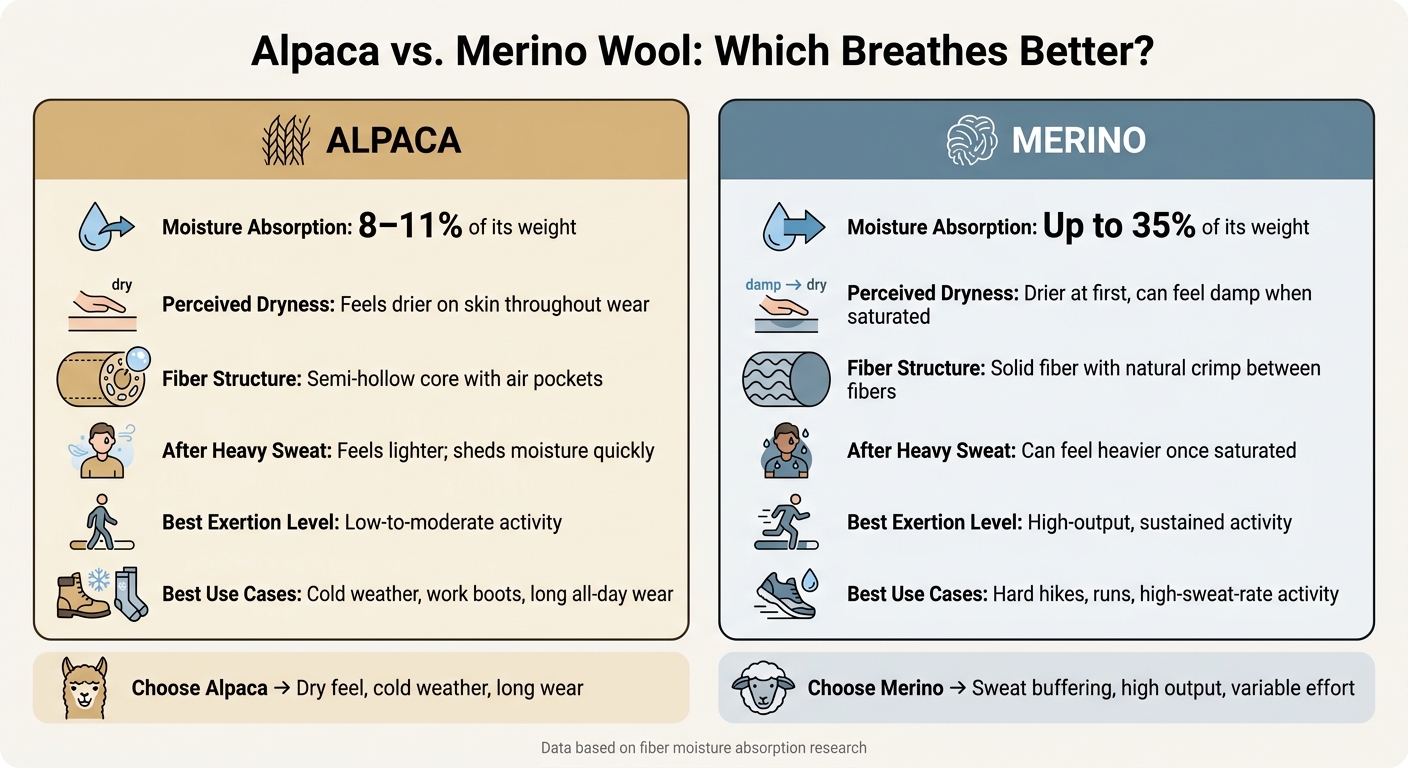
If you want the short answer: alpaca usually feels drier, while merino usually handles sweat vapor longer before it feels wet. That means alpaca often works better for cold days, long hours in boots, and all-day sock wear, while merino often works better for hard efforts where your sweat rate stays high.
Here’s the plain-English version:
Alpaca absorbs less water: about 8% to 11%
Merino can absorb much more moisture vapor: up to 35%
Your feet can produce more than 1 cup of sweat per day
Alpaca tends to feel lighter and drier
Merino tends to buffer sweat well at first, but can feel heavier when soaked
So when I compare alpaca, wool, and cotton for breathability, I’m not just asking, “Which lets in more air?” I’m also looking at dry feel, sweat handling, warmth, and how the fabric feels after hours of wear.
Quick Comparison
Criteria
Alpaca
Merino
Dry feel
Drier on skin
Drier at first, then can feel damp
Moisture absorption
Lower
Higher
Best for
Cold weather, work boots, long wear
High-output movement, changing effort
Warmth-to-weight
High
High
After heavy sweat
Often feels lighter
Can feel heavier
If you run cold, spend long days on your feet, or hate that clammy sock feeling, I’d lean toward alpaca. If you sweat hard during hikes or runs and want a fiber that can hold more moisture vapor before the fabric surface feels wet, merino has the edge.
Alpaca vs. Merino Wool: Breathability & Moisture Comparison
Merino vs Alpaca: Which Wool Wins on the Trail?
sbb-itb-855989e
Alpaca Breathability: Dry Warmth and Light Ventilation
Alpaca fibers have a semi-hollow core with tiny air pockets that work like natural insulation. That’s what gives alpaca its unusual mix of warmth and low weight. You notice it most during long wear, when temperature and sweat can shift a lot.
How hollow fiber structure affects airflow and insulation
In cold weather, those air pockets help hold body heat close to your skin. Then, once you start moving and heating up, that same fiber structure helps let extra heat escape instead of trapping it. In plain terms, alpaca helps even things out as your activity level changes.
That’s a big reason alpaca can feel warm without feeling stuffy, making it one of the best moisture-wicking materials for active wear.
Why alpaca often feels drier during long wear
Insulation is only part of the story. Alpaca also changes how damp a sock feels on your skin.
Alpaca absorbs less liquid moisture than merino. It takes in only 8–11% of its weight in water, compared with merino’s up to 30%. Inside boots over long periods, that gap can leave alpaca socks feeling lighter and drier against your skin.
Merino Breathability: Moisture Buffering During High Output
Merino puts less focus on dry warmth and more on active moisture management. Its breathability comes from two things working together: crimp-driven loft and moisture buffering. Each fiber has a natural waviness that creates loft and tiny air pockets. Those pockets help air move through the fabric and help your body hold or shed heat as conditions change.
How crimped fibers support airflow and temperature control
Those small air pockets trap heat when you're cold and can let extra warmth escape as your body heats up during activity. That matters during stop-and-go movement, where your body temperature keeps shifting. In practice, merino helps keep the microclimate next to your skin more even through the day instead of swinging from warm to clammy.
How moisture absorption changes fabric feel
Where merino stands out most is how it deals with sweat. Merino is hygroscopic, which means it pulls moisture vapor into the fiber before the fabric surface starts to feel wet. It can absorb up to 35% of its weight in moisture vapor.
"Merino wool has a unique way of handling sweat. The core of the fiber can absorb a lot of moisture vapor – up to 35% of its own weight – without feeling wet on the surface." - Caroline Chen, Author and Sock Industry Expert, rocasocks
That buffering effect is a big plus during sustained, high-output activity. Your skin can stay drier for longer because the fiber is managing humidity in the background. And as merino absorbs moisture, it gives off a small amount of heat through an exothermic reaction, which can help reduce that cold, clammy feeling when you slow down or stop moving.
There is a tradeoff, though. Once merino becomes saturated, it starts to feel heavier and less dry during long, intense wear.
That contrast stands out even more when you compare airflow and perceived dryness side by side.
Alpaca vs. Merino: Side-by-Side Breathability Comparison
Here’s the short version: alpaca dries faster, while merino handles sweat for longer before it feels wet.
Feature
Alpaca Fiber
Merino Wool
Fiber Structure
Hollow or semi-hollow core traps air inside the fiber
Solid fiber with natural crimp between fibers
Moisture Handling
Lower absorption; sheds moisture quickly
Higher absorption; holds moisture longer before feeling wet
Perceived Dryness
Feels drier for longer
Can feel damp or heavy once saturated
Breathability at Low Exertion
Strong; feels dry and warm at low activity
Good; crimp loft holds heat effectively
High-Output Performance
Dries faster; keeps feet feeling lighter during sustained effort
Buffers moisture well, but can feel stuffy when wet
That tradeoff is what shapes how each fiber feels once it’s on your feet.
Airflow, ventilation, and perceived dryness
The main difference comes down to moisture management. Merino pulls sweat into the fiber, where it can hold that moisture for a while before the surface starts to feel wet. Alpaca works a bit differently. It absorbs less moisture, so at low exertion, it tends to keep feet feeling drier.
When activity picks up, merino’s buffering effect can delay that damp feeling. But once the fiber is saturated, that edge fades, and alpaca often feels drier again.
Which fiber works better by activity and climate
Use case matters more than the fiber name on the label.
For cold-weather hiking, alpaca has a clear edge in freezing temperatures. Its hollow structure helps keep feet warm without holding as much sweat during low-to-moderate pace movement.
For long shifts in work boots, alpaca also performs well. Because it retains less water, it’s less likely to feel heavier or clammy over a long day the way a saturated merino sock can.
For humid summers or high-output activity, alpaca’s faster evaporation rate gives it an edge. Merino still works well when exertion keeps changing, since its crimp-driven loft helps regulate temperature through those ups and downs.
When breathable alpaca socks make sense
If your main goal is to keep your feet dry and odor-free during long, hard days, alpaca is often the better pick. Suri Performance Alpaca Socks puts alpaca’s moisture-wicking and thermo-regulating properties to work in hiking and work socks.
Conclusion: Which Fiber Breathes Better for Your Needs
The better pick comes down to one thing: do you want a drier feel, or better sweat buffering? Each fiber shines in a different setting.
Alpaca is the better choice when staying dry matters most. It takes in less moisture and lets it go fast, which helps it feel drier in cold weather, inside work boots, and during long wear.
You see that most clearly in the way each fiber deals with sweat.
Merino is the better choice for steady, high-output activity. It can buffer sweat well before the fabric surface starts to feel wet, which helps on long runs or tough hikes.
So the right fit depends on your climate, how hard you're pushing, and how your skin reacts to each fiber. If you tend to run cold, spend long hours in boots, or have sensitive skin, alpaca is the stronger pick. If you're sweating hard and need a fiber that can keep up with heavier moisture output, merino does the job well. For alpaca-based socks made for hiking, work, and all-day wear, Suri Performance Alpaca Socks puts the focus on moisture-wicking, odor-resistant comfort.
FAQs
Which fiber dries faster after sweat?
Alpaca fiber dries faster than merino wool after sweating. Merino wool can absorb up to 30% of its weight in water, while alpaca absorbs only 8%–11%.
That gap matters. Since alpaca holds less moisture and has a hollow fiber structure, it moves sweat away more well and helps it evaporate sooner. In Suri Performance Alpaca Socks, that means feet stay drier and more comfortable during activity.
Does alpaca or merino feel less itchy on skin?
Yes. Alpaca usually feels less itchy than merino wool.
The main reason comes down to fiber structure. Alpaca fibers have smoother, flatter scales, so they tend to glide against the skin more easily. Merino fibers have more raised scales, which can create that prickly feeling some people notice.
Alpaca is also naturally lanolin-free. Merino contains lanolin, and that can bother people with sensitive skin. Because of that, alpaca is often seen as the more comfortable option for anyone who gets irritated by wool.
How do blends affect breathability?
The provided information doesn’t explain how blending alpaca fiber with other materials changes breathability.
That said, Suri Performance Alpaca Socks depend on pure alpaca fiber and its hollow-core structure to support thermal regulation, moisture-wicking, and airflow. In plain terms, that helps keep feet dry and comfortable in both warm and cool conditions.