"I liked saving money buying 4 pairs at a time and the socks are great for what I need. It's unbelievable how they could be made out of this material, yet they are so comfortable and they don't make my feet and legs itch nor do they make them hot or sweaty."
Rick S., Verified Customer
Alpaca vs Merino Socks: Strength Comparison
Share
If you want stronger fiber and faster drying, alpaca wins. If you want a sock that stays snug and springs back better, merino wins.
I’d break it down like this:
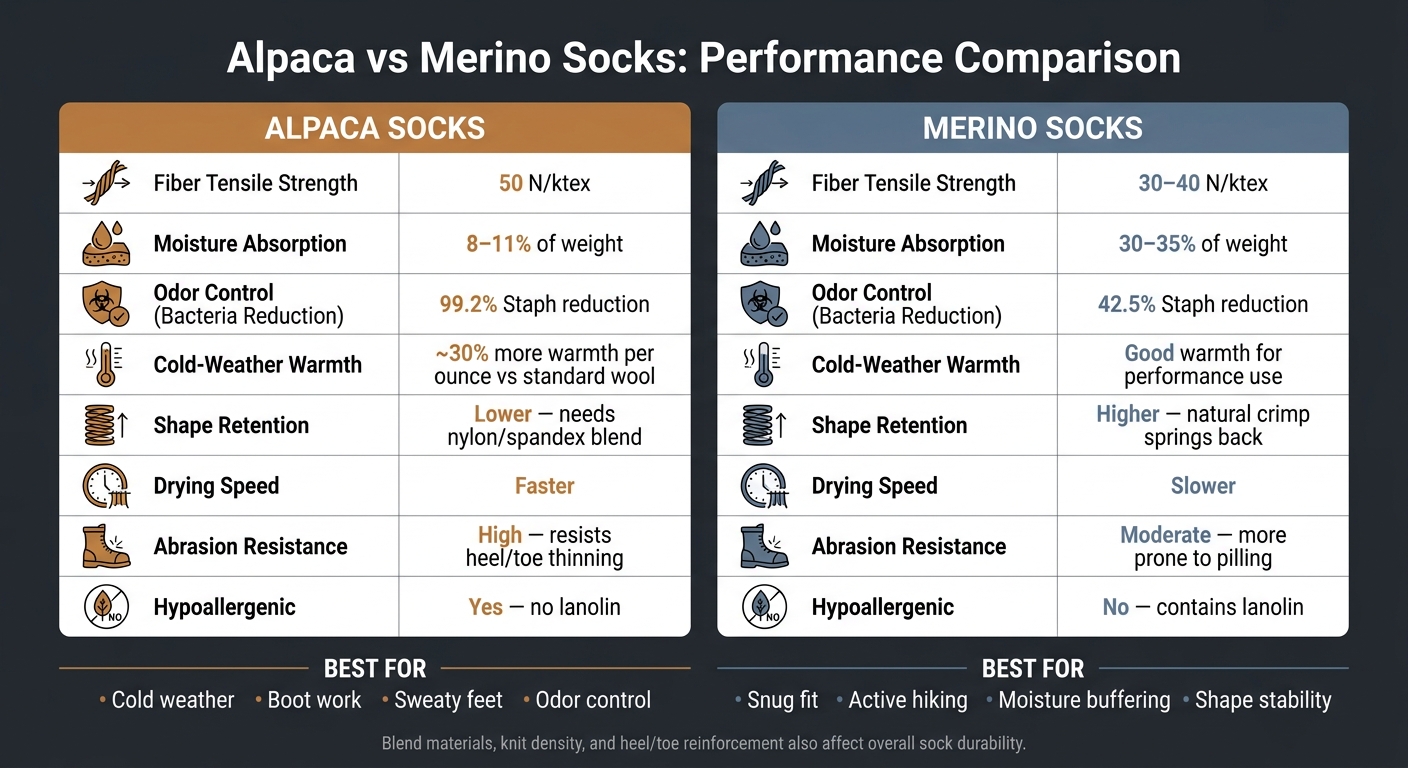
Alpaca has higher fiber strength: 50 N/ktex vs. 30–40 N/ktex for merino
Merino has better stretch recovery, so it tends to keep its shape better
Alpaca absorbs less water: 8–11% vs. 30–35% for merino
Alpaca also dries faster and runs warmer in cold weather
Merino is often the better pick when you want a close fit for hiking and long days on the move
For both, heel/toe reinforcement and blend materials matter just as much as the base fiber
If I were choosing, I’d pick alpaca for warmth, odor control, and hard boot use, and merino for fit hold and active movement.
Quick Comparison
Criteria
Alpaca Socks
Merino Socks
Fiber strength
Higher
Lower
Heel/toe wear
Usually better
Usually less durable
Shape hold
Weaker on its own
Better on its own
Moisture absorption
Lower
Higher
Drying time
Faster
Slower
Warmth in cold weather
Higher by weight
Good
Odor control
Stronger in cited test
Good
Best for
Cold, damp, long boot wear
Snug fit, active use
Bottom line: don’t judge by fiber name alone. I’d also check for nylon, spandex, knit density, and reinforced heel-and-toe zones before buying.
Alpaca vs Merino Socks: Key Performance Stats Compared
Merino vs Alpaca: Which Wool Wins on the Trail?
sbb-itb-855989e
Alpaca Sock Performance: Fiber Strength, Wear, and Comfort
Alpaca fiber has a tensile strength of 50 N/ktex, which puts it above merino’s 30–40 N/ktex. In plain terms, it can do a better job of resisting thinning and pilling in heel-and-toe zones.
That said, fiber strength doesn’t settle the whole durability story. Sock life still comes down to knit structure and reinforcement. When heel and toe wear become the main problem, construction matters just as much as the fiber itself.
Abrasion Resistance in High-Wear Zones
Alpaca has little crimp, so 100% alpaca socks can lose shape and start to sag with use. That’s the tradeoff.
To deal with that, performance socks usually blend alpaca with other fibers:
Nylon for durability
Spandex or elastane for shape retention
For hiking or long workdays, that build choice matters as much as the alpaca fiber itself.
Moisture, Odor, and Cold-Weather Comfort
Alpaca’s hollow-core fiber traps heat, absorbs less water than merino, and dries faster. That gives it an edge in cold, damp conditions.
The numbers make the case pretty clearly. Alpaca absorbs only 8–11% of its weight in water, compared to 30–35% for merino. It also provides about 30% more warmth per ounce than standard sheep’s wool.
Odor control is another strong point. Independent lab testing found that alpaca fiber reduces Staphylococcus aureus bacteria by 99.2%, compared to 42.5% for merino. And because alpaca contains no lanolin, it is naturally hypoallergenic and can help socks stay fresher for longer.
Where Performance Alpaca Socks Fit
Brands making performance alpaca socks pair these fiber traits with construction details that make up for alpaca’s weaker stretch recovery. Suri Performance Alpaca Socks, for example, offers crew, boot, ankle, and no-show styles with moisture-wicking, odor-resistant, and thermo-regulating properties, built for hiking, work, and cold-weather wear.
Merino’s advantage shows up next in stretch recovery and daily shape hold.
Merino Sock Performance: Elasticity, Recovery, and Daily Durability
Where alpaca tends to win on fiber toughness, merino stands out for stretch recovery. Its big advantage is natural elasticity. Merino fiber has a built-in crimp that helps a sock stretch under pressure and then spring back into shape when that pressure lets up.
Shape Hold and Fit Over Repeated Wear
That springy feel helps merino socks stay snug through long workdays and repeated wear without relying as much on spandex to keep their shape. And that close fit matters more than people think. When fabric gets loose, it can slip, bunch up, and rub in all the wrong places.
In hiking boots or work boots, merino’s recovery helps cut down on repeated shear against the skin, which can lower the chance of blisters.
Abrasion Limits and Reinforced Builds
This is the tradeoff with merino. At 30–40 N/ktex and 15–24 microns, it feels softer, but it also wears down faster at the heel and toe than alpaca. That’s why sock construction matters so much here.
If you’re buying merino for hard daily use, look for reinforced boot socks with nylon and spandex in the heel and toe.
That shape retention helps with daily wear. Moisture is where merino starts to show its downside.
Moisture Buffering and All-Day Comfort
Merino can absorb up to 35% of its dry weight in moisture, which helps delay that damp, clammy feeling but also means it dries more slowly. For moderate sweat output - like a steady hike or a long shift on your feet - that moisture buffering can keep things comfortable for longer.
Once the sock gets fully saturated, though, merino can start to feel heavy during extended wear. On odor control, it performs well, with a natural 42.5% reduction in Staphylococcus aureus bacteria, which helps with multi-day use. Merino also contains lanolin, and that can bother some people with sensitive skin.
Alpaca vs Merino Socks: Side-by-Side Strength Comparison
Here’s the direct comparison. The easiest way to judge these fibers is to put them next to each other.
Property
Alpaca Socks
Merino Socks
Tensile Strength
Higher (50 N/ktex)
Lower (30–40 N/ktex)
Abrasion Resistance
High; resists heel-and-toe thinning
Moderate; more prone to pilling and wear
Shape Retention
Lower; usually needs nylon/spandex for best recovery
Higher; natural crimp helps it spring back
Moisture Handling
Absorbs 8–11% of its weight and dries fast
Absorbs 30–35% and dries more slowly
Odor Control
Excellent; 99.2% bacteria reduction
Good; 42.5% bacteria reduction
Cold-weather Warmth
About 30% more warmth by weight than standard wool
Good warmth for performance socks
Fiber Strength and Abrasion Wear
Alpaca has the edge in raw fiber strength. At 50 N/ktex versus merino’s 30–40 N/ktex, alpaca fiber takes more force to break. That matters, especially in socks that deal with constant rubbing inside boots or hiking shoes.
Its smoother fiber surface may also help cut down on pilling and surface wear, which can slow thinning in high-friction spots like the heel and toe. Still, fiber strength is only part of the story. Knit density and heel-and-toe reinforcement often make the biggest difference in how long a sock lasts.
Shape Retention, Moisture Handling, and Odor
This is where the tradeoff gets more obvious.
Merino holds its shape better. Its natural crimp helps the sock bounce back after wear. Alpaca, on the other hand, usually needs nylon or spandex in the blend if you want better recovery and a more locked-in fit.
On moisture, alpaca stays lighter. It absorbs only 8–11% of its weight, while merino can hold 30–35% before it starts to feel damp. In plain English: alpaca tends to dry faster, often outperforming cotton and wool in moisture management.
Odor control also leans toward alpaca. In testing, alpaca reduced Staphylococcus aureus bacteria by 99.2%, compared with 42.5% for merino.
Best Pick for Hiking, Work, and Cold Weather
For cold-weather use or stationary work, alpaca stands out. Its structure traps more air, giving about 30% more warmth by weight than standard wool. It also handles the rubbing and pressure of work boots well.
For high-exertion hiking or activities where fit stability matters, merino blends usually have the upper hand. The fiber’s natural stretch helps the sock stay put through repeated movement. That can mean fewer bunching issues and less slipping over a long day on the trail.
If you sweat a lot or tend to run hot, alpaca’s faster drying may still make it a strong option. So the choice comes down to what matters more in your socks: fit stability, faster drying, or extra warmth in the cold.
Conclusion: Which Sock Fiber Makes More Sense for Your Use
This choice is about tradeoffs, not a simple winner or loser. Alpaca stands out for warmth, odor control, and tensile strength. Merino stands out for stretch, recovery, and fit stability.
That said, fiber type isn't the whole story. Knit density and reinforcement still play a big part in how long a sock lasts. Before you buy, check the blend and look for reinforced heel-and-toe zones, not just the fiber label.
Key Points to Help You Decide
For hiking, work, and cold weather, alpaca tends to make more sense when warmth and odor control matter most. Merino tends to make more sense when stretch and a steady fit matter most.
Choose alpaca if you work long shifts in boots, have sweaty feet, want maximum warmth, or are sensitive to lanolin.
Choose merino if you want a snug, springy fit that stays in place during high-intensity movement, or need a sock that buffers moisture during moderate activity. (See our guide to moisture-wicking socks for more details.)
If alpaca sounds like the better match, Suri Performance Alpaca Socks offers crew, boot, ankle, and no-show styles made for all-day wear.
Choose alpaca for warmth and odor control; choose merino for stretch and fit.
FAQs
Are alpaca socks always more durable than merino socks?
Not always. Alpaca fiber usually lasts longer than merino wool, especially in spots that take a beating, like the heel and toe. It tends to resist pilling, thinning, and holes a bit better.
That said, a sock’s lifespan also comes down to the blend. Pure alpaca has less natural stretch, so well-made socks often mix in nylon or spandex. That helps the socks keep their shape, stay in place, and avoid sagging over time.
Do alpaca socks need nylon or spandex blends?
Yes. Alpaca socks usually need nylon and spandex blends because alpaca fiber doesn't have much natural stretch memory or elasticity.
Those extra fibers help the socks keep their shape, stay snug, and wear better over time, especially for hiking or work.
Which is better for sweaty feet and long hikes?
For sweaty feet and long hikes, both alpaca and merino handle moisture well. But they do it in different ways.
Alpaca takes in less moisture and dries faster. That can help your feet stay warm and more comfortable during long hikes, especially in wet conditions. If you've ever had soggy socks halfway through a trail day, you know how big of a deal that is.
Alpaca also holds up well over time and has natural anti-microbial resistance. That helps socks stay fresher on multi-day trips, when you may not have the luxury of changing pairs often.
Suri Performance Alpaca Socks bring together those moisture-wicking and thermo-regulating traits with comfort that lasts all day.