"I liked saving money buying 4 pairs at a time and the socks are great for what I need. It's unbelievable how they could be made out of this material, yet they are so comfortable and they don't make my feet and legs itch nor do they make them hot or sweaty."
Rick S., Verified Customer
Alpaca Socks vs Wool Socks for Work Boots
Share
When it comes to work boots, the socks you choose can make or break your day. For workers enduring long shifts, alpaca and wool socks are two top contenders. Here's what you need to know:
Alpaca socks are warmer (20% more than wool), softer, and wick moisture faster. They’re hypoallergenic, resist odor, and stay durable even after heavy use.
Wool socks offer great insulation and moisture absorption but dry slower and may irritate sensitive skin due to lanolin. They’re slightly less durable in high-friction areas.
Quick Tip: Alpaca socks are pricier upfront (e.g., $44.99 for premium pairs) but last longer, making them a smart long-term investment for demanding jobs. Wool socks are more affordable initially but may wear out faster.
Quick Comparison
Feature
Alpaca Socks
Wool Socks
Warmth
20% warmer than wool
Good insulation
Moisture Wicking
Quick-drying
Slower to dry
Odor Resistance
Excellent
Good
Softness
Very soft, no itch
Soft (Merino); may irritate skin (lanolin)
Durability
Higher tensile strength
Wears faster in friction areas
Price
Higher upfront cost
Lower upfront cost
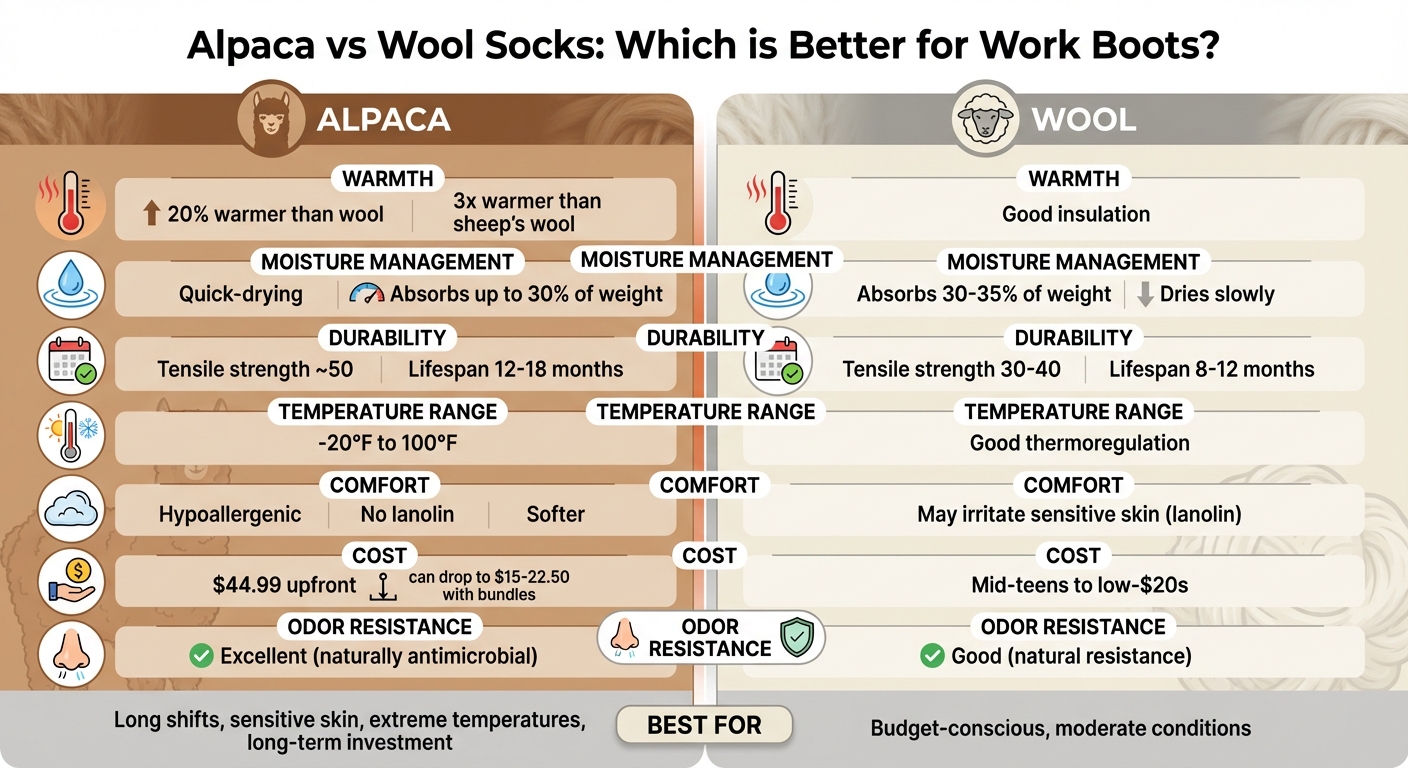
For long hours in work boots, alpaca socks excel in comfort, durability, and performance across seasons. Wool socks are a solid choice but fall short in moisture management and long-term wear. If comfort and longevity matter most, alpaca is the way to go.
Alpaca vs Wool Socks Performance Comparison for Work Boots
Alpaca Socks for Work Boots
Alpaca Fiber Properties
Alpaca fiber is a standout material, thanks to its hollow-core structure. This design creates tiny air pockets that trap warmth in cold weather while allowing breathability when it's warm. In fact, alpaca fiber is three times warmer than sheep's wool, all without adding unnecessary bulk - a game-changer when you're wearing heavy work boots.
One of alpaca’s other impressive traits? It can absorb up to 30% of its weight in moisture while efficiently wicking sweat away. This means your feet stay dry even during grueling 12-hour shifts, which significantly reduces the chance of blisters and discomfort. Unlike cotton, which holds onto moisture, alpaca dries quickly, keeping you comfortable.
Another bonus is alpaca fiber’s natural keratin content, which helps combat odor-causing bacteria. Add to that its incredible softness and itch-free feel, and you’ve got a material that’s perfect for long hours on the job.
How Alpaca Socks Perform on the Job
Work environments often expose you to extreme temperature changes - think subfreezing mornings, 80°F afternoons, or constant shifts between refrigerated spaces and loading docks. Alpaca socks handle these challenges with ease, thanks to their natural thermoregulation. Wildlife biologist Forrest Galante puts it best:
"You can take these boot socks and wear them from literally subfreezing and your toes don't get cold to 80° and you don't notice the difference."
On top of temperature control, work-specific alpaca socks feature targeted cushioning in high-pressure areas like the heel, ball of the foot, and toe box. This padding resists compression during long shifts, helping to prevent foot fatigue and the dreaded "zombie foot" feeling - those tired, sweaty feet you get after hours of hard work.
These features make alpaca socks a reliable choice for even the toughest work conditions.
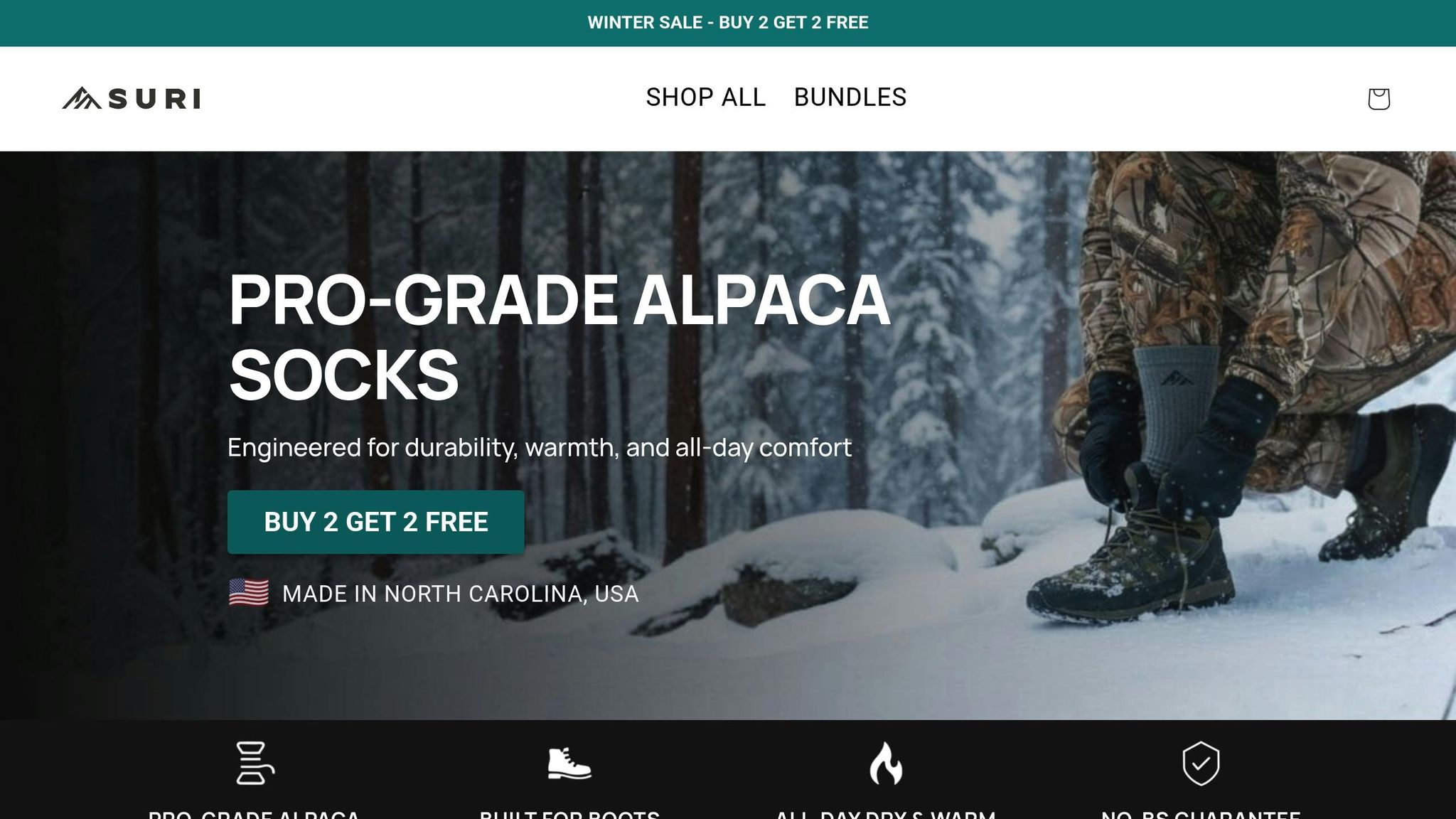
Suri Performance Alpaca Socks take all these benefits to the next level, offering unmatched durability and comfort for work boots. Their Boot Socks ($44.99) are built for cold weather, performing in temperatures as low as -20°F. With a 14-inch heel-to-cuff design, they provide full coverage inside tall work boots, keeping cold air out and warmth in.
The fabric blend is carefully crafted for both performance and durability: 70% Premium Peruvian Baby Alpaca Fiber, 27% Nylon, and 3% Spandex. The nylon boosts abrasion resistance for heavy-duty wear, while the spandex ensures a snug fit, preventing bunching. These socks hold their shape and cushioning even after multiple washes - just wash them in cold water and hang to dry to maintain their quality.
For year-round versatility, Suri's Performance Crew Socks ($37.99) are a great option. They’re designed to handle temperature ranges from 15°F to 100°F, making them perfect for spring and fall. Despite being lighter, they still provide the moisture-wicking and odor-resistant properties you need for all-day comfort in work boots.
Wool Socks for Work Boots
Wool Fiber Properties
Wool is a go-to choice for work socks, thanks to its natural cushioning and insulation. Its crimped fibers trap air, creating a buffer that keeps feet warm and provides a soft cushion for long hours on the job. Another standout feature is its elasticity - wool fibers can bend over 20,000 times before breaking, which ensures socks maintain their shape and fit throughout demanding shifts.
When it comes to managing moisture, wool performs impressively. Its inner hydrophilic core absorbs sweat, while the outer hydrophobic layer stays dry. Wool can soak up 30–35% of its weight in water without feeling damp, all while continuing to insulate [9, 11]. This makes it especially useful for workers braving rain, snow, or heavy perspiration, like those in transportation or delivery roles.
Wool also offers natural odor resistance, thanks to microscopic scales that trap bacteria. This is a game-changer for anyone stuck in non-breathable work boots for hours. Additionally, wool’s thermoregulation helps keep feet warm in cold weather while promoting evaporative cooling in hotter conditions [10, 12].
Limitations in Work Settings
Despite its benefits, wool does have some downsides. One of the most notable is its slow drying time. As textile expert Tyler Maheu puts it:
"Wool just doesn't dry very quickly. So once you get it wet, it stays wet."
This lingering dampness, combined with grit inside work boots, can increase friction and lead to blisters.
Another concern is that traditional wool can feel coarse, which may irritate the skin or even trigger allergic reactions in workers sensitive to lanolin, the natural oil in wool. Wool’s durability also takes a hit with frequent washing and heavy use, particularly in high-friction areas like the heel and toe. Over time, improper care or prolonged abrasion can cause the fibers to shrink and interlock, a process known as felting.
For workers clocking 12-hour shifts who need socks that dry quickly and won’t irritate their skin, these limitations are worth noting. These challenges set the stage for comparing wool socks with alpaca alternatives in terms of performance and durability.
Alpaca vs Wool: Side-by-Side Comparison
Performance Comparison Chart
If you're on your feet all day in work boots, the differences between alpaca and wool socks become pretty noticeable. Here's how they measure up for jobs like transportation and delivery:
Performance Factor
Alpaca Socks
Wool Socks
Warmth/Insulation
About 20% warmer than wool at the same weight; hollow fibers trap more air for better cold-weather protection
Offers good insulation and adapts well to temperature changes
Moisture Management
Quick-drying hollow core efficiently wicks sweat
Can absorb up to 30% of its weight in moisture but dries slower
Odor Control
Naturally antimicrobial and dries quickly, making it great for back-to-back shifts
Naturally resists odors; merino wool works well to prevent smells
Comfort/Softness
Softer and smoother, with no lanolin for itch-free comfort
Merino wool is soft, but traditional wool can irritate sensitive skin
Durability
Higher tensile strength (about 50 vs. 30–40), making it more resistant to pilling and wear in high-friction areas
Durable in blends, but thinner areas like heels and toes may wear out faster without reinforcement
Skin Sensitivity
Hypoallergenic and lanolin-free, perfect for people with wool sensitivities
Contains lanolin, which can cause irritation for some
All-Season Performance
Excellent thermo-regulation keeps feet comfortable in varying temperatures
Adapts well to different conditions, making it versatile year-round
Long-Term Cost Analysis
The differences in performance also play a big role in durability and overall value over time.
Alpaca socks come with a higher price tag upfront - like the Suri Performance Alpaca Boot Socks, which sell for $44.99 - while wool socks typically fall in the mid-teens to low-$20s range. However, alpaca socks tend to last longer, with a lifespan of 12–18 months of regular use, compared to wool socks, which often wear out in 8–12 months. This extended lifespan means fewer replacements, potentially lowering the yearly cost of alpaca socks.
Bundle deals can also bring the price down to around $22.50 or even $15.00 per pair, making them more affordable in the long run. For workers who need socks that can handle daily wear in boots without losing cushioning or developing holes, alpaca socks are a smart investment.
sbb-itb-855989e
Conclusion
Key Takeaways
In physically demanding jobs, every detail matters - right down to the socks you wear. For 8–12 hour shifts, sock performance plays a huge role in comfort and efficiency. Alpaca socks stand out by offering exceptional warmth without added bulk, quick-drying moisture control, and impressive durability that can handle the high-friction challenges of transportation and delivery work. Their natural ability to regulate temperature and maintain breathability makes them ideal for year-round use, whether you're transitioning between hot warehouses and cold loading docks or braving unpredictable weather.
Although the upfront cost may be higher, bundle discounts make them a smart investment for those who rely on consistent performance day in and day out.
Top Pick for Transportation and Delivery Professionals
For transportation and delivery workers who face tough conditions, alpaca socks are a game-changer. They excel in breathability, moisture management, and temperature control - all while being soft, eco-friendly, and luxurious.
If you're in the market for socks tailored to work boots, consider the Suri Performance Alpaca Boot Socks ($44.99 per pair). These socks provide targeted cushioning, enhanced durability, and odor control to keep you comfortable throughout long shifts. Plus, with free shipping often available and bundle discounts, these socks are designed to handle the daily grind while keeping your feet dry and comfortable.
PAKA APPAREL ALPACA SOCKS | Better than Sheep Wool?
FAQs
Why are alpaca socks a great choice for work boots?
Alpaca socks are a fantastic pick for work boots, offering top-notch insulation, moisture control, and long-lasting wear - a step up from traditional wool socks. Thanks to their hollow-core fibers, they excel at regulating temperature, keeping your feet cozy in cold weather and comfortably cool when it’s warm.
Another standout feature? These socks wick away moisture up to 85% faster, so your feet stay dry and comfortable even during marathon workdays. Plus, alpaca fibers naturally resist odors and are incredibly tough, making them ideal for demanding professions like delivery or transportation. In short, alpaca socks deliver all-day comfort and dependability when paired with work boots.
How do alpaca socks handle extreme temperature changes?
Alpaca socks are a game-changer when it comes to handling extreme temperature changes, all thanks to their hollow fibers. These fibers work like nature's thermostat - trapping heat to keep your feet cozy in the cold and releasing it to maintain coolness in the heat. In fact, they offer up to 20% better insulation than wool, making them a reliable choice even when temperatures soar to 100°F.
This natural ability to regulate temperature makes alpaca socks a solid pick for jobs that demand adaptability, like transportation or delivery, where you might face a mix of climates in a single day. Plus, their moisture-wicking and odor-resistant features ensure your feet stay dry and fresh, keeping you comfortable no matter how long your day lasts.
What makes alpaca socks better than wool socks for work boots?
Alpaca socks bring a lot to the table when it comes to work boots, especially for physically demanding jobs like transportation and delivery. One standout feature is their insulation - alpaca fiber offers 20–30% better insulation, which means warmer feet even in chilly conditions. Plus, they excel at keeping moisture at bay, wicking it away up to 85% more effectively than wool. This helps ensure your feet stay dry, no matter how long your shift lasts.
But that’s not all. Alpaca socks are naturally odor-resistant and hypoallergenic, making them a comfortable choice for all-day wear. Their softness is a bonus, especially if you’re on your feet for hours. On top of that, alpaca fibers are both stronger and lighter than wool, giving these socks the durability needed for tough work environments without adding extra weight.