"I liked saving money buying 4 pairs at a time and the socks are great for what I need. It's unbelievable how they could be made out of this material, yet they are so comfortable and they don't make my feet and legs itch nor do they make them hot or sweaty."
Rick S., Verified Customer
Alpaca Socks vs Wool Socks for Winter Layering
Share
When choosing winter socks, the debate often comes down to alpaca vs. wool. Both materials excel at insulation, but they differ in warmth, moisture control, and comfort. Here’s the quick takeaway:
Alpaca socks are warmer (up to 5x more insulation per weight), thinner for better boot fit, wick moisture faster, and are hypoallergenic - great for sensitive skin.
Wool socks (especially merino) are durable, naturally stretchy, and affordable, but bulkier and less efficient at staying dry once wet.
Quick Comparison
Feature
Alpaca Socks
Wool Socks
Warmth
Up to 5x warmer per weight
Great, but requires more thickness
Moisture Control
Wicks moisture faster, stays drier
Absorbs moisture, feels damp when wet
Comfort
Soft, non-itchy, hypoallergenic
Soft (merino), may irritate some
Durability
Strong, holds shape with blends
Resilient but wears faster
Fit
Slimmer for better circulation
Bulkier, may restrict boot space
Price
Higher ($20–$30+)
More affordable ($12–$25)
Alpaca socks are ideal for maximum warmth, dry feet, and comfort during long wear. Wool socks are a solid budget-friendly option but may not perform as well in extreme cold or wet conditions. Choose based on your priorities - warmth, dryness, or cost.
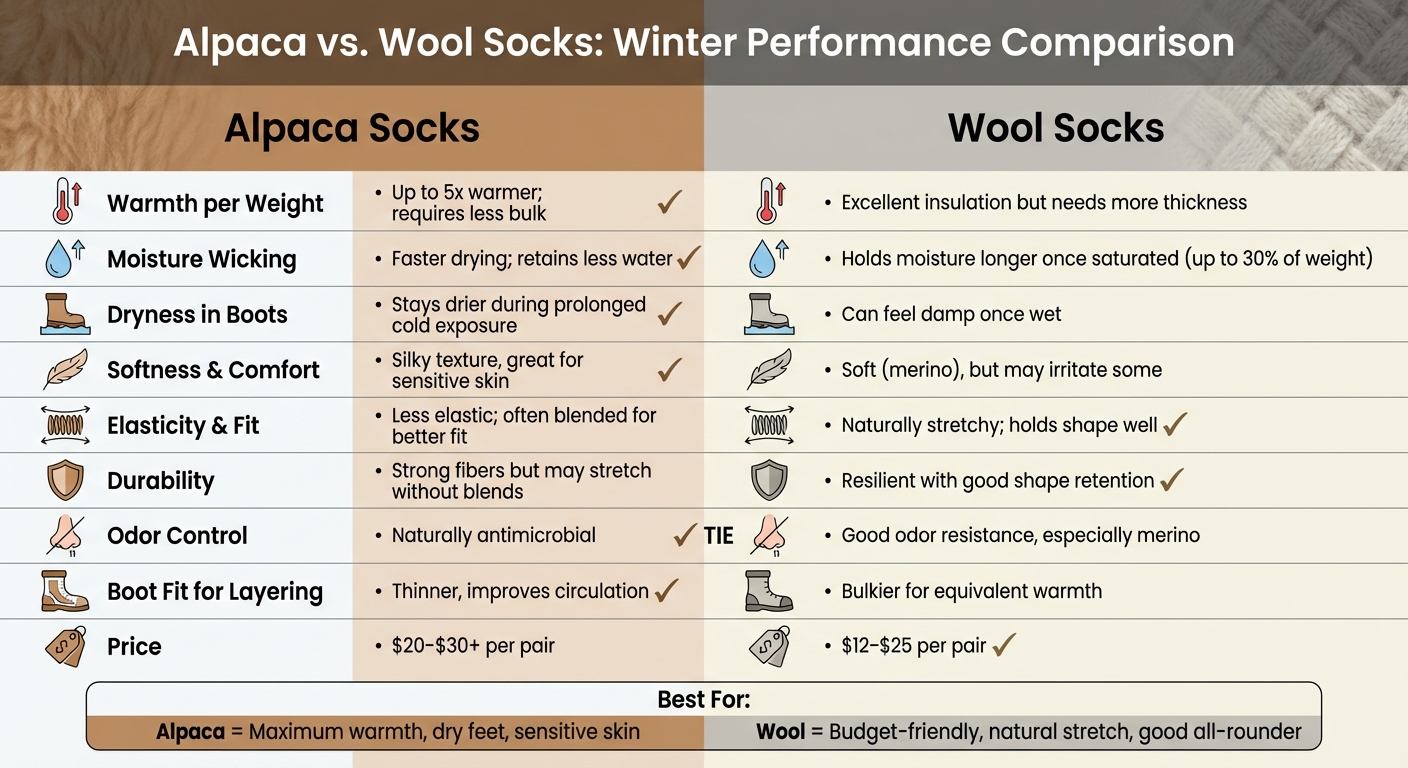
Alpaca vs Wool Socks Winter Performance Comparison Chart
Warmest Hunting Socks TEST | Merino, Alpaca, Electric Heated
Alpaca Socks: How They Perform in Winter Layering
Alpaca fibers have a unique hollow core that creates insulating air pockets, keeping your feet warm without adding unnecessary bulk. This design makes alpaca socks up to 5 times warmer than wool, while being lighter and thinner - an ideal choice for layering inside winter boots.
Heat Retention and Insulation
The hollow-core structure of alpaca fibers acts like built-in insulation. The air pockets trap body heat, creating a barrier against the cold. What sets alpaca socks apart for winter layering is their ability to deliver impressive warmth without the need for thick, bulky material. This means you can enjoy warm feet while still having enough room in your boots for proper circulation, which is key to staying comfortable in freezing temperatures. Along with their insulating properties, alpaca socks also excel in managing moisture - another crucial factor for winter wear.
Moisture Control and Breathability
Alpaca fibers naturally wick moisture away from your skin, pulling it outward so it can evaporate quickly. This keeps your feet dry, even during long outdoor activities. Plus, alpaca has natural antibacterial properties, which help control odors and keep your socks fresher for longer.
One hiker, Olly D., tested alpaca socks on a backcountry snowshoe trip in the Rockies and shared:
"Used these socks every day on a backcountry snowshoe trip in the Rockies. My feet stayed warm, dry, and blister-free - even after hours in deep snow."
Thanks to their breathability, alpaca socks regulate temperature effectively, preventing overheating and dampness inside insulated boots. This adaptability makes them a reliable choice for layering, no matter your activity level.
Comfort and Long-Term Wear
In addition to warmth and moisture control, alpaca socks offer exceptional comfort and durability. Unlike wool, alpaca fibers are lanolin-free, which makes them softer and less likely to irritate sensitive skin. Their smooth texture eliminates the itchiness that some people experience with wool socks, even during extended wear.
Durability is another strong point. Alpaca socks hold their shape and cushioning over time, even with frequent use. Mark P., a carpenter, shared his experience:
"I used to go through socks every few weeks - these have lasted months without thinning or sagging, and they actually stay up in my boots. Worth every penny."
Whether you're working long shifts, hiking rugged trails, or simply braving a cold commute, alpaca socks maintain their performance. They provide consistent warmth, comfort, and fit, making them a smart investment for anyone facing chilly conditions.
Wool Socks: Performance and Drawbacks for Winter Layering
Wool socks are a popular choice for winter, known for their ability to trap air, providing insulation and helping regulate temperature effectively.
Insulation and Warmth
The structure of wool fibers creates tiny air pockets, which act as natural thermal barriers. However, wool isn't the most efficient insulator by weight. To achieve the same warmth as alpaca socks, wool options need to be thicker, which can add bulk inside your boots and limit layering flexibility.
Moisture Retention and Comfort Issues
While wool can absorb up to 30% of its weight in moisture without feeling wet at first, this benefit quickly diminishes once saturation occurs. When soaked - whether from sweat or snow - wool socks often feel damp against the skin, reducing both warmth and comfort. This dampness not only lowers insulation performance but also increases the likelihood of blisters and odor buildup. Over time, these moisture-related issues can affect the overall fit and shorten the lifespan of the socks.
Fit and Durability Concerns
The added bulk of wool socks can lead to pressure points in boots, which may restrict circulation and cause discomfort during long wear. For those with sensitive skin, the lanolin in non-merino wool might cause itchiness or irritation. Durability is another downside - wool socks tend to wear out faster under heavy use, such as daily wear in work boots or during demanding outdoor activities. Even with proper care, like washing inside-out in cold water, wool socks often lose their shape, thin out, or develop sagging more quickly than alpaca alternatives.
sbb-itb-855989e
Alpaca vs. Wool Socks: Performance Comparison for Winter
When it comes to winter layering, alpaca and wool socks each bring unique strengths to the table. The main differences boil down to warmth-to-bulk ratio, moisture control, and overall comfort during extended wear.
Alpaca socks offer warmth without the bulk, often outperforming wool in insulation. Studies suggest alpaca socks can provide up to five times more warmth with less material. This means you can wear lighter alpaca socks while still enjoying the same insulation as thicker wool socks. The slimmer profile also leaves more room in your boots, improving circulation and reducing the risk of cold toes when layering.
Moisture management is another area where alpaca takes the lead. Alpaca fibers wick moisture away faster, keeping your feet drier for longer. Wool, on the other hand, can absorb up to 30% of its weight in moisture, but it tends to hold onto that dampness once saturated. While alpaca excels in static cold, merino wool adapts better to environments with fluctuating temperatures.
Comfort and durability depend on your priorities. Alpaca fibers are soft and silky, often likened to cashmere, and they lack lanolin, making them a great choice for sensitive skin. Merino wool, however, stands out for its natural elasticity, which helps it maintain a snug fit even after repeated washes. Many alpaca socks incorporate synthetic fibers like nylon to improve stretch and durability, ensuring they hold their shape over time.
The table below provides a quick comparison of these performance factors:
Performance Comparison Table
Factor
Alpaca Socks
Wool Socks
Winner
Warmth per weight
Up to 5x warmer; requires less bulk
Excellent insulation but needs more thickness
Alpaca
Moisture wicking
Faster drying; retains less water
Holds moisture longer once saturated
Alpaca
Dryness in boots
Stays drier during prolonged cold exposure
Can feel damp once wet
Alpaca
Softness & comfort
Silky texture, great for sensitive skin
Soft (merino), but may irritate some
Alpaca
Elasticity & fit
Less elastic; often blended for better fit
Naturally stretchy; holds shape well
Wool
Durability
Strong fibers but may stretch without blends
Resilient with good shape retention
Wool
Odor control
Naturally antimicrobial
Good odor resistance, especially merino
Tie
Boot fit for layering
Thinner, improves circulation
Bulkier for equivalent warmth
Alpaca
Price
Higher; $20–$30+ per pair
More affordable; $12–$25 per pair
Wool
Each material has its strengths, so the choice between alpaca and wool socks ultimately depends on what matters most to you - whether it's warmth, comfort, or cost-effectiveness.
Why Alpaca Socks Work Better for Winter Layering
Alpaca socks offer exceptional warmth without adding unnecessary bulk. Thanks to the unique properties of alpaca fiber, which provides more insulation per ounce than wool, you can enjoy thinner socks that still keep your feet just as warm - or even warmer. This means more room inside your boots, which improves circulation and eliminates that uncomfortable, cramped feeling thick wool socks can cause in the toe area. For anyone who deals with perpetually cold feet or spends long hours in freezing conditions, alpaca’s impressive warmth-to-weight ratio can make all the difference.
Another key advantage of alpaca fiber is its quick-drying and hypoallergenic nature, which ensures warmth and comfort during prolonged exposure to the cold. Unlike wool, which can absorb up to 30% of its weight in moisture, alpaca fibers don’t conduct heat away from your skin when wet. Plus, their silky texture - similar to cashmere - makes alpaca socks comfortable enough for all-day wear, even during 10+ hour shifts, without causing irritation. These benefits are the cornerstone of the thoughtful design behind Suri Performance Alpaca Socks.
Suri Performance Alpaca Socks are engineered to handle tough winter conditions with ease. Their reinforced construction focuses on high-stress areas like the heels and toes, ensuring durability even with daily wear in boots over extended periods.
The socks feature advanced moisture-wicking technology that keeps your feet dry, reducing the risk of blisters even in demanding environments. By managing moisture effectively, they also prevent the heat loss that typically occurs when feet get wet.
With thermo-regulating properties, these socks function like a built-in thermostat for your feet. They trap heat when you’re stationary and release excess warmth when you’re active, helping to minimize sweat buildup that could otherwise leave your feet feeling cold. Additionally, the socks include natural odor control, which combats bacteria - an essential feature for long workdays or multi-day outdoor adventures where changing socks isn’t always an option.
Suri Performance Alpaca Socks come in a variety of styles to meet different layering needs. Choose from crew socks with light compression for all-day boot wear, boot socks with extra cushioning for rugged conditions, ankle socks with breathable mesh zones for moderate cold, or no-show socks for lighter layering. With over 20,000 satisfied customers, these socks are trusted for their reliable performance in winter settings, whether you’re on a construction site or trekking through mountain trails.
Conclusion
When comparing performance, it’s easy to see why alpaca socks come out ahead of traditional wool. For winter layering, where warmth and comfort are non-negotiable, alpaca consistently excels. Thanks to its hollow core structure, alpaca provides up to five times better insulation than standard wool. This means you stay warmer without sacrificing mobility, whether you're tackling a long day outdoors or braving cold job sites.
Alpaca also shines in moisture management. Wool can absorb up to 30% of its weight in moisture, but alpaca fibers wick moisture away more efficiently. This keeps feet drier, reducing the chance of blisters, even in relentless snow or freezing rain.
The benefits don’t stop there. Alpaca’s hypoallergenic and silky texture is a game-changer for anyone who finds wool itchy or irritating. Add in its natural odor resistance and impressive durability, and you’ve got a sock that’s built for extended use in cold, demanding conditions.
For workers, hikers, or outdoor enthusiasts in the U.S. who face harsh winters, Suri Performance Alpaca Socks offer all these advantages with a thoughtful, engineered design. From reinforced construction to thermo-regulating properties, these socks are tailored for tough environments. With styles ranging from crew to boot to ankle, they meet the needs of various activities and preferences. Trusted by over 20,000 customers, they’ve proven their worth - whether you’re navigating a construction site in Burlington, VT, or snowshoeing in the Rockies. It’s no wonder alpaca socks are the go-to choice for winter layering.
FAQs
Why are alpaca socks a better choice for people with sensitive skin than wool socks?
Alpaca socks are a great choice for those with sensitive skin. Unlike wool, they don’t contain lanolin, a substance that can trigger irritation for some people. Plus, their fibers are naturally smoother and softer, making them gentle on the skin and less likely to cause itching or discomfort.
Beyond being kind to your skin, alpaca socks come with added perks. They wick away moisture effectively and resist odors, keeping your feet comfortable and dry even in chilly conditions.
Why do alpaca socks keep your feet drier than wool socks?
Alpaca socks are excellent at keeping your feet dry, thanks to their fibers' natural ability to wick moisture away from the skin more effectively than wool. This feature helps minimize dampness and lowers the chances of developing blisters, even in wet or snowy conditions.
What’s more, alpaca fibers are less absorbent than wool, meaning they don’t trap moisture. This makes them an ideal option for winter layering, ensuring your feet remain warm, dry, and comfortable throughout the day.
Why are alpaca socks a great choice for long-lasting durability?
Alpaca socks are built to last, making them a great choice for everyday wear. Thanks to the natural strength of alpaca fibers and their reinforced design, these socks resist thinning, sagging, and general wear and tear. Whether you're braving the outdoors or powering through long workdays, they hold their shape and keep you comfortable.
What sets alpaca fibers apart is their resistance to pilling, unlike traditional wool. This means the socks stay smooth and functional even after countless wears, offering a dependable option for anyone who values durability and long-term performance.