"I liked saving money buying 4 pairs at a time and the socks are great for what I need. It's unbelievable how they could be made out of this material, yet they are so comfortable and they don't make my feet and legs itch nor do they make them hot or sweaty."
Choose alpaca if your boots get wet, your feet stay cold, or your skin gets itchy in wool.
Choose merino wool if you do hard, sweaty chores and want a sock that stays put inside heavy boots.
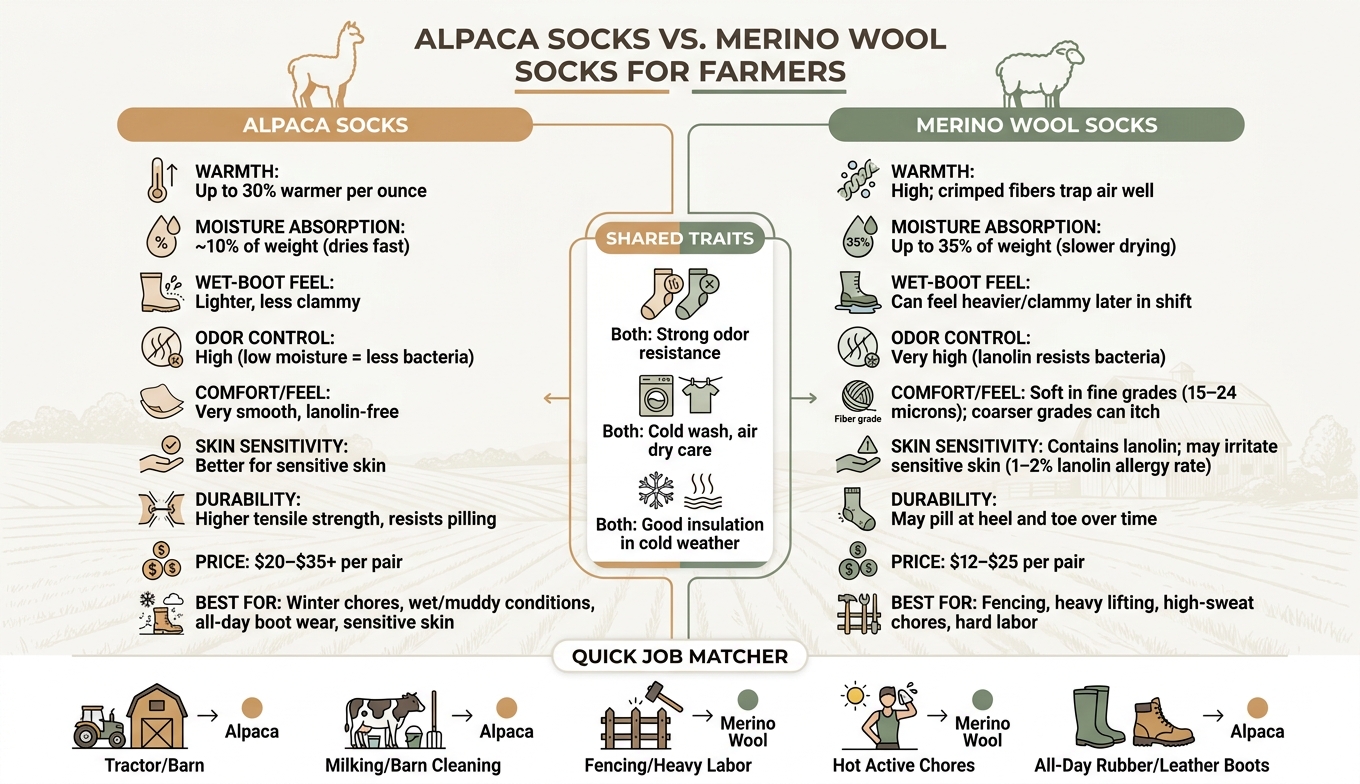
Alpaca absorbs about 10% of its weight in moisture, while merino wool can hold 30% to 35% before feeling wet.
Alpaca usually feels warmer for the weight, dries faster, and feels smoother.
Merino wool usually costs less at about $12 to $25 per pair, while alpaca often runs $20 to $35+.
If you farm through cold mornings, muddy lots, damp barns, and long hours in rubber or leather boots, the main things to look at are warmth, moisture, odor, comfort, durability, and price. From what this article shows, alpaca has the edge for wet and cold use, while wool still makes sense for heavy labor and hotter, high-sweat chores.
Quick Comparison
Feature
Alpaca Socks
Merino Wool Socks
Warmth
Warmer for the weight
Warm and steady
Moisture
Absorbs less; dries faster
Holds more moisture; dries slower
Wet-boot feel
Lighter, less clammy
Can feel heavier later in the day
Odor
Strong odor control
Strong odor control
Comfort
Smooth, less itchy
Soft in fine grades; coarse wool can itch
Skin issues
Lanolin-free
May bother sensitive skin
Fit in hard work
Good
Often better at staying in place
Price
$20–$35+
$12–$25
So if I were picking by job, I’d keep it simple: alpaca for winter chores, wet conditions, and all-day boot wear; merino wool for fencing, lifting, and other high-sweat work.
Alpaca Socks vs. Wool Socks for Farmers: Key Differences at a Glance
Warmest Hunting Socks TEST Part 2 | Bison, Yak, Merino, Alpaca, Electric
Alpaca Socks for Farmers: Performance in Cold, Wet, and Long Shifts
Alpaca fiber traps heat in tiny hollow cores and holds less moisture than wool, so feet stay warmer and drier in wet boots. It's also lanolin-free, which may help cut down on itch for people with sensitive skin. That makes alpaca a good fit for cold starts, wet chores, and long shifts.
How Alpaca Fiber Holds Up Inside Farm Boots
Inside insulated work boots or rubber chore boots, alpaca helps wick moisture away from the foot and dries faster than wool. Its fibers are also smoother than sheep's wool, which may help reduce rubbing at the heel and toe during long days on your feet.
That matters more than it might seem. When you're moving between muddy lots, damp barns, and freezing mornings, socks that stay less wet can make a big difference. Alpaca also helps regulate temperature, so feet are less likely to get too hot during hard work but can still stay warm during slower tasks, like running machinery in a cold barn.
Wool also insulates well, but it handles sweat and wet conditions differently.
Wool Socks for Farmers: Solid Insulation With Real Trade-Offs
Wool stays warm in damp conditions, but it does hold more moisture than alpaca. Its fibers can absorb 30% to 35% of their dry weight in moisture before they even start to feel wet. On the farm, that can help a lot during slushy mornings, muddy paths, and wet chores before sunrise.
When Wool Works Well on the Farm
For cold-weather chores with moderate activity, wool does a good job of keeping feet warm without feeling too bulky. It also lets extra heat escape when you're moving around more. That matters when you're going back and forth between standing still and working hard.
Wool also has a natural crimp, which gives it stretch and bounce-back. In plain English, the socks tend to stay in place better inside heavy boots like ultra boot socks instead of sliding down or bunching up.
Where Wool Falls Short During Heavy Labor
The same moisture-holding trait that helps in wet weather can turn into a problem during hard labor. When wool gets soaked with sweat, it takes longer to dry. Later in the shift, your feet can end up feeling heavy and clammy.
High-grade merino wool, usually 15 to 24 microns in diameter, feels soft. But coarser wool can feel itchy, especially during long hours in boots. And for some people, that irritation isn't minor. Around 1% to 2% of the general population has a real lanolin allergy, while up to 6% may deal with general wool-related skin sensitivity.
You see these trade-offs most in drying time, odor control, and fit.
Trait
Wool Sock Performance
Farm-Work Relevance
Drying Speed
Slow; retains moisture longer
Can stay damp after heavy sweat or boot leaks
Wet-Weather Warmth
High
Retains insulating qualities even when wet
Comfort
Soft merino to prickly coarse wool; contains lanolin
Can irritate sensitive skin during long shifts
Odor Resistance
Very high
Lanolin helps resist odors over long wear
Fit Retention
Excellent
Natural crimp helps prevent bunching in heavy boots
Most work-grade wool socks also mix in nylon or spandex at the heel and toe to help them last longer. This reinforcement is standard in high-quality boot socks designed for farm work. That detail becomes more useful in the side-by-side comparison below.
Alpaca Socks vs. Wool Socks for Farmers: Side-by-Side Comparison
After looking at each fiber on its own, it helps to compare them in the same setting: same boots, same long shift, same farm work.
That’s where the day-to-day differences show up most: warmth, drying speed, odor, comfort, and wear.
Warmth, Moisture Control, and Odor Over a Full Workday
Alpaca is warmer per ounce, while wool does a better job of letting heat escape during hard work. That difference stands out most during low-movement chores, like early-morning milking, equipment checks, or standing in a cold barn. If you’re moving hard and heating up, wool is often the better match because its natural crimp and stretch help the sock stay in place and let off extra heat.
When it’s cold, warmth is the big issue. Once your feet start sweating, moisture control takes over.
Alpaca absorbs only about 10% of its weight in moisture and dries fast, while merino wool can hold up to 35% before it feels wet. In boots, that usually means alpaca dries faster and feels less clammy. Wool tends to hold moisture longer, which can push up blister risk.
Both fibers help with odor. But in high-sweat conditions, alpaca often stays fresher because it holds less moisture.
Comfort, Durability, and Long-Term Value
Alpaca has a smoother feel, so it creates less rubbing inside boots. Over a long shift, that can mean fewer hot spots and a lower chance of blisters. Coarser wool, by contrast, can feel prickly during long wear, especially if your skin is on the sensitive side.
Comfort matters, but sock life matters too.
Alpaca tends to hold up better in heel-and-toe zones. Wool is still a tough fiber, but it can thin out and pill faster in those high-friction spots. Price is the tradeoff. In the U.S., alpaca socks usually cost $20–$35+ per pair, while merino wool socks usually fall between $12 and $25. So yes, alpaca costs more at the start, but the longer wear can bring down the cost per use.
The table below gives you the short version.
Feature
Alpaca Socks
Merino Wool Socks
Warmth
Up to 30% warmer per ounce
High; crimped fibers trap air well
Moisture Behavior
Hydrophobic; ~10% absorption; dries fast
Hygroscopic; up to 35% absorption; slower drying
Odor Control
High; dryness limits bacterial growth
Very high; lanolin helps resist bacteria
Comfort/Feel
Very smooth
Varies by grade; can feel prickly
Skin Sensitivity
Lanolin-free; better for sensitive skin
May irritate sensitive skin; contains lanolin
Durability
Higher tensile strength; resists pilling
Tensile strength 30–40; may pill at heel and toe
Care
Cold wash, air dry; dries quickly
Cold wash, air dry; dries more slowly
Typical U.S. Price
$20–$35+ per pair
$12–$25 per pair
Care is almost the same for both: cold wash, gentle cycle, air dry. The part that changes in daily farm use is drying time. Alpaca dries faster between washes, which can make life a lot easier if you’re rotating through a small sock pile during a busy week.
Matching Sock Material to the Farm Job
Best Fit for Winter Chores, Wet Conditions, and High-Sweat Work
Once you know how the fibers behave, the next step is pretty simple: pick the sock that fits the job.
Cold, wet, and sweaty workdays don’t ask for the same thing from a sock. A pair that feels great in a freezing tractor cab may not be the best pick for fencing or stall work.
For cold, low-movement tasks - like standing in a barn during early-morning feeding or sitting in a tractor cab in freezing temperatures - alpaca is the stronger option. When you’re not moving much, passive insulation matters most. That’s what helps keep your feet warm.
Wet and muddy conditions lean toward alpaca too. It takes in less moisture and dries faster, so it stays lighter when water gets into your boots. Merino wool can absorb up to 35% of its weight in moisture. That can help during heavy sweating, but it’s less useful when the moisture is coming from outside.
For hard labor - fencing, heavy lifting, or mucking stalls - merino wool tends to work better. Its springier fibers help the sock stay in place inside the boot when you’re moving hard all day. That steadier fit can cut down on friction and lower blister risk.
If you have sensitive skin or a lanolin allergy, alpaca stands out no matter what job you’re doing. About 1% to 2% of people have a genuine allergy to lanolin found in sheep’s wool. And on a long shift in work boots, even mild irritation can turn into a real headache.
Use this quick guide to line up the material with the work:
Farm Scenario
Main Challenge
Stronger Material
Winter feeding / tractor days
Extreme cold; low movement
Alpaca
Milking / barn cleaning
Dampness; concrete floors
Alpaca
Fencing / heavy labor
High sweat; foot friction
Merino Wool
Hot, active chores
Overheating; moisture buildup
Merino Wool
All-day work in leather or rubber boots
Odor; skin irritation
Alpaca
Once you look at your usual chores, the pattern is pretty clear.
Conclusion: Key Differences Farmers Should Keep in Mind
Alpaca’s main edge comes down to three things: more warmth for the weight, faster drying, and a smoother feel that can cut friction during long shifts. Merino wool does best with fit retention, stronger moisture absorption during heavy sweating, and a lower price.
Neither fiber is the best pick for every farm job. If your days are cold and slow, alpaca can be worth the extra cost. If you’re working hard and heating up fast, wool’s stretch and sweat-handling ability are useful. If your work swings between cold, wet chores and sweaty labor, it makes sense to keep alpaca crew socks for the first two and wool for the third.
FAQs
Are alpaca socks worth the higher price?
Yes. Alpaca socks often justify the higher upfront price because they tend to last longer than many standard socks, which can lower what you spend over the course of a year.
Most pairs sell for $19.00 to $44.99 and usually last 12–18 months with regular wear. Suri Performance Alpaca Socks add more value with bundle discounts and a 365-day guarantee.
Which sock is better for sweaty feet?
Alpaca socks are a smart pick for sweaty feet. Their hollow, moisture-wicking fibers push water away, dry faster than standard wool, and take in less moisture - about 10% to 11% of their weight.
That means your feet stay drier and feel fresher through long shifts. Less dampness also helps cut down on irritation, blisters, and bacterial growth. Suri Performance Alpaca Socks are a dependable, odor-resistant choice for all-day comfort.
How many pairs should farmers keep on hand?
That answer comes down to two things: how often you work and how often you do laundry.
Suri Performance Alpaca Socks are naturally odor-resistant and moisture-wicking, so you don’t need to wash them after every wear. In many cases, you can simply air them out between uses and put them back into your rotation.
For many farmers, six to eight pairs is enough for daily work. That gives each pair time to air out or be gently laundered when needed.