"I liked saving money buying 4 pairs at a time and the socks are great for what I need. It's unbelievable how they could be made out of this material, yet they are so comfortable and they don't make my feet and legs itch nor do they make them hot or sweaty."
Rick S., Verified Customer
Alpaca Socks vs Wool Socks for Adventure
Share
If I want the short answer: alpaca is usually the better pick for cold, wet, and multi-day trips, while merino wool is often the better pick for stretch and a close fit.
Here’s the article in plain terms:
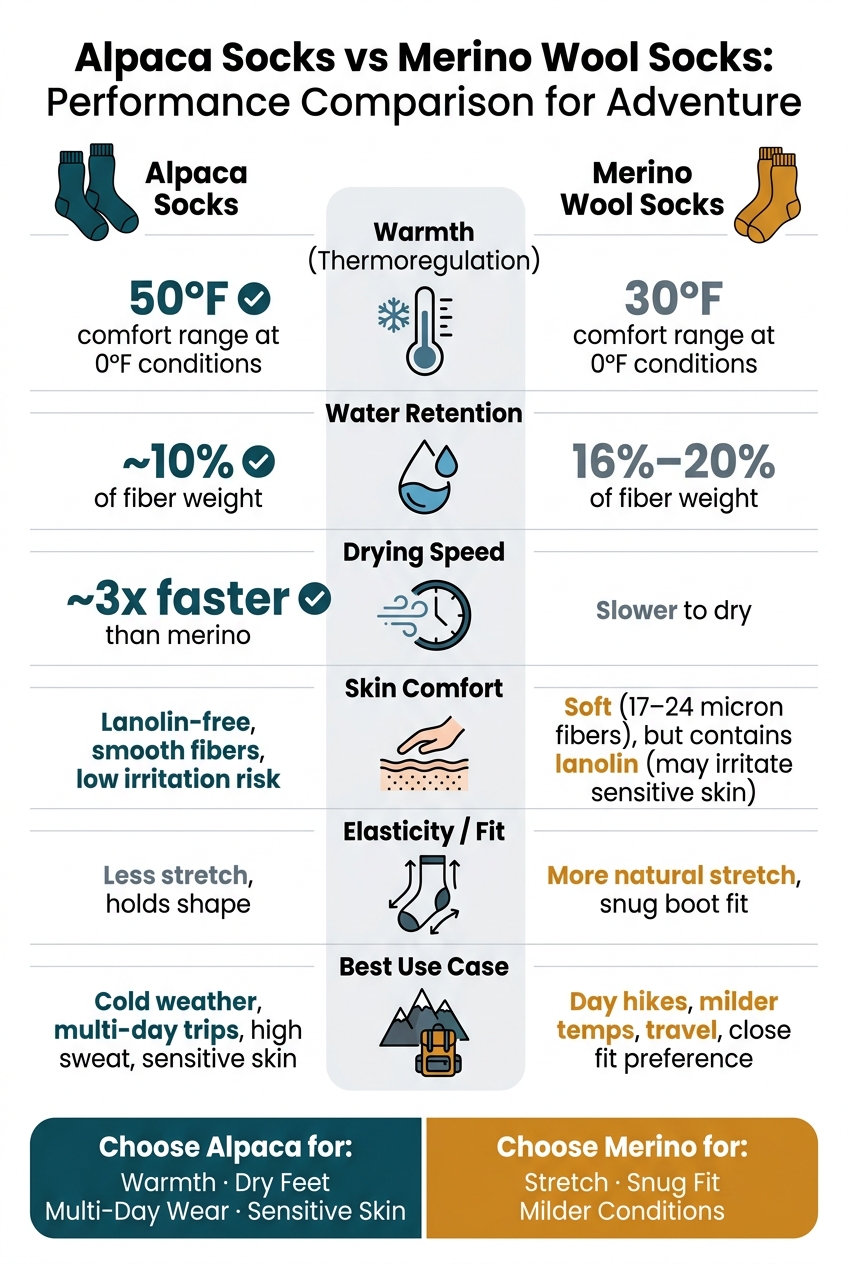
Warmth: alpaca is listed at a 50°F comfort range in 0°F conditions, vs. 30°F for wool.
Moisture: alpaca holds about 10% of its weight in water, while merino wool holds about 16% to 20%.
Dry time: alpaca dries at about 3x the rate of merino.
Comfort: alpaca is lanolin-free, which may help if your skin gets itchy or irritated.
Fit: merino wool has more natural stretch, so it can feel more snug in boots.
Alpaca Socks vs Merino Wool Socks: Performance Comparison for Adventure
Alpaca Vs Merino Clothing - What's Better For The Outdoors?
sbb-itb-855989e
Quick Comparison
Point
Alpaca Socks
Merino Wool Socks
Warmth
Warmer for the weight
Warm, but less than alpaca
Water held in fiber
~10%
16%–20%
Drying speed
About 3x faster
Slower
Skin feel
Smooth, lanolin-free
Soft, but may bother some skin
Stretch
Less stretch
More stretch
Best for
Cold trips, repeat wear, damp conditions
Day hikes, travel, closer fit
I’d sum it up like this: if you care most about dry feet, heat, and low friction, alpaca stands out against other fibers. If you care most about sock stretch and foot-hugging fit, wool still makes sense.
That gives you the full answer up front before getting into the details.
Alpaca Socks: Performance Traits for Hiking, Travel, and Outdoor Use
Alpaca fiber has a hollow core that helps it hold heat in cold weather and let off extra heat as things warm up. That built-in structure makes alpaca wool 3 to 7 times warmer than sheep wool while still staying light on your feet.
How Alpaca Fiber Regulates Temperature Without Adding Bulk
In standardized Yocum tests, alpaca socks delivered a 50°F comfort range in a 0°F setting, while sheep wool came in at 30°F. That gap shows up fast on shoulder-season hikes. The morning can start close to freezing, then turn mild by afternoon.
The upside is simple: you get steady warmth without stuffing your boot with a thick sock. That lighter build can make a big difference when space inside the boot is already tight.
How Alpaca Keeps Feet Drier and Fresher on Long Days
Alpaca fiber holds only about 10% of its weight in water, compared with 16% to 20% for sheep wool. It also dries at nearly three times the rate of merino wool.
On a long day in boots or trail shoes, that can mean less moisture sitting against your skin. Less dampness usually means fewer hot spots and a better shot at staying comfortable mile after mile.
Alpaca also helps with day-long wear in a few other ways:
Its smooth fibers and natural odor resistance can help cut down on odor buildup, which comes in handy on backpacking trips or long travel days when laundry isn't an option.
It's lanolin-free, so it's less likely to cause itching or bother sensitive skin.
Those moisture perks stand out even more when you stack alpaca up against wool's stretch and familiar feel.
How Alpaca Socks Are Built for Adventure
Fiber is part of the story, but hiking sock features matter too. Performance alpaca socks often include reinforced heels and toes, targeted cushioning, and breathable mesh zones. Alpaca fiber can bend up to 20,000 times before breaking, which helps it deal with the rubbing and pressure that come with boots.
Suri Performance Alpaca Socks offers crew, boot, ankle, and no-show styles with moisture-wicking, odor-resistant, and thermoregulating performance for hiking, work, and travel.
That leads into the next comparison: how wool handles fit, stretch, and all-day comfort.
Wool Socks: What They Offer for Backpacking and Active Travel
Wool tackles the same trail issues as other sock materials, but in a different way. For backpacking and active travel, merino wool is known for warmth, stretch, and moisture control.
Where Wool Socks Perform Well on the Trail
Merino wool holds heat well in cool to cold weather and offers a 30°F comfort range in a 0°F environment.
It also helps with the day-to-day stuff that matters on the trail. Merino wool resists odor, moves sweat away from your skin, and dries at a steady pace. That can make a long hiking day a lot more comfortable. Its natural stretch also helps nylon-spandex blends keep their shape and stay in place inside boots. For heavy-duty protection, specialized alpaca boot socks offer extra cushioning in high-wear zones.
Comfort, Stretch, and Possible Tradeoffs
Merino wool feels soft against the skin. Its 17 to 24 micron fibers can help cut down on itch. Still, there’s a catch for some people: wool contains lanolin, which may cause irritation or redness if you have sensitive skin or a lanolin allergy.
Wool can also hold about 33% of its weight in water. In plain English, that means thicker wool socks may feel heavier when wet and can stay damp longer.
Next, compare wool and alpaca side by side for warmth, moisture control, comfort, and durability.
Alpaca Socks vs Wool Socks: Side-by-Side Performance Comparison
This is where the gap starts to show on the trail. At first glance, alpaca and wool can seem close. But after a full day in boots, small differences start to matter.
Warmth, Moisture Control, and Odor Resistance
Alpaca comes out ahead on warmth and drying speed. In a 0°F setting, alpaca socks offer a 50°F comfort range, while wool comes in at 30°F. That’s a pretty big gap when the cold starts creeping in.
Moisture is another place where alpaca has an edge. Alpaca fiber holds only about 10% of its weight in water, while merino wool holds 16–20%. It also evaporates moisture at nearly 3 times the rate of merino wool. On the trail, that means feet stay drier for longer instead of feeling damp halfway through the day.
Both materials do a good job with odor. But since alpaca stays drier, it tends to stay fresher longer too.
Property
Alpaca Socks
Merino Wool Socks
Thermoregulation
50°F comfort range at 0°F
30°F comfort range at 0°F
Water Retention
~10%
16–20%
Drying Speed
~3x faster than merino
Slower to dry after soaking
Odor Resistance
Naturally antimicrobial
Naturally odor-resistant
Fit and skin feel matter just as much as warmth once you start stacking up miles.
Comfort, Blister Prevention, and Durability
Alpaca fiber has smoother, flatter scales than sheep’s wool, which means less friction against the skin during repeated movement. In plain terms, that can mean fewer hot spots and a lower blister risk.
That smoother surface also helps if your skin gets irritated easily. Alpaca is lanolin-free, so it’s less likely to bother sensitive skin.
Durability is another strong point. Alpaca fiber can bend up to 20,000 times before breaking. That kind of flex helps when socks are taking the same pounding, step after step, inside hiking boots.
Merino still has one clear advantage: stretch. Its natural crimp gives it more elasticity, which helps it keep a snug fit over time. So while alpaca does well on friction, warmth, and moisture, wool can feel more locked-in on the foot.
Feature
Alpaca Socks
Merino Wool Socks
Blister Risk
Lower; drier feet and less friction
Moderate; can feel damp under heavy use
Durability
Fibers bend 20,000x before breaking
Durable, but less resilient than alpaca
Elasticity
Lower; holds shape but stretches less
Higher; natural crimp helps maintain fit
Best Use Cases by Activity and Season
Alpaca makes the most sense when conditions get tough: high-altitude trips, cold-weather hikes, or multi-day outings where you won’t be washing socks anytime soon. Its lower moisture retention and faster drying time become a big deal when you’re wearing the same pair for a second day. Boot socks and crew socks made from alpaca fit that job especially well.
Wool works well for shoulder-season backpacking and day-to-day active travel in milder temperatures, where low-cut ankle socks provide sufficient coverage. It’s often the better pick when stretch, flexibility, and a close fit matter more than top-end warmth.
That’s the tradeoff: alpaca leans warmer, drier, and lower-friction, while wool leans stretchier and more fitted. Those differences make the choice less about which one is “better” and more about where you’re headed and what your feet usually need.
Which Sock Is the Better Fit for Your Adventure
The numbers point one way, but the bigger issue is more simple: what does your trip ask from your socks?
When Alpaca Is the Stronger Pick
When you look at warmth, moisture, and fit together, the answer depends on the conditions. If you're going into cold weather, dealing with changing temperatures, or spending several days on the move without laundry, alpaca is the more practical pick. Its lower moisture retention and faster drying help keep feet drier on multi-day trips.
Alpaca also has a couple of other perks that matter once you're out there for hours. It's lanolin-free, so it's often easier on sensitive skin. And it adds warmth without extra bulk, which helps a lot in snug boots.
Suri Performance Alpaca Socks comes in crew, boot, ankle, and no-show styles made for hiking, work, and travel.
Final Takeaway: Choose by Conditions, Not Just Material
For most adventures, the best sock is the one that fits the weather, moisture level, and fit you need. Wool works well across a range of conditions, especially when you want more stretch or a closer fit.
For cold-weather trips, high-sweat outings, multi-day wear, or sensitive skin, alpaca tends to work better when conditions get tougher. Pick based on the weather, the fit, and how long you plan to wear them.
FAQs
Are alpaca socks too warm for year-round use?
No. Alpaca socks are naturally thermo-regulating, which means they help keep your feet warm when it’s cold and let extra heat escape when it warms up.
They’re also breathable and moisture-wicking, so your feet stay comfortable, cool, and dry. That makes them a solid pick for year-round wear.
Do alpaca socks fit snugly in hiking boots?
Yes, alpaca socks can feel secure and comfortable in hiking boots. Suri Performance Alpaca Socks are made to keep their shape inside boots, which helps cut down on sagging or bunching that can lead to pressure points.
Their lightweight, moisture-managing fibers and supportive build also help the fit stay steady and comfortable during long days on the trail.
Which socks are better for sweaty feet on long trips?
For sweaty feet on long trips, Suri Performance Alpaca Socks are a smart pick. Alpaca fiber pushes moisture away instead of soaking it up, and it wicks sweat 85% faster than merino wool. That helps keep your feet drier and can cut down on blisters.
The fibers have a hollow core, which helps air move through the fabric more easily. Alpaca also has natural antimicrobial properties, which can help keep odor in check when you’re wearing the socks for long stretches.