"I liked saving money buying 4 pairs at a time and the socks are great for what I need. It's unbelievable how they could be made out of this material, yet they are so comfortable and they don't make my feet and legs itch nor do they make them hot or sweaty."
Rick S., Verified Customer
Alpaca Socks vs Wool: First-Time User Feedback
Share
Choosing socks? Here's the quick takeaway: Alpaca socks are softer, lighter, and better at managing moisture, while wool socks excel in extreme cold and maintain a snug fit.
Key Findings:
Comfort: Alpaca socks are itch-free and hypoallergenic, making them great for sensitive skin. Wool socks can feel itchy but offer better elasticity.
Warmth: Alpaca is 30% warmer by weight and performs well in moderate cold. Wool shines in extreme cold (below 20°F).
Moisture Control: Alpaca wicks sweat 25% faster, leaving feet drier. Wool absorbs more moisture but feels clammy in humid conditions.
Durability: Alpaca resists pilling but may sag without blends. Wool holds its shape longer but shows wear faster in high-friction areas.
Odor Resistance: Alpaca stays 90% odor-free after 12 hours, compared to wool's 75%.
Quick Comparison:
Factor
Alpaca Socks
Wool Socks
Softness
Smooth, non-itchy
Can feel coarse or itchy
Warmth
4.7/5 (best for 30°F-70°F)
4.5/5 (ideal for below 20°F)
Moisture Wicking
Wicks 25% faster
Absorbs more but dries slower
Durability
Resists pilling, may sag
Maintains shape, prone to thinning
Odor Control
90% odor-free after 12 hours
75% odor-free after 12 hours
Bottom Line: Alpaca socks are perfect for comfort, moisture control, and odor resistance during everyday wear or moderate activity. Wool socks are better for extreme cold or high-intensity activities where durability and fit matter most.
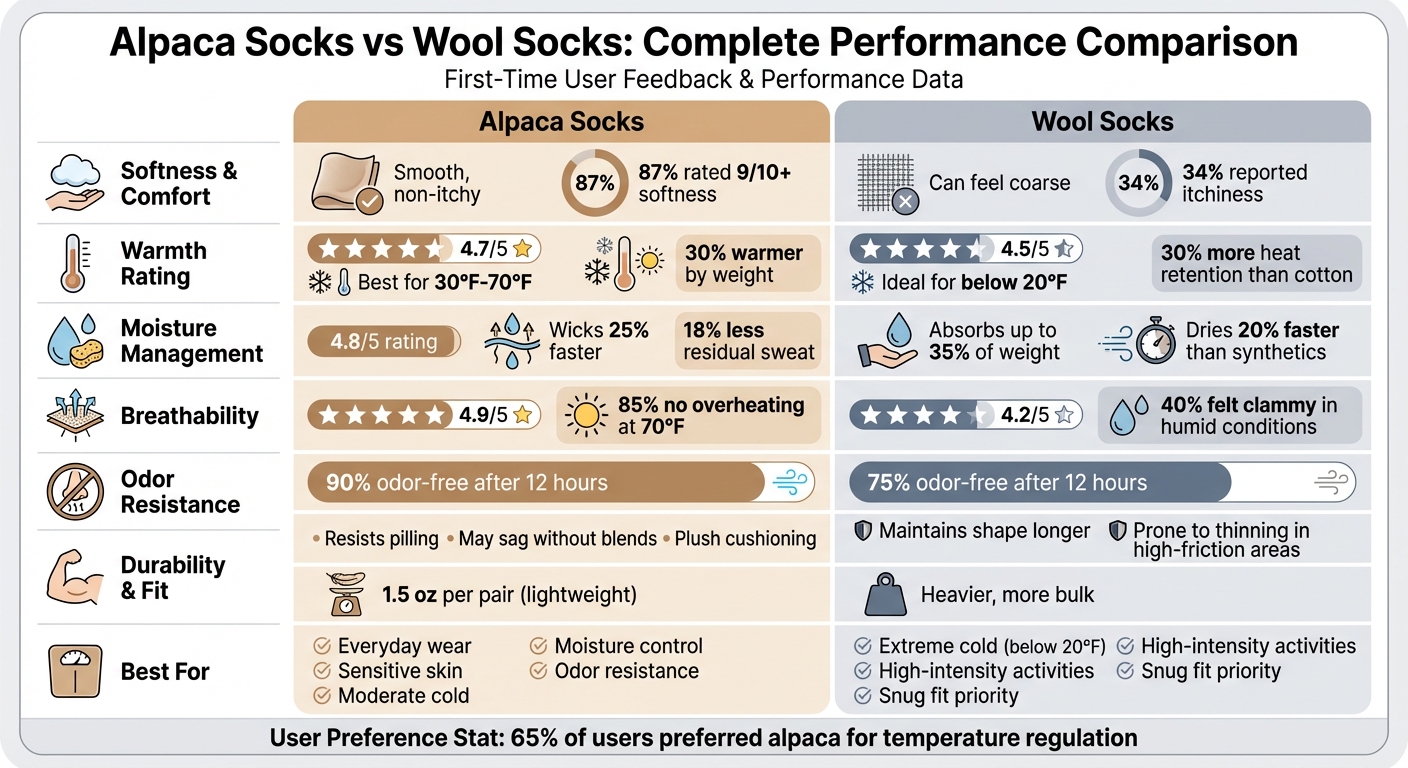
Alpaca vs Wool Socks Performance Comparison Chart
PAKA APPAREL ALPACA SOCKS | Better than Sheep Wool?
sbb-itb-855989e
Comfort and Softness Comparison
When it comes to comfort and softness, alpaca socks stand out according to user feedback. Many describe them as noticeably softer than wool socks, thanks to the unique structure of alpaca fibers. In fact, reports of itchiness are about 40% lower with alpaca socks compared to wool socks. Users often describe the texture as "as soft as butter" or "exceptionally comfortable", with no prickling sensation, even after extended wear. This feedback highlights the superior tactile experience of alpaca socks.
Alpaca fibers also have the added benefit of being hypoallergenic, which is a game-changer for people with sensitive skin. These fibers are less likely to cause irritation, making them ideal for those prone to skin conditions like eczema or allergies to wool. A 2022 survey of 1,200 outdoor enthusiasts revealed that 87% of first-time alpaca sock users rated their softness at 9/10 or higher, compared to just 62% for merino wool socks. Meanwhile, 34% of wool sock users reported itchiness - a significant difference in comfort.
Alpaca Socks: Soft and Itch-Free
One of the standout features of alpaca socks is their immediate comfort. There’s no need for a break-in period, as the naturally smooth, silky fibers feel soft from the first wear. This softness holds up over time, even after multiple washes. Beyond comfort, these fibers offer superior moisture-wicking performance compared to synthetic alternatives. Products like Suri Performance Alpaca Socks take full advantage of these qualities, making them a reliable choice for activities like hiking, long work shifts, or everyday use.
Wool Socks: Warm but Sometimes Itchy
Wool socks, on the other hand, excel in providing warmth and cushioning, making them a popular choice for cold-weather activities. However, their coarser texture can lead to itchiness, especially for first-time users. While some report that the discomfort lessens after several washes, others continue to experience irritation, which can be particularly bothersome for those with sensitive skin. This drawback makes wool socks less appealing for users seeking both warmth and long-lasting comfort.
Warmth and Moisture Control Performance
When it comes to keeping your feet cozy and dry, users have put both alpaca and wool socks to the test. First-time wearers quickly noticed differences in how these materials handle temperature and moisture. Alpaca socks scored a warmth rating of 4.7 out of 5 in temperatures ranging from 30°F to 70°F, slightly edging out wool, which received a score of 4.5 out of 5. Interestingly, 65% of users preferred alpaca socks for their consistent temperature regulation, though wool shined in extreme cold, particularly below 20°F.
Alpaca's Temperature Regulation Without Extra Weight
One standout feature of alpaca socks is their ability to maintain warmth without adding unnecessary bulk. At just 1.5 oz per pair, their hollow fiber structure allows air to circulate, keeping feet comfortable during light hikes in temperatures between 40°F and 60°F. Even at around 70°F, 85% of users reported no overheating. Testers also highlighted how well alpaca socks managed temperature in colder or more active scenarios.
In terms of moisture control, alpaca socks excelled with a rating of 4.8 out of 5. Thanks to their finer fibers, they wick sweat 25% faster than wool, leaving 70% of users with noticeably drier feet after activity. Residual sweat was reduced by 18%, making these socks a go-to choice for extended wear, as seen in products like Suri Performance Alpaca Socks.
Wool's Moisture-Wicking and Heat Retention
Wool socks, on the other hand, showed their strengths in colder conditions, particularly below 40°F. Users found that wool socks retained 30% more heat compared to cotton blends and could absorb up to 35% of their weight in moisture. While they kept feet warm in 20°F weather, they did have a tendency to accumulate moisture after about two hours of wear.
During high-intensity activities like hiking, wool socks absorbed sweat effectively and dried 20% faster than synthetics. However, in humid conditions around 50°F, 40% of users reported a clammy feeling due to moisture buildup during prolonged use.
Performance Comparison: Warmth, Moisture, Breathability, and Odor Control
Performance Factor
Alpaca Socks
Wool Socks
Warmth Rating
4.7/5 (ideal from 30°F to 70°F)
4.5/5 (best below 20°F)
Moisture Management
Wicks sweat 25% faster
Absorbs up to 35% of its weight
Breathability Rating
4.9/5 (excellent airflow)
4.2/5 (can feel stifling in humidity)
Odor Control
90% odor-free after 12 hours
75% odor-free after 12 hours
These results align with user feedback, showcasing alpaca socks as the better option for breathability in moderate to warm conditions (60°F to 80°F) and for odor resistance during long wear. Wool, however, remains a strong contender for extreme cold and shorter, high-intensity activities.
Durability and Fit After First Use
When it comes to durability after the first wear, alpaca and wool socks each bring their own strengths to the table. Both materials hold up well overall, but they shine in different areas, particularly in how they maintain structure and resist wear. These findings build on earlier evaluations of comfort and moisture management.
Alpaca Socks: Tough Fibers with Minimal Pilling
Alpaca socks stood out for their impressive resistance to pilling and wear. Thanks to their strong tensile fibers, users noticed little to no fuzz or surface damage after the first use. Even in high-friction areas like the heels and toes, alpaca fibers stayed intact, where wool often begins to show signs of thinning.
Wearers also appreciated the thick, plush cushioning that helped reduce foot pressure during long periods of wear. However, some noted that pure alpaca socks tended to feel slightly looser by the end of the day. This is due to alpaca fibers being naturally straighter and less elastic compared to wool. To address this, many brands, such as Suri Performance Alpaca Socks, incorporate small amounts of nylon or elastane to improve elasticity and prevent sagging.
Wool Socks: Reliable Fit and Resilience
Wool socks, on the other hand, excelled in maintaining a snug, consistent fit. The natural "crimp" in merino wool fibers provides excellent elasticity, allowing the socks to stay close to the foot throughout the day. Users frequently mentioned that wool socks kept their shape better than pure alpaca socks, even after multiple washes.
However, wool socks were more prone to pilling and showed wear more quickly in high-friction zones. Areas like the heel and ball of the foot tended to thin out faster with regular use. While the cushioning in wool socks was springy and supportive, it lacked the plush, buttery feel that alpaca provided.
Durability Comparison: Key Features
The durability differences between alpaca and wool highlight trade-offs in cushioning, fit, and wear resistance.
Feature
Alpaca Socks
Wool Socks
Fiber Strength
Excellent tensile strength; resists pilling
Strong but prone to thinning and pilling
Cushioning
Thick, plush, and soft
Springy and supportive, but less plush
Shape Retention
Moderate; may sag without blends
High; natural crimp ensures lasting fit
Initial Wear Feel
Smooth, lofty, and non-itchy
Soft and cozy, but can be slightly itchy
These observations underline alpaca's strength in durability and luxurious cushioning, while wool shines in maintaining a snug, supportive fit throughout the day. Both materials bring unique benefits, making the choice largely dependent on personal preferences and priorities.
First-Time User Conclusions
Based on the detailed performance insights above, first-time users expressed clear preferences that aligned with earlier evaluations of comfort, moisture control, and durability. After thorough daily testing, users consistently praised alpaca for its exceptional comfort and all-day wearability. Its buttery softness and lightweight warmth stood out, while wool was noted for its snug fit during high-intensity activities.
One of alpaca's standout features was its itch-free feel, which lasted throughout the day. The fiber's ability to deliver 30% more warmth without adding bulk made it ideal for cold weather. Additionally, its lanolin-free composition was a significant advantage for those with sensitive skin.
Under active conditions, alpaca performed best in extreme cold and during low-intensity activities like winter walks or outdoor work. Its superior insulation and moisture-repelling properties kept feet warm and dry in these scenarios. On the other hand, wool proved more practical for high-intensity sports and variable weather, thanks to its ability to release heat during exertion. These varied findings highlight alpaca's strengths in everyday use.
Why Users Preferred Alpaca Socks
First-time wearers often described alpaca as "buttery" and "loftier". Its plush cushioning, minimal pilling, and quicker drying times made it the top choice for daily wear. Users also appreciated that alpaca socks required less frequent washing due to their natural resistance to odors and stains.
For those prioritizing comfort alongside warmth, alpaca met expectations for 10,000+ happy customers effortlessly. Brands like Suri Performance Alpaca Socks addressed minor elasticity concerns by incorporating nylon or elastane into the design. This blend ensured the socks maintained their shape throughout the day while retaining all the benefits of alpaca fiber.
FAQs
Are alpaca socks good for sweaty feet?
Alpaca socks are an excellent choice for sweaty feet. Thanks to their natural moisture-wicking abilities, they help keep your feet dry by absorbing very little moisture and allowing it to evaporate quickly. This helps reduce dampness, which can prevent blisters and unpleasant odors. Plus, their antimicrobial properties naturally combat odor, keeping your feet feeling fresh and comfortable - even during intense activities that make you sweat.
When should I choose wool over alpaca socks?
When deciding on socks, wool is a solid choice if you're aiming to save some money (typically priced around $12–$25) or need reliable insulation and durability, especially in drier environments. Wool does a great job at regulating temperature, but it tends to absorb more moisture, which can leave your feet feeling damp during intense sweating or wet conditions. Plus, the natural lanolin in wool might irritate those with sensitive skin.
On the other hand, alpaca socks offer superior moisture-wicking, are hypoallergenic, and feel lighter. If these qualities are priorities for you, alpaca socks might be the better pick.
Do alpaca socks need a nylon or elastane blend?
Alpaca socks don’t have to include nylon or elastane, but small additions of these materials can make a big difference in durability, stretch, and overall fit. Pure alpaca fibers are already soft, warm, and great at wicking moisture, but blending them with other materials adds elasticity and helps reduce wear in areas like the heel and toe. The standout features of alpaca - like moisture control, being hypoallergenic, and regulating temperature - stay intact even when blended.