"I liked saving money buying 4 pairs at a time and the socks are great for what I need. It's unbelievable how they could be made out of this material, yet they are so comfortable and they don't make my feet and legs itch nor do they make them hot or sweaty."
Rick S., Verified Customer
Alpaca Socks vs. Cotton: Durability in Harsh Weather
Share
When it comes to socks built for tough conditions, alpaca fibers outperform cotton in nearly every way. Alpaca socks are moisture-wicking, insulating, and resistant to wear, making them ideal for wet, cold, or high-friction environments. Cotton, by contrast, absorbs moisture, weakens when wet, and wears out faster under stress. Here’s a quick breakdown:
Moisture Management: Alpaca wicks moisture, while cotton absorbs it, leading to dampness and faster fiber breakdown.
Cold Weather: Alpaca retains warmth even when wet, unlike cotton, which loses insulation.
Comfort in Heat: Alpaca stays breathable and dry, while cotton traps moisture, increasing discomfort and blister risk.
Quick Comparison
Feature
Alpaca Socks
Cotton Socks
Moisture Handling
Wicks moisture, stays dry
Absorbs moisture, stays damp
Warmth When Wet
Retains warmth
Loses insulation
Durability
Long-lasting, resists wear
Wears out faster
Friction Resistance
Low blister risk, smooth fibers
High blister risk, weakens with sweat
Breathability
Excellent in heat
Traps moisture, less breathable
For outdoor activities or harsh weather, alpaca socks are a reliable choice that lasts longer and provides consistent comfort. Cotton struggles to match their performance in challenging conditions.
Alpaca vs Cotton Socks Durability Comparison Chart
Fiber Properties and Durability
Alpaca Fibers: Strength and Resilience
Alpaca fibers are built for durability. Their hollow structure provides excellent insulation while also allowing flexibility and strength. These fibers can bend and stretch under pressure, then bounce back to maintain their shape and offer a snug fit.
What’s more, the smooth surface of alpaca fibers reduces pilling and efficiently wicks away moisture without compromising their structure. This blend of strength, flexibility, and moisture management makes alpaca a standout option for long-lasting wear.
Cotton’s cellulose-based structure gives it high absorbency, but that comes at a cost. When wet, the fibers swell, lose tensile strength, and become prone to tearing. Cotton’s short, twisted fibers are especially vulnerable in high-friction areas, leading to quicker wear and tear, pilling, and fabric thinning over time.
Once cotton fibers are saturated, they rarely return to their original shape, which further contributes to their reduced durability.
These fundamental differences in fiber properties directly impact sock performance, especially in harsh weather. Recognizing these contrasts is key to understanding how each material holds up under extreme conditions.
sbb-itb-855989e
Durability in Wet and Cold Conditions
Moisture Management and Longevity
Alpaca fibers have a standout feature: they absorb only about 8% of their weight in water. Compare that to cotton, which soaks up moisture readily, causing its fibers to swell and shrink. This constant expansion and contraction weakens cotton fibers over time. Alpaca, on the other hand, actively wicks moisture away from your skin and releases it quickly into the air. This not only keeps your feet dry but also helps maintain the sock's structure, especially in rainy or snowy conditions. By managing moisture so effectively, alpaca fibers maintain their integrity and last longer, even in challenging weather.
Cold Weather Resilience
Alpaca fibers shine in freezing conditions. Cotton struggles in the cold - when it gets wet, ice crystals form within the fibers during freeze-thaw cycles, leading to stiffness and eventual damage. Alpaca fibers, however, remain flexible even in sub-zero temperatures. Thanks to their hollow core, alpaca fibers provide insulation that's about three times warmer than wool. This structure keeps them lightweight, warm, and resistant to the wear and tear caused by temperature fluctuations. Whether you're braving a snowstorm or trekking through icy trails, performance alpaca crew socks hold their shape and strength, outperforming cotton in cold-weather durability.
Best & WORST Socks For Backpacking
Performance Under Heat and Friction
After exploring how these fibers handle moisture and cold, let’s dive into their performance under heat and friction.
Abrasion Resistance
Areas like heels and toes endure a lot of stress, especially during activities like hiking or demanding physical labor. Alpaca fibers shine in these high-friction zones. They hold up under repeated wear, resisting thinning and holes even with constant use. On the other hand, cotton fibers often struggle. They’re prone to pilling and breaking down when exposed to consistent friction. Add sweat into the mix, and cotton becomes even weaker - its fibers soften, making it more susceptible to damage. This durability under friction, combined with alpaca’s ability to manage heat, makes it an excellent option for tough conditions.
Breathability and Comfort in Heat
When temperatures rise, socks need to do more than just cover your feet - they should keep them cool and dry. Alpaca fibers excel here, allowing air to circulate and efficiently wicking away moisture. This keeps feet comfortable and dry, even during intense activity. Cotton, however, tends to trap moisture, which can lead to discomfort and chafing over time. Thanks to their breathability, alpaca fibers are a standout choice for staying comfortable in hot, demanding environments.
Durability Testing in Harsh Weather
Field Tests and Longevity
Field tests on trails like the Appalachian Trail and Pacific Crest Trail reveal something interesting: alpaca socks hold up after hundreds of miles, while cotton socks tend to fall apart. These trails, with their mix of boot friction, rain, and temperature extremes, create the perfect proving ground for testing durability. The results? Alpaca socks stand strong, offering insights that are shaping the next generation of high-performance sock designs.
The lessons learned from these rigorous tests have been directly applied to the design of Suri Performance Alpaca Socks. Built for tough environments, these socks are packed with features to ensure they last. Reinforced heel and toe areas combat wear and tear, while moisture-wicking fibers and targeted cushioning protect against friction and impact without feeling restrictive. Breathable mesh zones keep feet dry, and their thermo-regulating properties ensure comfort whether you're braving 20°F winter chills or hiking in 90°F summer heat. Plus, their natural odor-resistant qualities help them stay fresh, even after extended use. For outdoor enthusiasts and workers facing tough conditions, these socks are designed to deliver dependable performance when it matters most.
Alpaca vs. Cotton: Durability Comparison
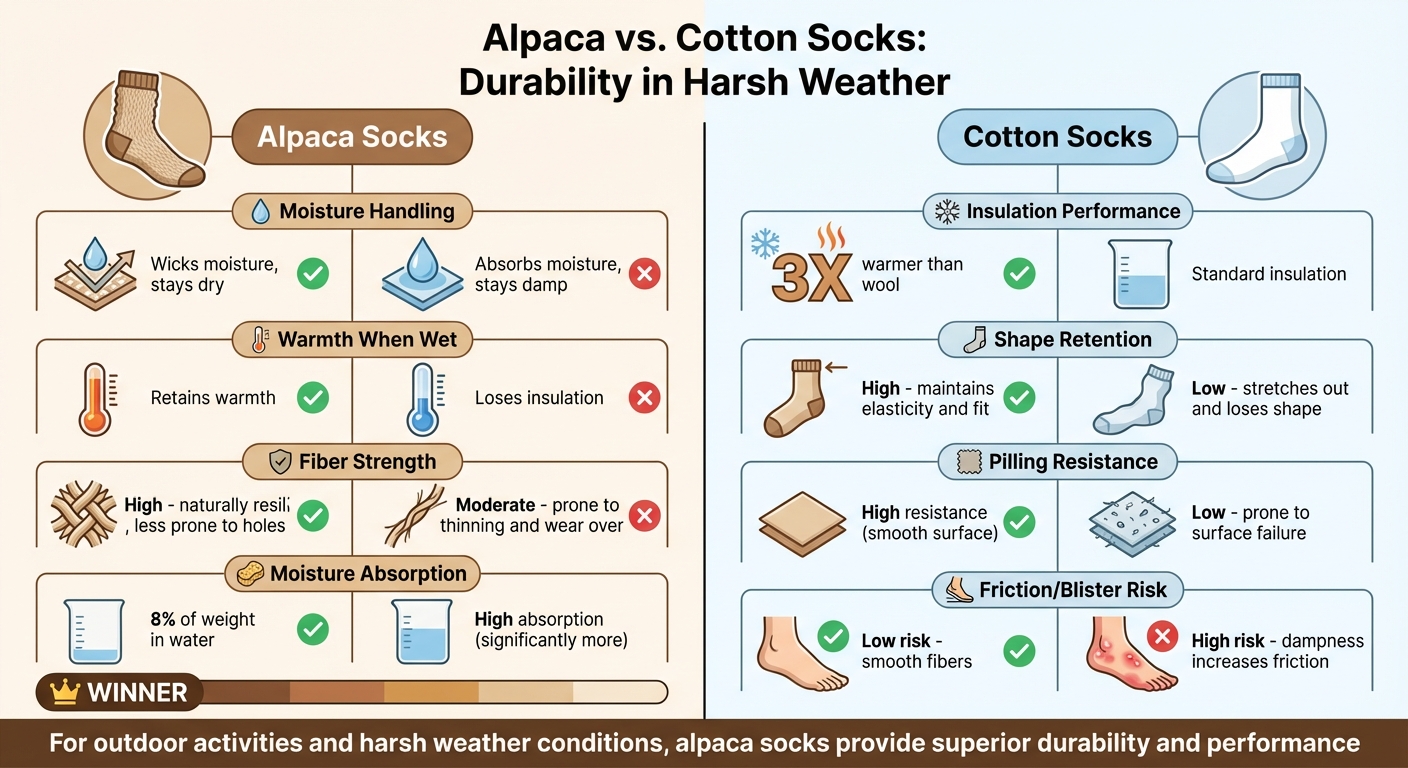
This side-by-side comparison breaks down how alpaca and cotton socks hold up under different conditions. Here's a quick look at their durability metrics:
Metric
Alpaca Socks
Cotton Socks
Fiber Strength
High; naturally resilient and less prone to holes
Moderate; prone to thinning and wear over time
Moisture Management
Hydrophobic; wicks moisture to keep feet dry
Absorbent; retains moisture and becomes damp
Shape Retention
High; maintains elasticity and fit after use
Low; tends to stretch out and lose shape
Pilling Resistance
High; resists surface pilling and unraveling
Low; prone to surface failure and thinning
Insulation when Wet
Maintains warmth due to hollow fiber structure
Loses insulating properties and becomes cold
Friction/Blister Risk
Low; smooth fibers in a dry environment
High; dampness increases friction and blister risk
Alpaca socks stand out because of their hollow fibers, which trap heat while staying lightweight. Even when wet, they maintain warmth - something cotton struggles with. Cotton's absorbent nature weakens its fibers over time, making it less durable. As WillowAce points out:
Cotton tends to absorb and hold onto moisture, which can lead to damp, uncomfortable socks and increase the risk of blisters.
This matters a lot for the 53% of Americans who participate in strenuous outdoor activities. Alpaca socks not only resist stretching and thinning but also retain their shape and elasticity after heavy use and multiple washes. Their natural strength results in fewer holes and a longer lifespan.
For those who demand dependable performance in tough conditions, Suri Performance Alpaca Socks offer the durability and comfort of alpaca fibers. This comparison makes it clear why alpaca socks excel in delivering long-lasting reliability.
Conclusion
When it comes to harsh weather, alpaca socks leave cotton far behind. Thanks to their hollow fiber structure, alpaca socks provide excellent insulation and wick moisture away, keeping your feet dry and warm. Cotton, on the other hand, tends to absorb moisture, which reduces warmth and shortens its lifespan over time.
Alpaca fibers also excel in durability. Their strength and resilience mean fewer replacements and better performance in cold, wet, or high-friction conditions. Cotton struggles to hold up under the same stresses, breaking down much more quickly.
For those who demand reliable performance, Suri Performance Alpaca Socks are a game-changer. With features like thermo-regulation, odor resistance, and reinforced construction, these socks are built for everything from hiking to outdoor work or facing unpredictable weather.
If you're looking for socks that can handle extreme conditions and keep up with your lifestyle, alpaca is the clear choice. These benefits make alpaca socks the go-to option for anyone needing comfort, durability, and performance in tough environments.
FAQs
How do alpaca socks perform after repeated washes?
Alpaca socks are known for staying soft and durable, even after multiple washes - if you care for them the right way. The best method? Hand wash them in cool water and let them air dry flat. This simple, gentle routine ensures they last longer while keeping their comfort and performance intact.
Are alpaca socks good for sweaty feet in summer?
Alpaca socks are a fantastic choice for sweaty feet during summer. They manage moisture up to three times better than cotton or wool, helping to keep your feet dry and comfortable even in the heat. Thanks to their natural breathability and ability to handle moisture effectively, they’re a dependable option for staying cool and fresh all day long.
Do alpaca socks reduce odor on multi-day trips?
Alpaca socks are great for reducing odor during multi-day trips. Their natural fibers have antimicrobial properties that help prevent bacteria from building up. This means your feet stay fresher and odor-free, even after extended wear in tough conditions.