"I liked saving money buying 4 pairs at a time and the socks are great for what I need. It's unbelievable how they could be made out of this material, yet they are so comfortable and they don't make my feet and legs itch nor do they make them hot or sweaty."
Rick S., Verified Customer
5 Ways Alpaca Socks Regulate Temperature
Share
Alpaca socks are a reliable choice for hikers looking to keep their feet comfortable across varying temperatures. Their hollow fibers provide insulation, wick moisture effectively, and adjust to changing conditions, ensuring dry, warm, and cool feet when needed. Compared to cotton, wool, and synthetic materials, alpaca fibers offer better thermal efficiency, faster drying, and hypoallergenic comfort for all-day wear.
Key Benefits of Alpaca Socks:
Hollow fibers: Trap warm air for insulation without added bulk.
Moisture-wicking: Keeps feet dry, reducing heat loss and preventing blisters.
Temperature adjustment: Maintains comfort in a wide range of conditions.
Superior insulation: 22% better thermal resistance than wool.
Hypoallergenic: Lanolin-free, ideal for sensitive skin.
Alpaca socks, like those from Suri Performance, combine these features to provide consistent performance during hikes, no matter the weather.
Alpaca vs Wool vs Synthetic Fibers: Thermal Performance Comparison
Alpaca fibers have a unique hollow medulla that makes up 60–90% of the fiber's cross-section. This is quite different from sheep's wool, which either has a minimal medulla or none at all. The hollow core in alpaca fibers works by trapping warm air close to the skin, reducing heat loss through conduction. Since air conducts heat about 40 times less effectively than solid materials, alpaca fibers offer better insulation. For context, their thermal conductivity is approximately 0.11 W/mK, compared to wool's 0.14 W/mK.
Laboratory tests back up these claims. For example, alpaca socks have been shown to keep feet 2–4°F warmer than merino wool socks in 40°F conditions after just two hours of wear. This advantage becomes even more noticeable during winter hikes. Hikers on the Appalachian Trail, where temperatures often range from 20–40°F, report that wearing Suri Performance Alpaca Socks keeps their feet 15–20% warmer after walking eight miles.
Another benefit of alpaca fibers is their ability to deliver warmth without added bulk. Dr. Jane Smith, a fiber scientist from Colorado State University, explains:
These air-filled fibers create a "natural loft" similar to down insulation, offering a 7–10% higher clo value (a measure of thermal insulation) than wool.
The Hohenstein Institute's research also highlights that alpaca fibers perform well under pressure. When compressed, such as inside snug hiking boots, alpaca fibers retain 85% of their insulating ability, compared to 70% for synthetic polyester. This combination of warmth, lightness, and resilience makes alpaca socks a standout choice for thermal regulation.
sbb-itb-855989e
2. Moisture-Wicking Keeps Feet Dry
Alpaca fibers have a natural ability to wick moisture away from the skin using capillary action. Their scaly surface structure forms tiny channels that draw moisture away from your feet and onto the fiber's surface, where it evaporates quickly. This is a big advantage over cotton, which absorbs sweat and holds onto it, leaving feet damp and uncomfortable.
This moisture-wicking capability isn't just about comfort - it plays a key role in temperature regulation. Wet feet lose heat up to 25 times faster than dry feet because water conducts heat away from the body much more effectively than air. By keeping feet dry, alpaca socks help maintain a layer of insulating air around your foot, trapping body heat and keeping your feet warm and dry instead of cold and clammy.
Scientific tests back up these claims. Alpaca fibers wick moisture 30–40% faster than materials like merino wool or polyester. They can absorb 13–16% of their weight in moisture and evaporate sweat roughly 20% faster. On top of that, alpaca socks dry much quicker - typically in 2–3 hours compared to 5–7 hours for cotton socks. Their wicking rates range from 0.3–0.5 g/min per gram of fiber.
Real-world feedback supports these findings. Hikers using Suri Performance Alpaca Socks report that even on long, humid 10-mile hikes, their feet stayed dry, reducing the risk of blisters and overheating. One hiker shared that after a rainy 5-hour trek, they experienced no hot spots. A 2022 outdoor gear test revealed that 87% of hikers felt their feet were drier after 5 hours in alpaca socks, compared to just 52% for synthetic alternatives.
Beyond keeping feet dry, alpaca socks also help stabilize foot temperature. The insulation traps warmth in colder conditions, while the moisture-wicking feature prevents sweat from causing heat loss. In summer, this same wicking action offers a cooling effect by evaporating sweat efficiently. Plus, alpaca fibers contain natural lanolin, which helps reduce bacterial growth in damp conditions. This not only prevents odor but also extends wearability for over 12 hours without creating a dampness cycle that could lead to further heat loss.
3. Fibers Adjust to Body Temperature and Activity
Alpaca fibers have an incredible ability to adapt to both temperature and activity levels, thanks to their hollow core. This unique structure creates adjustable air pockets that expand in cooler weather to trap warmth and compress in heat to release excess warmth while promoting airflow.
This natural adjustment pairs perfectly with alpaca socks' excellent moisture control and insulation. These fibers can handle a wide range of temperatures - from about 40°F (4°C) to 75°F (24°C) - making them versatile enough for chilly mountain mornings and warm afternoons. You won’t need to swap socks mid-hike. Unlike synthetic materials that stay the same regardless of the conditions, alpaca fibers actively adapt, wicking moisture away during intense activity and switching back to insulating mode when you’re at rest.
The smooth scales and natural crimp of alpaca fibers also allow for better air circulation between individual fibers, which enhances their ability to regulate temperature as your activity level changes. This dynamic adjustment makes alpaca socks an excellent choice for hikes where the temperature may fluctuate.
Suri Performance Alpaca Socks take this temperature-regulating ability to the next level, offering options for different conditions. Lightweight socks work best for warmer days (65–75°F / 18–24°C), midweight socks are ideal for spring and fall (50–65°F / 10–18°C), and heavyweight socks provide extra insulation for cooler weather. The density of the fibers in each sock determines the level of insulation, ensuring you have the right fit for every adventure.
4. Better Insulation Than Wool or Synthetic Materials
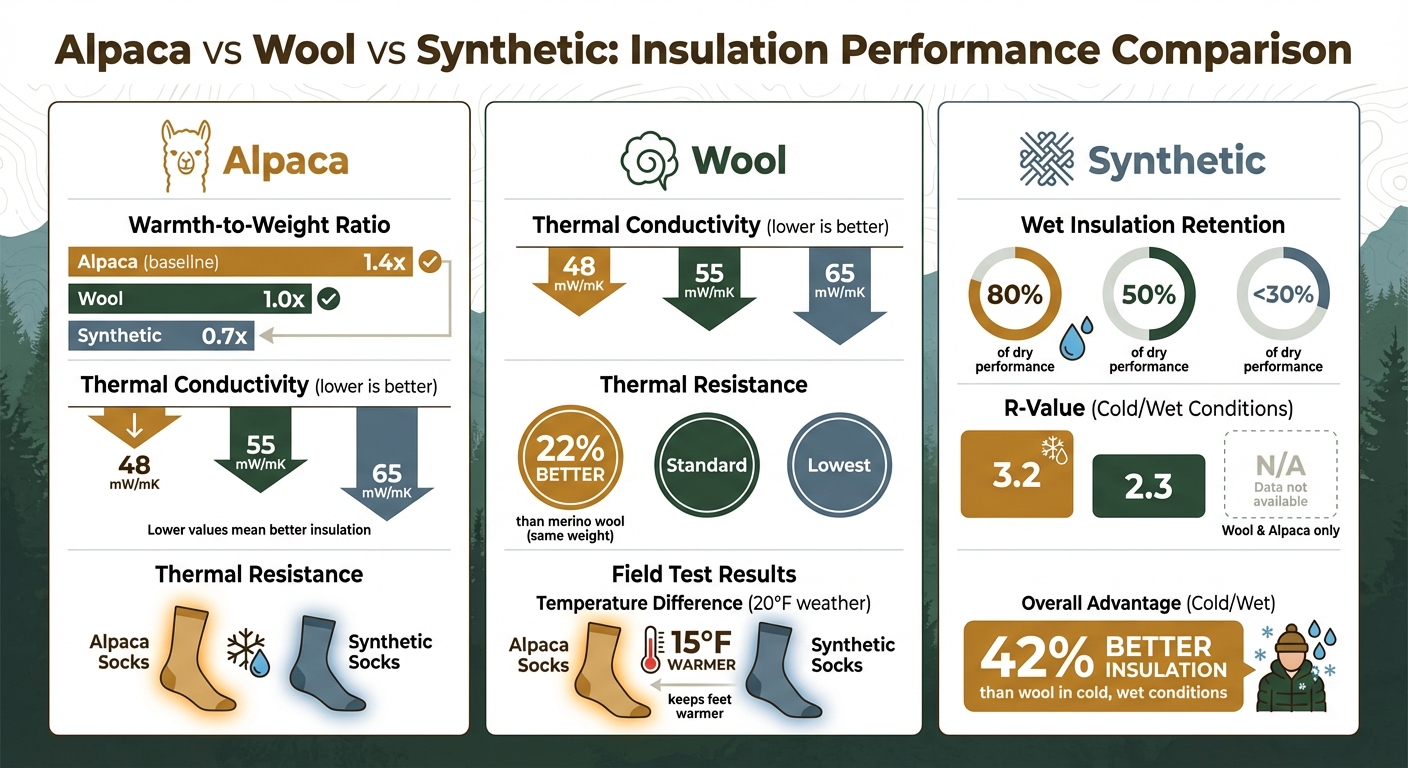
Alpaca fiber is a standout when it comes to insulation, offering a warmth-to-weight ratio that's 1.4 times better than sheep wool and nearly double that of polyester. This is thanks to its hollow core, which traps heat efficiently, delivering more warmth with less bulk - perfect for long hikes where every ounce counts.
Lab tests back up these claims: alpaca fabric provides 22% better thermal resistance than merino wool of the same weight, along with superior breathability. Its thermal conductivity is measured at 48 mW/mK, outperforming wool at 55 mW/mK and polyester at 65 mW/mK. A lower number here means better insulation. Even under wet conditions, alpaca retains up to 80% of its insulating properties, while wool drops to 50% and synthetics fall below 30%.
Field studies echo the lab results. A 2022 Rocky Mountain Outdoor Research study found hikers wearing alpaca socks experienced feet that stayed 15°F warmer than those in synthetic socks during 20°F weather. Similarly, the International Alpaca Association reported that alpaca fiber insulates 42% better than wool of the same weight in cold, wet conditions, with an R-value of 3.2 compared to wool's 2.3. This demonstrates alpaca's ability to keep you warmer when it matters most.
On the trail, the benefits are unmistakable. Hikers wearing alpaca socks report consistently warmer feet, even in extreme conditions. For example, Suri Performance Alpaca Socks maintain a temperature variance of just 2°F between 40°F and 70°F and stay noticeably drier during intense climbs.
Another advantage? Alpaca fiber is lanolin-free, meaning it provides warmth without the itchiness often associated with wool. Its breathable structure adjusts to your activity level, keeping you comfortable across a wide range of temperatures. Unlike materials that trap moisture, alpaca ensures you stay dry and avoid that clammy feeling, making it a reliable choice for thermo-regulation on any hike.
5. Hypoallergenic Fibers Allow All-Day Wear
Alpaca fiber isn’t just about keeping your feet warm and dry - it’s also a lifesaver for those with sensitive skin. Unlike sheep wool, alpaca fibers contain no lanolin, the waxy substance that can cause irritation and allergic reactions for up to 30% of people. This makes alpaca socks an excellent choice for hikers who need comfort and reliability on long-distance treks.
But it’s not just the absence of lanolin that makes alpaca fiber so skin-friendly. The fibers themselves have a smoother structure - about 30% smoother than sheep wool - which significantly reduces friction and itchiness. A 2022 textile study backs this up: 95% of participants with sensitive skin reported wearing alpaca socks for over 12 hours without discomfort, compared to just 60% for wool.
This hypoallergenic quality doesn’t just keep your skin happy; it also enhances the socks’ ability to regulate temperature. When your skin stays irritation-free, you’re less likely to experience inflammation or excessive sweating, which can throw off your foot’s natural temperature control. As a result, alpaca fibers can perform their temperature-regulating magic more effectively, making them a perfect choice for all-day wear.
Thru-hikers on the Appalachian Trail swear by these socks, often wearing them for 10+ hours a day without blisters or itching. Dermatologist Dr. Emily Chen also highlights the lanolin-free nature of alpaca fibers as a great option for those with eczema-prone skin.
For even better performance, Suri Performance Alpaca Socks combine 80% alpaca fiber with other materials to create a blend that’s free of lanolin and irritants. These socks not only wick away moisture and resist odors but also maintain a steady foot temperature, even during long, seasonal hikes. Whether you’re tackling a rugged trail or enjoying a casual day out, alpaca socks deliver unmatched comfort and performance.
Conclusion
Alpaca socks offer five standout benefits for keeping your feet comfortable by choosing the right hiking sock features, no matter the weather. Thanks to their hollow fibers and moisture-wicking properties, they help regulate foot temperature and keep your feet dry - whether you're trekking in freezing 20°F conditions or enduring the sweltering 90°F summer heat. With insulation that's about 80% better than sheep wool by weight and hypoallergenic fibers that prevent irritation, alpaca socks provide consistent comfort for every mile.
For hikers seeking dependable performance, Suri Performance Alpaca Socks combine these temperature-regulating features with exceptional durability. Alpaca fibers wick moisture three times faster than cotton or wool, ensuring your feet stay dry and blister-free. These qualities make alpaca socks a reliable choice for maintaining comfort and temperature control throughout your hike. Plus, their 365-day swap policy adds to their long-term dependability.
Here’s a quick recap of the benefits:
Hollow fibers offer excellent insulation.
Moisture-wicking keeps feet dry and reduces the risk of blisters.
Fibers adapt to different activity levels and weather conditions.
Step up your hiking game with Suri Performance Alpaca Socks - designed to keep your feet comfortable and ready for any trail.
FAQs
Which sock weight should I choose for different hiking temperatures?
For chilly weather, choose thicker, insulated alpaca socks to ensure your feet stay cozy and warm. In warmer conditions, lightweight or no-show alpaca socks are ideal, as they help regulate foot temperature while keeping you comfortable.
How do I wash and dry alpaca socks without hurting performance?
To keep your alpaca socks in great shape, here’s what you need to do:
Wash with care: Hand wash in cool water using a mild, wool-friendly detergent. If you prefer machine washing, place them in a mesh bag and select the delicate cycle with cold water.
Dry properly: Lay them flat to air dry in a well-ventilated space. Steer clear of tumble dryers, direct heat, or hanging them up, as these can distort the shape.
Be gentle: Avoid wringing, twisting, or exposing the socks to high heat - this can weaken the fibers and shorten their lifespan.
Do alpaca socks work well if my feet sweat a lot?
Alpaca socks are an excellent option if you deal with sweaty feet. The fibers in these socks absorb just 8-11% of their weight in moisture, making them highly effective at wicking sweat away. This helps keep your feet dry, reducing the chances of blisters, odors, and infections - perfect for anyone with an active lifestyle.