"I liked saving money buying 4 pairs at a time and the socks are great for what I need. It's unbelievable how they could be made out of this material, yet they are so comfortable and they don't make my feet and legs itch nor do they make them hot or sweaty."
Rick S., Verified Customer
5 Reasons Alpaca Socks Outperform Competitors
Share
Alpaca socks offer unmatched comfort, durability, and performance, making them a superior choice compared to wool, cotton, or synthetics. Here’s why they stand out:
Warmth Without Bulk: Alpaca fibers are hollow, trapping air for insulation. They're 33% lighter than merino wool but just as warm, reducing the need for layering.
Moisture Control: Alpaca wicks moisture efficiently, keeping feet dry and preventing blisters. It absorbs only 8–11% of its weight in water compared to merino wool’s 30%.
Odor Resistance: Naturally antimicrobial, alpaca socks resist odors for up to two weeks without washing.
Durability: Lasting 3–5 years, these socks outlive cheaper options, making them a cost-effective investment.
Year-Round Comfort: Alpaca fibers regulate temperature, keeping feet warm in winter and cool in summer, eliminating the need for seasonal sock swaps.
Alpaca socks combine performance and longevity, making them worth the upfront cost. From heavy-duty boot socks to lightweight liners, Whether for hiking, work, or everyday wear, they deliver comfort and reliability.
Alpaca Vs Merino Clothing - What's Better For The Outdoors?
sbb-itb-855989e
1. Superior Warmth-to-Weight Ratio Cuts Layering Costs
What makes alpaca so effective at keeping you warm? It all comes down to its fiber structure. Each alpaca fiber has a hollow or semi-hollow core that traps air, much like the way double-pane windows insulate your home. This creates a natural barrier that keeps warmth close to your skin without adding unnecessary bulk.
Here’s the science: alpaca fiber is 33% lighter than merino wool while providing the same warmth and offers 20% more efficient insulation. Essentially, one pair of alpaca socks can do the job of two layers of other materials. This not only reduces the need for extra layers but also ensures a better fit when worn with performance footwear.
"Alpaca is typically warmer for its weight, thanks to its hollow fiber structure that traps air efficiently." - Danish Endurance
This lightweight warmth is a game-changer for anyone who relies on snug footwear, like hiking boots, cycling shoes, or ski boots. Thick, bulky socks can create pressure points, restricting circulation and ironically making your feet colder. Alpaca socks, on the other hand, provide warmth in a thinner profile, ensuring your footwear fits properly and promotes healthy blood flow. As Suri Performance Alpaca Socks highlights:
"Bulky wool socks cut circulation and cramp your boots. Alpaca gives you full warmth in a lighter build, so you stay comfortable, mobile, and ready to push farther without compromise."
2. Moisture Management and Blister Prevention Add Performance Value
Keeping feet dry isn’t just about comfort - it’s crucial for performance. Wet feet can quickly lead to blisters, which are often caused by a combination of moisture, friction, and heat. As Nikolaj van den Berg of Danish Endurance explains:
"Blisters are rarely caused by distance alone. They usually come from friction plus moisture plus heat."
Alpaca fiber takes moisture management to another level. Its unique structure works like a network of tiny capillaries, pulling sweat away from the skin and pushing it to the surface for quick evaporation. This means your feet stay noticeably drier, even during intense activities.
Here’s the science: alpaca fiber absorbs only 8–11% of its weight in moisture, whereas merino wool can soak up to 30%. Not only that, but alpaca fiber dries 20–30% faster than merino wool. Whether you’re tackling a long hike or putting in hours on your feet at work, this translates to less moisture, reduced friction, and fewer hotspots - the perfect recipe for blister prevention.
Another bonus? Alpaca fibers are naturally smoother, which helps minimize friction even when your feet heat up inside your boots.
To maintain these benefits, avoid using fabric softeners when washing. They can coat the fibers and block the microscopic channels that make alpaca so effective at wicking moisture. A snug fit and proper care will ensure these socks keep performing at their best.
The results speak for themselves. Suri Performance Alpaca Socks have earned a 4.9-star rating from over 3,248 reviews, with users consistently praising their ability to keep feet dry during long, demanding activities.
3. Natural Odor Resistance Lowers Laundry and Replacement Costs
Damp feet create the perfect environment for bacteria, which leads to unpleasant odors. Alpaca fiber helps combat this issue by keeping moisture away from your skin. The drier your feet stay, the less chance bacteria have to grow. On top of that, alpaca fiber has natural antimicrobial properties that add another layer of odor resistance.
What sets alpaca fiber apart is that its odor resistance comes naturally - it doesn’t rely on temporary chemical treatments. Laboratory testing using ASTM Standard E2149-13a revealed that huacaya alpaca fiber reduced E. coli by about 65%, while suri alpaca fiber achieved an even higher reduction of approximately 79%. Ruth Fuqua and Wini Labrecque from the Alpaca Owners Association Fiber and Fiber Products Committee confirmed:
"These test results now give us the ability to honestly say that alpaca fiber is antimicrobial in nature."
Since these antimicrobial properties are part of the fiber itself, they last as long as the socks do. Alpaca socks can stay odor-free for up to two weeks without washing. Often, simply airing them out after each wear is enough to keep them fresh. This means fewer washes, less wear and tear, and a longer lifespan for your socks - all of which help reduce maintenance and replacement costs.
For even more value, Suri Performance Alpaca Socks offer deals like Buy 3 Get 3 Free, bringing the cost of a pair of crew socks down to about $19.00.
4. Durability and Long Lifespan Improve Cost Per Wear
Alpaca socks might cost more upfront, but they can last three to five years with proper care - far outlasting cheaper socks, which often wear out in just six months. This impressive longevity comes down to the unique properties of alpaca fiber.
The smooth, scale-free surface of alpaca fibers reduces friction, especially in high-stress areas like the heel and toe. Plus, alpaca fibers are naturally lanolin-free, meaning they don't require harsh processing that could weaken the material.
Durability also relies on advanced yarn construction. High-quality alpaca socks use compact-spun yarn, where fibers are tightly wrapped around a synthetic core. This design reduces pilling and keeps fibers in place. Additionally, a 15–25% synthetic reinforcement in the heel and toe helps to further cut down on friction in these high-wear zones.
Suri Performance Alpaca Socks are a great example of this thoughtful design. They come with a 1-year Ironclad Guarantee and have earned a 4.9/5 rating from 10,000+ happy customers. With promotions like Buy 3 Get 3 Free, the effective price drops to about $19 per pair, making their durability an excellent way to lower the cost per wear.
5. Year-Round Temperature Regulation Reduces the Need for Multiple Sock Types
Many people keep a variety of socks for different seasons - thick ones for winter, lightweight ones for summer, and so on. Alpaca fiber makes this unnecessary by naturally adjusting to temperature changes, offering comfort no matter the season.
What makes alpaca socks stand out is their ability to maintain comfort in both hot and cold conditions. This is thanks to the semi-hollow core of each alpaca fiber, which works like a natural thermostat. In cold weather, these fibers trap your body heat, keeping you warm. When it’s warmer or you’re active, the breathable structure releases excess heat and moisture. Nikolaj van den Berg of Danish Endurance explains it well:
"Alpaca fiber is naturally thermoregulating: warm when it is cold, breathable when it is warm, and less likely to feel wet and cold after sweat buildup."
This adaptability means you don’t need to swap socks for different seasons or activities. For example, during a fall hike, alpaca socks can handle the morning chill and midday warmth without you needing to change.
On top of that, alpaca fiber offers excellent insulation without adding bulk, thanks to its impressive warmth-to-weight ratio. Brands like Suri Performance Alpaca Socks have embraced this, offering styles like crew, boot, ankle, and no-show socks - all made with thermo-regulating alpaca fiber. This means fewer sock purchases, saving you money while keeping your feet comfortable year-round.
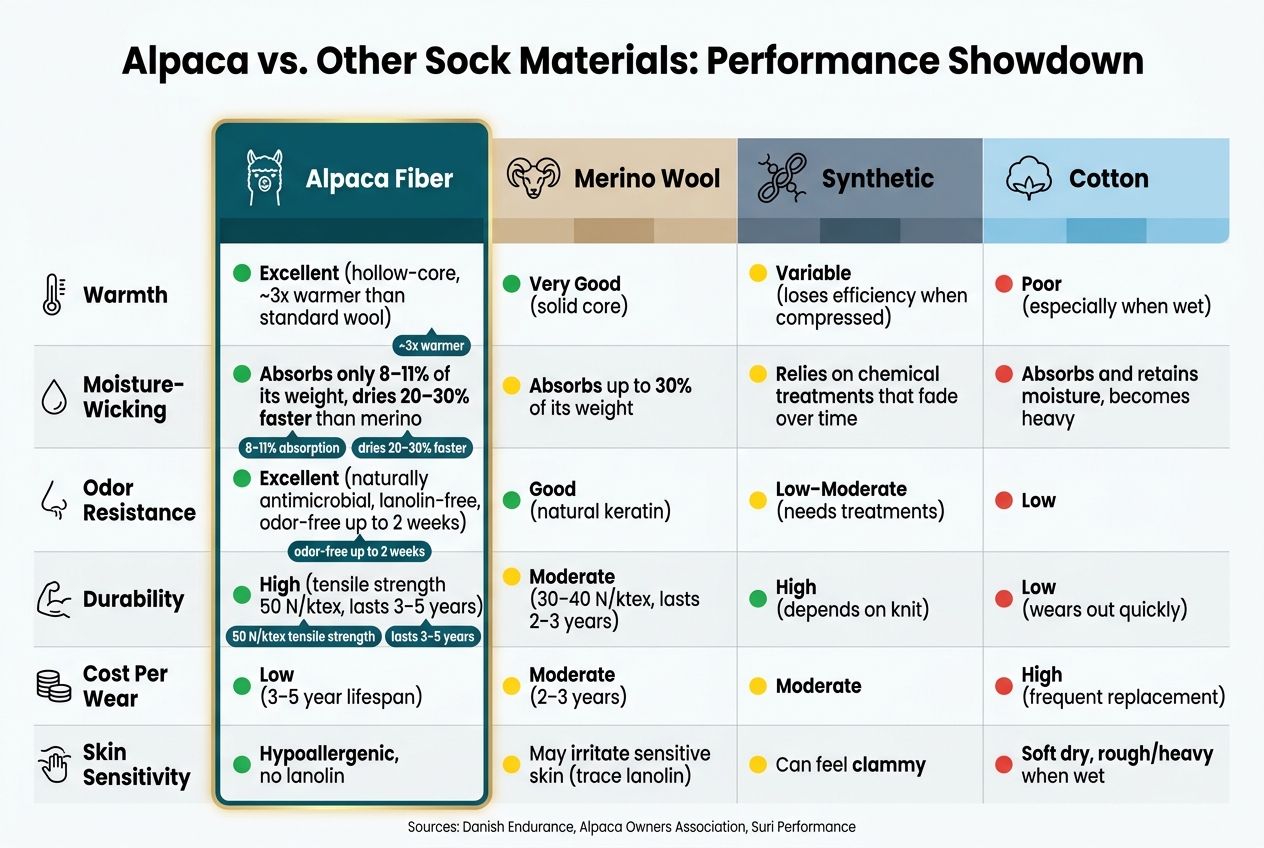
Comparison Table
Alpaca vs. Merino Wool vs. Synthetic vs. Cotton Socks: Performance Comparison
The following table highlights how alpaca fiber stands out in performance and value compared to other materials.
Feature
Alpaca Fiber
Merino Wool
Synthetic
Cotton
Warmth
Excellent – hollow-core structure traps air; about 3x warmer than standard wool
Very good – crimped fibers trap air but have a solid core
Variable; loses efficiency when compressed
Poor, especially when wet
Moisture-Wicking
Absorbs only 8–11% of its weight; dries 20–30% faster than merino
Absorbs up to 30% of its weight before feeling wet
Resists absorption but depends on chemical treatments that fade with time
Absorbs and retains moisture, becoming heavy
Odor Resistance
Excellent – naturally antimicrobial and free of lanolin
Good – natural keratin offers some odor resistance
Low to moderate; often requires additional treatments
Low
Durability
High – tensile strength of 50 N/ktex
Moderate – tensile strength of 30–40 N/ktex
High, but depends on knit construction
Low – wears out quickly
Cost Per Wear
Low – lasts 3–5 years
Moderate – lasts 2–3 years
Moderate
High – needs frequent replacement
Skin Sensitivity
Hypoallergenic; contains no lanolin
May irritate sensitive skin due to trace lanolin
Can feel clammy and lacks natural softness
Soft when dry, but becomes heavy and rough when wet
Alpaca fiber consistently outshines other materials, especially in durability and moisture management. For instance, its tensile strength of 50 N/ktex far exceeds merino wool's 30–40 N/ktex, meaning fewer holes and less wear over time.
Unlike synthetic fibers, which rely on chemical treatments for moisture-wicking (and lose effectiveness with repeated washing), alpaca fibers naturally wick moisture without additional treatments.
Conclusion
Alpaca socks stand out with their exceptional warmth, moisture-wicking abilities, odor resistance, durability, and all-season comfort. These features combine to ensure long-lasting performance, making the higher upfront cost worthwhile.
The unique qualities of alpaca fiber result in socks that stay dry, resist odors, and maintain their shape for up to three years - offering better value over time compared to cheaper alternatives.
For those looking to try alpaca socks, Suri Performance Alpaca Socks is a solid choice. Made in North Carolina with a high-density performance blend, meeting all the essential hiking sock features, these socks are reinforced from heel to toe and come with a 1-Year Ironclad Guarantee. As one satisfied customer, Rick S., shares:
"It's unbelievable how they could be made out of this material, yet they are so comfortable and they don't make my feet and legs itch nor do they make them hot or sweaty."
With over 3,248 positive reviews and bundle pricing that brings the cost down to $15–$19 per pair, these socks offer excellent value for the long haul.
FAQs
How do I wash alpaca socks without ruining the wicking?
To keep your Suri Performance Alpaca Socks in top shape, wash them in cold water using a mild detergent. While hand washing is the gentlest option, these socks are built to handle regular care without losing their moisture-wicking abilities. For quick clean-ups between washes, spot clean when necessary, and always air dry to preserve the fibers and keep them adventure-ready.
Will alpaca socks help if my feet sweat a lot?
Alpaca socks are a great choice for dealing with sweaty feet. Thanks to their semi-hollow fibers, they naturally pull moisture away from your skin and allow it to evaporate quickly. Unlike cotton or wool, alpaca fiber holds very little moisture, which helps keep your feet dry and reduces the chances of blisters or bacteria forming. Suri Performance Alpaca Socks are designed to provide comfort and minimize friction, making them perfect for hiking, workdays, or any outdoor adventures.
Are alpaca socks good for sensitive or itchy skin?
Alpaca socks are an excellent choice for those with sensitive or easily irritated skin. Unlike wool, alpaca fiber is naturally free of lanolin, which makes it hypoallergenic and less likely to trigger skin reactions. The fibers are smooth and silky, offering a soft feel that helps prevent itchiness. On top of that, alpaca socks are great at wicking away moisture, keeping your feet dry and comfortable. This reduces friction, minimizes chafing, and lowers the chances of developing blisters or fungal problems.