"I liked saving money buying 4 pairs at a time and the socks are great for what I need. It's unbelievable how they could be made out of this material, yet they are so comfortable and they don't make my feet and legs itch nor do they make them hot or sweaty."
Rick S., Verified Customer
How Alpaca Socks Keep Feet Dry on Hikes
Share
Wet feet can ruin any hike. Alpaca socks solve this problem by keeping your feet dry, comfortable, and odor-free. Here's how they work:
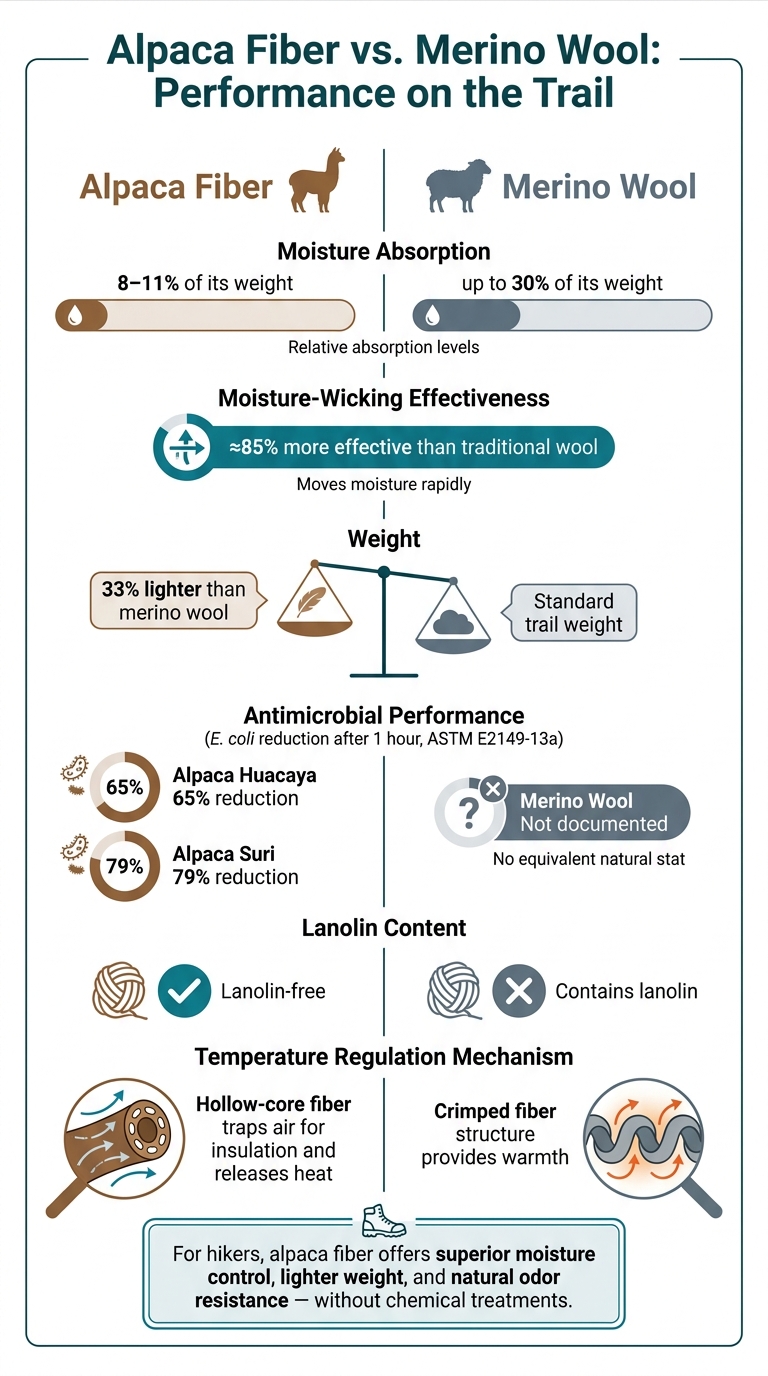
Moisture-wicking: Alpaca fibers absorb only 8–11% of their weight in moisture, compared to 30% for merino wool. This keeps socks lighter and drier.
Temperature regulation: The hollow core of alpaca fibers traps air, providing insulation in cold weather and releasing heat in warm conditions.
Odor resistance: Naturally antimicrobial properties reduce bacteria growth, helping to prevent bad smells and fungal infections.
Durability: Blends with nylon enhance toughness while maintaining comfort.
For hikers, alpaca socks offer better moisture control, reduced blister risk, and lasting comfort. Pair them with proper footwear and take care when washing to maximize their performance.
How Alpaca Fiber Manages Moisture and Comfort
Alpaca vs. Merino Wool: Key Performance Stats for Hikers
Alpaca fiber stands out on the trail thanks to its unique structure. Unlike cotton or most synthetic materials, alpaca fibers have a hollow or semi-hollow core. This design creates tiny capillary channels that draw sweat away from your skin and move it to the outer surface of the sock, where it can evaporate. This natural mechanism ensures excellent moisture control. Let’s take a closer look at how alpaca fiber wicks moisture, regulates temperature, and resists odor-causing bacteria.
How Alpaca Fiber Wicks Moisture Away
Alpaca fiber absorbs only 8% to 11% of its weight in moisture, compared to merino wool, which can hold up to 30%. This means alpaca socks remain lighter, drier, and more comfortable, even during long hikes. Plus, the fiber's smooth surface plays a role. Unlike sheep's wool, which has noticeable scales, alpaca fibers are smoother, allowing moisture to move freely along the surface instead of getting trapped. This results in moisture-wicking performance that is about 85% more effective than traditional wool.
How Alpaca Fiber Regulates Temperature
The hollow core of alpaca fiber doesn’t just wick moisture; it also serves as a natural insulator. Air pockets within the fiber create a thermal barrier, helping to retain heat in cold weather while releasing excess warmth when you’re active. ALPACORE explains:
"Alpaca fiber naturally regulates temperature through its unique hollow core structure that traps air for insulation while allowing moisture to escape."
This feature is especially handy on hikes where conditions can change quickly. For instance, moving from a cool, shaded forest to a sunny ridgeline can challenge your gear, but alpaca fiber adjusts without requiring you to stop and add or remove layers. It also provides this adaptability at a lighter weight - alpaca is 33% lighter than merino wool while delivering the same warmth.
Natural Odor and Bacteria Resistance
Foot odor often comes down to bacteria, which thrive in moist environments. By keeping feet drier, alpaca socks make it harder for bacteria to grow. On top of that, alpaca fiber is naturally antimicrobial. In standardized testing (ASTM E2149-13a), alpaca fiber reduced E. coli bacteria by 65% in huacaya samples and 79% in suri samples after just an hour of contact. Ruth Fuqua and Wini Labrecque from the Alpaca Owners Association noted:
"These results clearly show that alpaca fiber does indeed contain a degree of antimicrobial characteristics. ... Socks with this type of antimicrobial action are a benefit when wearing them for long periods of time."
Additionally, alpaca fiber is lanolin-free, which means it doesn’t have the waxy residue found in sheep's wool. This absence of lanolin reduces the likelihood of trapped organic matter and skin irritation. For multi-day hikes, this combination of low moisture retention and natural odor resistance keeps socks feeling fresher for longer stretches.
sbb-itb-855989e
What to Look for in Alpaca Hiking Socks
When picking alpaca hiking socks, focus on four key factors: fiber content, cushioning, breathability, and sock height. These elements can make or break your hiking experience.
Fiber Content and Quality
Look for socks made with at least 70% alpaca fiber. This high percentage ensures excellent moisture management. For added durability, blends with 20%–50% nylon are ideal, especially for high-friction areas. The nylon enhances the sock's toughness while maintaining alpaca fiber's natural ability to wick moisture, keeping your feet dry and comfortable.
"Alpaca wool retains slightly less moisture than merino wool, which slows (but does not prevent) the macerating process, keeping your skin stronger for longer." - Jaeger Shaw, Gear Reviewer
Be cautious with blends that include Modal, as this material tends to hold onto moisture longer, increasing drying times.
Once you've checked the fiber content, think about how cushioning and breathability match your hiking needs.
Cushioning and Breathability
The right cushioning depends on your activity and the weather. Light cushioning works best for warm days or snug-fitting trail shoes, as extra bulk can cause discomfort. On the other hand, thick terry cushioning provides better impact protection for long, high-mileage hikes. This added padding reduces pressure points and works hand-in-hand with alpaca's moisture-wicking properties to keep your feet comfortable.
If you're hiking in hot weather, look for socks with mesh uppers or thin-top designs to improve airflow. However, keep in mind that thicker cushioning, while great for comfort, will take longer to dry - something to consider if you're swapping socks on multi-day trips.
Finally, choose a sock height that complements your footwear and the terrain.
Choosing the Right Sock Height
The height of your sock matters more than you might think. It should match your footwear and provide protection from the elements. Here's a quick guide:
Sock Height
Best For
No-show / Ankle
Trail runners, warm weather, and well-maintained trails
Quarter / ¾ Crew
Light hiking shoes, variable temperatures, and trails with light brush
Crew (~5 inches)
Traditional hiking boots, preventing chafing from the boot collar
Boot
High-cut boots, cold weather, and rugged, uneven terrain
A general rule? Your socks should always rise above the boot collar. If they don't, the boot edge might rub against your skin, leading to hotspots or blisters. For trail runners or low-profile shoes, ankle or quarter-height socks strike a good balance between ventilation and protection.
How to Use and Care for Alpaca Socks
Alpaca socks are known for their exceptional performance, but how you use and maintain them can make all the difference when you're out on the trail.
Matching Sock Weight to Weather and Activity
Choosing the right sock weight is all about balancing the conditions and the demands of your hike. For warm weather or short trails, lightweight alpaca socks are ideal because they prioritize breathability. On the other hand, midweight or heavyweight alpaca socks are perfect for cooler mornings, extended hikes, or areas with fluctuating temperatures. Thanks to the hollow structure of alpaca fibers, these socks provide insulation without adding unnecessary bulk. If you're wearing snug-fitting boots, lightweight socks are a better choice to avoid creating pressure points or cutting off circulation. Pairing your socks with the right footwear ensures maximum comfort and performance.
Pairing Socks with the Right Footwear
The magic of alpaca socks lies in their ability to manage moisture effectively, but this works best when paired with breathable, well-fitted hiking boots. Proper footwear minimizes friction and keeps your feet dry, reducing the chances of blisters. Look for socks with elastic support zones and seamless construction, as these features help reduce foot movement and friction, especially during descents.
Washing and Drying Alpaca Socks
Caring for your alpaca socks is just as important as choosing the right pair. Gentle washing and drying practices are key to maintaining their performance and extending their lifespan. Use cold or lukewarm water with a mild, wool-friendly detergent, and steer clear of fabric softeners - they can coat the fibers and interfere with their moisture-wicking abilities. While hand washing is best, you can use a washing machine if you select a delicate or wool cycle with low spin speed. To prevent snagging, place the socks in a mesh laundry bag.
When drying, lay the socks flat on a towel or mesh rack. Avoid hanging them by the cuffs, as this can stretch the elastic and distort their shape.
Action
Do This
Avoid
Water Temp
Cold or lukewarm
Hot water
Detergent
Mild, wool-friendly
Fabric softeners, bleach
Machine Cycle
Delicate, low spin
Heavy-duty, high spin
Drying
Lay flat, air dry
Tumble dryer, hanging by cuffs
Storage
Cool, dry, loosely stored
Damp bags, tight compression
For multi-day hikes, bring at least two pairs of alpaca socks and rotate them. This allows each pair to dry completely and regain its structure before the next wear. With proper care, alpaca socks can retain their softness and performance for over 50 washes.
Suri Performance Alpaca Socks are designed to handle a variety of hiking conditions. The Mid-Crew (5" height) is your go-to for rugged trails and colder weather, offering extra coverage and security. The 1/2 Crew Hiking Sock strikes a balance between breathability and cushioning, making it a solid choice for spring, summer, and fall hikes. If you're tackling summer day hikes or trail runs, the ankle and no-show styles are lightweight yet protective, especially around the heel to reduce friction. Crew-length socks work perfectly with high-top hiking boots, while ankle styles pair better with low-rise trail shoes. These options let you take full advantage of the performance features Suri socks bring to the trail.
Performance Features That Matter on the Trail
Suri socks are built around alpaca fiber's natural ability to manage moisture, keeping your feet dry and comfortable no matter the trail. At the core of their design is Alpaca Dry Fusion Technology®, a patented yarn construction that uses hollow-core fibers to wick moisture 85% more effectively than Merino wool. This same structure also helps regulate temperature, adapting to changing conditions. For added comfort, micro-mesh panels on the instep boost airflow, reducing the risk of fungal growth during long hikes. These features also contribute to superior odor resistance without relying on chemical treatments.
"I wore my new Alpaca Socks yesterday on a long hike with no complaint from my feet... These socks are very comfortable and not soggy." - Amy J. White
Durability is another standout feature. Reinforced heels and toes, a tough nylon outer layer, and ribbed arch support ensure these socks maintain their shape and performance even after repeated use.
Bundle Options for Multi-Day Hikes
For hikers gearing up for multi-day adventures, Suri offers cost-effective bundle options. A single pair of the 1/2 Crew Hiking Socks costs $27.50, but you can save with bundles: a 3-pair pack is $66.00 (20% off), a 6-pair bundle is $123.75 (25% off), and the Buy 3 Get 3 Free deal brings the price down to about $19 per pair. Thanks to their durability and odor resistance, rotating between two or three pairs gives each pair time to dry and regain its loft, ensuring maximum comfort and value throughout your journey.
Conclusion: Keep Your Feet Dry on Every Hike
Nothing dampens a hike - literally and figuratively - like wet feet. Alpaca fiber, with its moisture-repelling abilities and temperature-regulating properties, is a game-changer for hikers. Its hollow core wicks moisture away fast, helping to prevent blisters even during the most challenging treks. Plus, it adjusts to temperature shifts, keeping your feet comfortable whether you're hiking in the heat or the cold. Add in its hypoallergenic nature, and it's clear why alpaca fiber stands out.
Suri Performance Alpaca Socks are built for the trail. Whether you prefer the extra coverage of Mid-Crew socks or the lightweight feel of ankle styles, there's a pair tailored to your hiking needs.
Take the right step - choose alpaca socks for dry, comfortable feet on every adventure.
FAQs
Do alpaca socks still work if my boots get wet?
Alpaca socks are a solid choice even if your boots get wet. Thanks to their hollow-core fibers, they absorb only about 8–11% of their weight in moisture. This means they stay lightweight and comfortable rather than becoming heavy and soggy. Plus, they hold onto warmth even when damp and dry quicker than many other materials. Their moisture-wicking abilities help keep your feet dry and reduce the risk of blisters during hikes.
How many pairs should I pack for a multi-day hike?
Thanks to alpaca fiber’s natural ability to resist bacteria and wick away moisture, you’ll need fewer pairs compared to regular socks. Alpaca fibers help prevent odor, dry fast, and stay fresh for longer periods - even on those extended hiking adventures. Suri Performance Alpaca Socks are a smart pick for multi-day trips, cutting down on the need for constant changes and keeping your backpack lighter.
Will alpaca socks help prevent blisters on long hikes?
Yes, alpaca socks can be a game-changer for preventing blisters during long hikes. Their secret lies in the unique properties of alpaca fiber. Unlike cotton, alpaca fibers have a hydrophobic, hollow-core structure that wicks moisture away from your skin. This helps keep your feet dry, reducing the chances of skin softening - a common cause of blisters.
On top of that, alpaca socks are incredibly soft. Combined with features like cushioned soles and seamless designs, they minimize friction and rubbing, which are often the culprits behind blisters. Plus, the extra cushioning helps reduce foot fatigue, making your hikes more comfortable and blister-free.