"I liked saving money buying 4 pairs at a time and the socks are great for what I need. It's unbelievable how they could be made out of this material, yet they are so comfortable and they don't make my feet and legs itch nor do they make them hot or sweaty."
Rick S., Verified Customer
5 Ways Alpaca Socks Keep Feet Cool and Dry
Share
If my feet get hot, the fix is simple: move sweat out, let heat escape, and stop the sock from bunching. That’s why alpaca socks work well in warm weather, long walks, hikes, and work shifts.
Cushioning and a snug fit lower rubbing and hot spots
One stat stands out: alpaca can hold up to 30% of its weight in moisture without feeling wet to the touch. That helps feet feel drier for longer.
Quick comparison
Feature
What it does
Why it matters
Moisture wicking
Moves sweat off skin
Helps lower dampness and rubbing
Mesh ventilation
Lets air move through the sock
Helps sweat dry faster
Temperature control
Releases extra heat when feet warm up
Helps keep feet from overheating
Odor control
Keeps socks drier for longer
Helps limit smell during long wear
Cushioning + fit
Reduces slipping and bunching
Helps lower friction and hot spots
I’d sum it up this way: alpaca helps at the fiber level, and the sock knit does the rest. If you want cool, dry feet, you need both.
sbb-itb-855989e
Why Breathability Matters in Outdoor Socks
Before getting into the five features, the main problem is pretty simple: trapped heat and sweat can ruin comfort in a hurry. Breathability helps move heat and moisture out of the sock. Without that, feet stay damp, friction goes up, and hot spots show up fast. Alpaca helps by moving moisture and heat through the sock more well than many other fibers.
How Sweat Buildup Affects Comfort and Skin
Feet can produce a lot of moisture during a long hike or a full work shift. If that sweat has nowhere to go, it stays pressed against your skin. And damp skin wears down fast. It also becomes more likely to rub.
That mix - moisture plus rubbing - is exactly what leads to hot spots and blisters.
Why Ventilation Matters as Much as Absorption
Absorption by itself doesn’t solve the problem. A sock needs to wick moisture away from the skin and let it evaporate. If it can’t, the fabric stays damp, holds heat, and makes odor more likely.
Airflow doesn’t depend on fiber alone. It also comes down to how the sock is made and how you wear it.
How Sock Height and Weight Affect Airflow
Sock height and weight both shape airflow. No-show and ankle styles leave more of the foot and lower leg uncovered, which helps airflow in low-cut sneakers or trail runners. Crew and boot heights cover more area. That extra coverage helps protect against debris and brush, but it also means the sock needs breathable fibers so heat doesn’t build up inside taller shoes or boots.
Weight matters just as much. A lightweight knit releases heat faster and works well in warm weather or during high-output activity. A midweight sock adds cushioning and works in most conditions, balancing warmth with moisture control.
That sets up the first feature: moisture-wicking alpaca fibers.
1. Moisture-Wicking Alpaca Fibers
Alpaca starts working by pulling sweat away from your skin before heat and rubbing have time to build up.
Sweat Transfer
Alpaca fibers wick sweat off the skin and move it toward the surface of the sock. Their hollow core helps push that moisture outward, which matters on a long hike or during a full work shift in boot socks. The payoff is simple: your skin feels drier, even when you're putting in hard effort.
Airflow Design
Once that moisture reaches the surface, it can leave the sock more easily. If your shoes are breathable, that process works even better. The sock and shoe team up to help keep feet cooler during high-output activity.
Temperature Balance
Alpaca’s hollow fiber structure can hold warmth when it’s cold and let off heat when it’s warm.
Friction Control
Sweaty skin tends to rub more. By moving moisture away, alpaca helps keep skin drier and cuts down on the friction that can lead to hot spots.
That moisture control works best when the knit also gives sweat a clear path out of the sock.
2. Breathable Mesh and Ventilation Zones
Wicking pushes sweat outward. Mesh zones help it get out. In performance alpaca socks, these ventilation areas work with the fiber to move heat away at a faster clip. Where they sit matters most, especially on the top of the foot and around the arch.
Sweat Transfer and Airflow
Mesh panels are usually placed on the top of the foot and arch - spots that run warm but don’t need as much cushioning. These open-knit sections give moisture a direct way out of the sock and into the air. Without them, even strong wicking fibers can get overloaded, which can leave feet damp and uncomfortable.
As moisture leaves the sock, evaporation pulls heat away with it. That’s why mesh zones help most in enclosed shoes and ultra boot socks, where heat tends to build fast.
Friction Control
Drier ventilation zones cut down on rubbing and can help prevent hot spots and blisters.
Skip fabric softeners. They can coat the fibers and reduce airflow through the mesh.
3. Natural Thermoregulation
Wicking moves sweat. Breathable mesh zones let that sweat escape. But thermoregulation starts earlier than that. It helps keep feet from getting too hot in the first place, and it comes from the fiber itself.
Temperature Balance
Alpaca fibers have a semi-hollow core. Those tiny air pockets act like a buffer, holding warmth when you're standing still and letting off extra heat when you start moving. That’s why alpaca socks can stay comfortable even when conditions shift during the day.
Sweat Transfer
That same fiber shape helps move moisture outward. The hollow core pushes sweat toward the surface, where it can evaporate and pull heat away from your feet.
Friction Control
Cooler, drier feet usually mean less rubbing, fewer hot spots, and less skin wear during long hikes or long work shifts. That same cooling effect can also help keep odor down during extended wear.
4. Odor-Resistant Performance
The same moisture and heat control that makes socks more comfortable also helps them stay fresher for longer. Alpaca helps limit odor by moving moisture away fast and keeping feet cooler and drier.
Sweat Transfer
When sweat clears out faster, odor has less time to build up. Alpaca’s hollow fibers pull moisture away from the skin, so there’s less dampness sitting where odor tends to start.
Airflow Design
The knit structure helps air reach damp areas faster. That means moisture can evaporate instead of hanging around in the fabric.
Temperature Balance
By keeping excess heat in check, alpaca can help cut down on the sweating that feeds odor. Less heat usually means less moisture, and that gives odor fewer places to settle in.
Friction Control
Fit plays a bigger role than most people think. When socks bunch up, they can trap moisture and create damp spots where odor is more likely to show up. A secure fit helps prevent that.
Skip fabric softener. It can coat the fibers and reduce moisture wicking.
5. Targeted Cushioning and Secure Fit
Strong moisture control only goes so far if the sock slips down or bunches up.
That’s why fit matters just as much as fiber. Cushioning and fit both affect friction and moisture buildup when you’re moving.
Friction Control
Heel and forefoot cushioning create a buffer between your foot and the inside of your shoe. That extra padding cuts down on rubbing, which helps prevent hot spots. Arch support and heel grips also help keep the sock in place, so there’s less sliding, less friction, and less heat.
Sweat Transfer
Cushioned zones help wick moisture away from high-pressure areas like the heel and forefoot. As a result, those spots stay drier during activity.
Airflow Design
A low-bulk fit helps ventilation zones stay lined up with your foot. When the sock stays put, airflow can keep moving through it during activity instead of getting blocked by bunching or shifting.
Temperature Balance
Low-bulk cushioning adds protection without trapping heat.
For high-impact use, look for socks with a cushioned sole and built-in arch support. For low-cut shoes, no-show styles with silicone heel grips - like those from Suri Performance Alpaca Socks - can help keep the sock in place.
Fit and cushioning shape how well alpaca’s breathability works when you wear it.
Material and Feature Comparison
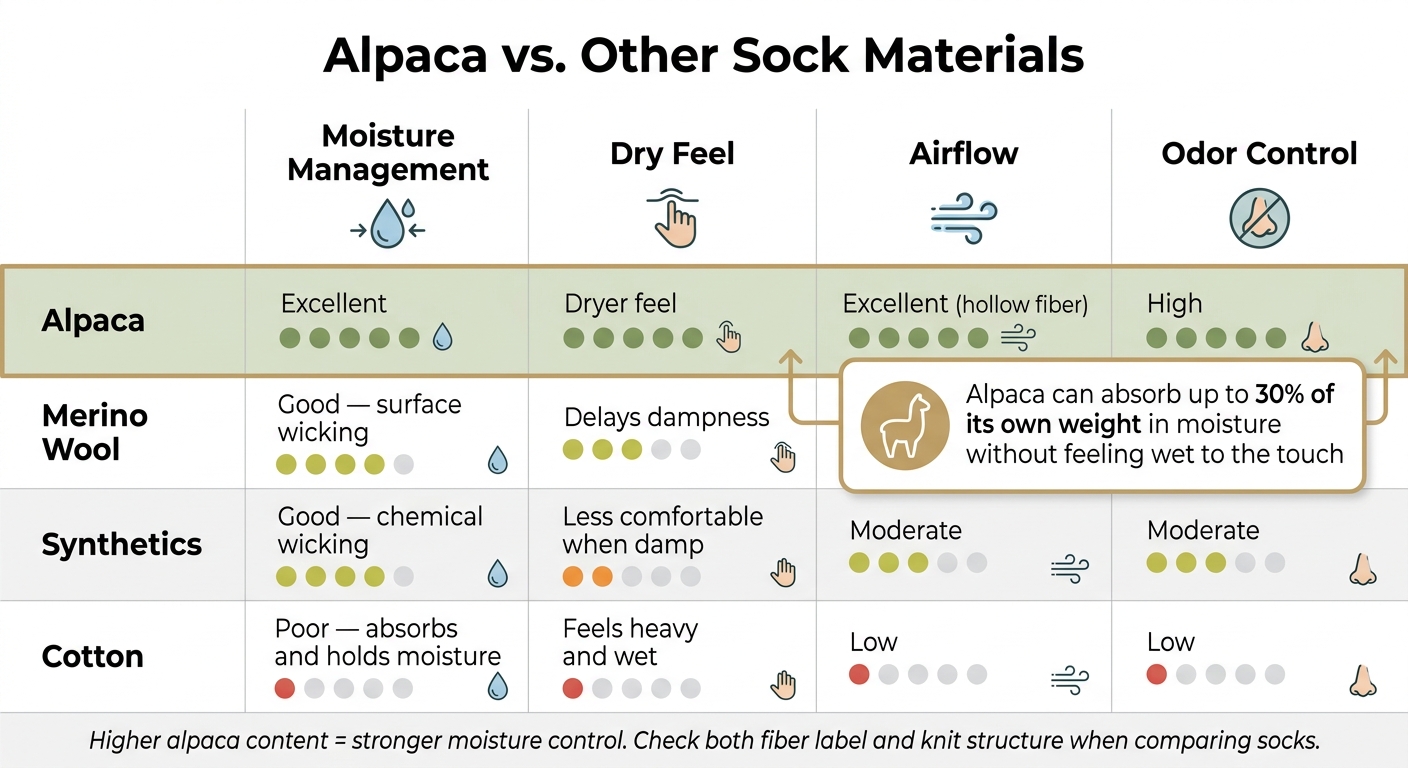
Alpaca vs. Other Sock Materials: Moisture, Airflow & Odor Control
Fiber matters, but knit design decides how much cool air actually gets to your foot.
Alpaca vs. Cotton, Wool Blends, and Synthetics
Fiber choice shapes how a sock handles sweat, heat, and odor. Cotton soaks up moisture and hangs onto it, so once your feet start sweating, they can stay wet. Synthetics wick moisture, but they often depend on chemical treatments that can fade with washing, and they can feel less comfortable when damp.
Alpaca works differently. It pulls moisture away from the skin and helps it evaporate faster. It can absorb up to 30% of its own weight in moisture without feeling damp to the touch. It also helps resist odor-causing buildup.
Material
Moisture Management
Dry Feel
Airflow
Odor Control
Alpaca
Excellent
Dryer feel
Excellent (hollow fiber)
High
Merino Wool
Good - surface wicking
Delays dampness
Very good
Moderate
Synthetics
Good - chemical wicking
Less comfortable when damp
Moderate
Low
Cotton
Poor - absorbs and holds moisture
Feels heavy and wet
Low
Low
Higher alpaca content usually means stronger moisture control. So when you compare socks, don’t just look at the fiber label. Read the material mix and the knit structure together.
How Knit Features Affect Comfort
Knit design affects airflow, fit, and cushioning. The fiber sets the starting point, then the knit details shape how the sock feels in motion.
Feature
Comfort Benefit
Best Use Case
Mesh Tops
Increases ventilation and allows sweat to evaporate faster
Summer hiking, running, gym workouts
Arch Bands
Keeps the sock in place and prevents bunching
Long-distance walking, trail sports
Targeted Cushioning
Absorbs impact on heels and toes without adding bulk
Rugged terrain, heavy work boots
Crew/Knee Height
Protects against brush, debris, and boot rubbing
Trekking, tall work boots
No-Show/Ankle Height
Minimizes fabric coverage for maximum cooling
Low-cut sneakers, warm-weather casual wear
Silicone Heel Grips
Prevents low-cut socks from sliding down
No-show styles for daily wear
Placement matters. Mesh zones help most when they sit over hot spots. Arch bands work best when the sock needs to stay locked in place. Cushioning helps more when it lines up with heel and toe impact. In other words, the right feature only helps if it matches the shoe and the activity.
Choosing the Right Alpaca Sock for the Activity
Once breathability is part of the sock, the next step is simple: match the height and cushioning to the job. That combo can make a big difference based on what you're doing and the shoes on your feet.
Best Features for Hiking and Warm-Weather Walking
For summer hiking and trail walking, go with lightweight crew or ankle socks. Crew height gives you more coverage, while ankle height lets in more airflow. If you're moving hard on a warm trail, mesh ventilation zones help let heat out. Seamless toe construction helps cut down on rubbing inside trail shoes, and arch support bands help keep the sock from sliding around mid-hike.
Heavier shoes call for more coverage and more protection underfoot.
Best Features for Work Boots and Yard Work
Work boots do best with coverage, cushioning, and a snug fit. For work boots, pick crew or boot height for extra coverage. Midweight cushioning in the heel and toe helps soften impact on hard ground and cuts down on the rubbing that leads to blisters. For yard work, crew height also helps stop grass clippings and dirt from getting into the boot. Reinforced heels and toes help the socks last longer.
With lower-cut shoes and long days on your feet, odor control matters more than extra bulk.
Best Features for Travel and Daily Wear
For travel and daily wear, odor resistance is the most practical feature. Alpaca's odor resistance makes multi-day wear easier. No-show and ankle styles pair well with low-cut shoes, and silicone heel grips help keep them from slipping down during a full day of walking.
Activity
Recommended Height
Cushioning Level
Summer Hiking
Crew or Ankle
Light to midweight
Work Boots
Boot or Crew
Midweight
Yard Work
Crew
Midweight
Travel & Daily Wear
No-Show or Ankle
Light
Conclusion
Cool, dry feet come down to two things working together: fiber performance and sock design.
Alpaca socks help keep feet cool and dry because the fiber moves moisture away from the skin, while the knit helps heat escape. It’s not just about how alpaca compares to cotton or wool on its own. The structure of the sock plays a big part too.
That’s why the balance matters most in socks made for all-day wear. Fiber and knit need to work as a team: alpaca manages moisture, and the sock build helps release heat. Suri Performance Alpaca Socks comes in crew, boot, ankle, and no-show styles for hiking, work, and daily wear.
To help that performance last, wash alpaca socks without fabric softener. It can coat the fibers and reduce breathability and wicking.
FAQs
Are alpaca socks good for summer?
Yes. Alpaca socks work well in summer because their hollow-core fibers let heat escape and help air move around your feet, which can help them feel cooler.
They also pull moisture away from the skin and dry faster than cotton. That means drier feet, less rubbing, fewer blisters, and less odor over the course of the day.
For hot weather, no-show and ankle socks are smart picks, especially with low-cut shoes. They feel light, let your feet breathe, and help keep things cool when the temperature climbs.
Suri Performance Alpaca Socks come in no-show, ankle, and crew heights, so you can pick the style that fits your activity and footwear while staying comfortable and dry.
How do I wash alpaca socks?
Machine wash your Suri Performance Alpaca Socks on a gentle cycle with cold water and a mild detergent. Skip bleach and fabric softeners, since they can wear down the natural fibers.
For the best outcome, let them air dry. That helps the socks keep their shape, softness, durability, and performance over time.