"I liked saving money buying 4 pairs at a time and the socks are great for what I need. It's unbelievable how they could be made out of this material, yet they are so comfortable and they don't make my feet and legs itch nor do they make them hot or sweaty."
Rick S., Verified Customer
Alpaca Socks for Hunting: Benefits for Mobility
Share
Alpaca socks are a game-changer for hunters, offering unmatched comfort and performance in challenging conditions. Unlike cotton vs wool vs alpaca socks, alpaca fiber excels at managing moisture, regulating temperature, and preventing odor - key factors for long days in rugged terrain. Here's why they stand out:
Moisture Control: Alpaca fiber absorbs up to 30% of its weight in moisture without feeling wet, reducing blisters and discomfort.
Temperature Regulation: Keeps feet warm in freezing conditions and cool in warmer weather, thanks to its semi-hollow fibers.
Lightweight Warmth: Provides three times more warmth than traditional wool with half the bulk, improving mobility and comfort.
Durability: Reinforced designs ensure long-lasting performance, even under tough use.
Alpaca socks also feature smart designs like compression zones, targeted cushioning, and reinforced heels, making them ideal for both short outings and extended backcountry trips. Whether you're navigating rocky trails or sitting motionless in freezing temperatures, alpaca socks help keep your feet comfortable, dry, and ready to perform.
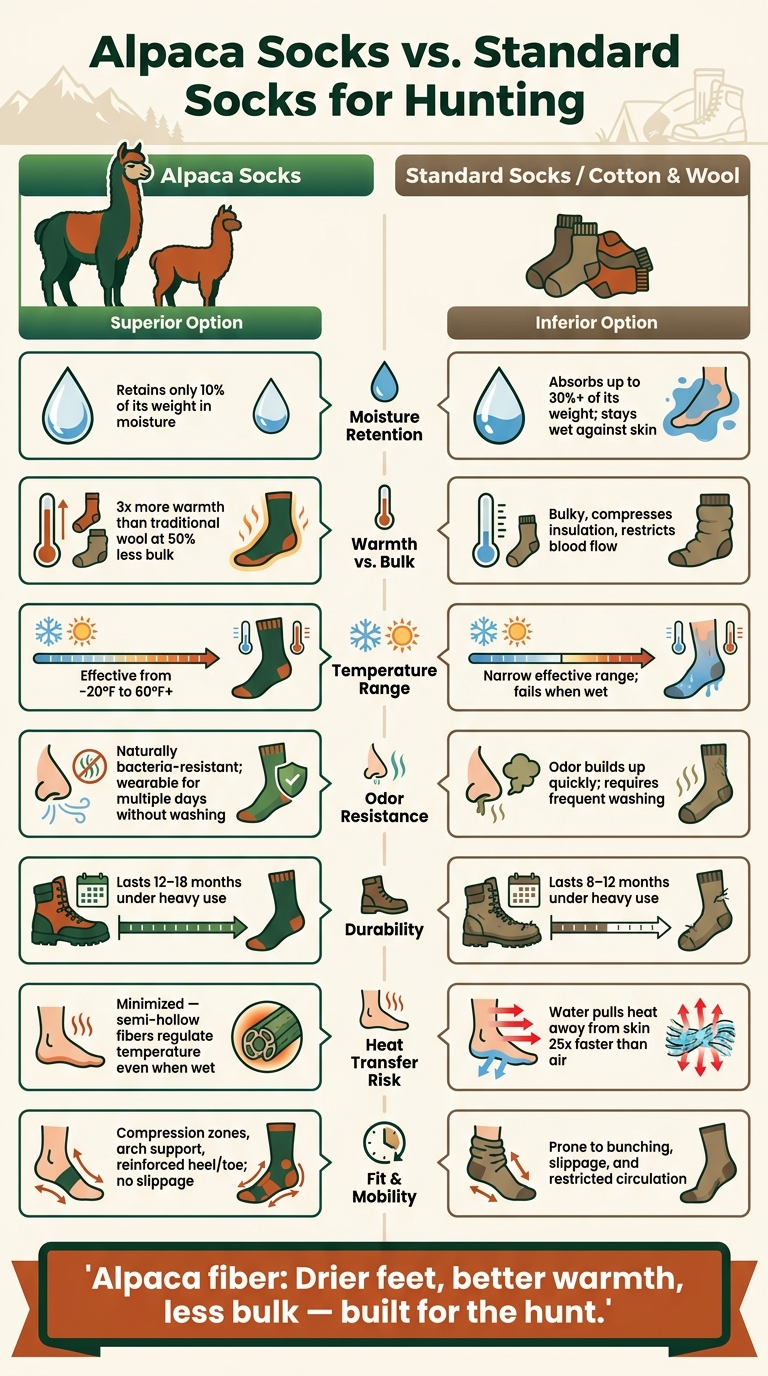
Alpaca Socks vs. Standard Socks for Hunting: Key Performance Stats
Problems with Standard Socks for Hunting
How Moisture and Friction Cause Blisters
Cotton socks might be everywhere, but they’re a terrible choice for hunting. Why? Because cotton soaks up sweat like a sponge but does nothing to move that moisture away from your skin. The result? Your feet stay damp for hours, creating the perfect environment for blisters.
Standard wool doesn’t fare much better. Its lack of elasticity leads to bunching, which, combined with moisture-softened skin, is a recipe for hotspots and painful blisters.
"Cotton is the classic example of what not to wear; it just soaks up sweat and loses all its insulating power, turning into a cold, wet liability against your skin." - Magic Eagle
And it’s not just about blisters - these friction issues also tie directly to poor temperature regulation.
Poor Temperature Control and Its Effect on Toe Movement
Temperature control is critical for hunters, but standard socks often make the problem worse. When moisture gets trapped, your feet don’t just feel clammy - they get cold. Water pulls heat away from your skin up to 25 times faster than air. So, even slightly damp socks can chill your feet quickly, especially when you’re stationary.
Cold, numb toes aren’t just uncomfortable - they make it harder to maintain balance and move precisely over rugged terrain. On the flip side, in warm conditions, poor ventilation leads to overheating. Your feet swell, fatigue sets in faster, and your overall performance takes a hit. Whether it’s cold or heat, bad temperature control can cut your hunt short.
How Bulk and Poor Fit Reduce Agility
Beyond moisture and temperature issues, bulky or poorly fitting socks can seriously limit your mobility. Thick, ill-fitting socks might seem warm, but they compress insulation and restrict blood flow, leaving your feet colder - not warmer. Plus, they reduce your ability to feel the ground beneath you, making it harder to navigate tricky terrain.
Another issue? Slippage. Socks that slide down or bunch up force you to stop and adjust, which creates noise and unnecessary movement - exactly what you want to avoid when stalking game.
"Slippage... might not sound like a big deal, but when you're trying to sneak into bedding cover or sit still on stand, any extra movement works against you." - Mike Manley, Retired Sergeant Major and U.S. Army Green Beret
As Suri Performance Alpaca Socks explains: "Bulky wool socks cut circulation and cramp your boots. Alpaca gives you full warmth in a lighter build, so you stay comfortable, mobile, and ready to push farther without compromise."
Altogether, these problems with traditional socks highlight why alpaca fiber stands out as a game-changer for hunters looking for better performance and comfort.
sbb-itb-855989e
How Alpaca Fiber Socks Address Hunting Mobility Problems
Moisture-Wicking and Fast-Drying Performance
Alpaca fiber is known for its ability to repel water, retaining only 10% of its weight in moisture. This means socks made from alpaca fiber dry faster, reducing friction and avoiding that uncomfortable "swampy" feeling after activities like climbing steep terrain or crossing creeks. Kevin Paulson, Founder and CEO of HuntingLife.com, highlights this benefit:
"Alpaca fiber retains only 10% of weight in water which allows these socks to dry so much faster than merino wool or other wool socks."
This moisture-wicking ability, combined with alpaca's natural thermal properties, ensures your feet stay dry and comfortable, no matter the conditions.
Temperature Regulation Across Seasons
Alpaca fiber's semi-hollow core acts like a built-in thermostat. In colder weather, it traps warm air near your skin, keeping you cozy. When temperatures rise, it releases excess heat, helping to prevent overheating. Even when wet, alpaca maintains its insulating properties, so your feet stay warm and mobile. Many alpaca socks are rated for a wide range of temperatures, from -20°F to over 60°F. This versatility is particularly useful for hunters who may spend hours sitting motionless in a stand or blind. As Suri Performance Alpaca Socks puts it:
"Its core fibers trap heat even when you're motionless, so you can stay focused on the hunt, not frozen feet."
For hunters tackling early-season conditions, alpaca's ability to regulate temperature ensures comfort without adding unnecessary bulk, which might hinder movement.
Softness and Odor Resistance for Extended Hunts
Comfort is critical during long hunting trips, and alpaca fiber delivers on multiple fronts. Unlike sheep's wool, alpaca fiber is lanolin-free and hypoallergenic, reducing the risk of irritation. Its smooth texture minimizes hot spots, even during extended wear. Additionally, alpaca naturally resists bacteria and odors, keeping socks fresh over several days. Suri Performance Alpaca Socks explains this advantage:
"Alpaca naturally resists odor, keeping bacteria from sticking to the fibers. That means you can wear them for days on end without washing - your socks stay fresh, your cover stays safe."
Rick Mikesell of MidCurrent also shared his firsthand experience:
"When I pulled off my boots, my feet were dry and comfortable, even after riding home with the heater blasting... there has been no foot funk after long days of wear."
With alpaca socks, you get dry, soft, and odor-free performance, allowing you to stay focused on the hunt without unnecessary distractions.
Warmest Hunting Socks TEST | Merino, Alpaca, Electric Heated
Alpaca Sock Design Features That Support Hunting
Alpaca fiber's natural ability to manage moisture and regulate temperature gets a boost from thoughtful sock designs, making them an excellent choice for hunters. These advanced features ensure comfort, support, and durability during long days in the field.
Targeted Cushioning for Long Hikes
Even the best fibers need smart design to handle rugged terrain. High-performance alpaca socks often include dense terry cushioning in the heel and toe, which absorbs shock while maintaining circulation. As Suri Performance Alpaca Socks explains:
"Performance Terry Cushioning - Cushioned for comfort during long hours on your feet - without the bulk that slows you down."
Some designs take it further by adding full-footbed cushioning, ensuring consistent shock absorption on uneven ground. Thanks to alpaca fiber's ability to retain only 10% of its weight in water, this padding stays dry and effective, even during sweaty, extended hunts. Combined with this cushioning, targeted compression ensures the sock stays firmly in place throughout the day.
Compression and Arch Support for Foot Stability
Cushioning is only part of the equation - stability and a secure fit are just as important. Socks that shift inside your boots can lead to blisters and discomfort. Built-in arch support and compression zones keep the sock snug and stable. Gear Reviewer Rick Mikesell of MidCurrent highlights this benefit:
"The Hunt model features a synthetic arch panel that secures the sock effectively. It will likely appeal to anglers [and hunters] who want extra support or a more sculpted fit."
This snug fit reduces micro-movements that can cause muscle fatigue. Kevin Paulson, Founder and CEO of HuntingLife.com, noted during his testing:
"These socks fit tight so if that is a concern, size up. Although I found that they do not slip down throughout the day which I really like."
For hunters wearing tall boots or waders, over-the-calf designs with compression provide added stability from ankle to knee, even during steep climbs or wet crossings.
Reinforced Construction for Rugged Conditions
Durability is critical for hunting socks, and reinforced construction helps them stand up to tough conditions. While alpaca fiber is soft, it needs added strength to handle constant boot friction. To achieve this, quality alpaca socks blend alpaca with nylon for durability and spandex for stretch recovery. Some performance blends include up to 45% nylon, ensuring the sock holds up under demanding use.
Key areas like the heel and toe are reinforced to handle the friction caused by boots. For example, Suri Performance Alpaca Socks designed their Field Boot Socks to include:
"Added durability where boots create the most friction, day after day."
Flat-knit toe seams also help by reducing pressure points, which can prevent irritation during long treks. These design features make high-performance alpaca socks last 12 to 18 months under heavy use - far longer than the 8 to 12 months typical for standard wool socks. This durability makes them a dependable choice for multiple hunting seasons.
Choosing the Right Alpaca Socks for Different Hunting Conditions
Hunting in various conditions calls for specific features in your alpaca socks. The season, terrain, and duration of your hunt all play a role in selecting the best pair. Matching your socks to these factors can make a huge difference in keeping your feet comfortable throughout the day.
Warm-Weather and Early-Season Hunts
When the heat is on, managing sweat and keeping your feet cool becomes a priority. For early-season hunts, lightweight alpaca socks with mesh ventilation zones are a smart choice. Alpaca fibers excel at regulating temperature, keeping your feet cool even when the thermometer hits 100°F. Avoid socks with extra bulk - opt for "light" or "medium" cushioning to prevent overheating and ensure a comfortable fit inside your boots.
Sock height is another factor to consider. In warm weather, ankle or crew-length socks are better than taller options, as they reduce insulation around your lower legs. As Chad S., a satisfied Suri Socks customer, shared:
"I didn't want anything too thick or heavy since I usually overheat on the trail. These struck the right balance - breathable, comfy, and they kept my feet dry the whole time."
For colder weather, however, you'll need a completely different approach.
Cold-Weather and Late-Season Hunts
When temperatures plummet, warmth becomes the top priority. Late-season hunts often mean long hours in freezing conditions, so your socks need to retain heat even when you're stationary. Alpaca fibers naturally trap warm air thanks to their semi-hollow core, offering up to three times more warmth than traditional wool - all while being 50% less bulky. This means your boots stay comfortable, and your toes stay nimble.
For extreme cold, look for boot socks with high alpaca content (around 70%). Over-the-calf designs are especially useful, as they provide extra insulation for your lower legs and stay securely in place during long hikes or wading. Rick Mikesell, a gear reviewer for MidCurrent, highlighted their moisture-wicking benefits:
"These socks are significantly better at moisture management than wool. Wool has always been warm, but when you peel it off at the end of the day it usually feels swampy."
Multi-Day Backcountry Hunts
Extended hunts in the backcountry demand socks that can handle multiple days of wear without washing. Alpaca fibers naturally resist bacteria buildup, which means less odor and reduced scent risk - a crucial factor when trying not to alert game. For these trips, choose socks with reinforced heels, performance cushioning, and a snug fit. These features ensure durability and comfort, even when carrying heavy packs over uneven terrain for days on end.
A great example is Suri's Field Boot Socks, which boast a 4.8/5-star rating from 323 verified reviews. They’re specifically designed to meet the demands of extended hunts, combining durability, odor control, and all-day comfort in one reliable package.
Conclusion: Better Foot Comfort Starts with the Right Socks
Your feet play a crucial role in every hunt. Discomfort or blisters can pull your focus away from the experience. But the right socks? They can make all the difference.
Alpaca fiber tackles common challenges like moisture, temperature regulation, bulkiness, and odor. It holds only 10% of its weight in water, dries faster than wool, and delivers up to three times more warmth with half the bulk. This unique mix keeps your feet dry, warm, and ready to move, no matter the conditions. Every step becomes a support system for your hunt.
As Suri Performance Alpaca Socks explains:
"Bulky wool socks cut circulation and cramp your boots. Alpaca gives you full warmth in a lighter build, so you stay comfortable, mobile, and ready to push farther without compromise."
Choosing the right sock for your hunting environment is key. Opt for lightweight crew socks in warm weather, insulated boot socks for colder conditions, or reinforced designs when tackling multi-day adventures.
Suri Performance Alpaca Socks are designed to meet these demands, earning an impressive 4.9/5 rating from over 3,248 verified reviews. Upgrading your socks is a simple yet effective way to elevate your hunting game.
FAQs
How do I choose the right sock thickness for my boots?
When choosing socks, consider how much insulation you need and how they’ll fit with your boots. Thicker socks add cushioning and warmth but can feel bulky in snug boots, which might restrict circulation. For a balance of warmth and comfort, Suri Performance Alpaca Socks are a great option - they provide insulation without the added bulk, making them perfect for long, cold days.
For most conditions, go with moderately thick socks. If you're tackling freezing temperatures, thicker styles like Field/Ultra boot socks are a better choice. On the other hand, lighter socks work well with tighter boots, ensuring a more comfortable fit.
Should I size up if I want a looser fit?
For optimal performance, your socks should fit snugly - secure but not overly tight. Suri Performance Alpaca Socks are crafted with stretchable fibers that ensure they stay in place without bunching or cutting off circulation. This close fit allows the alpaca fibers to effectively regulate temperature, keeping you comfortable during hunting trips. Avoid sizing up, as it can compromise the fit and diminish the socks' thermal efficiency.
How many days can I wear alpaca socks without washing?
Thanks to the natural odor-resistant and moisture-wicking qualities of alpaca fiber, Suri Performance Alpaca Socks can go several days without needing a wash. Many users have shared that they’ve worn these socks for up to five days straight during hunting trips, all while keeping their feet warm and free from odor. This makes them a dependable option for long outdoor adventures where doing laundry isn’t an option.