"I liked saving money buying 4 pairs at a time and the socks are great for what I need. It's unbelievable how they could be made out of this material, yet they are so comfortable and they don't make my feet and legs itch nor do they make them hot or sweaty."
Rick S., Verified Customer
What 50 Hiker Reviews Say About Alpaca Socks
Share
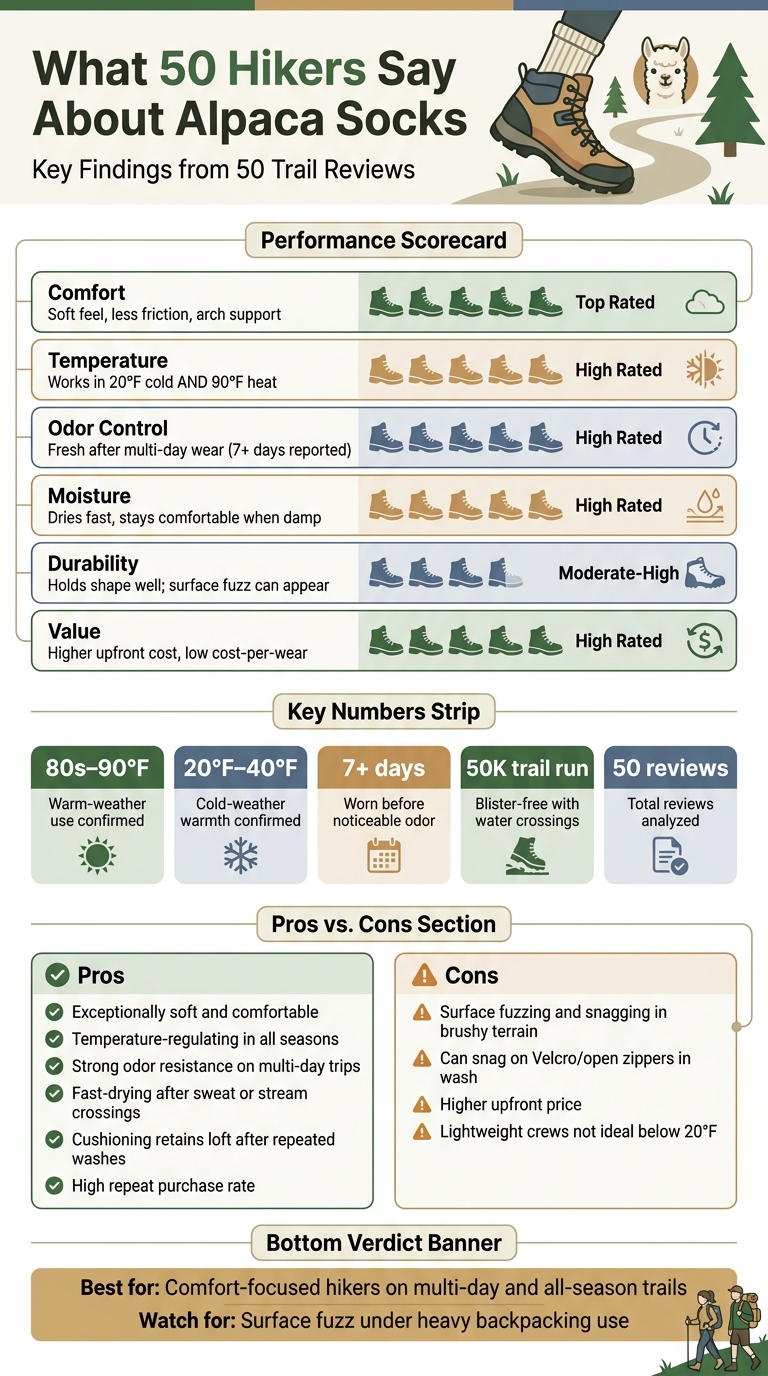
If you want the short answer: hikers mostly like alpaca socks for comfort, smell control, and all-season use. Across 50 hiking reviews, the pattern is simple: feet stayed comfortable, socks handled sweat well, and many people wore them for several days before noticing odor. The main downside was wear on the surface, like fuzz or snags, more than holes.
If I boil it down, here’s what stood out:
Comfort was the top theme
Warm in cold weather, not too hot in warm weather
Low odor after multi-day wear
Works well when feet get sweaty or wet
Durability was good overall, but snagging came up (though reinforced boot socks can help mitigate wear)
Higher upfront price, but many felt the cost per wear was low
A few numbers and trail details helped frame the feedback:
Warm-weather use included hikes in the 80s and 90s°F
Cold-weather feedback showed up in the 20°F to 40°F range
Some hikers said they wore the socks for a week or more
One reviewer reported staying blister-free during a 50K trail run with water crossings
Here’s the quick takeaway for you: if you care most about soft feel, fewer blisters, less odor, and solid trail use across changing weather, alpaca socks got strong marks. If you care most about a sock looking new after hard use, the fuzz and snags may bug you.
Area
What I’d take from the reviews
Comfort
Best-rated part; soft feel and less friction
Temperature
Good in both summer heat and cool mornings
Odor
Strong point on multi-day trips
Moisture
Dries fast and still feels okay when damp
Durability
Holds shape well; surface wear can show up
Value
High price at first, but many still bought again
That’s the full picture from the review set, without the extra fluff.
Alpaca Socks Review Breakdown: What 50 Hikers Really Think
Comfort on the trail across warm, cold, and changing conditions
Reviewers kept coming back to the same idea: these socks feel soft and springy. One reviewer put it simply:
"The socks are very comfortable, warm, and like walking on a cloud." - Wayne Saunders
That soft feel wasn't just a first impression. Reviewers said it lasted through full days on the trail, even inside boots. The fine alpaca fibers help explain that feel. Hikers also pointed to the arch support and heel cushioning, saying both helped cut down on friction and hot spots.
You can see that comfort show up in different weather, too. In warm conditions, hikers cared about breathability. In colder weather, they wanted warmth without the puffy feel of thick socks.
What hikers said about warm-weather comfort
In warmer weather, one point stood out: hikers said their feet didn't get too hot. On summer hikes with temperatures in the 80s and 90s°F, reviewers described the socks as lightweight and not hot. Alpaca fiber lets air move through the sock, and mesh zones in some designs helped with airflow during harder climbs.
What hikers said about cold-weather comfort
Feedback from cold-weather hikes was just as clear. Hikers wearing alpaca socks on chilly mornings, with temperatures from 20°F to 40°F, said their feet stayed warm without needing thick, bulky socks. Alpaca fiber has a hollow-core structure that holds still air close to the foot, which helps with insulation on cold trail days. Reviewers also said alpaca stayed warm even when damp. When temperatures dropped below 20°F, the review summary pointed hikers toward high-alpaca boot socks or thermal crews instead of lightweight crews.
That same damp-weather warmth also showed up in how hikers talked about moisture handling and odor control on longer trips.
sbb-itb-855989e
Odor control and moisture handling on long hiking days
Warmth was only part of the story. Hikers also paid close attention to how these socks dealt with sweat, odor, and repeated wear on long trips or work shifts.
One pattern showed up again and again in the reviews: odor control held up especially well on multi-day hikes.
Multi-day freshness and odor buildup over repeated wear
Reviewers said the socks stayed fresh through several days of back-to-back use. Some hikers wore them for a week or more without noticeable odor buildup. A few reviewers also mentioned a short-lived natural smell after washing, but said it disappeared once the socks were dry.
How hikers described sweat and drying performance
On heavy-sweat hikes, reviewers said their feet stayed drier than they expected. They also said the socks dried faster than expected after sweat, rain, or stream crossings. Several reviews pointed to alpaca’s ability to move moisture off the foot fast, which made the socks feel less clammy over long miles.
That mattered on wet days. Even after stream crossings or muddy trail conditions, reviewers said the socks still felt good against the skin, and that helped cut down on blister problems. One reviewer said they stayed blister-free during a 50K trail run with multiple water crossings.
That same moisture handling also connects directly to the durability feedback in the next section.
Durability after repeated hikes, washing, and boot use
Washing alpaca socks less often cut down on wash-related wear. Even so, hikers still spoke highly of how they held up over time. Many wore them for several days before washing, then judged them based on shape retention and day-after-day use. So the main test wasn’t the first hike. It was how the socks handled months of trail miles and repeat washes.
Where durability feedback was strongest
This is where the feedback lined up. Reviewers said alpaca socks kept their shape well and maintained their cushioning over time. Reinforced heel and toe areas also stood up well to boot friction, which matters when socks take a beating inside hiking boots.
A point that came up more than once: the cushioning kept its loft even after repeated washes. Reviewers also said the socks handled gentle machine cycles well, without losing their fit or feel.
Where hikers noticed wear or limits
The biggest downside was snagging. In brushy terrain, or in the wash with gear that had Velcro or open zippers, the knit could catch and develop pulls or surface fuzz. That was usually more cosmetic than structural. Reviewers talked about "fuzzy spots" rather than holes or tears. Still, under heavy backpacking use, it showed up often enough to matter.
On light day hikes, hikers saw little visible wear. With heavier backpacking and work-boot use, fuzz and minor snags became more common, though holes stayed rare. That mix helps explain why many hikers bought another pair: solid long-term wear, with a bit of surface fuzz as the tradeoff.
Why hikers buy again and the main takeaway from the 50 reviews
The mix is pretty simple: comfort, odor control, and long wear life. That’s why so many hikers come back and buy another pair. Across these 50 reviews, one pattern shows up again and again: once hikers try alpaca socks, they often reorder.
Comfort is the main reason people buy again. Right behind that is odor control. Hikers like being able to wear the socks for several days without much smell, which matters a lot on longer trips. Moisture management comes up often too. Alpaca dries fast after sweat or water exposure, and that gives people a reason to come back. Temperature control is another big part of the appeal, since hikers like socks that work in both cold and warm weather across different seasons.
That same mix also helps justify the price. Alpaca socks cost more up front, but many reviews point to a longer useful life. Over time, that can mean a low cost per wear.
For hikers, the message from these reviews is clear: these socks tend to earn repeat purchases by staying comfortable, fresher for longer, and useful across seasons.
FAQs
How long do alpaca socks usually last on hikes?
Alpaca socks are known for durability and usually last 18 to 24 months with mixed use. If you're using them on rugged trails, reinforced pairs with double-knitting at the heel and toe can hold up for over 500 miles.
Care makes a big difference too. Hand-washing in cool water and laying them flat to air-dry helps reduce stress on the fibers and can help them last longer.
Are alpaca socks good for blister prevention?
Yes. Alpaca socks can help prevent blisters because they wick moisture and help keep your feet dry, which cuts down on friction, one of the main causes of blisters.
They can also help in a few other ways during long hikes:
Soft fibers can feel gentler on the skin
Temperature control helps feet stay more comfortable
Extra cushioning in high-friction spots like the heel and toe can reduce rubbing
Put simply: dry feet + less rubbing usually means fewer blisters.
How should I wash alpaca hiking socks?
Hand washing works best. Turn the socks inside out, then soak them in cold or lukewarm water with a mild, pH-neutral detergent for 3 to 15 minutes. Give them a gentle swish, then press out extra water with a towel.
Don’t wring or twist them. Let them air dry flat in a well-ventilated spot, away from direct heat or sunlight.