"I liked saving money buying 4 pairs at a time and the socks are great for what I need. It's unbelievable how they could be made out of this material, yet they are so comfortable and they don't make my feet and legs itch nor do they make them hot or sweaty."
Rick S., Verified Customer
Alpaca Socks for Hazardous Work Environments
Share
Alpaca socks are a game-changer for workers in harsh conditions. They solve common issues like sweaty feet, blisters, and discomfort caused by traditional cotton or wool socks. Thanks to their natural properties, alpaca fibers regulate temperature, wick moisture 3x better than cotton or wool, and resist odors. These socks are also hypoallergenic, flame-resistant, and durable enough to withstand long shifts in steel-toed boots or extreme climates ranging from -20°F to 110°F.
Key Benefits:
Moisture Control: Keeps feet dry, reducing blisters and bacterial growth.
Temperature Regulation: Insulates in cold and breathes in heat.
Durability: Reinforced heels and toes resist wear in heavy-duty boots.
Skin-Friendly: Lanolin-free and soft, preventing irritation.
Flame Resistance: Class 1 rating, self-extinguishing properties for added safety.
Suri Performance Alpaca Socks offer options for different needs, from boot socks to no-show styles, all backed by a 365-day replacement guarantee. Whether you’re in construction, firefighting, or outdoor trades, these socks provide lasting comfort and protection for demanding jobs.
Benefits of Alpaca Socks for Hazardous Work
Durability and Longevity
Alpaca fiber stands up to the rigors of heavy-duty work boots better than many other materials. With reinforced heels and toes, these socks are built to handle the constant friction from steel-toe and safety footwear. Unlike cotton, which tends to compress and lose its protective qualities when wet or under pressure, alpaca fibers retain their structure, providing consistent cushioning and shock absorption.
Superfine alpaca fiber is used for added strength, ensuring the socks resist thinning or sagging even after months of use. To improve fit and elasticity, manufacturers incorporate a blend of 27% nylon and 3% spandex, ensuring the socks stay in place during long, grueling shifts - sometimes lasting 14 hours or more on hard surfaces like concrete. These features also contribute to their ability to manage moisture effectively.
"I used to go through socks every few weeks... these have lasted months without thinning or sagging. No more sweaty feet, and they stay up in my boots." - Jake P., Veteran
Moisture-Wicking and Odor Resistance
Alpaca fiber excels at pulling moisture away from the skin, moving it to the fabric's surface where it can evaporate. This keeps feet feeling dry, even inside work boots. Impressively, alpaca fibers can absorb up to 30% of their dry weight in moisture without feeling damp, while their natural keratin content helps combat odors. This combination is especially beneficial for preventing blisters and bacterial growth during long shifts in hazardous environments.
"Wear my socks daily for work as a firefighter - they keep my feet warm and dry all day!!!" - Jerry N., Firefighter
In addition to moisture control, alpaca socks are designed to maintain optimal thermal comfort.
Temperature Regulation in Extreme Conditions
Alpaca fibers contain tiny air pockets that act as natural insulators, keeping feet warm in freezing conditions and breathable in hot environments. This built-in climate control allows workers to transition comfortably between subzero outdoor temperatures and sweltering indoor settings. Alpaca socks are effective in temperatures ranging from -20°F to over 110°F, far outperforming typical cotton or wool socks. For workers dealing with extreme temperature swings, they’re an invaluable choice.
"You can take these boot socks and wear them from subfreezing conditions to 80° and you don't notice the difference." - Forrest Galante, Wildlife Biologist
Safety Features of Alpaca Fiber Socks
Hypoallergenic Properties and Skin Protection
Alpaca fiber stands out as a naturally hypoallergenic material. Unlike sheep's wool, it lacks both lanolin and the rough scales that often irritate the skin, making it incredibly soft and less likely to trigger allergic reactions. Additionally, its keratin composition provides built-in antimicrobial protection. This is especially important for those wearing warm, enclosed boots for extended periods - like 12- to 14-hour shifts. The antimicrobial properties help maintain foot health without relying on chemical treatments, which is great news for individuals with sensitive skin or allergies. These qualities make alpaca fiber an excellent choice for demanding environments where comfort and skin protection are priorities.
Flame Resistance and Safety Compliance
Alpaca fiber offers natural flame-resistant properties, including the ability to self-extinguish, which helps slow the spread of flames. Classified as Class 1 by the US Consumer Product Safety Commission - the highest flame resistance rating - alpaca fiber provides a safety edge in fire-prone settings. Its high sulfur amino acid content encourages rapid char formation instead of melting, a feature that synthetic fibers often lack. Unlike synthetics, which can melt or stick to the skin under intense heat, alpaca fiber maintains its structure longer, reducing the risk of burns.
Testing through a micro-combustion calorimeter revealed that 100% alpaca fiber exhibits significantly lower peak heat release rates and less total heat release compared to various sheep wool breeds. This means it offers better protection in high-heat environments while still delivering excellent moisture control and temperature regulation. For workers in extreme conditions, these safety benefits are invaluable.
Suri Performance Alpaca Socks come in four distinct styles, each tailored to meet specific workplace challenges. Here’s what they offer:
Boot Socks ($46.99): Designed for over-the-calf coverage, these socks feature reinforced high-wear zones, making them perfect for heavy work boots and long shifts in cold or rugged conditions.
Performance Crew Socks ($37.99): Offering mid-calf support with light compression, these are great for versatile, everyday use.
Ankle Socks ($33.33): Ideal for warmer environments, they provide low-cut comfort with targeted cushioning and breathable mesh zones for better airflow.
No-Show Socks ($28.99): Perfect for hot days, these socks offer invisible protection with strategic cushioning and airy mesh zones to keep your feet cool.
Every pair is made with Pro-Grade Alpaca™ Fiber, a material known for its strength and durability. This fiber wicks moisture three times more effectively than cotton or wool, keeping feet dry and reducing the risk of blisters or fungal issues during long, demanding shifts. These features make them a reliable choice for those working in extreme or hazardous conditions.
Reinforced Design for Tough Conditions
Suri Performance Alpaca Socks combine the natural benefits of alpaca fiber with thoughtful design upgrades to handle the toughest environments. Reinforced heels, high-density fiber toes, and performance terry cushioning protect against constant friction from boots, while their compressive, stay-put fit prevents annoying bunching during extended wear.
With an impressive 4.82 out of 5 stars from 239 reviews, these socks are a favorite among workers who need durability and moisture control. Construction worker Chris W. shared his experience:
"I work construction and I spend a lot of time in boots and on my feet. These have to be some of the most amazing socks that I have ever owned. Just for overall comfort and dryness; I would definitely recommend".
To top it off, Suri Performance Alpaca Socks come with a 365-day "no-drama" swap guarantee. If your socks wear out within a year, they’ll replace them at no cost.
sbb-itb-855989e
How Alpaca Socks Meet Workplace Safety Standards
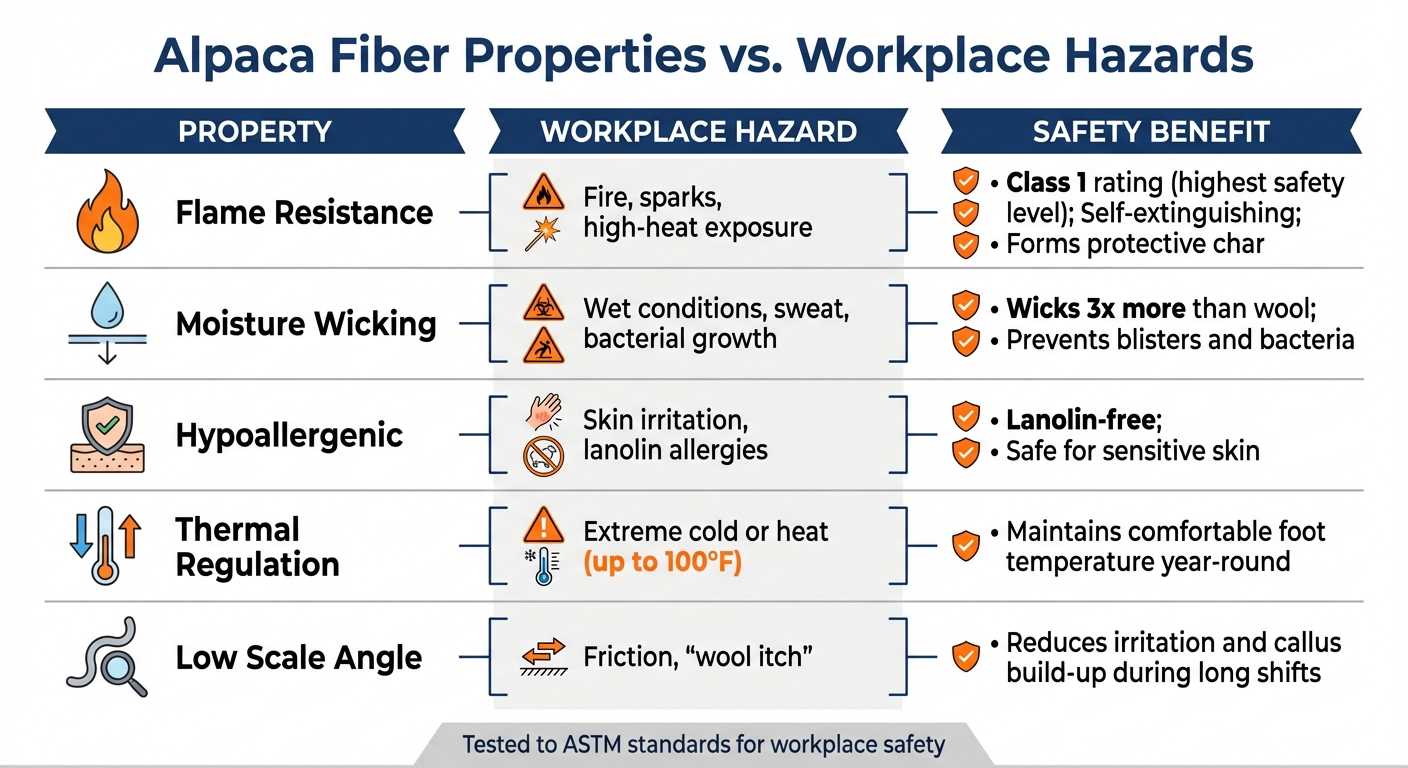
Alpaca Fiber Properties vs Workplace Hazards Safety Benefits
Alpaca Properties vs. Workplace Hazards
Alpaca fiber doesn’t just offer comfort - it’s designed to tackle workplace hazards while meeting strict safety standards.
One standout feature is its Class 1 flame resistance rating, the highest level for clothing and furnishings. This makes alpaca fiber a safe choice for environments where sparks, open flames, or high heat are part of the daily routine.
Property
Workplace Hazard
Safety Benefit
Flame Resistance
Fire, sparks, high-heat exposure
Class 1 rating; self-extinguishing, forming protective char
Moisture Wicking
Wet conditions, sweat, bacterial growth
Wicks 3x more than wool; prevents blisters and bacteria
Hypoallergenic
Skin irritation, lanolin allergies
Lanolin-free; safe for sensitive skin
Thermal Regulation
Extreme cold or heat (up to 100°F)
Maintains comfortable foot temperature year-round
Low Scale Angle
Friction, "wool itch"
Reduces irritation and callus build-up during long shifts
These natural properties, backed by rigorous testing, provide added protection in challenging work environments. For workers with sensitive skin, the hypoallergenic nature of alpaca fiber is a game-changer. Ruth Fuqua, an expert in alpaca fiber, emphasizes:
"Alpaca is flame resistant, meeting the standards of the US Consumer Product Safety Commission's rigid testing specifications as a Class 1 fiber, the safest level of flame resistance for use in clothing and furnishings".
Safety Certifications and Testing Standards
The safety benefits of alpaca fiber are further validated through standardized testing. It meets industry protocols like ASTM E1354 (Cone Calorimeter), ASTM D6413 (Vertical Flame Spread), and ASTM D7309 (Microcombustion Calorimetry), all of which evaluate its behavior under combustion conditions. Notably, 100% alpaca fiber has shown excellent self-extinguishing capabilities during vertical burn tests.
"Pure Alpaca fiber... displays self-extinguishing behavior and low heat release when subjected to combustion conditions".
The secret lies in the fiber’s composition. It contains methionine and cysteine, sulfur-based amino acids that promote rapid char formation during combustion, creating a protective barrier.
Alpaca fiber also excels in antimicrobial performance. Testing under ASTM Standard E2149-13a revealed a reduction in viable bacterial cells by about 65% in huacaya and 79% in suri varieties after just one hour of exposure. Thermal evaluations using ASTM Standard 1868 showed that alpaca fabrics achieve Clo Values between 0.85 and over 1.50, far exceeding the typical thick long-sleeve sweater, which rates at just 0.36.
While alpaca socks provide excellent flame resistance and moisture management, they are not intended to replace specialized NFPA-approved protective gear required for high-risk occupations. Instead, they are a safer, more comfortable option for general hazardous work environments, offering a reliable blend of safety and everyday practicality.
Conclusion
When it comes to safety, durability, and comfort, workers in hazardous environments require gear that can handle tough conditions. Alpaca socks stand out with their natural flame resistance, superior moisture-wicking abilities - three times better than cotton or wool - and effective thermal regulation, making them a smart choice for demanding job sites. Suri Performance Alpaca Socks take these benefits a step further, designed to withstand the challenges of grueling 14-hour workdays. Plus, they come with a 365-day Ironclad Guarantee for added peace of mind.
Although these socks aren’t a substitute for specialized protective equipment in high-risk occupations, they provide a dependable base layer for workers who face heat, moisture, and long hours on their feet.
For professionals in manufacturing, construction, warehousing, and other tough industries, high-quality alpaca socks help prevent blisters, manage odor, regulate temperature, and deliver long-lasting comfort - offering reliable support for those who need it most.
FAQs
How do alpaca socks perform compared to cotton or wool in extreme temperatures?
Alpaca socks stand out as a top choice for extreme temperatures, thanks to the unique properties of their fibers. In cold weather, the semi-hollow structure of alpaca fibers traps heat more effectively than wool, making them much warmer than cotton. Plus, they absorb significantly less moisture - only about 10–11% of their weight compared to wool’s 30%. This means your feet stay dry and warm, even in damp conditions.
When the heat is on, alpaca socks shine just as brightly. They wick moisture away from the skin about three times better than cotton or wool, keeping your feet dry. The natural air pockets in the fibers help release excess heat, ensuring your feet stay cool and comfortable - even in temperatures as high as 100°F. This makes alpaca socks a dependable choice for challenging environments, offering consistent comfort whether you're facing freezing cold or intense heat.
Are alpaca socks a good choice for people with sensitive skin or allergies?
Alpaca socks are a great choice for anyone dealing with sensitive skin or allergies. Thanks to their natural hypoallergenic properties and the absence of lanolin - a common irritant in many other types of wool - they're typically gentle and comfortable to wear. That said, while it's uncommon, a small number of people might still find themselves sensitive to alpaca fibers.
Why are alpaca socks considered flame-resistant, and how is this helpful for workers?
Alpaca fibers naturally resist flames and meet the U.S. Consumer Product Safety Commission Class 1 standards. This quality makes alpaca socks less prone to catching fire or melting, which lowers the risk of burns - an important safety feature for those working in hazardous conditions.
Opting for alpaca socks gives workers a tough, protective layer that prioritizes safety while maintaining a high level of comfort.