"I liked saving money buying 4 pairs at a time and the socks are great for what I need. It's unbelievable how they could be made out of this material, yet they are so comfortable and they don't make my feet and legs itch nor do they make them hot or sweaty."
Rick S., Verified Customer
Alpaca Socks for Rocky Trails: Key Benefits
Share
Hiking rugged trails is tough on your feet. Uneven terrain, constant impact, moisture, and temperature swings can lead to blisters, fatigue, and discomfort. Alpaca socks are designed to address these challenges, offering:
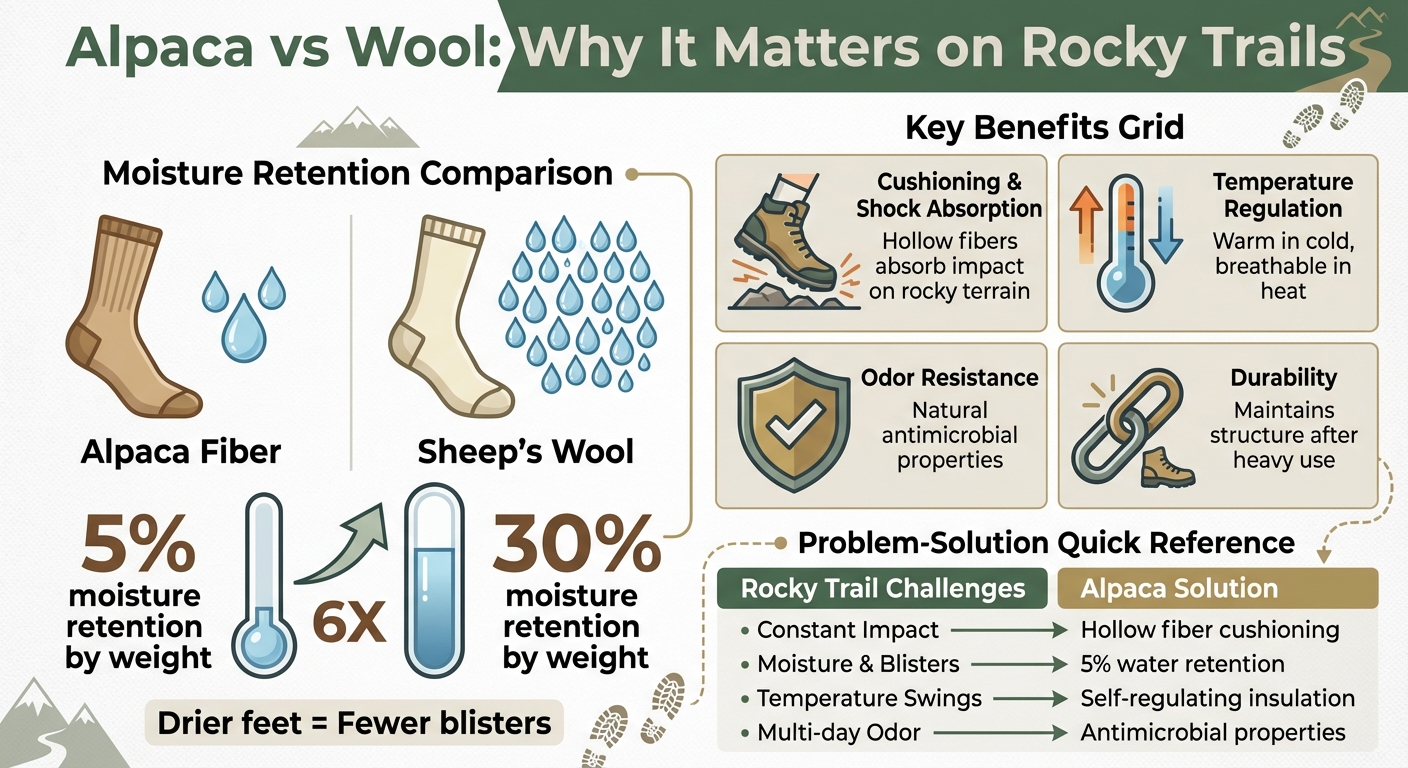
Moisture Control: Alpaca fiber holds only 5% of its weight in moisture, compared to wool's 30%, keeping your feet drier and reducing blisters.
Temperature Regulation: Hollow fibers provide warmth in cold conditions and breathability in heat, ensuring all-day comfort.
Durability: Stronger than traditional materials, alpaca socks maintain cushioning and structure even after heavy use.
Cushioning and Support: Targeted padding in high-impact areas absorbs shocks, while arch support enhances stability on uneven ground.
These features make alpaca socks an ideal choice for hikers tackling rocky trails, ensuring comfort, protection, and long-lasting performance.
Alpaca vs Wool Socks: Moisture Retention and Performance Comparison for Hiking
Problems Hikers Face on Rocky and Uneven Terrain
Foot Impact and the Need for Cushioning
Walking on rocky, uneven trails can feel like a constant battle for your feet. Every step sends shockwaves up from gravel, roots, and jagged stones, leaving your feet to absorb the brunt of the impact. Over time, this relentless pounding can lead to soreness, bruising, and fatigue that spreads up through your legs. Descending is even tougher - gravity adds extra force, making each step feel heavier and harder.
If your footwear lacks proper cushioning, your feet take the full hit. The stabilizing muscles and tissues in your feet and legs have to work overtime, which can lead to exhaustion and cut your hike short. High-performance socks with cushioning in key areas, like the heel and ball of the foot, can make a huge difference. They act as a protective layer, soaking up some of that impact before it reaches your bones and joints. Without this support, you're not just dealing with fatigue - you’re also opening the door to blisters and moisture problems.
Blisters, Friction, and Moisture Problems
Rocky trails are a breeding ground for blisters. The uneven terrain causes your feet to slide and twist inside your boots, creating constant micro-movements between your skin, socks, and insoles. These repetitive movements generate friction, especially around the heel, toes, and sides of your foot, leading to hot spots that quickly turn into painful blisters.
And then there’s moisture. Whether it’s sweat, crossing a stream, or hiking in the rain, damp conditions soften your skin and make it more vulnerable to irritation. Wet socks can bunch up and wrinkle, creating pressure points that intensify friction, especially during steep climbs or descents. This combination of friction and moisture makes demanding trails even tougher on your feet. Add in shifting temperatures, and comfort becomes even harder to maintain.
Temperature Changes and Comfort Issues
Hiking rocky terrain often means dealing with rapid temperature changes. You might start your day in the cool shade, only to face blazing sun on exposed rocks by midday, and then drop into chilly canyons or high-altitude winds later on. On sunny stretches, the heat radiating off the rocks can make your feet hot and sweaty inside your boots, causing swelling and increased friction. When the temperature drops - whether in shaded areas, at higher elevations, or during evening descents - you might find your toes feeling cold and stiff, which affects both comfort and dexterity.
These temperature swings can wear on you over hours of hiking. Swollen feet press harder against your boots, while cold feet can feel clumsy and fatigued. To handle these extremes, performance socks need to strike a balance. They should keep your feet warm in chilly conditions but also prevent overheating and excessive sweating when it’s hot. Standard cotton or even basic wool socks often fall short on rocky, unpredictable trails.
How Alpaca Socks Solve Problems on Rugged Trails
Cushioning and Shock Absorption
Alpaca fibers are packed with naturally hollow air pockets that provide lightweight cushioning while reducing impact on uneven terrain. These pockets compress under pressure, absorbing shocks from jagged rocks before they can strain your feet and joints.
Unlike cotton, which tends to flatten and lose its shape over time, alpaca fiber retains its loft and bounce, even after hours of hiking. This means your feet stay protected from the constant pounding of heel strikes and toe-offs, helping to reduce fatigue, especially on tough downhill stretches. Plus, alpaca's durability ensures that the cushioning holds up in high-wear areas, delivering consistent support throughout your trek. And while it softens the blow on rugged trails, alpaca also excels at managing moisture, creating a well-rounded solution for trail comfort.
Moisture-Wicking and Blister Prevention
Blisters can turn a great hike into a miserable experience, and they’re often caused by the combination of moisture, heat, and friction inside your boots. Alpaca fibers tackle this trifecta head-on. They wick sweat away from your skin and allow it to evaporate quickly, keeping your feet drier. In fact, alpaca holds only about 5% of its weight in water, compared to sheep's wool, which can hold up to 30% of its weight in moisture. Drier feet mean less friction, fewer soft spots, and a lower chance of developing painful blisters.
Additionally, alpaca fibers are smooth and low-itch, unlike coarser wools, which can cause irritation. This smooth texture reduces rubbing, even as your feet shift inside your boots on rocky trails. By managing moisture effectively and minimizing friction, alpaca socks help prevent the hot spots that could cut your hike short.
Temperature Control for All-Day Comfort
The same hollow structure that provides cushioning also works as natural insulation, adapting to changing trail conditions. On chilly mornings or shaded paths, those air pockets trap warmth close to your skin, keeping your feet cozy. When the sun beats down on exposed rock, the structure allows heat to escape, while sweat evaporates to cool your feet. This self-regulating insulation keeps your feet comfortable all day long, so there’s no need to swap socks mid-hike.
Alpaca’s excellent warmth-to-weight ratio also solves a common hiking issue: sweating during steep climbs and then freezing during rest breaks at windy summits. Because alpaca doesn’t hold much moisture, there’s less evaporative cooling when you stop, which means your toes stay comfortable even at higher elevations.
Odor Resistance for Multi-Day Hikes
In addition to its thermal and moisture-controlling benefits, alpaca fiber has natural antimicrobial properties that help fight odor. These properties inhibit the bacteria that cause unpleasant smells in warm, damp conditions. Combined with its moisture-wicking abilities, this means your alpaca socks stay fresher for longer - even on multi-day backpacking trips. For hikers tackling remote trails, this allows you to pack fewer pairs of socks without worrying about stinking up your campsite.
This odor resistance also promotes healthier feet. By reducing bacterial growth and keeping your feet drier, alpaca socks help lower the risk of fungal problems during extended adventures. Whether you’re navigating rugged trails or setting up camp miles from the nearest laundry, alpaca socks provide the reliable performance and freshness you need to keep going.
Paka Trail Crew Sock Review | Best New Trails Socks | Should You Buy These?
sbb-itb-855989e
Design Features That Improve Performance on Rocky Trails
Alpaca fiber's natural properties are impressive on their own, but when paired with thoughtful design features, they create hiking socks that truly excel on rugged trails. These features are tailored to protect key impact zones and enhance comfort during challenging hikes.
Extra Cushioning in High-Impact Areas
Alpaca hiking socks are designed with extra padding in the heel, toe, and sole - areas that endure the most stress on rocky terrain. This specialized cushioning absorbs the repeated shocks of uneven ground without making the socks bulky. Whether your heel strikes a sharp rock or your toes jam on a steep descent, this padding helps spread the impact, reducing discomfort and preventing bruising. Thanks to the hollow structure of alpaca fibers, this cushioning remains lightweight while offering reliable protection.
For example, the Boot socks from Suri Performance Alpaca Socks are reinforced in high-wear zones, providing comfort and durability for long days on demanding trails.
But cushioning alone isn't enough; secure support is just as crucial for tackling rugged terrain.
Arch Support and Stability
Light compression zones around the arch and midfoot help keep the sock firmly in place inside your boot. This reduces the small, repetitive movements that can lead to blisters and foot fatigue. At the same time, these zones provide support to your arch as it adjusts to uneven surfaces, helping you maintain balance on loose rocks and shifting terrain.
Suri Performance Alpaca Socks' Crew socks are a great example of this balance of compression and support. The design reduces the effort needed to stabilize your footing, especially on technical trails where every step requires careful adjustment. Over time, this added stability helps cut down on fatigue, keeping you more comfortable during long hikes.
Beyond support, advanced construction techniques focus on minimizing friction and improving airflow.
Breathable and Seamless Construction
Seamless toe construction eliminates the bulky seams that can cause friction. On steep descents, when your toes press against the front of your boot, raised seams can become painful pressure points that lead to blisters. A smooth, seamless toe allows your toes to spread naturally, distributing pressure evenly and reducing discomfort during downhill sections.
Breathable mesh zones on the top of the foot and around the ankle complement alpaca fiber's natural moisture-wicking abilities. These ventilation panels let heat escape during tough climbs while ensuring that cushioning stays where it’s needed most. For instance, Suri Performance Alpaca Socks' Ankle socks combine targeted cushioning with mesh zones to provide cool comfort on the trail. This thoughtful design promotes airflow, keeping your feet dry and comfortable across varying terrains and temperatures.
How to Choose and Care for Alpaca Hiking Socks
To get the most out of your alpaca hiking socks, it's important to pick the right pair for your adventures and take care of them properly. These steps will help ensure your socks perform well and last through many miles of rugged trails.
Choosing the Right Cushioning and Sock Height
Match the cushioning to your trail conditions. If you're tackling rocky, uneven terrain with a heavy pack, go for socks with dense cushioning in the heel, sole, and toe areas. This extra padding absorbs impact and reduces foot fatigue. For example, Suri Performance Alpaca Socks' Boot socks are designed for these challenging conditions. On smoother, warmer trails, medium cushioning is a better choice since it balances comfort and breathability.
Sock height matters for comfort and protection. If you're wearing mid or high-cut hiking boots, crew or boot-height socks are ideal. They protect your ankles from brush, keep out debris, and prevent your boots' collars from rubbing against your skin. These socks also stay in place throughout the day, avoiding the annoyance of slipping socks. For trail runners or low-cut shoes, crew-height socks still provide good coverage while allowing for ventilation.
Look for features that enhance comfort and durability. Performance-oriented socks often include arch support bands or compression zones, which help reduce foot fatigue by keeping the sock snug and supporting your arch on uneven terrain. Seamless toe construction minimizes friction and helps prevent blisters, especially during steep descents. Reinforced heels and toes add durability, protecting the socks from wear caused by rocks and boot seams. A blend of alpaca fiber with nylon and elastane ensures the socks are warm, moisture-wicking, and stretchy without bunching.
Washing and Maintaining Your Alpaca Socks
Gentle washing keeps your socks in top shape. Turn your socks inside out before washing to remove dirt and sweat salts. Use cold or lukewarm water with a mild detergent that's safe for wool, either by hand or on a gentle machine cycle. Avoid bleach and fabric softeners, as these can weaken the alpaca fibers and reduce their moisture-wicking abilities.
Air-drying is key to preserving cushioning and fit. Lay your socks flat to dry, away from direct heat. Gently reshape them to maintain their form. Air-drying helps protect the knit structure and prevents stretching, especially around the heel and arch. While some blended alpaca socks can handle low-heat tumble drying, frequent exposure to heat can compress the cushioning and damage elastic fibers. If you're drying socks on the trail, clip them to your pack in a breezy, shaded spot for faster results.
Rotate and store your socks properly to extend their life. Use multiple pairs on your hikes to maintain cushioning and elasticity. After washing, store your socks in a cool, dry place, folded gently instead of balled up to preserve the elasticity of the cuffs. Alpaca fibers are naturally strong and resistant to abrasion, so following these care tips will help your socks withstand countless miles on the trail. With proper care, your alpaca socks will continue to provide the support and comfort you need for every adventure.
Conclusion
When tackling rocky trails, the right socks can make or break your day. Alpaca socks stand out with their exceptional cushioning to absorb impact, moisture-wicking fibers that keep your feet dry and blister-free, temperature regulation that adjusts to changing conditions, and natural odor resistance - perfect for multi-day adventures. Plus, their durable, abrasion-resistant fibers are built to handle the constant wear and tear of rugged terrain.
And this isn’t just hype. Studies reveal that alpaca fiber retains only about 5% water by weight, compared to 30% for sheep’s wool. This means drier feet and fewer blisters, even on long treks. The hollow structure of alpaca fibers provides warmth without adding bulk, while their natural strength ensures your socks can endure season after season of hiking.
For outdoor enthusiasts facing demanding trails, Suri Performance Alpaca Socks delivers all these benefits. Their Boot socks, designed with targeted cushioning, are ideal for rocky terrain, and the entire range offers moisture-wicking and odor-resistant properties to keep you performing at your best.
FAQs
What makes alpaca socks a great choice for hiking compared to wool socks?
Alpaca socks are a fantastic choice for hiking thanks to their superior moisture-wicking, odor-resistant, and temperature-regulating abilities. These qualities work together to ensure your feet stay dry, comfortable, and at a consistent temperature, even when you're tackling tough trails.
What sets alpaca fiber apart from traditional wool is its natural softness, which minimizes irritation - perfect for long hikes on rugged paths. Plus, alpaca socks are built to last and offer excellent cushioning, giving your feet the extra support and comfort they need on rocky or uneven terrain.
Do alpaca socks help prevent blisters during long hikes?
Alpaca socks are a smart choice for preventing blisters during long hikes. Their moisture-wicking fibers work to keep your feet dry, which is key to avoiding irritation. Plus, the natural cushioning and support they offer help minimize friction and ease pressure on your feet. Together, these features make alpaca socks ideal for tackling rocky or uneven trails with added comfort.
What’s the best way to care for alpaca hiking socks to keep them in great shape?
Keeping your alpaca hiking socks in great condition is simple with the right care. Wash them in cold water using a gentle cycle to protect the fibers. Skip the bleach and harsh detergents - they can weaken the material. After washing, lay your socks flat to dry. This preserves their shape and keeps them soft, ensuring they’re ready for all your outdoor adventures!