"I liked saving money buying 4 pairs at a time and the socks are great for what I need. It's unbelievable how they could be made out of this material, yet they are so comfortable and they don't make my feet and legs itch nor do they make them hot or sweaty."
Rick S., Verified Customer
Why Alpaca Socks Beat Cotton for Work
Share
If I have to choose one sock material for long shifts, I’d pick alpaca over cotton. It moves sweat off the skin, dries fast, helps cut odor, and stays more comfortable inside hot, closed-in work boots.
Here’s the short version:
Alpaca keeps feet drier
Cotton holds sweat and stays wet
Wet cotton can lead to more rubbing, odor, and cold feet
Alpaca keeps its cushion and warmth better when damp
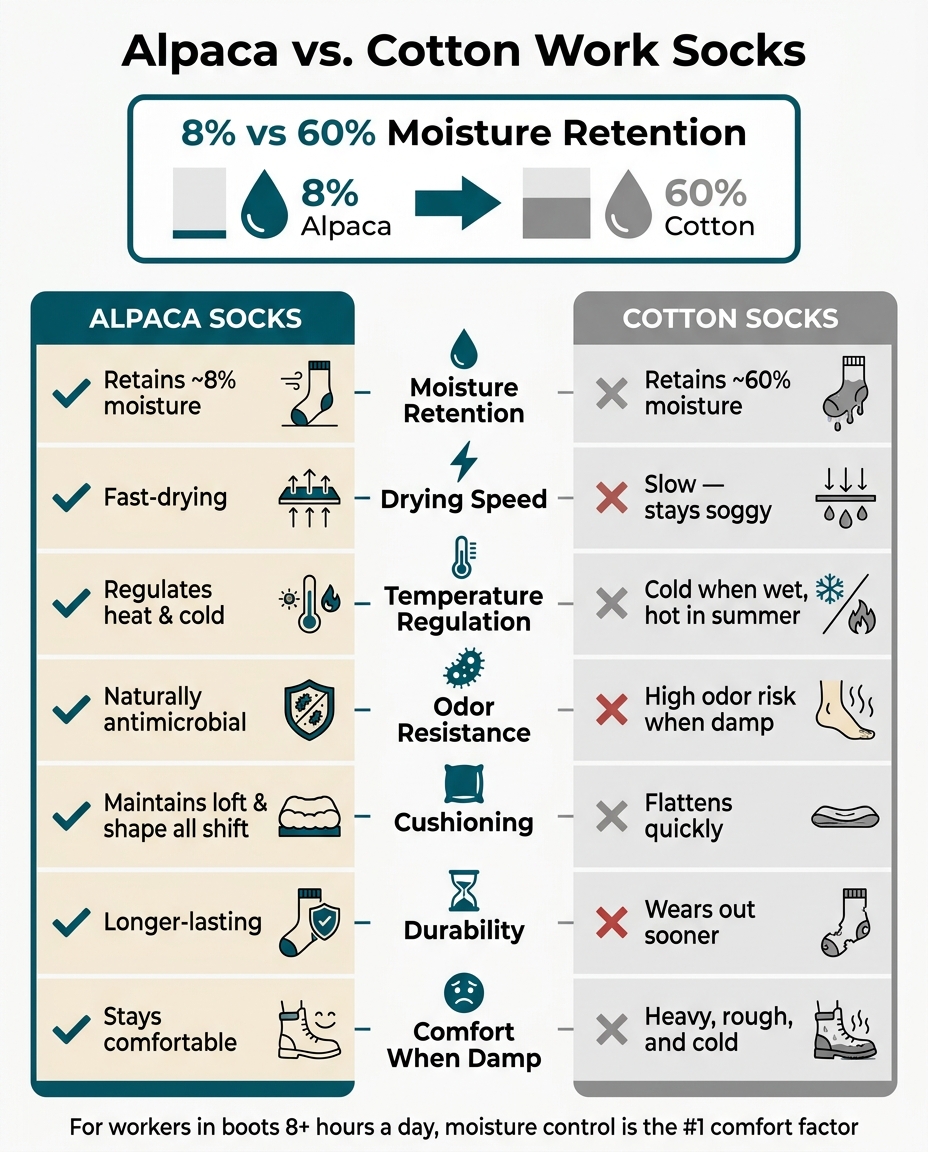
The article’s key stat is simple: alpaca holds about 8% moisture, while cotton can hold about 60%
If you work in boots for hours at a time, that gap matters. Dry feet usually mean less friction, less odor, and better comfort by the end of the shift.
So if I want a work sock that can handle sweat, friction, and long hours, alpaca comes out ahead.
Alpaca vs. Cotton Work Socks: Full Feature Comparison
Alpaca socks vs. cotton socks: side-by-side
Here’s how the two fibers perform inside a work boot. And yes, that gap shows up across an entire shift.
Feature
Alpaca Socks
Cotton Socks
Moisture Control
Wicks moisture away; keeps skin dry
Absorbs and holds moisture; stays wet
Drying Speed
Fast-drying due to fiber structure
Slow; stays soggy
Comfort When Damp
Stays comfortable
Becomes heavy, cold, and abrasive
Odor Resistance
Naturally antimicrobial and odor-resistant
Higher odor risk in damp conditions
Temperature Regulation
Strong thermal balance
Poor - cold when wet, hot in summer
Cushioning
Resilient; maintains loft and support throughout the shift
Flattens quickly; loses shape
Durability
More durable
Less durable
Those differences hit hardest after sweat, heat, and friction start building up inside the boot.
Key differences that affect a full shift
On the job, wet cotton tends to stay wet. Alpaca does the opposite: it keeps pulling moisture away from the skin. That matters more than it might seem at first.
When cotton holds moisture, feet stay damp. Damp skin rubs more, and that extra friction can lead to blisters. It also creates the warm, wet setup that odor-causing bacteria love.
Alpaca responds in a different way. Its hollow fiber structure helps regulate temperature in both directions, so feet stay cooler in hot conditions and warmer in cold ones.
sbb-itb-855989e
Why moisture control matters during work
Once sweat starts building up inside a work boot, the sock needs to pull that moisture away from the skin FAST. That job matters even more in work boots because thick leather and waterproof materials let in very little airflow. In plain English, the sock becomes your main line of defense against moisture buildup. And when that fails, comfort starts slipping pretty quickly.
Damp skin creates more friction than dry skin, which increases the risk of blisters. On top of that, skin that stays wet for long periods softens and breaks down more easily, leaving feet more open to sores and fungal infections like athlete's foot. Odor works the same way: bacteria do well in warm, damp conditions.
The problem doesn't stop there. In cold weather, wet socks lose their insulating ability, so feet cool down fast. In hot conditions, those same wet socks trap heat and moisture against the skin. They also lose cushioning, which means each step can feel harsher on your feet.
That is why moisture control matters more than simple softness or thickness.
How alpaca outperforms cotton in work conditions
How alpaca manages sweat during long shifts
That matters a lot inside boot socks when you're on your feet for a full shift.
Alpaca fibers have fine channels that move sweat away from your skin and push it toward the outer layer, where it can dry faster. In a hot, closed-in boot, that small difference can feel big by hour six or seven. Alpaca also keeps its loft, dries faster, and hangs on to its insulating performance for longer. On top of that, its natural odor resistance helps during long shifts.
Why cotton falls short once it gets wet
Cotton handles sweat in a very different way once moisture starts to build.
Instead of moving sweat out, cotton soaks it up and holds it, which leaves the sock heavy, damp, and uncomfortable. In cold conditions, wet cotton can pull warmth from your foot, especially in heavy-duty boots, and when the cushioning flattens out, every step can feel harsher on the skin.
For work socks, that moisture gap is a big deal. It's what helps keep feet drier, steadier, and more comfortable through the shift. The next question is which features help an alpaca work sock stand up to the job.
What to look for in alpaca work socks
Key features for work: cushioning, durability, and fit
Once moisture control is handled, the next step is simple: pick a sock that can hold up through a full shift.
Cushioning should be one of the first things you check. Look for socks with reinforced sole and heel cushioning to absorb impact and help cut foot fatigue.
Fit and construction matter just as much. Alpaca socks blended with nylon or spandex tend to stay snug under pressure. If a sock starts to sag or bunch up, it can create friction and bump up the risk of blisters. A close, steady fit helps keep everything where it should be from the first hour to the last.
Sock height plays a part too. For sock height, crew or boot-length styles usually work best with work boots. They help protect the ankle and lower calf from boot rub. Suri Performance Alpaca Socks offers crew, boot, ankle, and no-show styles for work and outdoor use, with moisture-wicking, odor-resistant, thermo-regulating alpaca fiber.
Wash cold and air-dry to help preserve fiber performance.
Conclusion: Why alpaca is the better work sock material
Those features matter for a reason: they help alpaca keep doing its job even after sweat and friction start to build.
Alpaca retains only about 8% moisture compared with cotton's 60%, which means feet stay drier through the shift. Alpaca fiber is also naturally antimicrobial, which helps keep odor in check during long workdays. That makes alpaca the better work sock material.
FAQs
Are alpaca socks too warm for summer work?
No. Alpaca socks are not too warm for summer work.
Their natural thermal regulation and breathable fibers help keep feet cool and dry, even in temperatures up to 100°F, which makes them a solid pick for hot conditions.
How long do alpaca work socks usually last?
Alpaca work socks usually last 12 to 18 months with regular use.
That long lifespan comes from the fiber itself. Alpaca has high tensile strength and stands up well to everyday wear and tear, so the socks tend to keep going longer than many people expect.
What blend is best for work boots?
For work boots, the best blend is 70% premium Peruvian baby alpaca fiber, 27% nylon, and 3% spandex.
It gives you a strong mix of durability, moisture-wicking, and insulation, which is exactly what you want in tough job-site conditions. In plain terms, your feet stay drier, warmer, and more comfortable while the socks hold up under heavy wear.