"I liked saving money buying 4 pairs at a time and the socks are great for what I need. It's unbelievable how they could be made out of this material, yet they are so comfortable and they don't make my feet and legs itch nor do they make them hot or sweaty."
Rick S., Verified Customer
5 Workers Share Alpaca Sock Stories
Share
Alpaca socks are becoming a go-to choice for workers in physically demanding jobs. Why? They tackle common problems like sweaty feet, blisters, and discomfort during long shifts. These socks wick moisture, regulate temperature, and resist odor, making them ideal for tough environments. Workers from construction, healthcare, warehouses, kitchens, and outdoor fields shared their experiences, highlighting key benefits:
Moisture Control: Keeps feet dry, even in heavy boots or hot kitchens.
Odor Resistance: Reduces smell after long hours.
Comfort: Soft cushioning prevents blisters and reduces fatigue.
Durability: Lasts months without thinning or sagging.
Temperature Regulation: Warm in cold weather, breathable in heat.
Quick Tip: Choose a sock style based on your job. For example, compression socks are great for nurses, while reinforced boot socks suit construction workers. Investing in the right pair can transform your workday comfort.
How These Worker Stories Were Collected
The five stories highlighted in this article come from verified customer reviews on Trustpilot, an independent platform known for authentic reviews. Trustpilot ensures that all shared experiences are legitimate.
To find these accounts, industry-specific keywords like "nurse", "construction", and "warehouse" were used to filter reviews. This method targeted workers who face tough, demanding conditions daily. The focus was on "power users" - individuals wearing these socks for shifts lasting 10+ hours. Their feedback provided insights on key features like moisture control, temperature regulation, cushioning, and durability. This selective approach set the stage for the detailed experiences shared here.
Each story represents a unique work setting, ranging from hospital floors to outdoor job sites. These sites often require specific sock types for construction workers to handle heavy boots. These environments tested the socks under various conditions, including extreme heat, cold, heavy footwear, wet surfaces, and long hours of movement.
"I used to go through socks every few weeks.. these have lasted months without thinning or sagging. No more sweaty feet, and they actually stay up in my boots." - Jake P., Veteran
This kind of clear, measurable feedback played a big role in shaping the selection process.
sbb-itb-855989e
5 Workers Share Their Alpaca Sock Experiences
Construction Foreman: Getting Through Long Shifts in Steel-Toe Boots
Marcus, a construction foreman, spends 10–12 hours a day on rugged surfaces like concrete and gravel while wearing steel-toe boots. These boots are essential for safety, but they create pressure points and quickly wear out cotton socks, leaving his feet damp and uncomfortable.
Switching to alpaca socks made a big difference. The natural fibers provided cushioning without adding bulk, and their ability to absorb 25–30% of their weight in moisture kept his feet drier during long summer workdays. As one customer shared:
"No blisters, no stink, even after a day on the job site." - John H., Verified Customer
For heavy-duty work, the Field Boot style from Suri Performance Alpaca Socks ($46.99 per pair) offers extra reinforcement in high-wear areas and dense cushioning, making it ideal for Marcus and others in demanding roles.
Next, Sandra, a hospital nurse, shares how these socks help her power through long shifts.
Hospital Nurse: Keeping Feet Comfortable Through 12-Hour Shifts
Sandra, an ICU nurse, works grueling 12-hour night shifts at a busy urban hospital. Constantly on her feet, she used to rely on cotton scrub socks, which left her with chafing and noticeable odor by the end of her shifts.
Alpaca socks changed that. Their softness reduced friction at pressure points, and their odor-resistant properties kept her footwear fresher, even during back-to-back shifts. Dr. Anthony Gualtieri, an orthopedic surgeon, praised these socks as well:
"The comfort was 10/10. And best of all, even after 3 intense days there was no smell! They were soft and cool in my leather cowboy boots and supportive and unobtrusive while standing all day in crocs." - Dr. Anthony Gualtieri, Orthopedic Surgeon
Additionally, the socks’ graduated compression (15–20 mmHg) improved circulation, helping reduce swelling and leg fatigue during her demanding shifts.
Warehouse Worker: Managing Sweat and Fatigue on the Move
Derek, a warehouse picker, spends his shifts walking miles on concrete floors, moving between warm storage aisles and cold loading bays. His safety shoes, combined with constant temperature changes, left his feet sweaty and tired halfway through his shift.
Alpaca socks provided a solution. Their thermo-regulating properties kept his feet comfortable across varying temperatures without needing to change socks. One customer summed it up perfectly:
"The overall comfort is incredible. Kept my feet dry and I tend to sweat a ton." - Alex D., Verified Customer
While Derek benefited from temperature regulation, Priya, a restaurant worker, faced a completely different set of challenges.
Restaurant Worker: Handling Heat and Messy Conditions
Priya works in a fast-paced kitchen, standing near grills and ovens where temperatures often hit 90°F. Spills are common, and cotton socks quickly became soaked, making her non-slip shoes uncomfortable during her 10-hour shifts.
Alpaca socks helped keep her feet drier by wicking away moisture, even in the heat. They also held up well through repeated washes, maintaining their softness and shape. For workers like Priya, the Performance Crew style from Suri Performance Alpaca Socks ($37.99 per pair) fits snugly into non-slip shoes without adding unnecessary bulk.
Outdoor Technician: Reliable Performance Across Changing Weather
Ray, a telecom field technician, works year-round in rural and suburban areas. His days often begin in freezing temperatures and warm up to 60–80°F by afternoon. He spends hours climbing ladders, navigating uneven terrain, and working in light rain - all while wearing composite-toe boots.
Alpaca fiber's hollow structure traps insulating air, making it 3–5 times warmer than sheep wool by weight. At the same time, it breathes well enough to prevent overheating as temperatures rise. Even in damp conditions, Ray’s feet stayed warm and dry. A customer shared a similar experience:
"I've also been wearing them to work where I'm on my feet all day, and they hold up just as well. Honestly, great performance all around." - Chad S., Verified Customer
Ray’s socks have lasted through multiple seasons with minimal wear, providing consistent comfort and durability regardless of the weather.
What Workers Found in Common
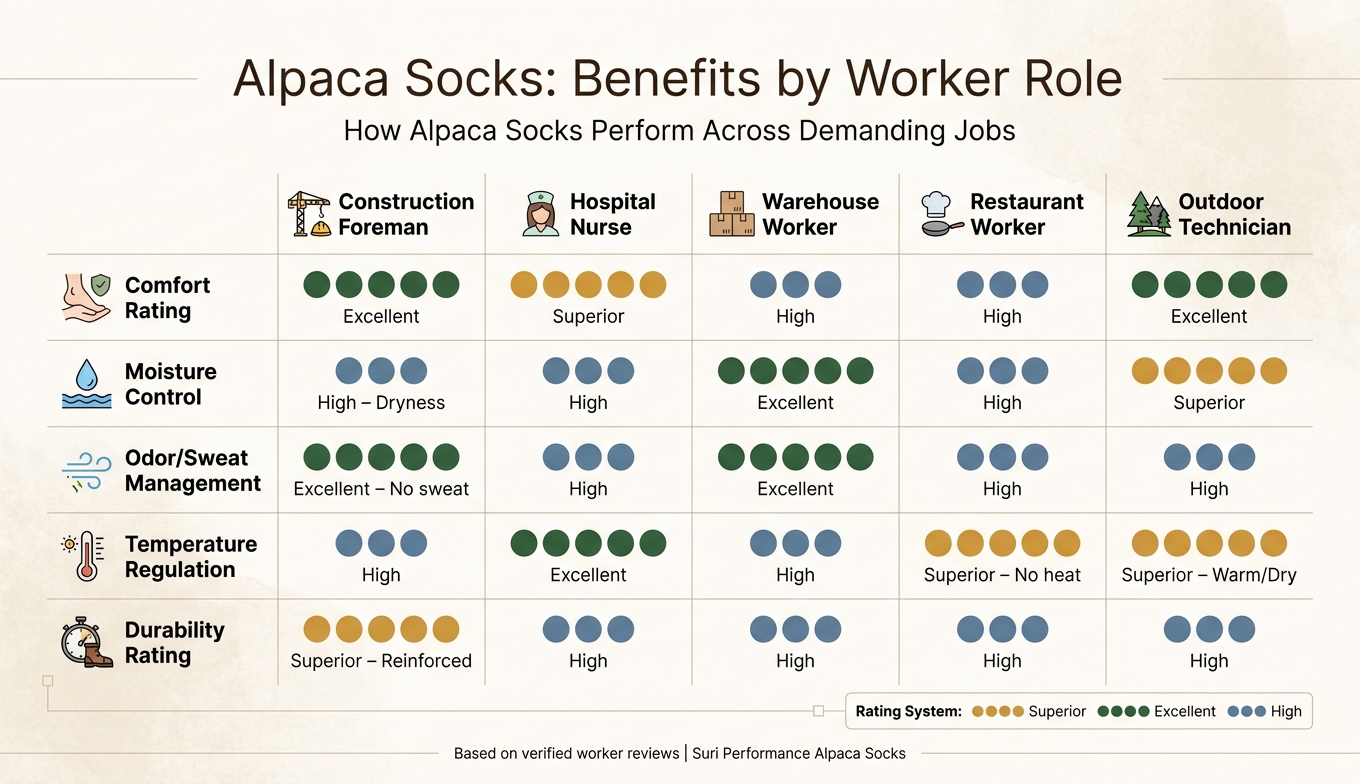
Alpaca Socks Benefits by Worker Role: A Side-by-Side Comparison
Workers across various industries agree on one thing: alpaca socks make a noticeable difference in comfort by the end of the day. From construction sites to hospital floors, personal accounts reveal how these socks consistently perform in tough conditions. These shared experiences lay the groundwork for understanding their role-specific benefits.
One standout feature is moisture control. Alpaca fiber naturally wicks moisture away, keeping feet much drier - whether in a bustling kitchen or inside heavy steel-toe boots. This eliminates the damp, uncomfortable sensation often caused by cotton socks. As one of our 10,000+ happy customers shared:
"It's unbelievable how they could be made out of this material, yet they are so comfortable and they don't make my feet and legs itch nor do they make them hot or sweaty." - Rick S., Verified Customer
Durability also received high praise. Despite the daily wear and tear, the socks retained their shape and cushioning for months. Workers also appreciated the balance of warmth and breathability. Thanks to the hollow structure of alpaca fibers, the socks provide insulation during cold weather and allow airflow to prevent overheating in warmer conditions.
Comparison Table: Benefits by Worker Role
The table below highlights the key advantages of alpaca socks for different professions, showcasing the overlap in benefits across demanding environments.
Worker Role
Comfort Rating
Moisture Control
Odor/Sweat Management
Temperature Regulation
Durability Rating
Construction Foreman
Excellent
High (Dryness)
Excellent (No sweat)
High
Superior (Reinforced)
Hospital Nurse
Superior
High
High
Excellent
High
Warehouse Worker
High
Excellent
Excellent
High
High
Restaurant Worker
High
High
High
Superior (No heat)
High
Outdoor Technician
Excellent
Superior
High
Superior (Warm/Dry)
High
How to Pick the Right Alpaca Socks for Work
The right socks can make or break your workday, especially when your job keeps you on your feet for hours. Whether you're a nurse pulling 12-hour shifts, a construction worker in heavy boots, or a restaurant worker hustling in a hot kitchen, matching your socks to your specific needs can mean the difference between comfort and misery.
Start by thinking about sock height. If you're wearing heavy-duty work boots - like those used by construction crews or outdoor technicians - a taller sock is your best bet. For example, the Suri Field Boot Sock ($46.99) offers extra cushioning in high-wear areas and protects against grit and cold. On the other hand, nurses and healthcare workers standing all day on hard floors might benefit more from the Compression Sock ($48.99). These socks provide 15–20 mmHg graduated compression to support circulation. Dr. Anthony Gualtieri, an Orthopedic Surgeon, shared his experience with these socks:
"The socks remained high on my calf with no loss of tightness. The comfort was 10/10. And best of all, even after 3 intense days there was no smell!" - Dr. Anthony Gualtieri, Orthopedic Surgeon
For warehouse workers or those in general labor roles, a mid-calf sock like the Performance Crew Sock ($44.99) offers a great balance. It provides light compression and excellent versatility. Meanwhile, restaurant workers who wear low-cut shoes in hot environments might prefer the Ankle Sock ($34.99) or the No-Show Sock ($28.99). Both styles are designed with breathable mesh zones to keep feet cool while offering targeted cushioning where it matters most.
One key feature across all these options is a secure fit. Socks that slide down during your shift can cause friction, leading to blisters and discomfort. Suri's compression and crew socks are designed to stay in place, even during long hours of wear. Plus, all styles use Pro-Grade Alpaca™ fiber, which is specifically engineered to maintain its shape under pressure and resist pilling - unlike softer, casual alpaca blends that may wear out quickly under daily use.
Sock Style
Ideal For
Price
No-Show
Indoor heat, low-cut shoes
$28.99
Ankle
Kitchen work, athletic shoes
$34.99
Performance Crew
Warehouse, general labor
$44.99
Field Boot
Construction, outdoor tech
$46.99
Compression
Healthcare, long standing shifts
$48.99
Picking the right sock isn't just about comfort - it's about making sure your feet can keep up with the demands of your job. The right pair can help you stay focused, avoid distractions, and finish your shift strong.
Conclusion: Better Workdays Start With Better Socks
Five workers have shared their experiences, and they all agree: alpaca socks can make long, grueling workdays much more manageable. Whether it's a construction foreman dealing with the constant friction of steel-toe boots, a nurse enduring hours on hard hospital floors, or a warehouse worker navigating concrete surfaces, they've all noticed a clear improvement.
Their firsthand accounts align perfectly with the promises of these socks. After eight to ten hours on the job, having dry, odor-free feet and performance crew socks that stay in place can make all the difference.
Alpaca fiber stands out for its ability to control moisture, regulate temperature, and provide durability - qualities that directly address the challenges of hard surfaces, heat, and long hours. These features consistently win over professionals across various industries.
The customer reviews speak volumes. Chris W., a verified construction worker, shared:
"I work construction and I spend a lot of time in boots and on my feet. These have to be some of the most amazing socks that I have ever owned. Just for overall comfort and dryness; I would definitely recommend."
Suri Performance Alpaca Socks has earned a stellar 4.9/5 star rating from 260 reviews for their Field Boot Socks, with 85% of reviewers giving them a perfect 5-star rating. Over 10,000 customers have already experienced the benefits for work, outdoor adventures, and everyday wear.
If your job keeps you on your feet, upgrading to alpaca ankle socks could be the simple change that transforms your day.
FAQs
How do I choose the right alpaca sock style for my job?
The right sock style largely depends on your work environment and the type of footwear you use. Boot socks are perfect for heavy-duty boots or when you're dealing with cold weather or tough terrain. They provide extra padding and extend over the calf for added protection. If you're looking for everyday support, performance crew socks are a great choice. These come up to mid-calf and often include light compression for better comfort throughout the day. On warmer days or when wearing lighter shoes, ankle socks or no-show socks are ideal. They offer a breathable, low-profile fit that keeps you comfortable. Always go for socks with reinforced heels and toes to ensure they last longer.
Will alpaca socks help prevent blisters in work boots?
Yes, alpaca socks can help prevent blisters when wearing work boots. Blisters are typically caused by a combination of moisture and friction, but Suri Performance Alpaca Socks are designed to tackle both issues. These socks wick moisture up to three times better than traditional materials, keeping your feet dry. Plus, their breathable fibers and reinforced areas in high-friction zones create a protective layer, reducing irritation and discomfort during those long workdays.
How should I wash alpaca socks so they last longer?
To keep your Suri Performance Alpaca Socks in great shape, wash them in cool water (below 85°F) and always turn them inside out to minimize pilling. Skip the dryer - air dry them flat or hang them to maintain their integrity. Rotate between pairs to give the fibers time to recover, and fold them neatly instead of balling them up to avoid stretching.