"I liked saving money buying 4 pairs at a time and the socks are great for what I need. It's unbelievable how they could be made out of this material, yet they are so comfortable and they don't make my feet and legs itch nor do they make them hot or sweaty."
Rick S., Verified Customer
Cold vs Heat: Alpaca Sock Performance
Share
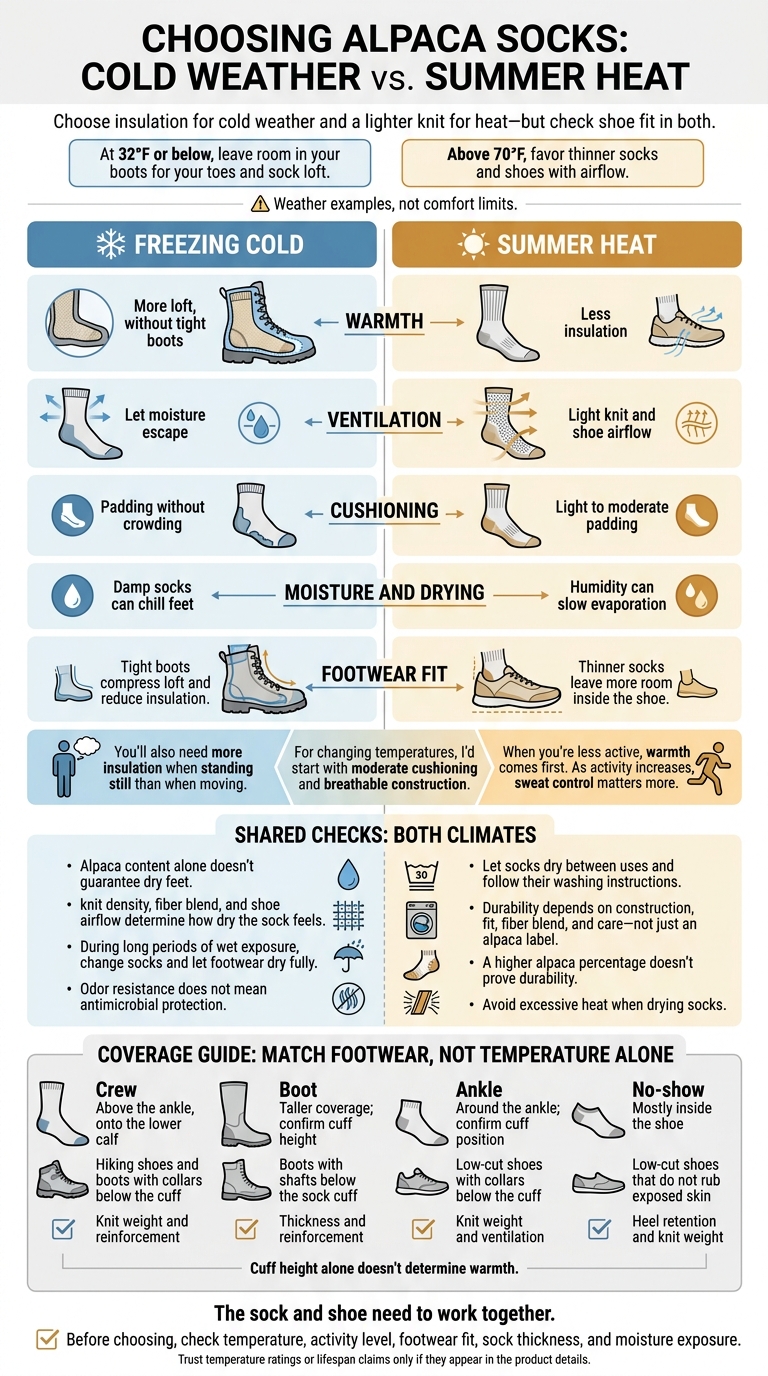
My rule: choose insulation for cold weather and a lighter knit for heat - but check shoe fit in both. At 32°F or below, leave room in your Ultra Boot Socks for your toes and sock loft. Above 70°F, favor thinner socks and shoes with airflow. These are weather examples, not comfort limits.
I look beyond alpaca content when comparing socks:
Warmth and comfort: Check thickness, cushioning, ventilation, and room inside your shoes.
Moisture and odor: Sweat, humidity, drying time, and washing affect comfort in either season. Odor resistance does not mean antimicrobial protection.
Wear and care: Check heel and toe reinforcement, elastic content, and washing instructions. A higher alpaca percentage does not prove longer wear.
Height: Choose crew or boot socks for taller footwear; ankle or no-show socks for low-cut shoes. Check cuff position and heel hold.
Quick Comparison
What I check
Freezing cold
Summer heat
Warmth
More loft, without tight boots
Less insulation
Ventilation
Let moisture escape
Light knit and shoe airflow
Cushioning
Padding without crowding
Light to moderate padding
Coverage
Crew or boot height for taller footwear
Ankle or no-show for low-cut shoes
Moisture and drying
Damp socks can chill feet
Humidity can slow evaporation
Odor
Dry between uses; wash as directed
Same care, with attention to sweat
Wear and shape
Fit, reinforcement, elastic, and care
Same checks; temperature alone matters less
For changing temperatures, I’d start with moderate cushioning and breathable construction. Before choosing Suri Performance Alpaca Socks, I’d check the exact pair’s specs - not just its style name. <u>The sock and shoe need to work together.</u>
Alpaca Socks: Cold vs Heat Selection Guide
Cold vs Heat: Warmth and Comfort
Loft, airflow, and room inside your shoes make the difference between comfort in freezing cold and summer heat.
Criteria
Freezing cold
Summer heat
Selection advice
Warmth
More loft helps retain warmth.
Too much insulation traps unwanted heat.
Choose more insulation for stationary cold-weather work and lighter knits for active summer use.
Ventilation
Keep warmth in while letting moisture escape.
Open knits and shoe airflow help release heat.
Check ventilation in both the sock knit and footwear.
Cushioning
Extra cushioning adds comfort inside work or hiking boots.
Light to moderate cushioning cuts bulk.
Keep cushioning where you need it without crowding the shoe.
Thickness, knit construction, and footwear fit work together to determine how a pair performs.
Freezing Cold: Insulation and Boot Fit
Thicker isn’t always warmer. Tight boots compress loft and restrict circulation, so leave enough room for your toes to move comfortably. You’ll also need more insulation when standing still than when moving. Once moisture builds up, drying and odor control matter just as much as warmth.
Summer Heat: Breathability and Sock Thickness
Choose a lighter, breathable knit for hot weather. Ventilated footwear helps moisture evaporate and excess heat escape. Alpaca helps moderate temperature, but your feet can still get damp during hot, humid activity when evaporation is limited. That makes drying speed another factor to check.
Temperature Swings: Balancing Warmth and Ventilation
For chilly mornings that turn into warm afternoons, moderate cushioning and breathable construction balance insulation with ventilation. A heavily cushioned pair may feel comfortable while you’re standing in the cold but too warm once you pick up the pace.
On long days with cold starts and warm finishes, that balance shapes both comfort and how the sock handles sweat and drying.
sbb-itb-855989e
Cold vs Heat: Moisture, Odor, and Wear
Sweat, snow, and humidity put a sock’s moisture control to the test as temperatures change.
Alpaca helps move sweat away from the skin so it can evaporate. But knit density, fiber blend, and shoe airflow still determine how dry the sock feels. How it’s made and worn matters as much as temperature.
The same sock can feel different in winter and summer because moisture behaves differently in each season.
Sweat makes odor control and drying more important.
Wear duration and washing frequency
Abrasion
Boot friction wears areas that get the most contact.
Sweat and rubbing increase blister risk.
Fit and heel and toe reinforcement
Shape retention
Temperature alone has less influence.
Temperature alone has less influence.
Elastic content, knit tension, and care
Sweat, Wet Feet, and Drying
Alpaca content alone doesn’t guarantee dry feet. Wet socks reduce warmth in freezing weather and extend damp discomfort in summer heat. During long periods of wet exposure, change socks and let footwear dry fully.
Odor Resistance and Washing
Odor resistance doesn’t mean socks will stay odor-free or provide antimicrobial performance. Moisture, time spent wearing them, and damp footwear still affect how they smell in either climate. Let socks dry between uses and follow their washing instructions.
Friction, Shape Retention, and Care
Moisture affects comfort. Fit and care affect how long that comfort lasts.
Durability depends more on fit, friction, knit quality, and care than on cold or heat. Alpaca has weaker shape recovery, so elastic components help socks keep their shape. A higher alpaca percentage doesn’t prove durability.
Avoid excessive heat when drying socks. Check heels and toes for thinning, since areas with more friction often show wear first.
After weighing warmth, moisture-wicking performance, and wear, choose a sock height that fits your footwear. Suri Performance Alpaca Socks offers crew, boot, ankle, and no-show styles. Start with coverage, then check how the specific pair is made.
Style
Coverage
Footwear compatibility
Check
Crew
Above the ankle, onto the lower calf
Hiking shoes and boots with collars below the cuff
Knit weight and reinforcement
Boot
Taller coverage; confirm cuff height
Boots with shafts below the sock cuff
Thickness and reinforcement
Ankle
Around the ankle; confirm cuff position
Low-cut shoes with collars below the cuff
Knit weight and ventilation
No-show
Mostly inside the shoe
Low-cut shoes that do not rub exposed skin
Heel retention and knit weight
Crew and Boot Socks: Coverage for Taller Footwear
Pick crew socks when their cuffs reach above your hiking or work footwear. For taller boot shafts, choose boot socks with enough coverage to clear the top.
Cuff height alone doesn’t determine warmth. Construction and fit still shape cold-weather comfort. Before buying, check the product listing for toe room, bunching, and reinforcement.
Ankle and No-Show Socks: Fit for Low-Cut Shoes
Match low coverage to shoe height, not temperature alone. Lower-profile socks work with low-cut shoes when the heel stays secure and the shoe collar clears the cuff without rubbing exposed skin.
For summer wear, check the specific pair’s ventilation. Ankle cuffs should sit above the shoe collar, while no-show heels should stay in place as you walk.
If a boot collar rubs above the cuff, switch to a taller style. Before wearing no-shows all day, take a short walk to test their heel hold.
Conclusion: Match Socks to Weather and Activity
When you’re less active, warmth comes first. As activity increases, sweat control matters more. Match moisture control to your activity, footwear, and climate.
Durability depends on construction, fit, fiber blend, and care - not just an alpaca label. Check reinforcement and care instructions before buying.
Before choosing, check temperature, activity level, footwear fit, sock thickness, and moisture exposure.
Trust temperature ratings or lifespan claims only if they appear in the product details. Check the specs for the exact Suri Performance Alpaca Socks style.
FAQs
Can one pair of alpaca socks work year-round?
One pair of alpaca socks can work year-round. Their semi-hollow fibers trap heat in freezing conditions while allowing airflow to release heat in hot weather [3]. This helps manage moisture and regulate temperature from below 0°F to over 110°F [4].
They also wick sweat and resist odors, offering comfort and durability without the need to switch socks when the seasons change [5][6].
How can I tell if my socks are too warm?
Damp, clammy, or overheated feet can mean your socks aren’t moving moisture away effectively - or they’re providing more insulation than you need.
Suri Performance Alpaca Socks are designed to regulate temperature and wick moisture. But comfort still depends on choosing the right sock weight for your activity and the temperature. On warmer days, opt for a lightweight style.
When should I replace my alpaca socks?
Replace your Suri Performance Alpaca Socks when the fabric starts thinning, especially at the heel and toe. They’re made to last and resist pilling and shape loss, but heavy use will wear them down over time.
Help them last longer by rotating between pairs so the fibers have time to recover. Follow the care instructions, including washing in cool water. The 365-day swap policy gives you added peace of mind.