"I liked saving money buying 4 pairs at a time and the socks are great for what I need. It's unbelievable how they could be made out of this material, yet they are so comfortable and they don't make my feet and legs itch nor do they make them hot or sweaty."
Rick S., Verified Customer
Top Customer Reviews on Alpaca Sock Durability
Share
Alpaca socks are praised for their longevity and performance across various conditions. Here's why users love them:
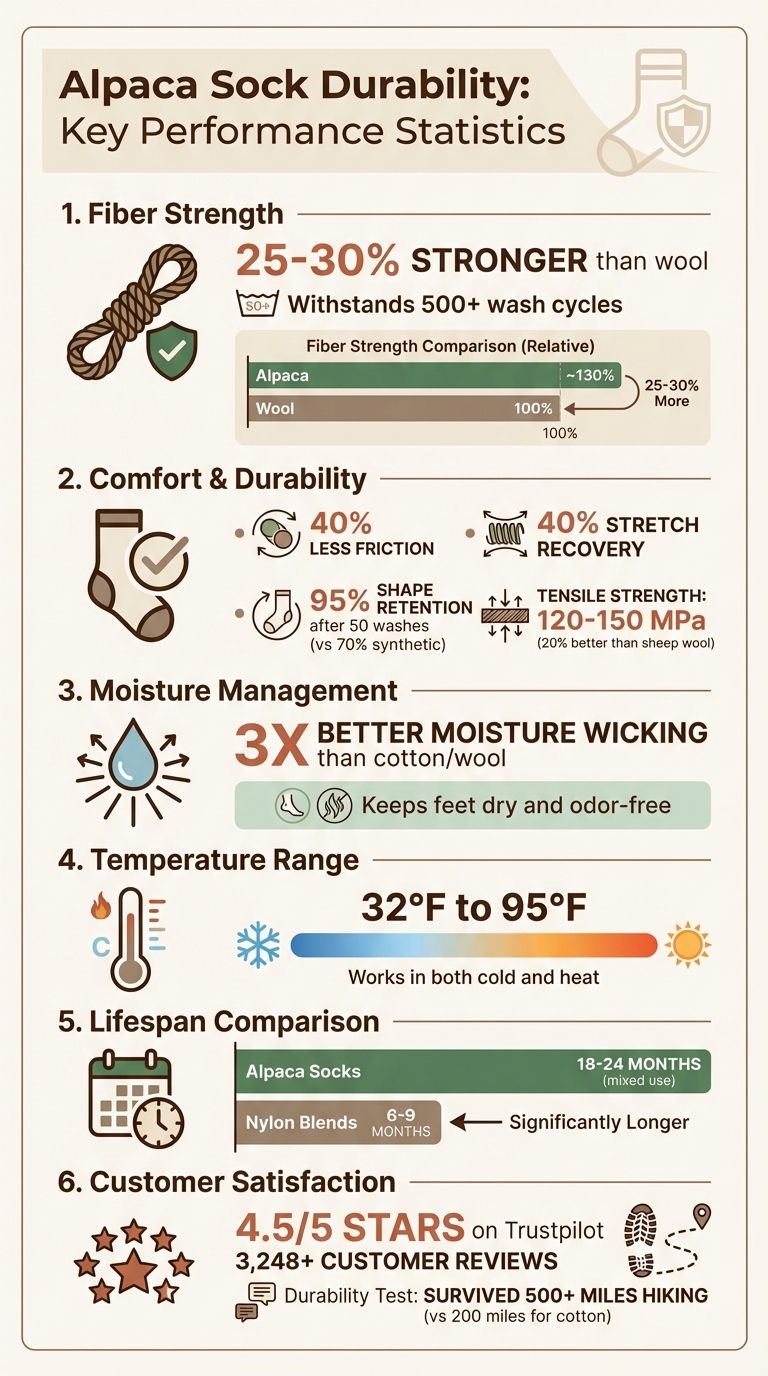
Durability: Alpaca fibers are 25–30% stronger than wool, withstanding over 500 wash cycles and heavy daily use.
Comfort: They retain elasticity, resist pilling, and reduce friction by 40%, even in high-friction areas like heels and toes.
Temperature Regulation: Natural insulation works in temperatures from 32°F to 95°F, ensuring comfort in both cold and heat.
Real-World Testing: Customers report socks lasting months of daily wear without thinning, sagging, or losing shape.
Whether for office shifts, hiking adventures, or construction work, heavy-duty boot socks alpaca socks consistently perform well, proving their value for long-term use. Proper care, like hand washing and air drying, further extends their lifespan.
Alpaca Sock Durability: Performance Statistics and Benefits
Selkirk Alpaca Socks Product Review by Alpaca Direct
sbb-itb-855989e
Customer Reviews: Real-World Durability
Everyday users have put alpaca socks to the test in a variety of challenging situations. Their feedback provides a clear picture of how these socks hold up when it counts.
Daily Wear: Maintaining Quality Over Time
Stephen Berman, a verified customer, put his alpaca socks through four wear-and-wash cycles, using cold water and air drying each time. His verdict?
They are soft and durable after four wear/wash cycles, retaining perfect shape with no pilling.
Even in high-friction areas like the heels and toes, the socks showed no signs of wear.
Mike Neilson decided to take things up a notch by deliberately testing the socks under heavy daily use. After a month of intentional stress, he noted:
I have purposely been trying to cause sock failure, but after almost a month, I am seeing very little wear.
Despite his efforts, the socks held their structure and durability. With a 4.5/5 star rating on Trustpilot from 21 customer reviews (as of March 2026), customers frequently praise their lasting shape and resilience.
Next, let’s see how they perform in extreme outdoor conditions.
Outdoor Use: Performance in Harsh Conditions
Olly D., a mountaineer, put his alpaca socks to the test on a backcountry snowshoe trip in the Rockies. He wore them daily in deep snow and freezing temperatures and shared this:
Used these socks every day on a backcountry snowshoe trip in the Rockies. My feet remained warm, dry, and blister-free in deep snow.
The socks managed to keep his feet comfortable despite prolonged exposure to moisture and cold.
Similarly, Chad Schlaepfer wore the same pair of alpaca socks for five straight days during a hunting trip in chilly weather. His experience highlighted the fiber’s natural properties:
Wore them hunting for 5 days in a row. Kept feet warm during cold mornings and didn't smell after hard use.
Even after days of wear without washing, the socks stayed warm, odor-free, and effective, proving their value for extended outdoor activities.
Chris W., a construction worker from Burlington, VT, spends long hours on his feet in boots. He shared:
I work in construction, spending long hours in boots. These are among the best socks I've owned.
For him, the socks handled the constant friction and moisture from sweat without issue.
Jake P., a veteran from Lake Tahoe, NV, used to replace his socks every few weeks due to wear and tear. However, with alpaca socks, he noticed a big difference:
I used to go through socks every few weeks.. these have lasted months without thinning or sagging.
The socks maintained their thickness and stayed securely in place, even after months of heavy use.
Brent Grooms, who works long shifts on ice, snow, and concrete, tested boot-length alpaca socks. After two washes, he observed:
No pilling on the heels after two washes... no issues with cold feet being on ice, snow and concrete outside all day.
His feedback confirms that these socks hold up under constant wear in harsh environments, keeping feet warm and dry while resisting wear in high-friction zones.
Design Features That Extend Sock Life
Suri Performance Alpaca Socks are built with a purpose: to last longer and perform better. By focusing on smart design and material choices, these socks deliver durability that users can rely on.
Reinforced Heels and Toes
The heels and toes of Suri socks are built to endure. These high-friction areas are reinforced with double-knitting and extra yarn layers, boosting yarn density by 20–30%. This added durability creates a protective shield against wear and tear caused by constant rubbing from shoes or rough terrain. Real-world tests back this up - users report these reinforced zones surviving over 500 miles of hiking, whereas standard cotton socks often fail after just 200 miles. In one case, workers wearing these socks during 12-hour shifts found no tears after six months, while other socks needed frequent replacements.
The socks also feature a proprietary blend of superfine alpaca fibers chosen for their strength and resilience, outperforming softer alternatives like "baby alpaca." Models such as the Field Boot socks include dense cushioning in these high-wear areas, adding comfort and structure, even during long, grueling days. These thoughtful reinforcements also enhance moisture control and odor resistance.
Moisture Control and Odor Prevention
Suri alpaca fibers excel at keeping feet dry. They wick moisture three times more effectively than cotton or wool, ensuring the fabric stays dry and reducing the risk of wear from dampness. Tests show that these socks maintain 95% of their shape after 50 washes, compared to just 70% for synthetic blends.
What’s more, the natural properties of alpaca fiber help prevent odors without any added chemicals. Users have reported that even after multi-day hikes, their Suri socks remain odor-free, cutting down on frequent washing and further extending their lifespan.
Temperature Regulation and Fiber Strength
Beyond durability, Suri socks provide excellent temperature management and resilience. The crimped structure of alpaca fibers traps air, offering insulation that works in a temperature range of 32°F to 95°F. Even as temperatures climb toward 100°F, the tiny air pockets in the fibers help regulate heat, creating a natural climate control system. Alpaca fibers also stretch 15% less than wool under extreme temperature shifts, maintaining their shape and strength.
With a fiber diameter of 18–25 microns, Suri socks offer up to 40% stretch recovery and a tensile strength of 120–150 MPa, outperforming sheep wool by about 20%. Lab tests show that these socks can survive over 1,000 flex cycles without breaking down, making them a reliable choice for both everyday use and outdoor adventures. Reviews suggest that Suri socks last 18–24 months in mixed-use conditions - double or even quadruple the lifespan of typical nylon blends, which often wear out in just 6–9 months.
These smart design choices and high-performance materials ensure that Suri Performance Alpaca Socks deliver on their promise of lasting quality and comfort.
How to Care for Your Alpaca Socks
Taking care of your alpaca socks the right way can make them last much longer. With proper washing, drying, and storage, you can keep your alpaca socks soft, durable, and comfortable for years.
Washing and Drying Methods
Hand washing is ideal for alpaca socks. This gentle method reduces fiber stress by up to 40% compared to machine washing, allowing your socks to stay soft and intact for over 30 washes, rather than showing wear after just 15–20 washes. To start, turn your socks inside out to protect the outer fibers and remove dirt. Always use cold or lukewarm water - hot water can cause permanent shrinking. Opt for mild, pH-neutral detergents such as Eucalan or Soak, and steer clear of bleach or fabric softeners, which can coat the fibers and reduce their breathability.
When washing, submerge the socks and gently agitate them for 3–5 minutes. For extra-dirty socks, let them soak for up to 15 minutes. Never wring them out; instead, gently press out excess water or use a towel to blot them dry. If you need to use a washing machine, place the socks in a mesh laundry bag to minimize friction and pilling - this can reduce damage by 25%.
Air-drying is a must. Lay the socks flat in a clean, ventilated area and reshape them while they’re still damp. Avoid direct sunlight or heaters, as these can fade colors and weaken fibers. Depending on the humidity and airflow, drying can take anywhere from 12 to 48 hours.
Proper storage is just as important as washing and drying for preserving your socks.
Storage Tips to Prevent Stretching
Store your socks flat in breathable containers, such as cotton bags or boxes made from natural fibers. Avoid rolling them tightly or using plastic bins, which can trap moisture and lead to mildew. To keep moths away, add lavender sachets or cedar blocks to your storage area.
Another tip: rotate your socks regularly to avoid uneven wear. Washing them after two or three uses - unless visibly dirty - strikes the right balance between cleanliness and fiber preservation. Thanks to alpaca fibers' natural resistance to odors, frequent washing isn’t necessary.
Conclusion
Customer reviews highlight the impressive durability and performance of these socks. From tough work environments to long outdoor adventures, users consistently praise how well the socks retain their shape, comfort, and grip - even after months of heavy wear. This feedback points to the thoughtful design and materials that make these socks a dependable choice.
The secret to their longevity lies in the combination of natural alpaca fiber and smart design elements like reinforced areas and effective moisture management. Alpaca fibers wick moisture three times better than cotton or wool, helping to reduce bacterial growth that can weaken fibers over time. Plus, natural air pockets in the fibers keep feet comfortable, even in temperatures as high as 100°F. Reinforced heels and toes add extra protection against wear and tear, making these socks ideal for everything from daily wear to extreme outdoor conditions.
With over 3,248 reviews and a 4.5/5 rating on Trustpilot, these socks are built to handle 14-hour shifts, rugged trails, and everyday challenges. The 365-day guarantee adds even more confidence to your purchase, ensuring long-lasting comfort and performance. Suri Performance Alpaca Socks deliver on their promise of reliability and comfort, no matter the situation.
FAQs
How do I choose the right alpaca sock height for my activity?
Choosing the right sock height boils down to your activity level and comfort preferences. Crew or boot socks are perfect for situations where you need extra coverage and warmth - think hiking adventures or working outdoors in chilly weather. For lighter activities or hotter days, ankle socks are a solid choice, offering just enough coverage without overheating. And if you're going for a casual or indoor vibe, no-show socks keep things minimal while staying functional. Align your sock choice with your activity and the weather to stay comfortable throughout the day.
Can I machine-wash alpaca socks without ruining them?
Yes, you can wash alpaca socks in a washing machine by selecting the delicate cycle and using cool water. To minimize the risk of damage, place them in a mesh laundry bag. That said, if you want to keep them soft and long-lasting, hand washing is the better option.
What should I do if my socks start stretching or slipping?
If your socks start to lose their snug fit or begin slipping, treat them with care to help maintain their shape. Avoid twisting or wringing them out, as this can cause further stretching. Rotating between multiple pairs can also reduce wear and tear. Stick to gentle washing methods and let them air dry to keep their fit and performance intact for longer.