"I liked saving money buying 4 pairs at a time and the socks are great for what I need. It's unbelievable how they could be made out of this material, yet they are so comfortable and they don't make my feet and legs itch nor do they make them hot or sweaty."
Rick S., Verified Customer
Alpaca Sock Care: Common Mistakes to Avoid
Share
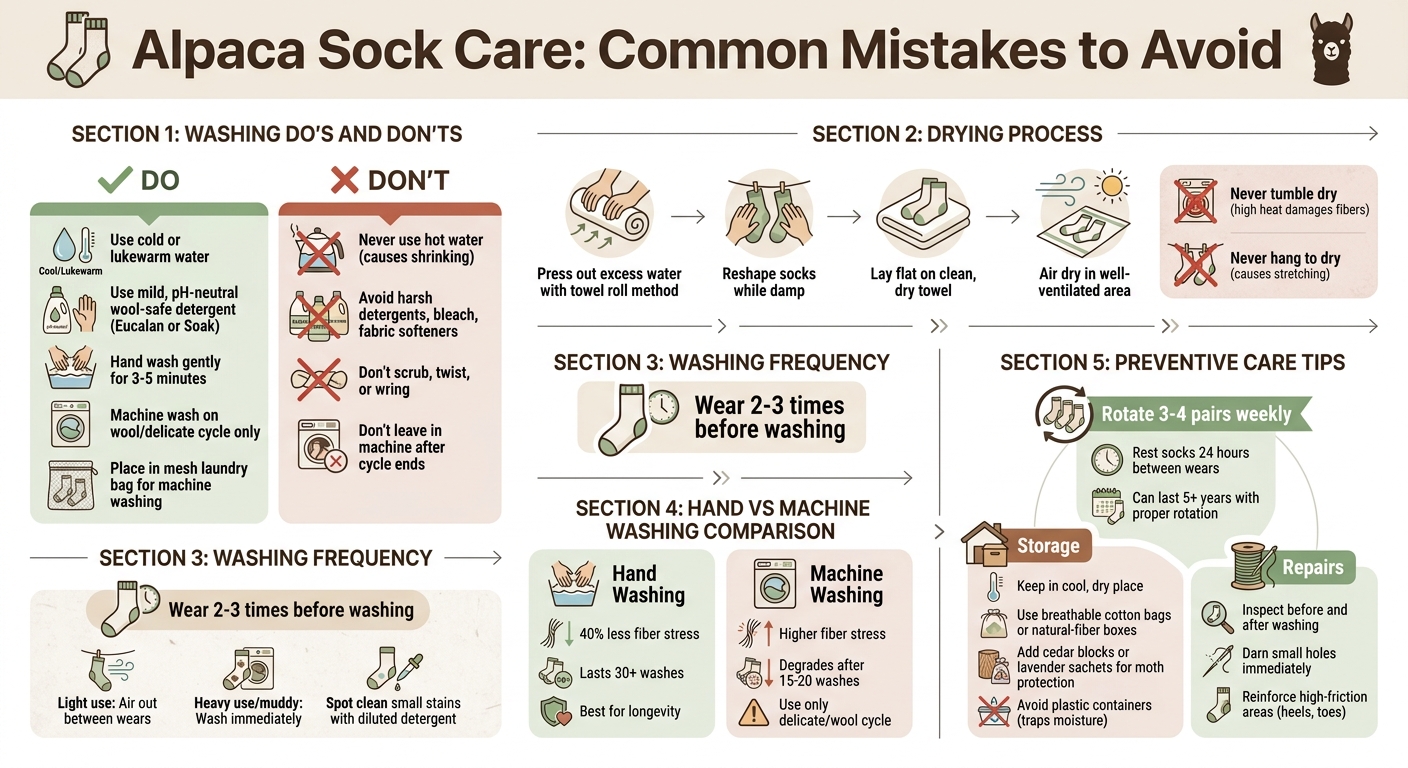
Want your alpaca socks to last for years? Here's the key: avoid common care mistakes like washing with hot water, using harsh detergents, or drying them improperly. These actions can shrink, stretch, or damage the fibers, reducing their comfort and durability.
Key Tips for Long-Lasting Socks:
Wash with cold water and mild, wool-safe detergent.
Avoid wringing or scrubbing to protect the fibers.
Air dry flat - never use a dryer or hang them.
Rotate pairs regularly to reduce wear.
Store in cool, dry places to prevent damage and odors.
With proper care, your alpaca socks can outlast synthetic ones by years, staying soft and trail-ready for all your adventures. Keep reading for detailed steps to maintain their quality and comfort.
Complete Alpaca Sock Care Guide: Washing, Drying, and Storage Best Practices
How to Wash Alpaca Woolen Garments (Step-By-Step Guide) || Yanantin Alpaca
sbb-itb-855989e
Common Care Mistakes and How to Fix Them
Taking care of alpaca socks might seem straightforward, but a few common missteps can significantly affect their longevity and comfort. Here's how to avoid these pitfalls and keep your socks in great shape.
Using Hot Water
Stick to cold or lukewarm water when washing your socks. Hot water can shrink the fibers, reduce elasticity, and fade colors. It also strips away the natural softness of alpaca wool compared to other fibers. For hand washing, fill a basin with cool water, add a small amount of wool-safe detergent, and gently agitate the socks for three to five minutes. If you're using a washing machine, opt for the "wool" or "delicate" cycle and ensure the water temperature stays cold.
Scrubbing and Wringing Too Hard
Rough handling can do more harm than good. Scrubbing, twisting, or wringing your socks can damage the fibers and lead to felting. For heavily soiled socks, let them soak for up to 15 minutes to loosen dirt naturally. To remove excess water without wringing, use the towel roll method: lay the socks on a towel, roll it up, and press gently. For tough stains, try blotting with a soft cloth and diluted detergent instead of rubbing.
Using the Wrong Detergent
Choose a mild, pH-neutral detergent specifically designed for delicate fibers, like Eucalan or Soak. Harsh detergents, bleach, and fabric softeners can strip the natural oils from the wool, causing shrinkage and felting. Fabric softeners, in particular, can coat the fibers, reducing breathability. After washing, rinse thoroughly with cold water. If your socks feel rough, a wool conditioner or lanolin rinse can help restore their softness.
Machine Washing Incorrectly
If machine washing is your only option, take precautions. Place your socks in a mesh laundry bag to minimize friction and reduce pilling. Always use the delicate or wool cycle, and remove the socks promptly after the cycle ends to prevent prolonged exposure to moisture, which can weaken the fibers.
Drying Socks the Wrong Way
Drying is just as important as washing. Tumble dryers are a no-go - they expose the fibers to high heat, leading to shrinkage and damage. Hanging socks to dry might seem like a good idea, but it can stretch them out of shape. Instead, press out excess water with a towel, reshape the socks while damp, and lay them flat on a clean, dry towel to air dry. This method preserves their natural softness and elasticity.
Preventive Care for Hikers and Outdoor Users
Rotate Your Socks to Reduce Wear
Giving your socks a break between uses can make a big difference in how long they last. When you alternate between pairs, the fibers have time to recover, reducing the wear and tear caused by repeated use. Continuously wearing the same pair of socks, especially with hiking boots, increases friction on high-stress areas like the heels and toes. To avoid this, rotate three to four pairs of socks throughout the week. This habit can help high-quality alpaca socks last up to five years or more when combined with regular care and inspections.
If you're heading out on a multi-day hike, bring enough socks to change into a fresh pair daily. After each wear, let your socks rest for at least 24 hours before putting them back on. This downtime helps prevent fiber fatigue, ensuring they stay comfortable and durable for your adventures.
Store Socks in Cool, Dry Places
How you store your socks matters just as much as how you wear them. Keeping them in humid or damp conditions can lead to mildew, unpleasant odors, and even fiber damage over time. Instead, opt for breathable storage solutions like cotton bags or natural-fiber boxes, and choose a cool, dry spot to keep them. Avoid plastic containers, as they tend to trap moisture, which can harm the fibers.
To protect your socks from moths, which are drawn to natural fibers, consider adding cedar blocks or lavender sachets to your storage area. You can also reduce the amount of moisture your socks absorb by using foot powder or shoe trees to keep your hiking boots dry. These small steps go a long way in preserving your socks' quality.
Fix Small Holes Right Away
Even a tiny hole can turn into a major problem after a long hike. That’s why it’s important to check your socks for damage before and after washing. Spotting minor issues early makes repairs much easier and prevents them from getting worse.
For small holes, use matching yarn to darn and reinforce the area as soon as possible. If you notice high-friction zones like heels or toes showing signs of wear, consider reinforcing these areas before they develop holes. Taking a proactive approach ensures your socks maintain their moisture-wicking and temperature-regulating properties, making them reliable companions for all your outdoor adventures.
How Often to Wash Alpaca Socks
Alpaca socks are pretty low-maintenance. Thanks to their natural qualities, you can wear them two to three times before they need a full wash. While frequent washing might seem like the right move for hygiene, it can actually wear down the fibers faster, causing pilling, shrinkage, and a loss of softness.
Your washing schedule should depend on how you use the socks. If you've been trekking through muddy trails or they’re visibly dirty, go ahead and wash them. But for lighter activities, like casual walks or day hikes, you can simply air them out as outdoor workers often do in a well-ventilated space to handle odors without stressing the fibers. This approach helps extend their lifespan.
For small stains, spot cleaning is a great option. Use a soft cloth with diluted wool-safe detergent or vinegar to gently blot the area. Avoid rubbing, twisting, or wringing the fabric, as these actions can damage the fibers or cause the socks to lose their shape.
How you wash them also makes a big difference. Hand washing is the gentlest method and can keep your socks soft and durable for over 30 washes. In comparison, machine washing may start to degrade them after just 15 to 20 washes. Studies even show that hand washing reduces fiber stress by up to 40% compared to machine cycles.
Conclusion
Keeping your hiking trips smooth and your alpaca socks in top shape comes down to avoiding a few common care mistakes. A little effort goes a long way in maintaining their quality and comfort. The essentials are simple: stick to cold water, mild detergent, and let them air-dry flat. These steps help prevent felting, shrinking, and losing that signature softness.
Think about your washing routine: hand washing is the best option - it reduces fiber stress by up to 40% and helps maintain performance through more than 30 washes. But if you’re using a machine, make sure to turn the socks inside out, place them in a mesh bag, and choose the delicate cycle.
Care doesn’t stop at washing. Rotate your socks to avoid overuse, repair small holes as soon as you spot them, and store them in a breathable container to keep moths away and extend their lifespan. A little care goes a long way toward keeping your boot socks trail-ready!
FAQs
Can I use a dryer on alpaca socks at low heat?
Yes, you can toss alpaca socks in the dryer on a low heat setting. However, if you want to keep them in top-notch shape, it's better to let them air dry flat. This method helps protect the fibers, keeping your socks soft, durable, and long-lasting.
How do I de-pill alpaca socks without damaging them?
To remove pills from alpaca socks without causing damage, use a fabric shaver or a sweater comb. Work gently to avoid harming the delicate fibers. Steer clear of harsh scrubbing or pulling, as this can weaken or thin the material. Treat the socks with care to keep them soft and long-lasting. Using gentle methods is key to maintaining the quality and comfort of your alpaca socks.
What’s the best way to remove sweat odor between washes?
To keep your alpaca socks fresh between washes, start by airing them out to let any moisture evaporate - this takes advantage of their natural ability to resist odors. If the smell sticks around, try spot cleaning with cool water and a detergent specifically made for wool. Additionally, rotating your socks and storing them in a cool, dry spot can go a long way in maintaining their freshness.