"I liked saving money buying 4 pairs at a time and the socks are great for what I need. It's unbelievable how they could be made out of this material, yet they are so comfortable and they don't make my feet and legs itch nor do they make them hot or sweaty."
Rick S., Verified Customer
Why Alpaca Outperforms Merino in Moisture Control
Share
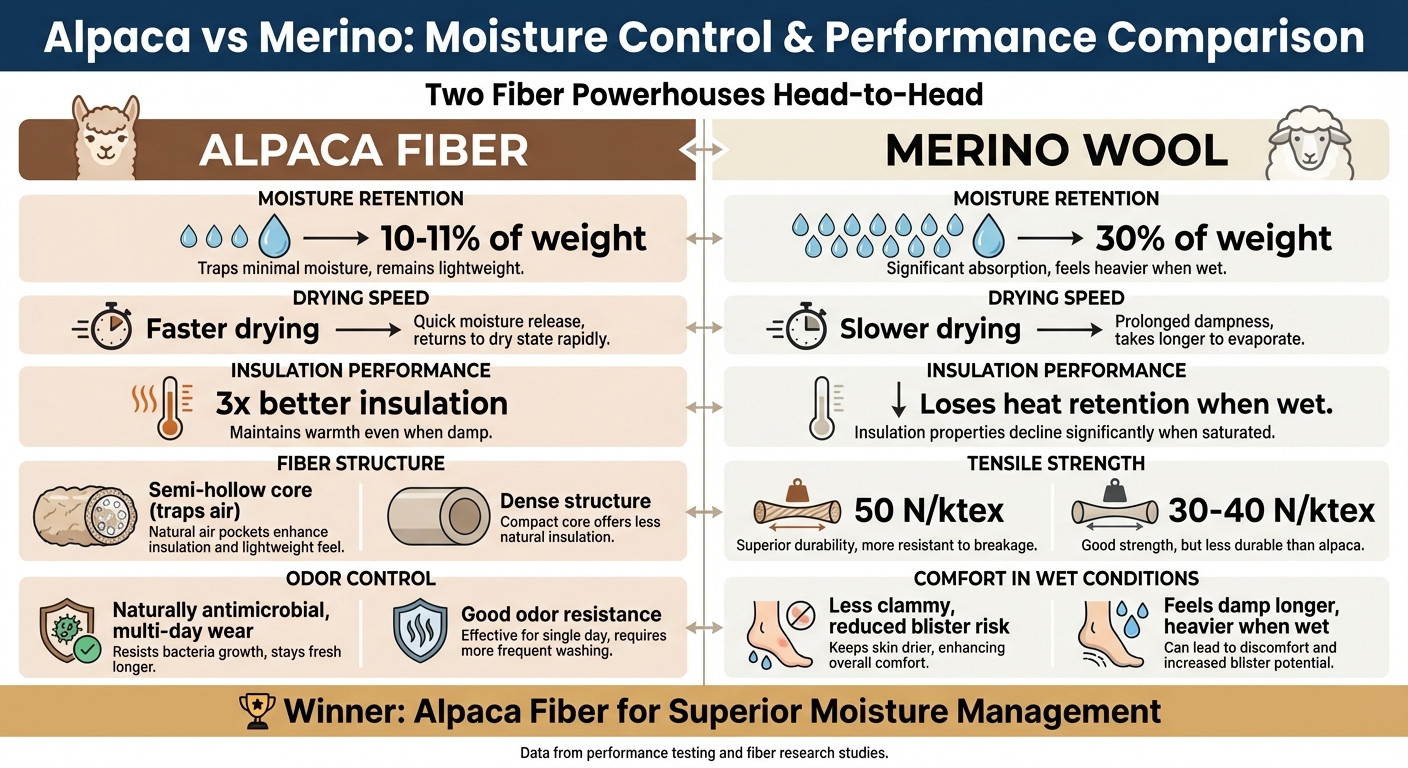
When it comes to moisture management, alpaca fiber outshines merino wool. Alpaca absorbs only 10–11% of its weight in water, compared to merino's 30%. This means alpaca dries faster, feels less damp, and reduces the risk of blisters. Its hollow fibers also insulate better, keeping you warm even when wet. Products like Suri Performance Alpaca Socks take advantage of these qualities, offering superior moisture-wicking, odor resistance, and durability for outdoor activities.
Key Differences:
Moisture Retention: Alpaca (10–11%) vs. Merino (30%)
Drying Speed: Alpaca dries faster
Insulation: Alpaca retains heat better when wet
Odor Control: Alpaca is naturally antimicrobial
Alpaca fiber delivers comfort and performance, making it a solid choice for demanding conditions.
Alpaca vs Merino Wool Fiber Performance Comparison
Alpaca Vs Merino Clothing - What's Better For The Outdoors?
sbb-itb-855989e
Water Retention and Wicking Performance
When it comes to managing moisture, the contrast between alpaca fiber and merino wool is striking. Research shows that alpaca fiber absorbs only about 10–11% of its weight in moisture, while merino wool can soak up roughly 30%. Essentially, merino wool holds nearly three times more moisture than alpaca fiber.
This difference plays a big role in how these fibers perform during activities that involve heavy sweating. Merino wool, while capable of absorbing a lot of moisture before feeling wet, retains that moisture longer. This means it stays damp for an extended period. On the other hand, alpaca fiber’s lower moisture absorption allows it to pull sweat away from the skin more effectively, helping to reduce that sticky, clammy feeling and lowering the risk of issues like blisters with breathable no-show socks. Tests have shown that alpaca fiber dries noticeably faster when wet. FieldMag also highlights alpaca’s natural water-resistant quality, which helps keep you comfortable even during intense activities.
Property
Alpaca Fiber
Merino Wool
Water Retention
About 10–11%
Around 30%
Drying Speed
Faster drying
Slower drying
High-Sweat Performance
Less clammy; reduced blister risk
Feels damp longer
Thanks to its efficient moisture-wicking and quick-drying abilities, alpaca performance crew socks stand out as a reliable option for anyone needing consistent dryness and comfort during demanding activities. Its ability to keep you dry enhances overall performance in tough conditions.
Temperature Control and Comfort
Alpaca fiber doesn't just manage moisture effectively - it also stands out for its ability to regulate temperature. Thanks to its semi-hollow core, alpaca fibers trap air, providing excellent insulation even when wet. In contrast, merino wool, with its denser structure, loses much of its heat-retaining ability when saturated.
Research highlights that alpaca fibers, though shorter and thicker, are more effective at maintaining core body temperature. In fact, tests show that alpaca's insulation is three times better than merino's, all while remaining breathable. This makes alpaca an excellent choice for outdoor activities where conditions can shift unexpectedly.
The hollow core of alpaca fibers dynamically adjusts to temperature changes, trapping heat when it's cold and releasing it when it's warm. This keeps you comfortable throughout the day, whether you're braving a chilly morning or enjoying a sunny afternoon. On the other hand, merino's tendency to hold onto moisture can leave you feeling damp and weighed down.
Take something like Suri Performance Alpaca Socks, for example. These socks leverage alpaca's unique properties to keep your feet warm during wet, cold hikes while preventing overheating during high-intensity activities. The fibers continuously adapt to your body's temperature needs, ensuring all-day comfort whether you're working outside or tackling a rugged trail. This dynamic thermo-regulation complements alpaca's moisture-wicking capabilities discussed earlier.
Additionally, alpaca's fast-drying nature and ability to insulate even when wet make it a dependable choice for unpredictable weather. It helps prevent heat loss in cold, damp conditions, giving you an edge when the elements are less than ideal.
Performance Testing in Socks
When put to the test, alpaca and merino socks reveal some noticeable differences. alpaca socks excel at keeping feet dry, whether you're trekking up mountain trails or powering through a grueling 12-hour work shift. This superior moisture control creates an environment that's less hospitable to bacteria.
Thanks to their hollow-core fiber structure and natural antimicrobial properties, alpaca socks can be worn for several days without developing unpleasant odors. This makes them a fantastic choice for extended trips where frequent washing isn't an option.
Suri Performance Alpaca Socks highlights these benefits in their product lineup. Their Buy 3 Get 3 Free deal reduces the cost to around $18–$22 per pair, while the Boot 8 Pack is a great option for heavy use, pricing each pair at approximately $15.
Durability is another area where alpaca socks stand out. Alpaca fiber boasts a tensile strength of 50 N/ktex, outperforming merino wool, which ranges from 30–40 N/ktex. Dana Holzer explains:
Alpaca is a stronger fiber than Merino wool... Alpaca's tensile strength is 50... Merino's tensile rate is 30-40.
This added strength allows alpaca socks to hold their shape and perform well even after repeated wear and washing. However, proper care is key to maintaining these qualities. For best results, hand-wash your alpaca socks or use a cold, gentle cycle in the washing machine. Always air-dry them flat to avoid shrinkage and protect the fibers.
Conclusion
Alpaca fiber stands out in moisture control, absorbing only 10–11% of its dry weight compared to merino wool's 30%. This means it stays drier, dries faster, and provides better insulation even when damp.
Thanks to its lower water retention, excellent moisture-wicking, and ability to regulate temperature, alpaca fiber is perfect for extended outdoor activities. Its hollow fibers trap air for warmth while maintaining breathability, avoiding the clammy sensation often associated with moisture-heavy fabrics.
For outdoor enthusiasts, alpaca socks reduce the risk of blisters and ensure feet stay comfortable and odor-free, even in unpredictable weather.
Suri Performance Alpaca Socks harness these benefits with a range of moisture-wicking, odor-resistant, and temperature-regulating socks. Whether you're looking for hiking crew socks or work boot socks, their products showcase the natural advantages of alpaca fiber, offering comfort and dependability throughout the day. It's clear why alpaca fiber remains a top choice for performance socks.
FAQs
Is alpaca less itchy than merino?
Alpaca wool is often considered less itchy than merino wool. Why? For starters, it's lanolin-free, which makes it a great choice for people with sensitive skin or allergies. Plus, alpaca fibers are smoother and finer, reducing the chances of irritation and offering a more comfortable feel against the skin.
How should I wash and dry alpaca socks?
To keep your alpaca socks in great condition, hand wash them in cool or lukewarm water with a mild detergent. Skip bleach and fabric softeners - they can harm the fibers. If you prefer machine washing, place the socks in a mesh laundry bag and use the delicate cycle with cold water. Always air dry them flat and out of direct sunlight to help preserve their shape and texture. Avoid tumble drying, but if you must, use a low-heat or air setting carefully to prevent damage to the fibers.
Are alpaca socks good for hot weather too?
Alpaca socks are an excellent choice for hot weather. Thanks to their natural fibers, they help regulate temperature, wick away moisture, and keep your feet dry and cool. These features make them a comfortable option, even when the temperatures rise.