"I liked saving money buying 4 pairs at a time and the socks are great for what I need. It's unbelievable how they could be made out of this material, yet they are so comfortable and they don't make my feet and legs itch nor do they make them hot or sweaty."
Rick S., Verified Customer
How Alpaca Fiber Wicks Moisture Naturally
Share
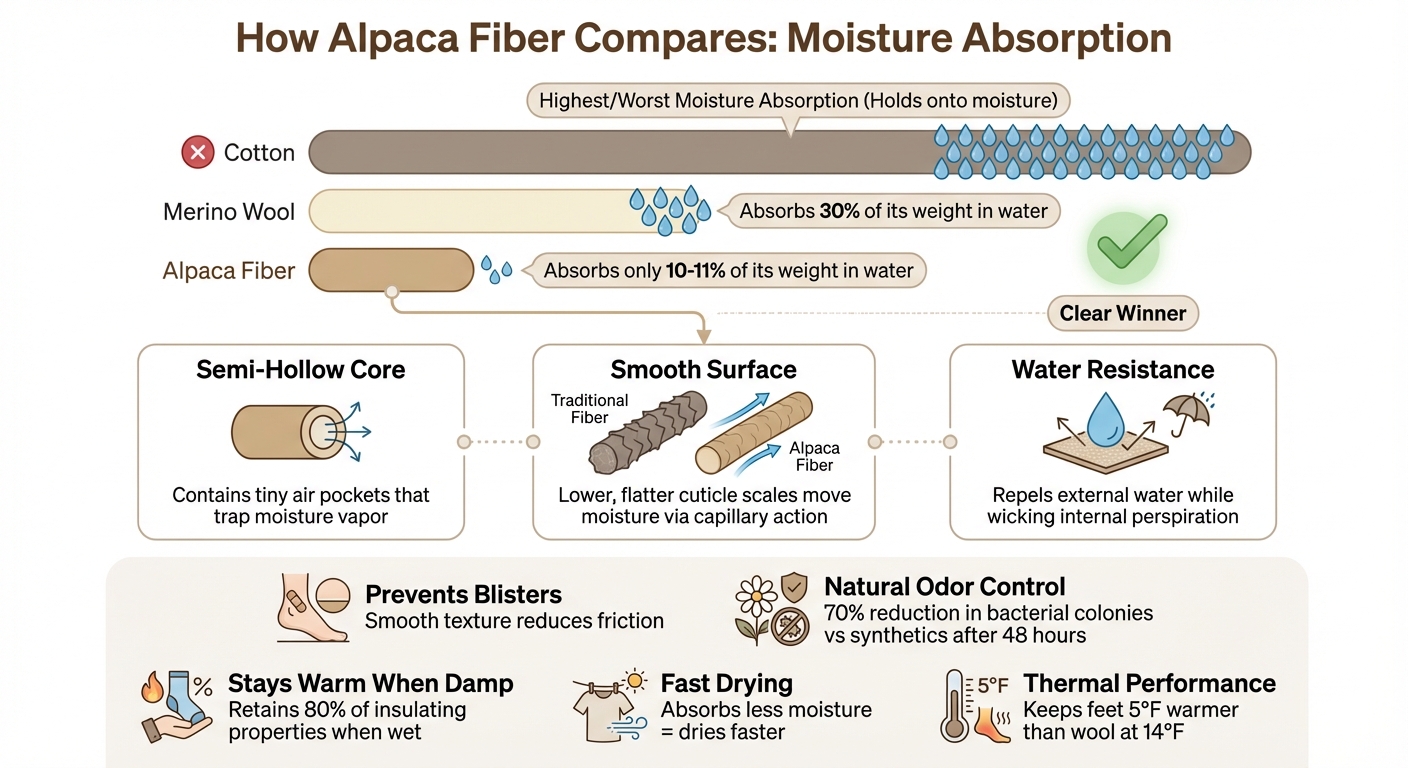
When it comes to keeping your feet dry and comfortable, alpaca fiber is a standout material. Unlike cotton, which holds onto moisture, or wool, which absorbs up to 30% of its weight in water, alpaca fiber absorbs only 11% while staying dry to the touch. Its semi-hollow core traps moisture vapor, its smooth surface moves sweat away, and its natural water resistance repels external moisture. These features make alpaca socks ideal for activities like hiking, working, or sports, where managing sweat and staying warm - even when damp - is crucial.
Key Benefits of Alpaca Fiber Socks:
Moisture Control: Absorbs less water than wool and dries faster.
Comfort: Smooth fibers reduce friction, lowering the risk of blisters.
Odor Resistance: Antimicrobial properties keep socks fresher for longer.
Warmth: Retains heat even in wet conditions, thanks to air pockets in the fibers.
Durability: Blended with nylon or spandex, they maintain shape and last longer.
Alpaca socks are a great choice for anyone needing reliable moisture management, whether you're tackling long hikes, tough workdays, or casual wear. Proper care, like air drying and rotating pairs, ensures these benefits last for years.
Alpaca Fiber vs Wool vs Cotton: Moisture Absorption Comparison
Is Alpaca fiber really THIS good? The PAKA Base layer and how it performs hiking and camping 🦙
Alpaca Fiber's Physical Structure
The moisture-wicking properties of alpaca fiber come down to three main physical features: a semi-hollow core, a smooth outer surface, and its natural water resistance. These characteristics work together to efficiently manage sweat and help keep your feet dry.
Semi-Hollow Core Absorbs Moisture Vapor
One standout feature of alpaca fiber is its semi-hollow structure, which contains tiny air pockets. These pockets act as miniature channels within the fiber itself. When your feet sweat, much of that moisture turns into vapor and is absorbed into these internal spaces, rather than sitting on your skin.
This unique structure allows alpaca fiber to hold up to 10–11% of its weight in moisture without feeling damp. Since the moisture stays as vapor inside the fiber - rather than as liquid on the surface - your socks remain dry to the touch, even while managing sweat. This feature is especially useful during activities like long hikes or extended work shifts, where your feet can produce a lot of moisture over time. Adding to this efficiency, the fiber's smooth outer surface plays a key role in moving moisture away.
Smooth Surface Moves Moisture Along the Fiber
Alpaca fiber has a smoother outer surface compared to sheep's wool, thanks to its lower, flatter cuticle scales. These scales, which are the overlapping plates found on animal fibers, are less pronounced on alpaca. This reduced texture minimizes the chance of moisture droplets clinging to the fiber.
Instead, the smooth surface enables sweat to move along the fiber through capillary action. Moisture travels from the warmer side near your skin to the cooler outer layers of the sock, where it can evaporate into the air. This process not only speeds up moisture transfer but also reduces friction against your skin, lowering the risk of hot spots or blisters. To top it off, alpaca fiber's natural water resistance ensures that external moisture doesn't weigh you down.
Water Resistance Maintains Dryness
Another advantage of alpaca fiber is its natural water resistance, which causes external water - like light rain, dew, or splashes - to bead up and roll off instead of soaking in. According to the Alpaca Owners Association, alpaca fiber "resists external water penetration" while still effectively "wicking away perspiration".
This dual functionality is a game-changer for sock performance. While the outside of the sock resists becoming waterlogged in damp conditions, the fiber continues to manage internal moisture (your sweat) by absorbing and moving it as vapor. This means you avoid the soggy, uncomfortable feeling often associated with cotton socks. Your feet stay drier and warmer, even when you're dealing with wet environments.
How Moisture-Wicking Works in Alpaca Fiber
The Moisture Movement Process
Alpaca fiber handles sweat through a clever three-step process. First, sweat partially transforms into moisture vapor, which is absorbed into the semi-hollow core of the alpaca fibers. Then, any liquid sweat on your skin is drawn into the fabric, spreading along the smooth outer surface of the fibers. This movement shifts moisture from high-concentration areas, like the soles and toes, to the outer layers of the sock. Finally, as warm air circulates inside your footwear, the moisture evaporates from the fibers' outer surface into the air inside the shoe and eventually escapes through the shoe material. This process ensures your feet stay dry and comfortable.
Creating a Dry Environment Around Your Foot
Alpaca fibers don't just move moisture - they also regulate the microclimate around your foot. Thanks to their semi-hollow structure, the fibers trap warm air close to your skin, maintaining a stable temperature even when outside conditions fluctuate. Simultaneously, they wick sweat away from your skin while resisting water from external sources, keeping the air near your foot dry instead of damp. This prevents the "sauna effect" often caused by cotton or non-breathable synthetic materials, especially in closed footwear used for hiking, working, or sports. By keeping your skin drier, alpaca socks help reduce the softening and swelling of skin that can lead to blisters or hot spots during long hikes, runs, or shifts. These qualities make alpaca fiber a top choice for anyone who values comfort and performance during active pursuits.
Fast Drying and Lightweight Feel
Alpaca fiber holds 10–11% of its weight in moisture, much less than merino wool's 30%, meaning it saturates more slowly and dries faster once activity stops. This keeps alpaca socks lightweight and dry during use, and they dry quickly during breaks or overnight. The lower moisture absorption also promotes rapid vapor release, ensuring a consistently dry feel against your skin during activities like hiking, running, or long workdays.
Practical Benefits of Alpaca Fiber Socks
Preventing Blisters and Reducing Friction
Blisters often form when moisture softens your skin, increasing friction between your foot and sock. Alpaca fiber helps combat this issue by keeping your skin firm and resilient, even during long hikes, runs, or extended work shifts. Unlike sheep's wool, which contains lanolin that can irritate sensitive skin, alpaca fiber is lanolin-free and hypoallergenic, making it a gentler option. Its smooth texture reduces friction, gliding easily against your skin and preventing the hot spots that lead to blisters. For anyone tackling strenuous activities, the combination of dryness and reduced friction offers a noticeable boost in comfort and endurance.
Natural Odor Control
Alpaca fiber doesn’t just prevent blisters - it also fights odor naturally. Thanks to its smooth surface and superior moisture-wicking abilities, alpaca socks create an environment that bacteria struggle to thrive in. In fact, lab tests show that alpaca socks can reduce bacterial colonies by over 70% compared to synthetic blends after 48 hours of continuous wear. Many hikers and outdoor enthusiasts have praised alpaca socks for staying "fresh and less pungent" even after multi-day trips without washing. This odor resistance is a game-changer for extended adventures or long workdays, allowing you to pack fewer pairs or confidently wear the same socks without worrying about unpleasant smells.
Staying Warm Even When Damp
One standout feature of alpaca fiber is its ability to keep you warm, even when damp. Thanks to its semi-hollow core, alpaca fiber retains up to 80% of its insulating properties in slightly wet conditions. In cold-chamber tests at 14°F, alpaca socks kept feet nearly 5°F warmer than those wearing sheep's wool after two hours. This is due to the microscopic air pockets within the fiber, which trap heat close to your skin. With thermal conductivity measured at approximately 0.033 W/m·K compared to merino wool’s 0.038 W/m·K, alpaca socks deliver reliable warmth even when the weather turns unpredictable or your socks get damp. This makes them an excellent choice for outdoor activities in variable conditions.
sbb-itb-855989e
Selecting Alpaca Performance Socks for Moisture Management
When it comes to staying dry and comfortable during active pursuits, alpaca fiber's natural ability to manage moisture is a game-changer. Picking the right sock ensures you can take full advantage of this benefit.
Features That Enhance Moisture-Wicking
For the best results, look for socks with a high percentage of alpaca fiber blended with just enough nylon or spandex to provide durability and stretch. Pro‑Grade Alpaca™ blends are particularly effective, as they hold their shape under pressure and manage heavy sweat. Steer clear of baby alpaca varieties - they tend to pill and lose their form over time.
Socks with breathable mesh zones and ventilated panels on the instep and top of the foot are excellent for warm-weather activities or extended wear. These features help moisture evaporate quickly. Additionally, targeted cushioning under the heel and forefoot adds comfort without locking in moisture. Reinforced zones in high-wear areas, like the heel and toe, ensure the socks maintain their moisture-wicking properties over time.
A snug fit supported by arch bands helps keep the sock in place, reducing friction and preventing blisters. Light compression zones further enhance this secure fit without feeling too tight, ensuring comfort throughout the day.
Here are some of the top options from Suri Performance Alpaca Socks, designed specifically for moisture control.
Suri Performance Alpaca Socks offers three styles tailored for managing moisture:
Ankle Socks ($33.33): With breathable mesh panels and targeted cushioning, these are perfect for running, workouts, and casual summer wear.
Performance Crew Socks ($37.99): Featuring strategic cushioning and light compression, these mid-calf socks are ideal for everyday wear, light hiking, or long workdays.
Field Boot Socks ($44.99): Designed for heavy-duty use, these socks provide dense cushioning and reinforced zones for long shifts and cold-weather hiking. They wick moisture three times more effectively than cotton or wool, and their natural air pockets help regulate temperature - even in heat up to 100°F.
All styles are crafted in North Carolina and come with a one-year guarantee. With an impressive 4.8-star rating from over 3,248 reviews, customers praise these socks for keeping feet dry and odor-free during extended wear.
Sock Selection Comparison
Here's a quick breakdown to help you choose the right style for your needs:
Sock Type
Ideal Use Case
Cushioning Level
Moisture Features
Ankle Socks
Running, gym, summer casual
Targeted
Breathable mesh zones; low-cut design for airflow
Performance Crew
Everyday wear, work, hiking
Strategic
Light compression zones for a secure, comfortable fit
Field Boot Socks
Heavy boots, cold weather
Dense
Reinforced zones; natural air pockets for insulation
When selecting socks, consider both the height and cushioning level based on your footwear and activity. For warm weather and low-cut shoes, ankle socks are a great choice. Crew socks are versatile for hiking and everyday wear, while boot socks are perfect for tall work boots and colder conditions. For long shifts or safety boots, prioritize styles with medium to heavy cushioning under the heel and forefoot to keep moisture at bay.
Maintaining Your Alpaca Socks for Long-Term Performance
Taking good care of your alpaca socks ensures they keep their moisture-wicking abilities intact. The fibers’ semi-hollow core and smooth surface are key to their performance, and with a little attention, you can keep these benefits for the long haul.
Washing and Drying Guidelines
When it’s time to clean your alpaca socks, use cool or warm water with a mild, wool-safe detergent. Since alpaca fibers are lanolin-free, they don’t need harsh chemicals or fabric softeners - these can actually reduce their water-resistant properties. Always air dry your socks by laying them flat or hanging them in a well-ventilated space. Avoid using a dryer, as the heat can damage the delicate fibers and impact their moisture-wicking performance. For spills, spot-clean as soon as possible to prevent oils from settling into the fibers.
Rotating Pairs Between Wears
To get the most out of your socks, rotate pairs regularly. Giving them 24–48 hours to dry between uses helps maintain their natural antibacterial qualities and reduces odor buildup. This means you can wear them several times before washing, which also minimizes wear and tear from frequent laundering. A simple rotation system can go a long way in extending their lifespan.
Long-Term Care for Continued Wicking Performance
Proper storage is just as important as washing. Keep your socks in a cool, dry, and well-ventilated area, avoiding cramped spaces that can compress the fibers. Alpaca’s lanolin-free composition makes it easy to clean them gently without degrading their structure over time. With consistent care, your socks will continue to manage moisture effectively, keeping your feet comfortable for years to come.
Conclusion
Alpaca fiber stands out for its ability to wick moisture effectively, thanks to its unique structure. It dries much faster than merino wool, helping to keep your feet dry and comfortable. As Arms of Andes explains, "Alpaca fibers wick and push away moisture keeping your body dry and warm".
This exceptional moisture management offers more than just comfort. It helps prevent blisters, controls odors naturally, keeps you warm even when wet, and maintains a breathable, water-resistant design. These features create the perfect microclimate for your feet, whether you're hiking, working, or tackling any active endeavor.
The Suri Performance Alpaca Socks take full advantage of these benefits. Whether you're wearing crew socks for everyday comfort, boot socks for tough work conditions, or ankle socks for warmer weather, these designs combine the moisture-wicking power of alpaca fiber with added durability and targeted cushioning for reliable performance.
FAQs
Do alpaca socks still work if my feet sweat a lot?
Alpaca socks are a great choice, even if your feet tend to sweat. Thanks to their hollow fiber structure, they quickly wick moisture away from your skin. This helps keep your feet dry and comfortable all day long.
Are alpaca socks good in rain or wet boots?
Alpaca socks are excellent in damp conditions thanks to their moisture-wicking abilities, which help keep your feet dry and minimize the chances of blisters. That said, they aren't waterproof, so they won't prevent your feet from getting wet in heavy rain or if your boots are completely soaked.
How do I wash and dry alpaca socks without ruining wicking?
To keep your alpaca socks performing at their best, hand wash them in cool water using a mild detergent that's safe for wool. If you prefer machine washing, place them in a mesh laundry bag and select the delicate cycle with cold water.
When it comes to drying, lay the socks flat to air dry. Avoid using a tumble dryer, hanging them up, or exposing them to direct heat. This care routine helps preserve their softness, durability, and ability to wick away moisture effectively.