"I liked saving money buying 4 pairs at a time and the socks are great for what I need. It's unbelievable how they could be made out of this material, yet they are so comfortable and they don't make my feet and legs itch nor do they make them hot or sweaty."
Rick S., Verified Customer
Alpaca Fiber vs Wool: Moisture Control and Wear
Share
When comparing alpaca fiber and wool for socks, alpaca fiber offers clear advantages in moisture management, durability, and comfort during active use. Here's why:
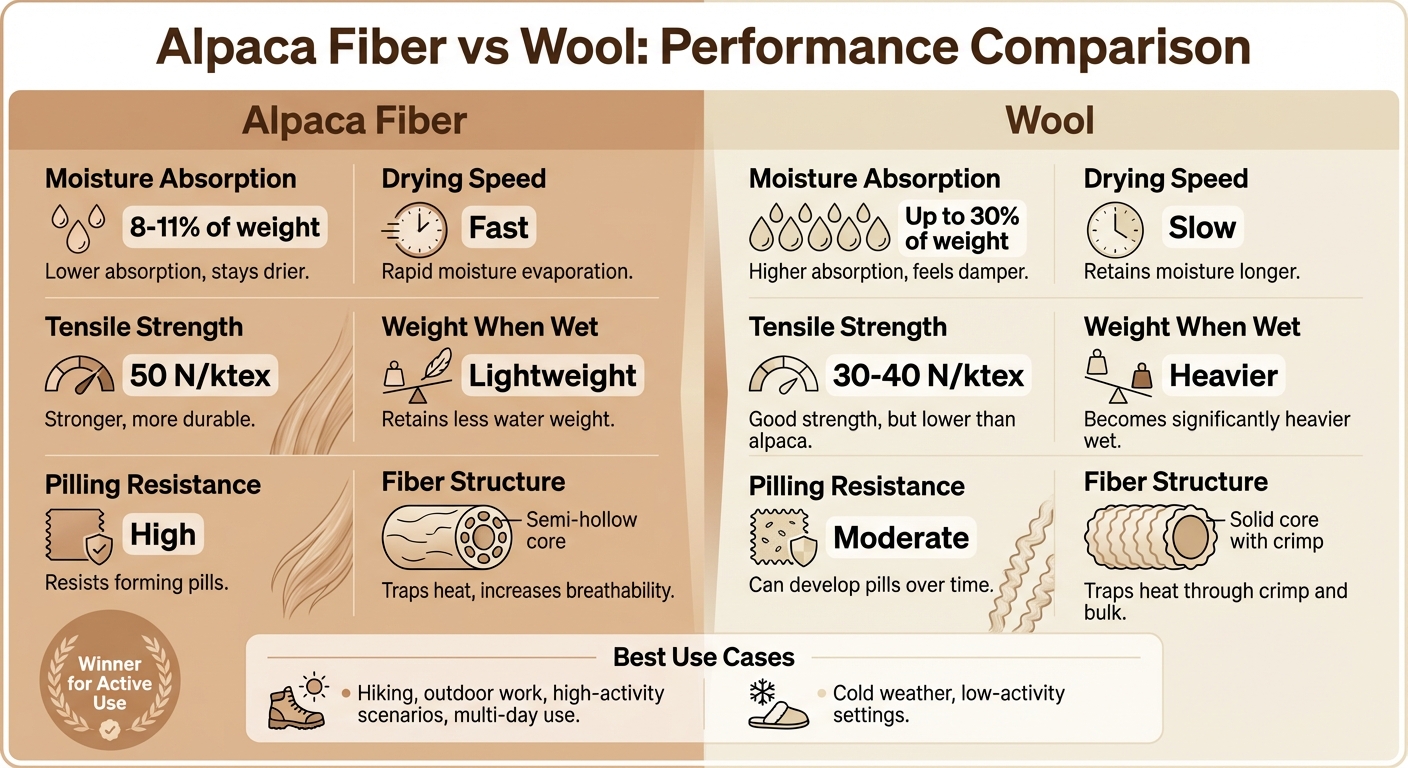
Moisture Control: Alpaca fiber absorbs only 8–11% of its weight in moisture, while wool absorbs up to 30%. This means alpaca socks stay lighter, dry faster, and keep feet drier during intense activities, reducing the risk of blisters.
Durability: Alpaca fiber has a tensile strength of 50 N/ktex, outperforming wool’s 30–40 N/ktex. It resists wear and tear in high-friction areas like heels and toes, lasting longer even with heavy use.
Comfort: Alpaca’s hollow-core structure traps air for lightweight warmth and breathability, while its lanolin-free, smooth surface minimizes pilling and irritation, making it suitable for sensitive skin.
Quick Comparison
Feature
Alpaca Fiber
Wool
Moisture Absorption
8–11% of weight
Up to 30% of weight
Drying Speed
Fast
Slow
Tensile Strength
50 N/ktex
30–40 N/ktex
Weight When Wet
Lightweight
Heavier
Pilling Resistance
High
Moderate
Alpaca fiber excels in demanding conditions, making it the better choice for hiking, outdoor work, and other high-activity scenarios. Wool, while effective in cold and low-activity settings, falls short in moisture control and durability for extended or high-intensity use.
Alpaca Fiber vs Wool: Moisture Absorption, Strength, and Durability Comparison
PAKA APPAREL ALPACA SOCKS | Better than Sheep Wool?
sbb-itb-855989e
Moisture Control: Alpaca Fiber vs. Wool
Moisture management in fibers depends heavily on their internal structure. Alpaca fiber is built with a medullated (hollow) core filled with tiny air chambers, which trap warmth and resist water absorption. Wool, on the other hand, has a solid core with a natural crimp that actively draws moisture inward.
This structural difference creates distinct moisture-handling properties. Alpaca fiber is hydrophobic, meaning it resists water and moves moisture outward for quick evaporation. Wool, being absorbent, pulls moisture into its fibers. While this trait can help in cool, dry conditions, it becomes a disadvantage during intense activities or in humid settings when you need your socks to stay light and dry.
Additionally, alpaca fibers are lanolin-free, which simplifies processing and helps prevent odor buildup, ensuring socks remain fresh and comfortable for longer periods.
Alpaca Fiber: Water-Resistant and Fast-Drying
The hollow-core structure of alpaca fiber acts like a natural ventilation system. As you sweat, moisture is wicked away from your skin and spread across the surface of the fiber, allowing it to dry quickly. Alpaca absorbs only 8–11% of its weight in water, meaning socks made from this fiber remain lightweight and comfortable, even when damp. This quality significantly lowers the risk of blisters during activities like hiking or other high-energy pursuits.
Wool: High Absorption and Slow Drying
Wool can absorb up to 30% of its weight in water, making it feel wet much sooner. While this high absorption can help regulate temperature in cooler weather by managing sweat, it becomes a drawback during vigorous activities. Wool’s slower drying time leaves the fabric feeling damp and heavier, which can lead to clammy feet. The added weight and prolonged moisture can also increase friction, causing discomfort and blisters.
Comparison Table: Moisture Control Metrics
Metric
Alpaca Fiber
Wool
Absorption Capacity
8–11% of weight
Up to 30% of weight
Drying Speed
Fast (low absorption)
Slow (high saturation)
Weight When Wet
Lightweight
Heavier
Breathability
High (hollow-core airflow)
Moderate
Moisture Management
Hydrophobic (dries faster)
Absorbent (stays damp longer)
Alpaca fiber's superior moisture management makes it an excellent choice for socks designed to perform well in challenging conditions. At Suri Performance Alpaca Socks (https://surisocks.com), these natural properties are used to create socks that combine durability, comfort, and all-day dryness - perfect for hiking, outdoor work, or any adventure.
How Moisture Control Affects Sock Lifespan
Managing moisture is crucial for making socks last longer. When socks hold onto moisture, the fibers swell, creating friction at stress points and speeding up wear. The structural differences between alpaca fiber and wool play a big role in how well they handle this, directly impacting their durability. Let’s dive into how these materials influence sock lifespan.
Alpaca Fiber: Longer-Lasting Performance
Alpaca fiber stands out for its ability to wick moisture - up to three times better than wool. This efficient moisture removal keeps the fibers from becoming saturated, reducing swelling and limiting bacterial growth that leads to odors and fabric breakdown. For example, during intense activities like hiking over 20 miles, alpaca socks stay dry, even under heavy sweating. This dryness helps prevent blisters and minimizes abrasion.
Another perk? Alpaca naturally resists both moisture and odors, meaning these socks don’t need to be washed as often. Less frequent washing reduces wear and tear, extending their lifespan. Brands like Suri Performance Alpaca Socks are specifically designed to harness these moisture-wicking benefits, making them a durable choice for hiking, work, and other demanding activities.
Wool: Challenges with Moisture Retention
Wool, on the other hand, absorbs up to 30% of its weight in water. This high absorbency leaves the fibers damp for longer, which accelerates wear. Experts explain that saturated wool feels heavier, adding mechanical stress to the fabric. Over time, this leads to faster breakdown of the natural lanolin in wool, resulting in felting and thinning in areas prone to wear.
In practice, this means wool socks often develop holes - especially around the toes - due to moisture retention and friction. The slow drying time not only leaves feet feeling clammy but also weakens the fibers, requiring more frequent replacements. For those working in wet conditions or tackling multi-day outdoor adventures, this is a critical drawback to consider.
Fiber Strength and Durability: Alpaca vs. Wool
When it comes to sock durability, the strength and surface texture of the fiber are just as important as moisture control. When comparing cotton vs wool vs alpaca socks, the fibers differ in key aspects like tensile strength, surface characteristics, and resistance to pilling, all of which influence how long socks can last.
Alpaca Fiber: Stronger and Smoother
Alpaca fiber stands out with a tensile strength of about 50 N/ktex, compared to wool's 30–40 N/ktex range. This means it can better withstand pulling forces and friction, especially in areas that experience a lot of stress. Its semi-hollow core adds flexibility and toughness, making it ideal for demanding conditions.
Another advantage of alpaca is its smooth surface, which reduces fiber entanglement and pilling, even after repeated washes. Unlike wool, alpaca lacks lanolin, giving it a sleek texture that’s perfect for long-lasting wear. For example, products like Suri Performance Alpaca Socks are designed to maintain their durability and performance in challenging environments.
Wool: Softer but Less Resilient
Wool, on the other hand, is known for its elasticity and excellent stretch recovery, helping socks keep their shape and fit snugly. Its natural crimp gives it a softer, more flexible feel. However, wool's scaly cuticle structure makes it more prone to pilling, which often appears after 10–20 wear cycles.
This tendency to pill, combined with wool's higher moisture absorption (up to 30% of its weight), means wool socks generally wear out faster. In active use, they may need replacing 25–50% sooner than alpaca-based socks.
Comparison Table: Durability Metrics
Durability Metric
Alpaca Fiber
Wool
Tensile Strength
50 N/ktex
30–40 N/ktex
Elasticity
Lower stretch recovery
Higher stretch recovery
Pilling Resistance
High (smooth surface)
Moderate (scaly surface)
Moisture Absorption
~10% of fiber weight
Up to 30% of fiber weight
Fiber Structure
Semi-hollow core, minimal crimp
Solid core, higher crimp
Durability Rating
Stronger for heavy use
Better for shape retention
Performance in Active Use: Hiking, Work, and Outdoor Activities
Alpaca Fiber: Reliable in Challenging Conditions
Alpaca fiber stands out for its ability to stay dry and maintain its structure, even during multi-day hikes or physically demanding outdoor tasks. Unlike wool, which absorbs up to 30% of its weight in moisture, alpaca fiber takes in only 11%. This low absorption level prevents the saturation that can lead to stretching and felting, keeping the material lightweight and comfortable even in wet environments.
With a tensile strength of 50 (compared to wool's 30–40) and a smooth surface, alpaca fiber resists abrasion and pilling. This makes it a practical choice for rugged activities like trail running or construction work. Products like Suri Performance Alpaca Socks capitalize on these qualities, offering moisture-wicking and thermo-regulating designs in various styles, including crew, boot, ankle, and no-show options.
The hollow structure of alpaca fibers enhances breathability, helping to reduce the clammy feeling that often leads to blisters and chafing during intense physical activity. Additionally, alpaca dries faster than wool and naturally resists odors due to its lack of lanolin. This means you can wear alpaca socks longer between washes - a huge plus for backpacking trips or extended work shifts. This combination of moisture control and durability not only improves performance but also extends the life of the socks.
Wool: Strengths and Limitations in Wet and Cold Weather
Wool performs differently, particularly excelling in cold weather where its insulation properties remain effective even when damp. This makes it a solid choice for low-movement outdoor tasks in winter conditions. However, its ability to absorb more moisture becomes a drawback during prolonged physical activities or wet conditions.
When wool socks become saturated - whether from rain or sweat - they stay damp longer, which can accelerate felting and weaken the fibers over time. This also adds weight and increases the risk of blisters, as the prolonged moisture compromises comfort and fit. While wool's elasticity offers some initial support, its higher moisture retention ultimately limits its practicality for high-exertion or multi-day use compared to less absorbent materials like alpaca.
Conclusion
When it comes to managing moisture and ensuring durability, alpaca fiber stands out as a clear winner over wool. Alpaca absorbs only 10–11% of its weight in moisture, compared to wool's 30%. This means alpaca stays lighter, dries quicker, and holds its shape better during intense activities. Less moisture absorption also means reduced fiber swelling, minimized felting, and longer-lasting socks - essential qualities for anyone who spends hours on their feet.
The tensile strength of alpaca fiber is another game-changer. With a strength of 50 N/ktex compared to wool's 30–40 N/ktex, alpaca can handle more wear and tear in high-friction areas like heels and toes. Thanks to its smooth, long fibers and semi-hollow core, alpaca resists pilling and abrasion while offering excellent breathability. As Forbes Vetted puts it, "Alpaca fiber naturally locks in warmth... great for every season".
For those who lead active lifestyles - whether trekking, working outdoors, or tackling daily tasks - alpaca's moisture-wicking power outperforms wool by a wide margin. This helps keep feet drier, reduces the chance of blisters, and naturally fights odor without relying on lanolin. The result? Socks that stay fresh longer between washes, which also lowers their environmental footprint.
Suri Performance Alpaca Socks takes full advantage of these benefits with their range of crew, boot, ankle, and no-show styles. Designed for durability and all-day comfort, these socks are perfect for demanding conditions. While wool may work well in cold, low-activity settings, alpaca fiber’s low moisture retention, impressive strength, and quick-drying properties make it the go-to choice for anyone focused on performance and sock longevity.
FAQs
How do alpaca socks reduce blisters on long hikes?
Alpaca socks are a game-changer when it comes to preventing blisters. Their secret lies in their ability to manage moisture and offer insulation. Thanks to the hollow fiber structure, these socks wick away sweat far better than cotton or wool, keeping your feet dry and reducing friction that causes blisters.
What’s more, alpaca fibers absorb less moisture, dry quickly, and promote better airflow. This means less dampness, fewer bacteria, and a more comfortable experience overall. On top of that, their lightweight insulation helps regulate temperature, while their natural antimicrobial properties protect your skin from irritation. This makes alpaca socks an excellent choice for long-distance hikes or any activity where foot comfort is key.
Do alpaca socks stay warm even when they get damp?
Alpaca socks are known for staying warm even when damp. Their hollow fiber structure is the key to this, as it traps heat effectively while also helping to regulate temperature. This means your feet can remain warm and comfortable, even in moist conditions.
How should I wash alpaca socks to maximize lifespan?
To keep your alpaca socks in great shape for longer, wash them by hand or use your machine's gentle cycle with cold water and a wool-safe detergent. Steer clear of hot water, harsh chemicals, and tumble drying, as these can damage the fibers. Instead, air dry them flat. For extra care, turn the socks inside out before washing to minimize pilling. To maintain their durability, limit washing to every 3–5 wears and let them air out between uses.